What is a toxic algae bloom? Officials describe hazard considered in mysterious deaths
Toxic algae in Sierra National Forest is being retested by California water officials and considered by investigators in the mysterious deaths of a family this week while hiking along a trail northeast of Mariposa and southwest of Yosemite National Park.
Kristie Mitchell, spokesperson for the Mariposa County Sheriff’s Office, said Friday morning that toxicology results from autopsies are pending for Mariposa residents John Gerrish, Ellen Chung, their 1-year-old daughter, Miju, and family dog, Oski, who were found dead Tuesday.
“Toxicology can take up to six weeks, sometimes even longer,” Mitchell said about when results might be shared with the public. “Unfortunately we don’t have a great time frame for that yet.”
Officials said the Mariposa family was hiking in the Hites Cove area of Devil’s Gulch near known toxic algae blooms. Sheriff Jeremy Briese is considering that and other potential hazards in a case with “no smoking gun” clues.
Is all algae poisonous?
Not all algae is harmful, but “some species can produce toxins, and if present, can pose a risk to humans and pets,” Sierra National Forest warned on its Facebook page last month about “toxic algal mats” that formed in the Hites Cove area.
Other names for harmful algal blooms include cyanobacteria, blue-green algae, golden algae, or simply, algae.
“Algae and cyanobacteria are simple, plant-like organisms that live in the water,” the Centers for Disease Control and Prevention said. “Algae and cyanobacteria can rapidly grow out of control, or ‘bloom,’ when water is warm, slow-moving, and full of nutrients.”
The CDC said blooms of algae or cyanobacteria can be harmful if they produce toxins (poisons), become too dense, use up the oxygen in the water or release harmful gases.
The U.S. Environmental Protection Agency called harmful algal blooms a “major environmental problem” in all 50 states. They need sunlight, slow-moving water, and nutrients – nitrogen and phosphorus – to grow.
How do I know if algae in the water is toxic?
The California Department of Public Health shared some signs of a potentially harmful algal bloom:
- There is a bright green, blue, brown, or red color to the water. It may appear as though paint is floating on the water.
- Cloudy water. However, toxins may persist for days even after the cells have died and the water appears clear.
- A very bad odor, similar to the smell of a sewer or rotten eggs.
- Dead plants and/or fish.
“The bloom may concentrate and form a film or scum on the water surface,” the State Water Boards said in a news release Thursday about a worrisome algae bloom in Crowley Lake in the Eastern Sierra. “The color of the water may also appear discolored as bright or dark green.”
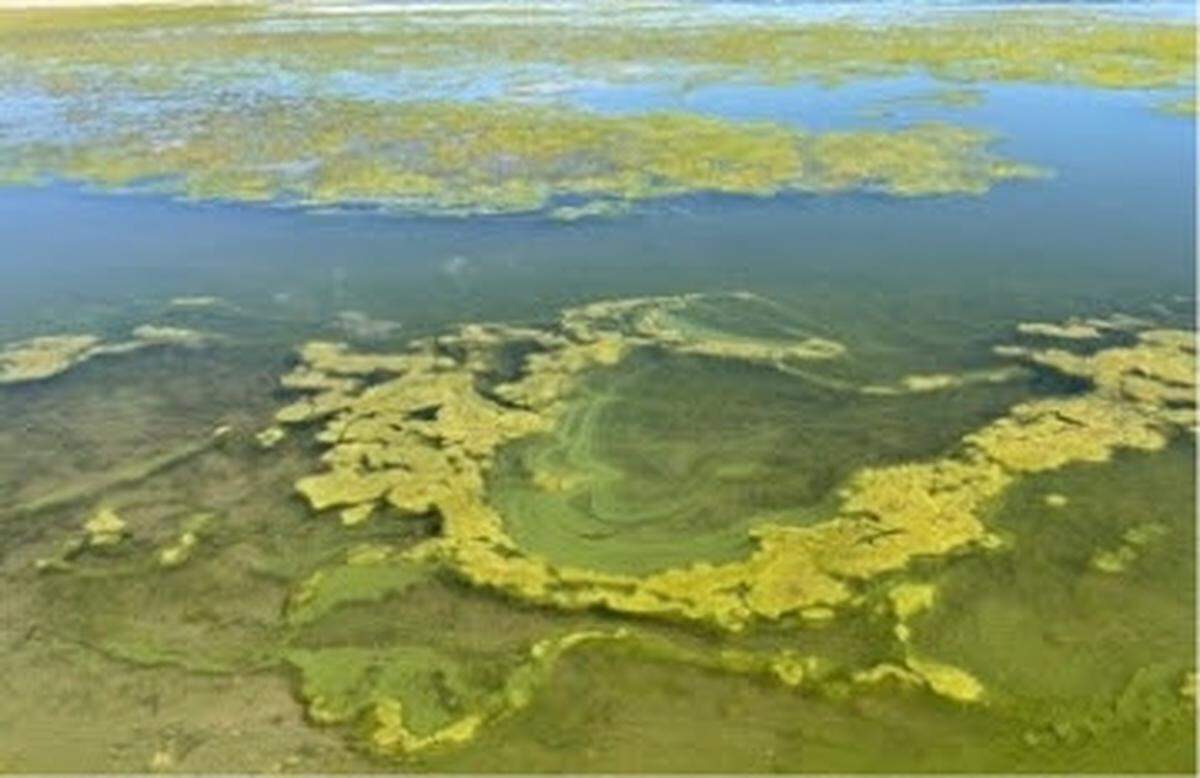
The CDC said harmful blooms can be found in all types of water around the world.
“Blooms sometimes look like foam, scum, mats, or paint on the surface of the water,” the CDC said. “They can even make the water appear different colors, including green, blue, red, brown, or another color.”
The State Water Resources Control Board also has a HAB (harmful algal blooms) map of locations around California where harmful algae has been voluntarily reported. There are dozens of locations listed, including in the central San Joaquin Valley and Sierra Nevada.
Algae locations can be reported to the state at mywaterquality.ca.gov/habs.
What happens if you drink algae, touch it, or breathe it?
In its warning about toxic algal mats around Hites Cove, Sierra National Forest shared a notice that said mats “can be attached to the bottom, detached and floating, or washed up on the shore.”
“Do NOT let children or adults touch, eat or swallow any algal mats,” the warning continues. “Do NOT let dogs eat algal mats or drink from the water. Call your doctor or veterinarian immediately if you or your pet get sick after contacting or ingesting algae.”
Contacting a Poison Control Center is also recommended.
The State Water Board said people also shouldn’t eat shellfish from a body of water with harmful algae.
The board described harmful algal blooms as producing cyanobacteria and dermatoxins that can cause skin inflammation, itchy skin and rashes, along with gastrointestinal distress if swallowed while swimming.
The California Department of Public Health said harmful algae can also cause diarrhea, vomiting, and “harm to the liver, kidneys, or nervous system if the toxin levels are very high.” The state health department said it also found “some evidence that dried algal mats can produce measurable toxin in the air.”
The CDC said other symptoms can include headaches; skin, eye, nose or throat irritation; and neurological symptoms, such as muscle weakness and dizziness.
“Animals can get very sick or even die quickly after exposure to harmful algae and cyanobacteria. ... Animals are often the first affected,” the CDC said, “in part because they are more likely to swim in or drink from bodies of water that contain harmful algae or cyanobacteria.”
The state health department reported that while animals have been poisoned from algae, “no known human fatalities have been documented from recreational or drinking water exposure to cyanobacterial toxins.”
This story was originally published August 20, 2021 at 12:57 PM with the headline "What is a toxic algae bloom? Officials describe hazard considered in mysterious deaths."