
California voters OK’d billions for water projects. Where are the new dams, reservoirs?
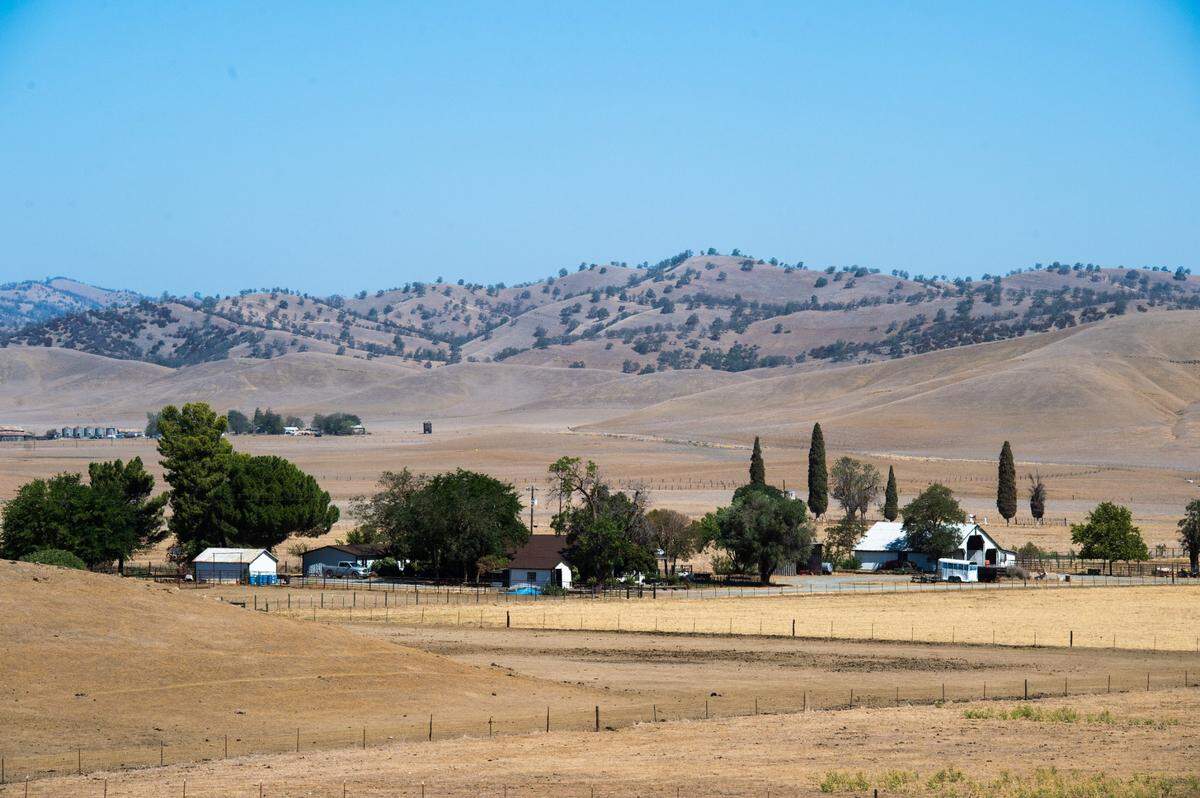
It doesn’t look like much now, a dry and dusty valley surrounded by the modest mountains of California’s Coast Range.
These barren, brown hills an hour northwest of Sacramento will be the future home of Sites Reservoir, one of the few major water projects to be built in California since the 1970s. California taxpayers are helping pay for Sites, which would hold more water than Folsom Lake, through a $7.1 billion bond they approved during the 2014 election.
With the state facing a potentially catastrophic drought, leaders of the Sites Project Authority say the reservoir would dramatically improve California’s water supplies.
“If Sites were open today, we’d have nearly 1 million acre feet of water for farms, the environment, cities,” said the authority’s executive director Jerry Brown (no relation to the former governor).
But here’s the thing: Sites isn’t ready to open today, tomorrow or anytime soon. Mired in red tape and struggling with rising costs, even after the project was downsized, the reservoir isn’t scheduled to begin construction until 2024 and wouldn’t begin filling until 2030.
The Sites plan

Map: The Sacramento Bee • Source: Sites Authority
None of the major water storage projects being funded by Proposition 1, the 2014 water bond, will be able to provide short-term relief for California’s worsening water situation.They’re all still in the pre-construction phase: reviewing environmental impacts, designing dams and nailing down financing to pay for the costs the state won’t handle.
“Anybody who thought we would have a new surface reservoir by now from the 2014 water bond doesn’t understand how … that kind of project happens,” said Ellen Hanak, a water expert at the Public Policy Institute of California. ”Those are not overnight projects.”
In other words, California, for the time being, is going to have to make do with the overtaxed portfolio of dams and reservoirs built in the last century as it confronts the escalating threat from climate change.
“We’re largely going to manage the future of water with the infrastructure we have today,” said Jay Lund, co-director of the Center for Watershed Sciences at UC Davis.
Proposition 1 passed by a resounding 67-33 margin. A bipartisan group of boosters said the bond “secures our water future, keeps our family farms and businesses productive, and puts Californians to work building the new facilities we need to store, deliver and treat water.”
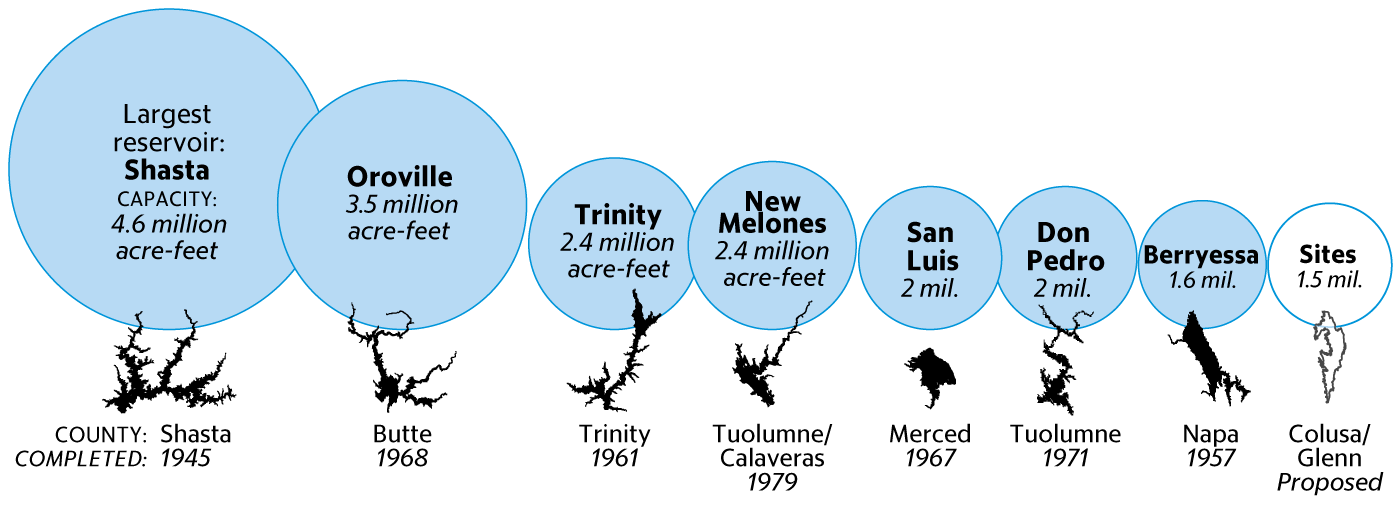
While Sites would become the state’s eighth-largest reservoir, the other projects are considerably smaller, with more of a local consequence. How much new water these projects can capture for California’s growing and changing needs is unclear.
“Clearly these seven projects that are going through the Prop 1 process are important for drought resilience over time, but while they’re important, they’re not adequate,” said Wade Crowfoot, secretary of the California Natural Resources Agency. “We need significantly more investment, from the state, the federal and the local governments to build our drought resilience.”
Federal funds may be coming. The tentative infrastructure deal struck by President Joe Biden and Senate Republicans includes $5 billion for Western water storage projects, although which projects would get funded is unclear.
Of the seven big water storage projects receiving Proposition 1 funding, the earliest that anything will get completed is late 2024, when a groundwater-banking project south of Sacramento is scheduled to begin operations.
The other projects won’t get done until much later. A reservoir expansion in the East Bay is eight years away; an expansion of a Silicon Valley reservoir is 11 years off. A groundwater project in the desert north of Los Angeles is supposed to be done in 2030, the same year as Sites.
Jeff Kightlinger, the just-retired general manager of the Metropolitan Water District of Southern California, said the painstaking nature of the Proposition 1 process demonstrates once again how slowly things usually get done in California water.
“I think if the voters were oversold anything, they were undersold the difficulty of building new reservoirs,” said Kightlinger, whose former agency plans to store water at Sites.
A ‘laborious’ process for big water projects
Lund, the UC Davis watershed expert, has this set answer when he’s asked about the difficulty in building a dam or some other big water project in California these days: The state has 1,500 reservoirs and most of the prime locations already have a dam on them.
“The remaining dam sites are going to be more expensive and give you less water than the 1,500 dam sites that already exist,” he said.
When it comes to Proposition 1, Gov. Gavin Newsom’s administration says there’s a good reason the process is moving slowly — there’s so much at stake, the state is being careful.
“Proposition 1 ... clearly represents an important investment in long-term water resilience,” Crowfoot said. “It was structured in a manner that requires a significant amount of time to put those projects in place.”
Applications for the bond money weren’t due until August 2017. The following spring — three and a half years after Proposition 1 passed — the California Water Commission approved funding for eight of the 12 applicants. (One of the eight later dropped out).
The state put strict conditions on funding. The state would only contribute to the portion of the project that would dedicate water to “public benefits,” with an emphasis on environmental needs. Most of the winners received less than they asked for.
Picking the winners required “a very laborious selection process,” Crowfoot said.
On the other hand, Crowfoot said California is moving quickly to facilitate billions of dollars worth of smaller water projects that lawmakers recently approved in the new state budget.
The budget commits California to $5.1 billion worth of spending on water over four years, starting with more than $300 million in emergency aid for rural and urban water systems whose wells have already failed — or are at risk of failing — as the drought intensifies and groundwater tables fall. The new budget also earmarks $1.3 billion for somewhat longer-term projects such as repairing leaky pipes, installing water meters, digging new wells, and cleaning contaminated water systems. The money will also be spent on new septic systems and sewer lines in disadvantaged communities to prevent groundwater from becoming tainted.
Much of the funding approved by the Legislature, totaling $2.1 billion, hasn’t been earmarked for any particular projects yet; that’s expected to be hashed out later this summer by lawmakers and the governor.
In the meantime, state officials say they will get money out the door quickly for the emergency projects.
“We face a set of challenges this summer and fall that could grow significantly, or worsen significantly, with another dry winter,” Crowfoot said. “It’s our goal to get this drought resiliency funding working and actually building redundancy and reliability in case of an extended drought.”
A new era of reservoirs in California?
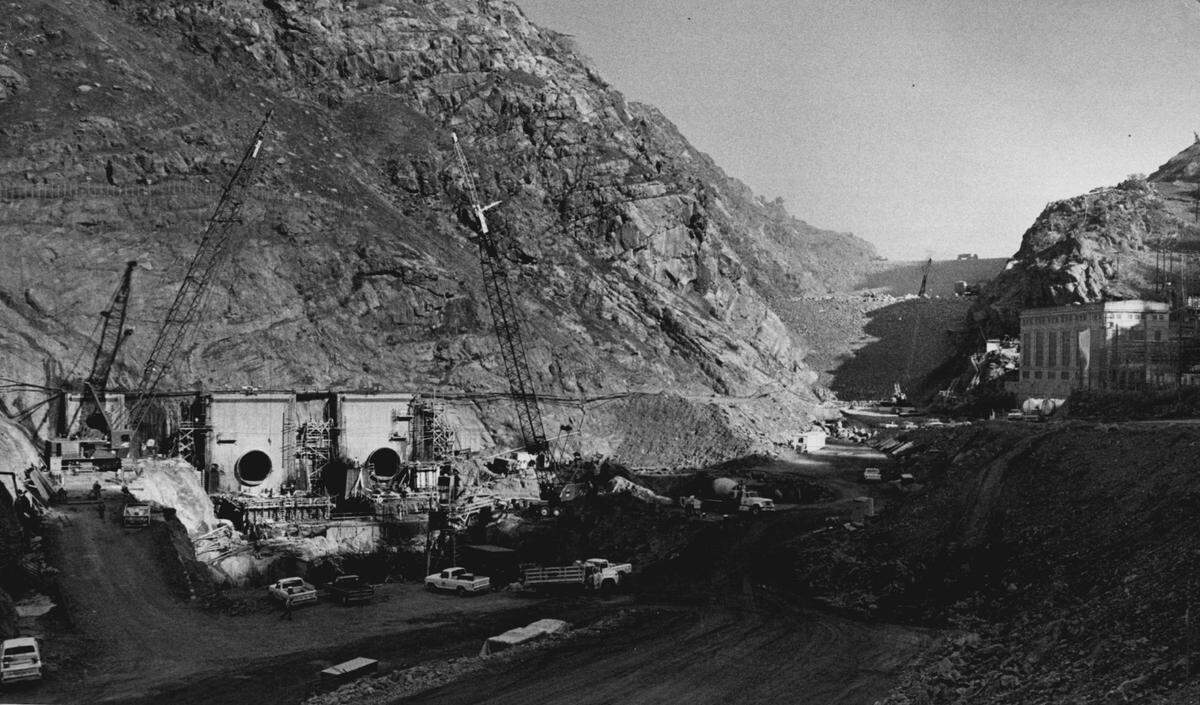
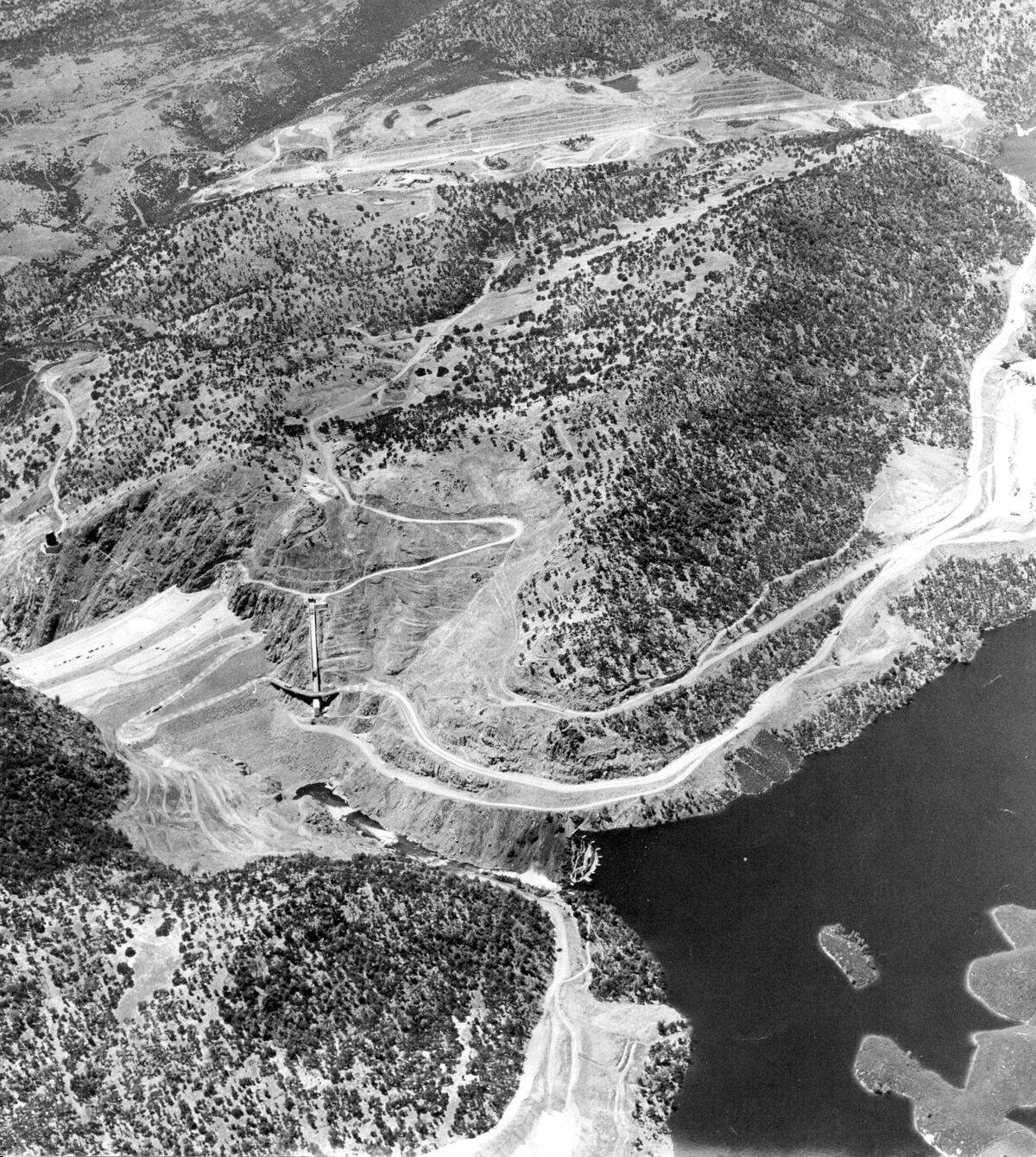
In 1944, Congress authorized construction of New Melones reservoir, on the Stanislaus River about an hour east of Stockton. The main impetus was to replace a 1920s-era dam and protect Oakdale, Riverbank and other downstream communities from floods.
Getting New Melones built wasn’t easy.
Construction didn’t begin until 1966, and controversy flared as environmentalists protested a project that would flood archaeological sites and a popular whitewater rapids area. In 1974, while construction was still under way, environmentalists qualified a ballot initiative that would have limited the size of the lake to the capacity needed for flood control. Voters rejected it. In early 1979, as construction was finally winding down, the leader of Sacramento environmental group Friends of the River chained himself to a rock to prevent the Corps of Engineers from filling the reservoir with water.
Today the reservoir, capable of storing 2.4 million acre-feet of water, stands as something of a relic from another era. It’s the last major reservoir built in California by the federal government following the dam-building boom that began in the Great Depression. Environmentalists — who argue that damming rivers is harmful to fish and wildlife — hope it stays that way.
“We’ve already built a lot of dams and squeezed a lot of water out of the system,” said Ron Stork, who’s Friends of the River’s senior policy advocate.
Most Californians apparently thought otherwise. Seventy years after Congress gave New Melones the green light, with the state in the early stages of the last drought, the Legislature placed an initiative on the ballot to borrow billions for new water projects.
“It was an amazing convergence over a big idea, and the big idea is that the future of California needs a lot of water and we’ve got to use it in the best way possible,” said then-Gov. Jerry Brown, whose first stint in office coincided with the completion of New Melones, as he signed the bill putting Proposition 1 on the 2014 ballot.
Voters agreed, and Proposition 1 became law. It generated funds for all manner of water needs: $1.5 billion for protecting lakes and watersheds, $395 million for flood control, $725 million for recycling. At least $250 million in Proposition 1 funding also is being used to tear down some existing dams — namely, a group of small dams on the Klamath River along the Oregon border that are being removed to improve salmon runs. The hydroelectric dams aren’t used for storage.
The biggest slug of money was for the “water storage investment program” — $2.7 billion that’s now been set aside for seven different projects.
Some are moving ahead fairly swiftly. The $440 million Harvest Water project, conceived by the Sacramento Regional County Sanitation District, will build a network of pipes and pumps to deliver recycled water from the agency’s treatment plant outside of Sacramento to an agricultural area south of Elk Grove. The farmers will use that recycled water instead of the groundwater they normally pump, enabling a vast aquifer at the south end of the county to fill gradually. In 40 years, the aquifer will hold enough water to fill half of Folsom Lake, said Terrie Mitchell, the agency’s manager of regulatory affairs.
The project, which has been awarded $287 million in Proposition 1 money, should be finished by late 2024 — by far the earliest of the projects chosen by the water commission. By California water standards, it’s a pretty easy lift.
“It’s more of a traditional construction (project),” said Mike Crooks, the district’s deputy operations director. “It’s pump stations and pipes.”
How a big water project got sunk
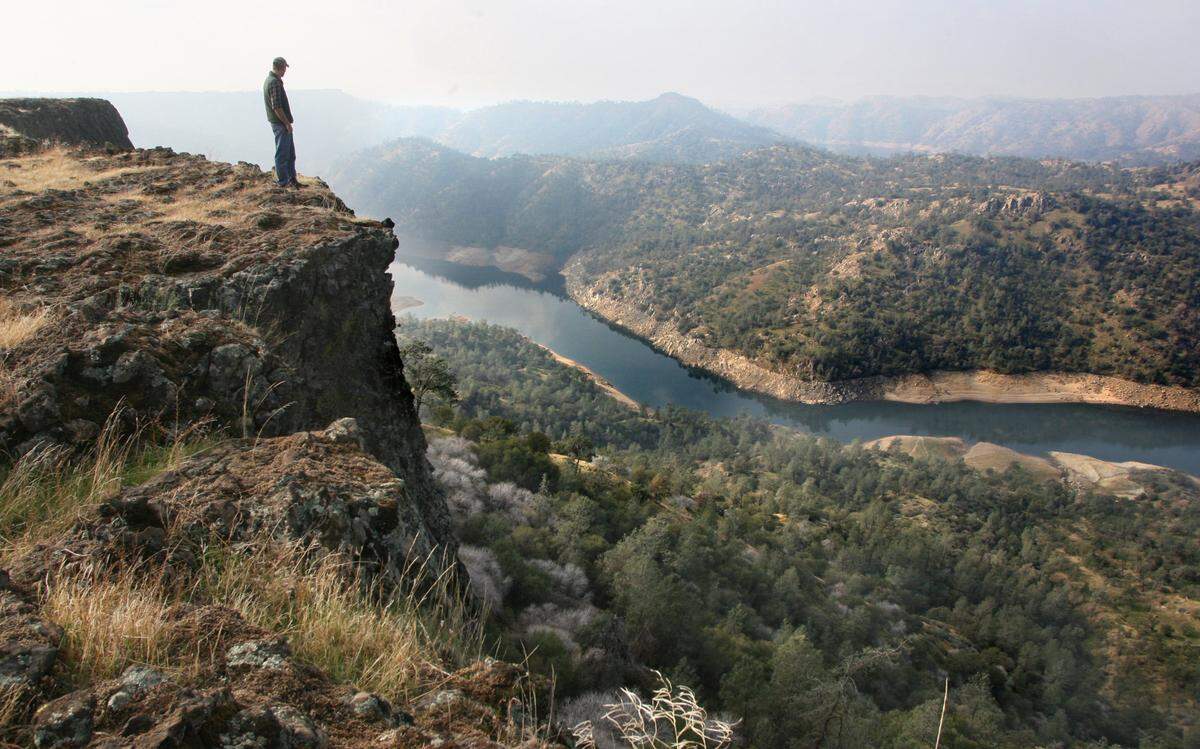
At the other end of the spectrum is Temperance Flat — a large new reservoir proposed for the San Joaquin River.
On the drawing board for decades, the reservoir has long been controversial with environmentalists, who say Temperance Flat would further degrade the river’s troubled eco-system. The Water Commission awarded the project a mere $171 million in funds from Proposition 1, concluding that it would provide meager benefits to the environment.
That was just a sliver of the more than $3 billion needed to build it. Faced with a major funding gap, the Temperance Flat Reservoir Authority declined the state’s money last fall, putting the project’s future in serious jeopardy.
Kole Upton, the authority’s chairman and a Chowchilla farmer, said the troubles with Temperance Flat reflect the difficulties of building a new reservoir from scratch nowadays.
“If it wasn’t done years ago, then it’s probably not going to get done,” he said.
Financial shortfalls seem endemic to big water projects, whether they’re in rural Fresno County or the epicenter of high technology.
The Santa Clara Valley Water District secured nearly $500 million in Proposition 1 money to increase dramatically the size of tiny Pacheco Reservoir on a creek southeast of San Jose. The state dollars represented about half the cost of the project.
Then came a bombshell announcement. In January, the district announced that the project would now cost $2.5 billion, largely because of “major changes to the dam and spillway design.” The gap between state funding and total cost is now $2 billion.
“It’s a significant cost overrun,” said Gary Kremen, the board’s vice chairman. “The board hasn’t decided what to do.”
Kremen said the board might have little choice but to proceed with the project. Under orders from federal dam-safety regulators, it almost completely drained the county’s largest reservoir last year to begin work on a seismic retrofit. That’s left the valley with practically no storage in the midst of an ever-worsening drought.
Expanding Pacheco to hold up 140,000 acre feet of water “would have solved the problem we have right now,” Kremen said.
But regardless of cost, the Pacheco project won’t solve Silicon Valley’s short-term woes. The expansion is scheduled to get done in 2032, according to the district’s website.
Raising the state’s largest dam
The slow pace doesn’t just apply to Proposition 1.
At the northern edge of the Sacramento Valley, Lake Shasta, the state’s largest reservoir, is just over one-third full — its arms little more than rivers surrounded by steep, barren banks of mud and rock. Farmers in the San Joaquin Valley, who rely heavily on Shasta’s supplies, have for years been promoting a plan to raise Shasta Dam by 18 feet. That would increase Shasta Lake’s storage capacity by 14%, enough to fill Folsom Lake about two-thirds full.
The proposal isn’t getting any Proposition 1 money; the project’s backers didn’t bother asking for any.
California officials have been adamantly opposed to raising the dam, saying the project would inundate the lower stretch of the McCloud River, protected by the Wild and Scenic Rivers Act, and submerge ancestral sites that are sacred to the Winnemem Wintu Tribe. Westlands Water District, the Fresno-based irrigation district that bought land along the McCloud to facilitate the project, said the consequence for the river would be minimal and would actually ensure more cold water stays in the lake to be used to protect endangered fish downstream of Shasta Dam.
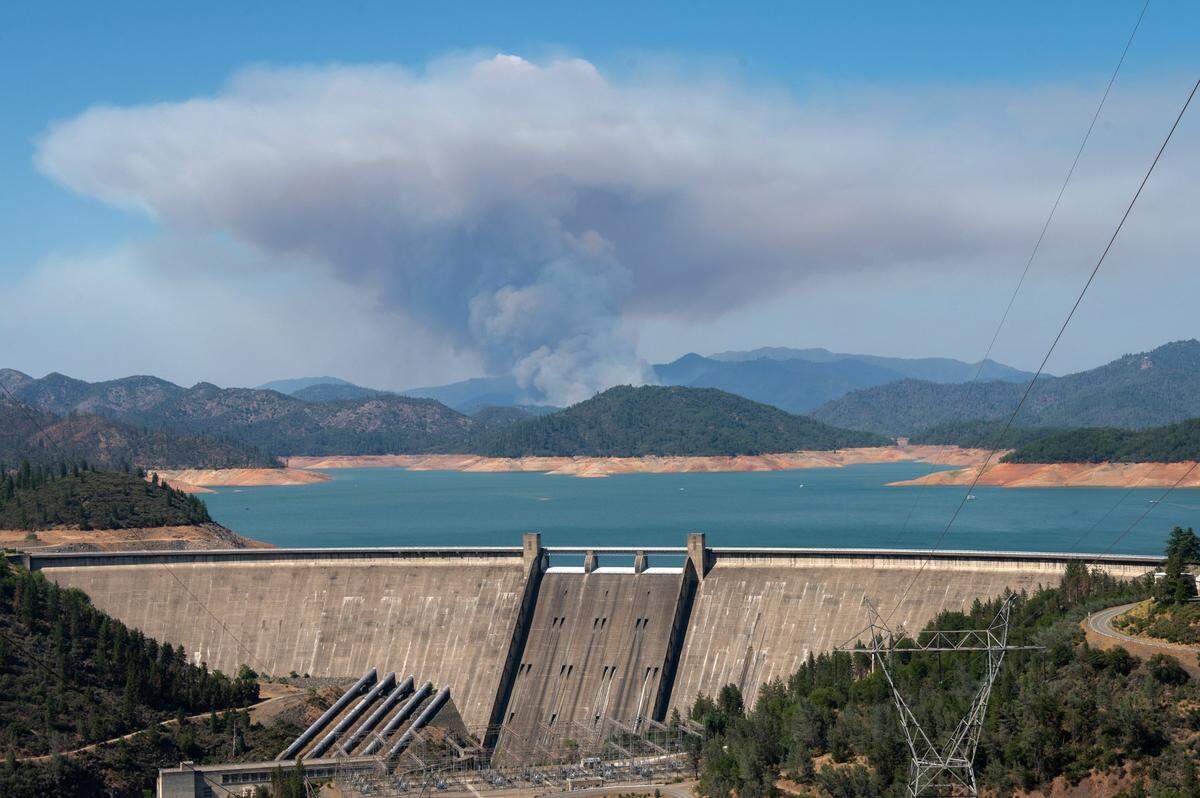
Backers say that with a price tag of $1.4 billion, raising the dam represents a comparatively cheap water-storage investment to supply the state with an additional 634,000 acre feet of water. (An acre-foot is 326,000 gallons.) The proposed Sites Reservoir, by comparison, is currently projected to cost almost three times as much and store only a little more than twice as much water.
Raising Shasta Dam gained momentum during the Trump administration but now, with Democrat Joe Biden in the White House, its prospects appear to have stalled.
That’s fine with California officials.
“We’ve been focused on getting projects done that frankly are more realistic and can deliver water reliability and ecological restoration,” Crowfoot said.
Can Sites Reservoir overcome cost increases?
Straddling the Glenn-Colusa county line, Sites Reservoir would be built on a ghost town, the remnants of a small community built in the 1880s by a rancher named John Sites. Today it’s mostly populated by grazing cattle, along with a smattering of human occupants who would be compensated for their land. An old wooden sign, marking the former town square, sits on the east side of the would-be reservoir’s floor. The whole area is ringed by mountains that would help contain the water.
The proposed reservoir location lies about 10 miles west of the Sacramento River. Sites will be an “off-stream” facility; water will be diverted from the river and shipped via canals to the reservoir, and then dispatched back into the river when it’s needed.
Sites would hold 1.5 million acre-feet of water, making it California’s eighth-largest reservoir, and the first major reservoir built in the state since Diamond Valley Lake opened in Riverside County in 2000. To get Proposition 1 funding, the reservoir will have to dedicate much of its water to environmental needs; its backers say wildlife refuges and the Yolo Bypass in particular will benefit.
Still, environmental concerns have been raised. In 2018, the state Department of Fish and Wildlife declared that Sites was planning to divert too much water from the Sacramento River, potentially harming the river’s struggling Chinook salmon population.
Since then, the reservoir’s planners have made revisions that they believe will address the state’s protests. But the issue hasn’t been resolved. Kristal Davis Fadtke, an environmental program manager at Fish and Wildlife, said her agency is still evaluating Sites’ new proposal for pulling water from the river.
California's largest reservoirs
Map: The Sacramento Bee • Source: Sites Authority, California Dept. of Water Resources
“Whether their proposed changes are adequately protective are still unknown,” she said.
Sites is designed to be a local affair — by state law its governing board is made up exclusively of representatives of Sacramento Valley irrigation districts and other entities. The board chairman, Fritz Durst, is a rice farmer in northern Yolo County.
Valley pride notwithstanding, Sites received just $837 million in Proposition 1 money — far more than any other storage project, but barely one fifth of the cost. The award was about half as much as Sites requested from the state.
Most of the rest of the money will have to come from Sites’ “investors” — cities, counties and farm irrigation districts that would store water at the reservoir.
As of now, the biggest investor is the Metropolitan Water District of Southern California, the mega-agency with 19 million urban customers. Metropolitan would control a bigger share of Sites’ water than all of the Sacramento Valley agricultural districts combined. Other urban agencies are major participants in Sites as well, including agencies in the Bay Area and north of Los Angeles.
Kightlinger, the just-retired general manager of Metropolitan, fears that Sites won’t be able to stitch together enough funding to complete the work. The cost is so high that, without more help from the state and federal governments, “Sites is going to hit the wall,” Kightlinger said.
Acknowledging funding problems, the Sites Authority downsized the project last year, bringing the cost from $5.1 billion to just over $3 billion. But just a month ago the Sites board accepted a new estimate that pegged the project at around $3.9 billion, reflecting ordinary inflationary pressures and new geotechnical studies showing that it will cost hundreds of millions more than anticipated to build the main dam structures.
At such a price, the water coming out of Sites will cost its investors plenty — maybe $700 to $800 an acre-foot. That’s relatively affordable for cities, which can spread the costs over millions of customers. It’s a different story for farmers, who typically pay in the $200 range for an acre-foot.
Durst, the board chair, pays about $30 an acre-foot for the irrigation water he receives from Reclamation District 108. He acknowledged the high cost of Sites’ water. But he said the reservoir will be worth it — and he’s convinced the project can find enough money to get to the finish line.
“If we want security, we’re going to have to buy this quote-unquote expensive insurance,” he said. “The way insurance is, it’s always expensive until the day you need it, and then you wish you had more.”
And with California gasping for water, Durst said the project has to move forward — now. Delays will simply mean more cost increases.
“If it goes out another year or two or three, you’re going to add a lot of zeros to the cost of this project,” Durst said.
This story was originally published July 21, 2021 at 12:00 AM with the headline "California voters OK’d billions for water projects. Where are the new dams, reservoirs?."