
As drought ravages California, Biden’s infrastructure bill could help store more water
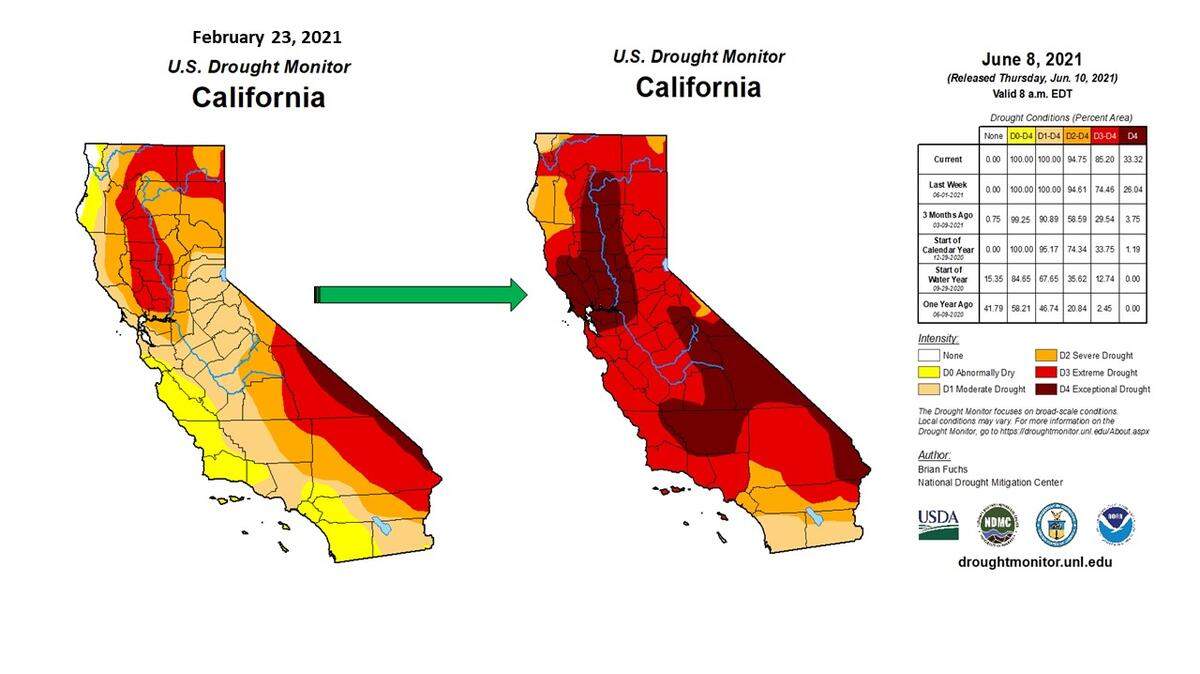
As California and the West suffer through an epic drought, President Joe Biden and Senate Republicans and Democrats have included $5 billion for Western water projects in their infrastructure deal.
The prospect of federal money comes as several big-ticket water projects are on the drawing boards in California — although many are still years from completion and probably wouldn’t get finished in time to help California with the current drought.
But the federal dollars, which are probably months and several more negotiations away from possible approval, could enable California to jump-start projects that have been in the works for years.
It’s “the largest federal investment in western water storage in U.S. history. More than the Hoover Dam and other similar investments,” Eric Olsen, spokesman for Rep. John Garamendi, D-Walnut Grove, told The Sacramento Bee.
Heather Engel, director of communications at Association of California Water Agencies, said they were “waiting on the legislative language to understand what it means for California.”
Garamendi, who has been active in water storage issues for several years, said the $5 billion storage funds will “help California and neighboring states claw out of the current drought conditions.
“We aren’t going to solve these issues by maintaining the status quo. This drought requires bold solutions and investments in climate-resilient water storage infrastructure,” he said.
The water could be stored in a variety of ways, his office said, citing dams and reservoirs as one popular method that this funding could support.
Garamendi, a member of the House Water Resources and Environment subcommittee, had helped secure several billion dollars to build Sites Reservoir near his district, for instance, and there are several major reservoir projects proposed throughout California that could be supported by this funding.
Help for the drought?
Gov. Gavin Newsom has declared a drought emergency in 41 of the state’s 58 counties, and experts say this is already shaping up as worse than the drought that ended in 2017. Most farmers are getting little to no water from the state and federal water projects, and government scientists say conditions are so dire on the major rivers that massive deaths are likely among winter-run Chinook salmon and other species covered by the Endangered Species Act.
So far Newsom has resisted calls to institute mandatory cutbacks in urban usage of the type that his predecessor Jerry Brown ordered in 2015. But Newsom’s aides say such an order could come next year if winter rains don’t materialize.
What was shaping up as a difficult year turned much worse this spring, when an early heat wave caused much of the Sierra Nevada snowpack to evaporate or disappear into dried-out soils — instead of trickling into the reservoirs and rivers. The heat cost the state an estimated 700,000 acre-feet of water, enough to fill about three-quarters of Folsom Lake.
Sites Reservoir is a nearly $4 billion project proposed for Colusa County, northwest of Sacramento, that’s been in the planning stages for years. Due to be completed in 2030, it would be the first mega-reservoir to open in California since New Melones was completed in the late 1970s.
As it stands now, the reservoir, to be built about 10 miles west of the Sacramento River, would be largely funded with state taxpayer dollars, from a 2014 voter-approved bond, and money from farm-irrigation districts and municipal water agencies that would own a portion of the water in the facility.
There are also methods to capture rainwater as it seeps into groundwater to ensure it stays within existing water supplies instead of washing into the ocean.
California still needs rain
But Garamendi’s office warned that “California does not currently have adequate water storage and recycling infrastructure to capture and reuse the rainwater that we do receive. A lot of it is used once and then sent off into the ocean.”
In the meantime, California lawmakers are eager to see what the infrastructure deal could bring.
“We can’t point to anything for sure at this point, but the two projects this would likely benefit are the Del Puerto project and the Delta Mendota canal in our district,” said Andrew Mamo, spokesman for Rep. Josh Harder, D-Turlock, who has been active on water issues.
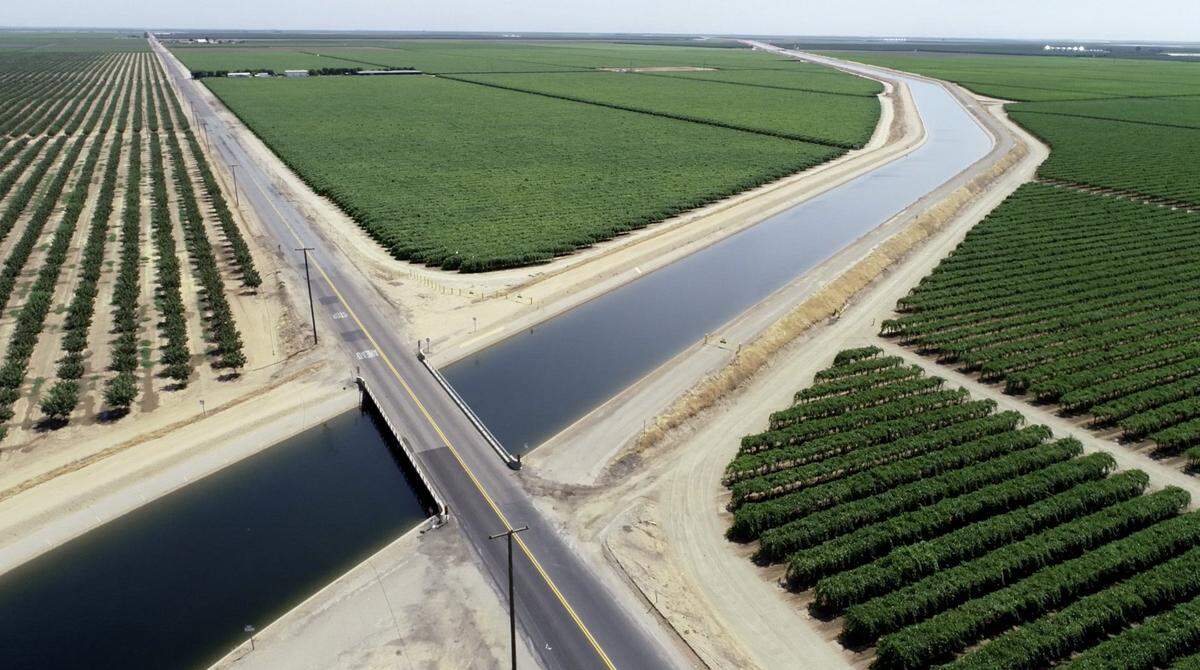
The Delta Mendota Canal is one of three major canals running through the San Joaquin Valley that are in need of major repair. Along with the California Aqueduct and the Friant-Kern Canal, the Delta Mendota has lost a significant amount of its carrying capacity in recent years because of the phenomenon known as subsidence — literally, the sinking of portions of the Valley floor because of relentless pumping of groundwater during the last drought.
The over-pumping caused the canals, which operate on gravity, to buckle at key points, crimping their ability to deliver water to farms and cities.
Newsom’s budget includes $371 million over two years for the three repair jobs, but it’s believed federal dollars are needed to get them completed. The California Aqueduct, built during former Gov. Pat Brown’s administration, is the main vehicle for delivering water on the State Water Project. The Friant-Kern and Delta Mendota are owned by the U.S. Bureau of Reclamation.
Can Washington help?
A White House fact sheet said the deal’s intention is to “eliminate the nation’s lead service lines and pipes, delivering clean drinking water to up to 10 million American families and more than 400,000 schools and child care facilities that currently don’t have it, including in tribal nations and disadvantaged communities.”
The deal now has to become formal legislation, and that will probably take months. It also faces all sorts of hurdles. The water money is part of a $579 billion, five-year package that includes money for roads, bridges, broadband, power and more.
And while Biden, five Republican and five Democratic senators reached agreement on the broad contours of the deal, there’s still concern about how to pay for it. The deal lists 13 different ideas for raising revenue, but again gives no specifics.
This story was originally published June 30, 2021 at 12:00 AM with the headline "As drought ravages California, Biden’s infrastructure bill could help store more water."
.jpg)