
Should California reform its marijuana laws? Why advocates want cannabis back on the ballot
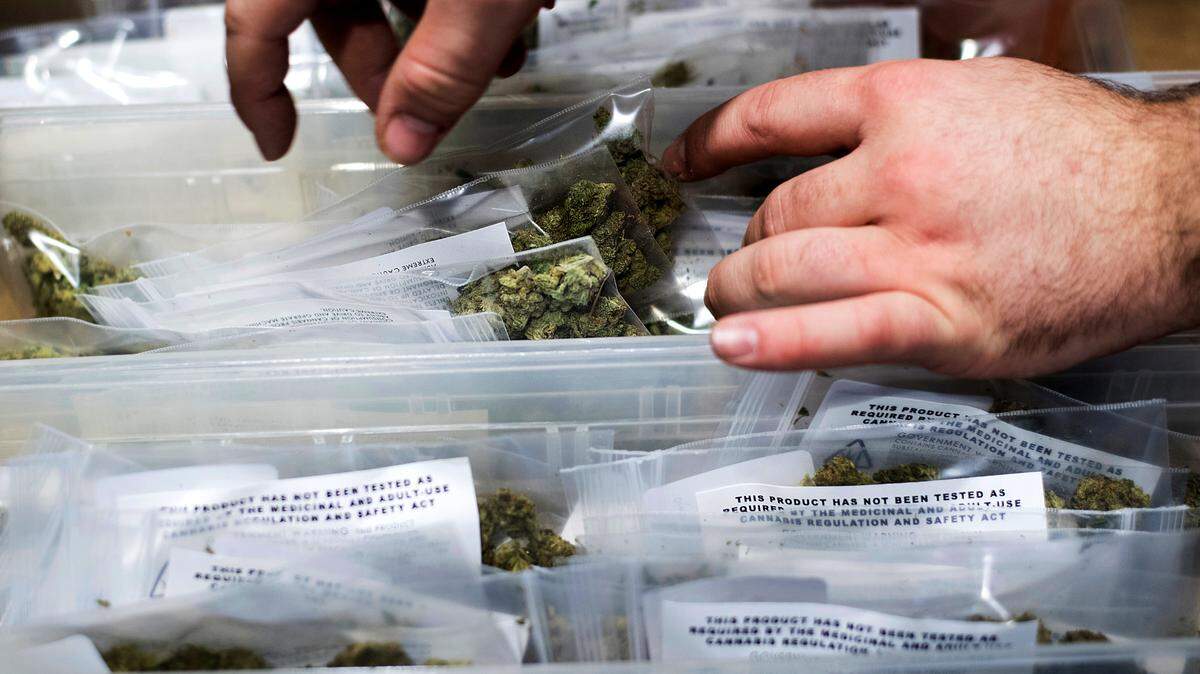
A new coalition of marijuana advocates wants to put cannabis back on the California ballot aiming to expand access for consumers just five years after voters legalized recreational use.
Marijuana advocates argue that high taxes and recalcitrant local governments have led to legalization falling far short of what voters were promised with Proposition 64 in 2016. They’re working on a proposal that they argue would fix the problems created by the law.
Most notably, the proposed ballot measure would strip local governments of their power to approve or deny cannabis licenses.
“The big issue with local control is it’s just bad policy,” said Sean Kiernan, executive director of veterans advocacy group Weed for Warriors and the California Cannabis Reform Project, which is working on the proposed ballot initiative.
What has resulted, Kiernan said, is that the illicit cannabis market continues to thrive while people, including the disabled veterans he represents, are unable to access lawful, regulated cannabis in huge portions of the state.
According to The New York Times, 80% of California’s roughly 500 local governments have prohibited the sale of marijuana, creating cannabis retail deserts.
“They have no control and the gigantic illicit cannabis market is the only proof we need,” Kiernan said.
The ballot initiative likely will face an uphill battle, especially from local governments reluctant to give up control and revenue, said Meital Manzuri, a Los Angeles attorney whose practice focuses on cannabis.
The 2016 battle over Prop. 64 hinged in part on getting local governments to buy in, and she said the issue of local control was a concession from marijuana legalization advocates to make legalization more palatable.
Local control “was a real sticking point” for cities and counties as the language of Prop. 64 was crafted, Manzuri said.
Nearly five years later, Manzuri said that reforms “are much needed,” particularly in the areas of local control and taxes.
“Hindsight is always 20/20,” she said.
So far, the organizations representing municipalities are keeping quiet.
A spokeswoman for the California State Association of Counties said that the group doesn’t comment on proposed ballot initiatives.
Elisa Arcidiacono, legislative representative for the League of California Cities, said in a statement that the league does not take positions on ballot measures that have not officially qualified.
“However, any position Cal Cities would take in the future would derive from a robust process driven by our member cities and in the best interest of their communities. The objective of Cal Cities is to advocate in support of local control as it relates to all issues, cannabis included,” Arcidiacono said.
The proposed initiative also aims to reform the tax structure for cannabis.
It does so by removing the cultivation tax (which is $9.65 per dry-weight ounce for cannabis flower, $2.87 per dry-weight ounce for cannabis leaves and $1.35 per dry-weight ounce for fresh cannabis plants), reducing the excise tax from 15% of average market price to 5%, and preventing local governments from taxing cannabis at all.
Instead, local governments would be provided a fifth of all state excise tax revenue, under the proposed initiative.
The effort is still in early stages.
“I wouldn’t call what we’re doing campaigning right now. I would call what we’re doing team-building,” he said.
Kiernan acknowledged that putting the measure before voters would be an expensive endeavor, costing in the ballpark of $6 to 8 million.
For now, Kiernan said that his group is in “backroom discussions” with lawmakers about introducing legislation that would put this proposed reform on the ballot, though there is some debate about whether it would be better to put it on the ballot in 2022 or 2024.
This story was originally published April 20, 2021 at 5:00 AM with the headline "Should California reform its marijuana laws? Why advocates want cannabis back on the ballot."