
‘A roller coaster ride.’ Inside a small town California hospital’s fight against COVID
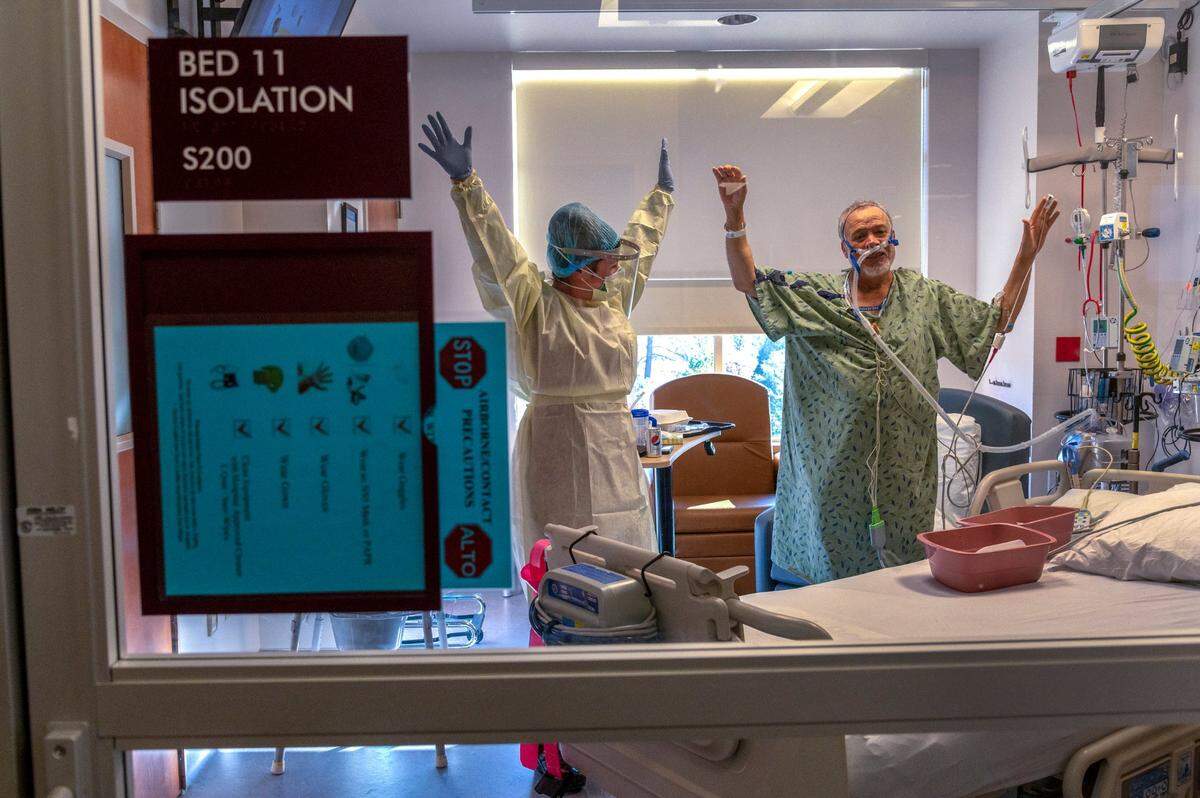
“High five!” Alina Kendler says.
A tired but game Francisco Apolinar slaps hands with his nurse, not quite getting his arm all the way up, then sits down to gather his breath after a round of physical therapy, sucking on the oxygen tube fitted to his nostrils.
The 67-year-old Truckee-area resident, battling COVID-19, spent his birthday last week quarantined in a specialized room that’s suddenly in high demand:
“Isolation Room 11” in the intensive care unit of Marshall Hospital in Placerville is one of several thousand acute care nodes that have emerged on the front lines of the effort to handle California’s growing COVID-19 crisis.
Gov. Gavin Newsom last week announced his public health department is now doing a daily count of ICU availability across the state. If any region in the state tops 85% occupancy of its hospitals’ staffed ICU units, the governor says he will order a stay-at-home mandate in those counties, shutting down most businesses (that aren’t already shut down) for at least three weeks.
As of Saturday, the greater 13-county Sacramento region, which includes El Dorado County and Marshall Hospital, was listed by the state at 21% of ICU capacity. The Southern California and San Joaquin Valley regions fell below 15% capacity and headed for widespread shutdowns.
The moment has placed intense pressure on both rural hospitals with small staffs such as Marshall and bigger urban hospitals such as Sutter and Kaiser Permanente in Sacramento. One key hospital, Adventist-Rideout in Marysville, hit capacity in its ICU briefly last week.
Not only must those facilities treat a growing number of COVID-19 patients, they must do it efficiently while navigating a host of new safety steps. Because the virus is new, highly-contagious and sometimes lethal, hospitals must take extraordinary measures to assure a skittish public as well as concerned employees that health care facilities can be counted on to stop the virus, not spread it.
Marshall Medical Center CEO Siri Nelson said the impact of COVID-19 is unlike any she has seen in the health care world. A few years ago, when she worked in Lake County, they nearly were forced to evacuate a hospital because of wildfire. That was an extraordinary moment, but only a moment.
The coronavirus has been, in contrast, a nine-month haul requiring hospitals to undergo a physical transformation and protocol changes, and forcing staffs to deal with the emotions of facing a never-ending task.
Robot ‘zaps’ COVID with Xenon
A number of rooms at Marshall are now fitted with bulky negative airflow systems so that they can house a COVID-19 patient without sending air-borne virus droplets filtering out when the door is opened.
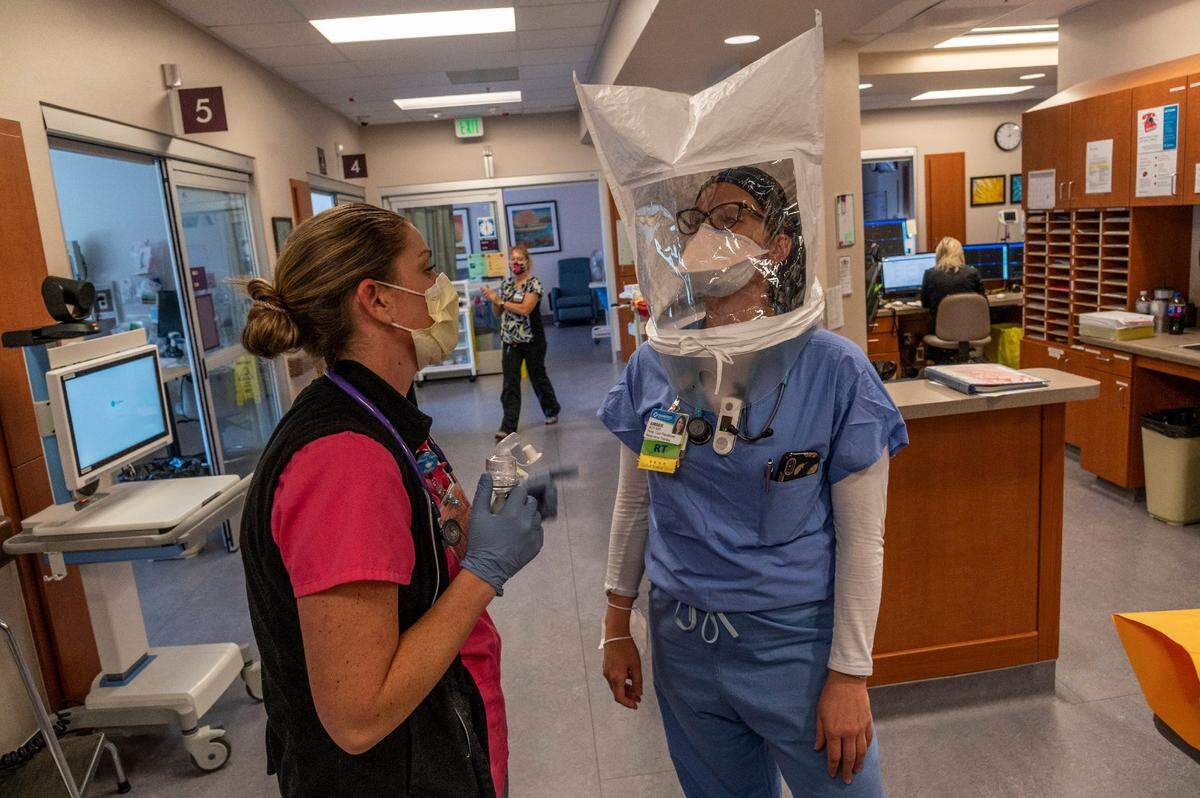
Last week, before entering one of the COVID-19 rooms, respiratory therapist Amber Marshall put on a N95 mask, then donned a tent-like testing hood over her head and shoulders so that nurse Natasha Benedet could spray aerosol with an aroma into the hood. That way, Marshall could determine whether her N95 mask was filtering properly, by sniffing for the aroma.
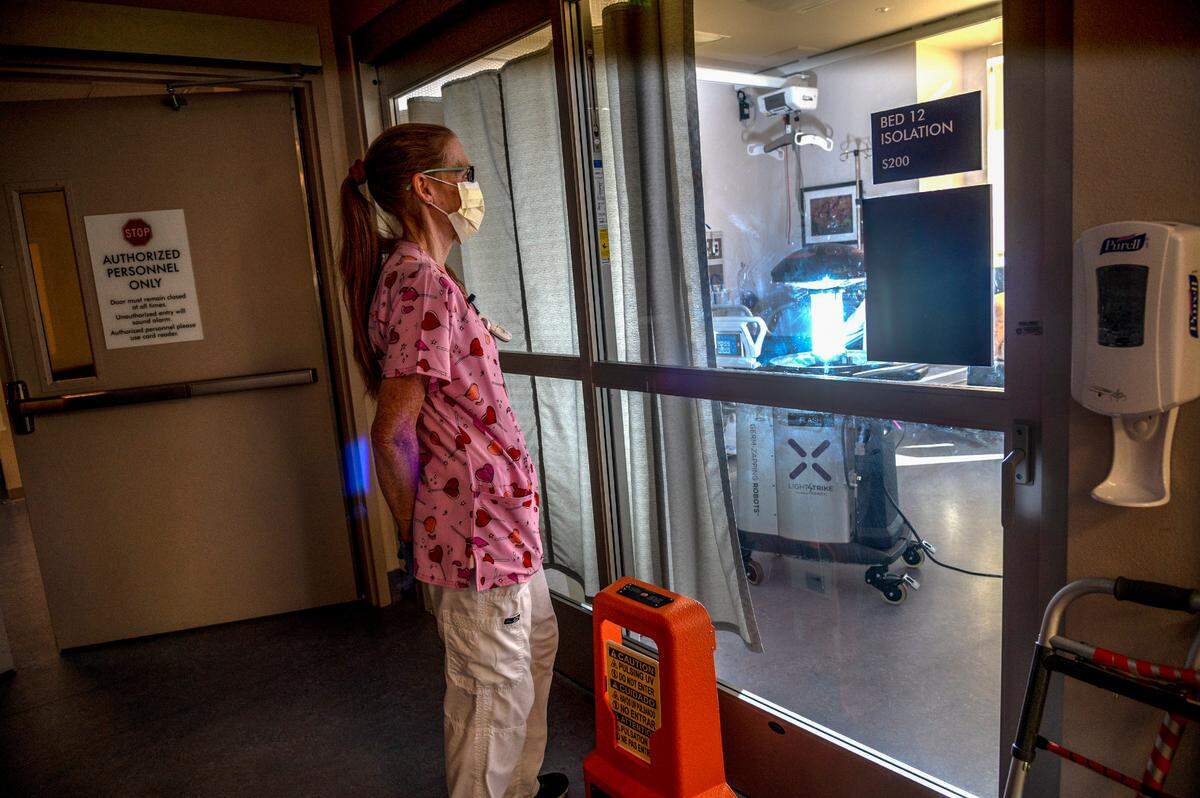
When a patient is discharged from ICU, a robot they call “The Flash” is sent into the room for a sci-fi-like task: The $92,000-plus robot, which looks like R2D2 of the Stars Wars movies - and has lettering calling it a COVID killer - lifts its mushroom-shaped head on a rotating pedestal and flashes blue UV light for 20 minutes around the room, killing the virus in nooks and crannies.
“It ends up frying all the bacteria and viruses,” said Jim Waddington, hospital nursing director. “It destroys its DNA or RNA so it can’t reproduce.”
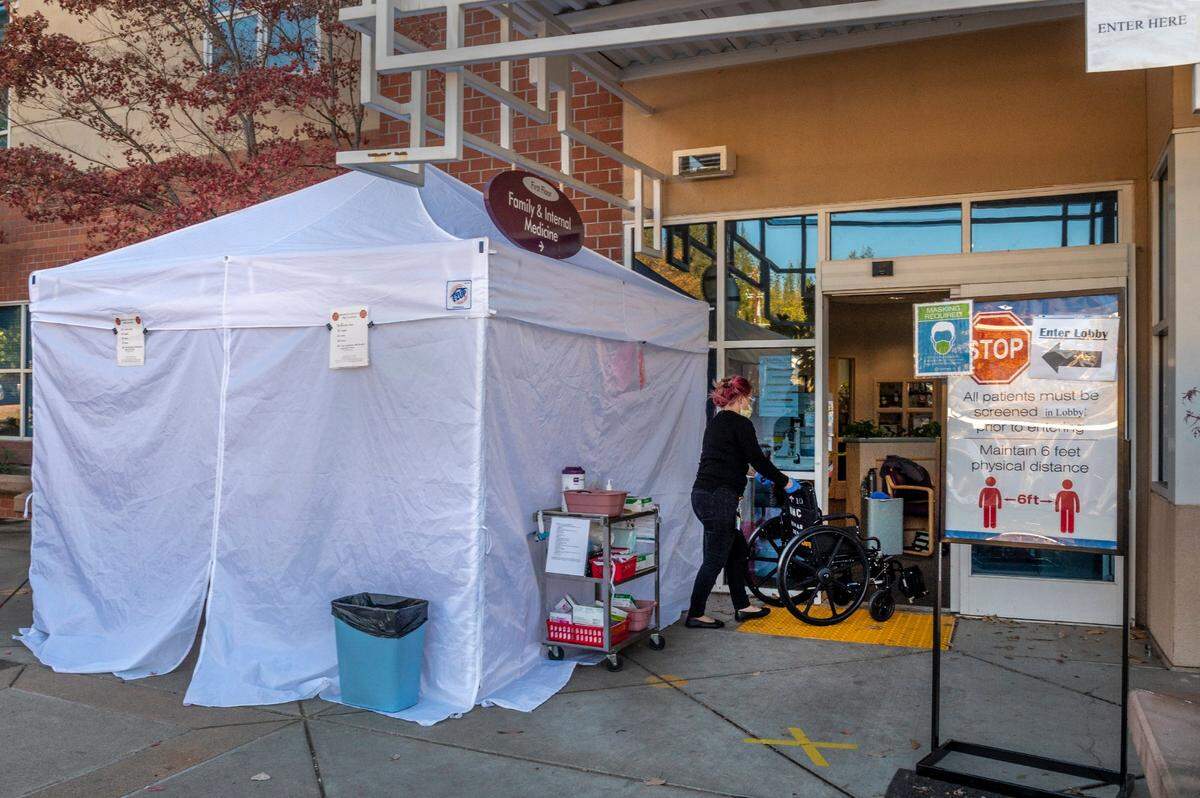
Not everyone can just walk into the hospital or its clinics anymore.
One of the hospital’s clinics has a small, square white tent out front with a zipper flap where COVID-19 patients can be seen by doctors without entering the clinics.
“It’s not glamorous or warm, but it’s one of the COVID modifications we had to make,” said Jonathan Russell, chief ambulatory officer.
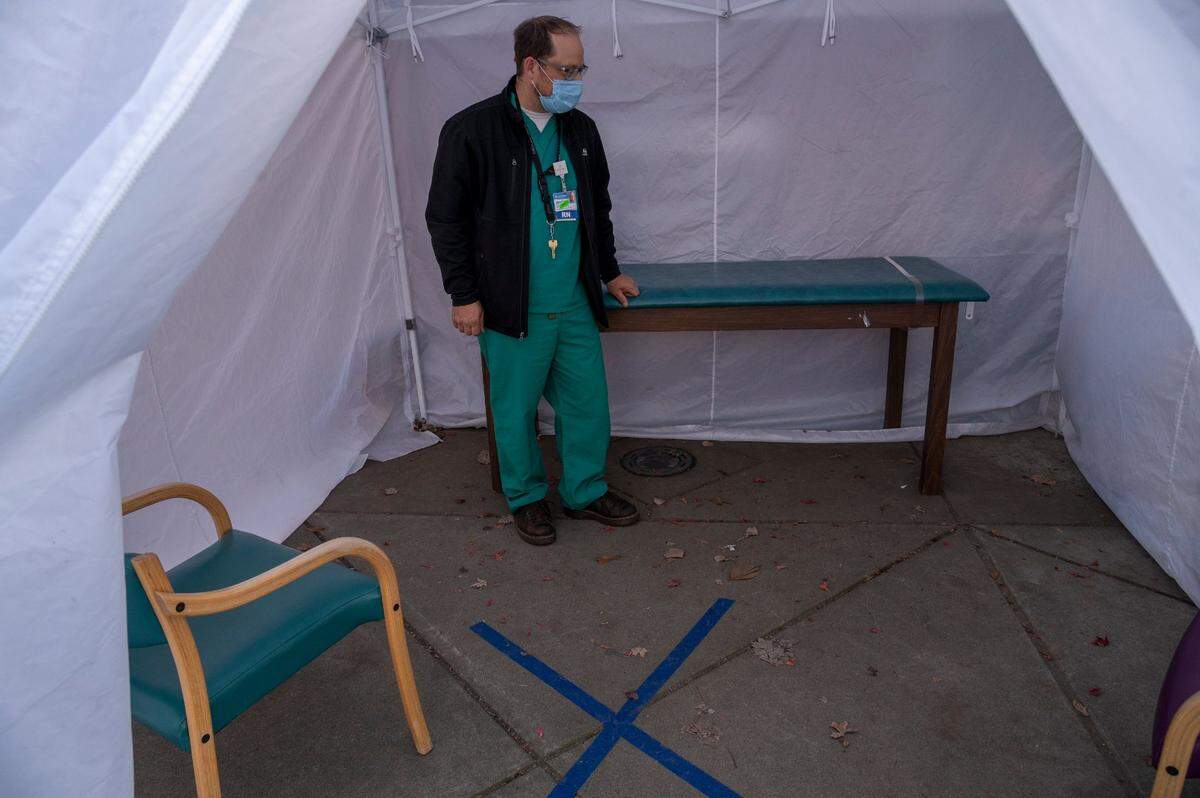
A massive surge tent with heaters is on order to be placed in the parking lot, outside the emergency room, where doctors can test and triage suspected COVID-19 patients.
Hospital busy, but not overwhelmed
The Placerville hospital is, for the moment, busy, but has capacity for more patients, Nelson said. The hospital was dealing with 10 COVID-19 patients as of late in the week. Hospitals in the four-county Sacramento area in total were treating 550 coronavirus patients.
In the face of a worsening pandemic, though, space is becoming sorely limited at Marshall and other local hospitals. Marshall has 20 ICU beds. Late last week, 10 were taken. That number fluctuates, and health leaders say they fear the number of virus patients will continue to rise, overwhelming the ICU system.
Marshall is part of a regional hospital cooperative. It could send patients to hospitals in Reno or Sacramento. But those hospitals are facing their own crowding issues. El Dorado County officials last week activated their county Emergency Operations Center as a communications coordinator in case virus numbers continue to climb.
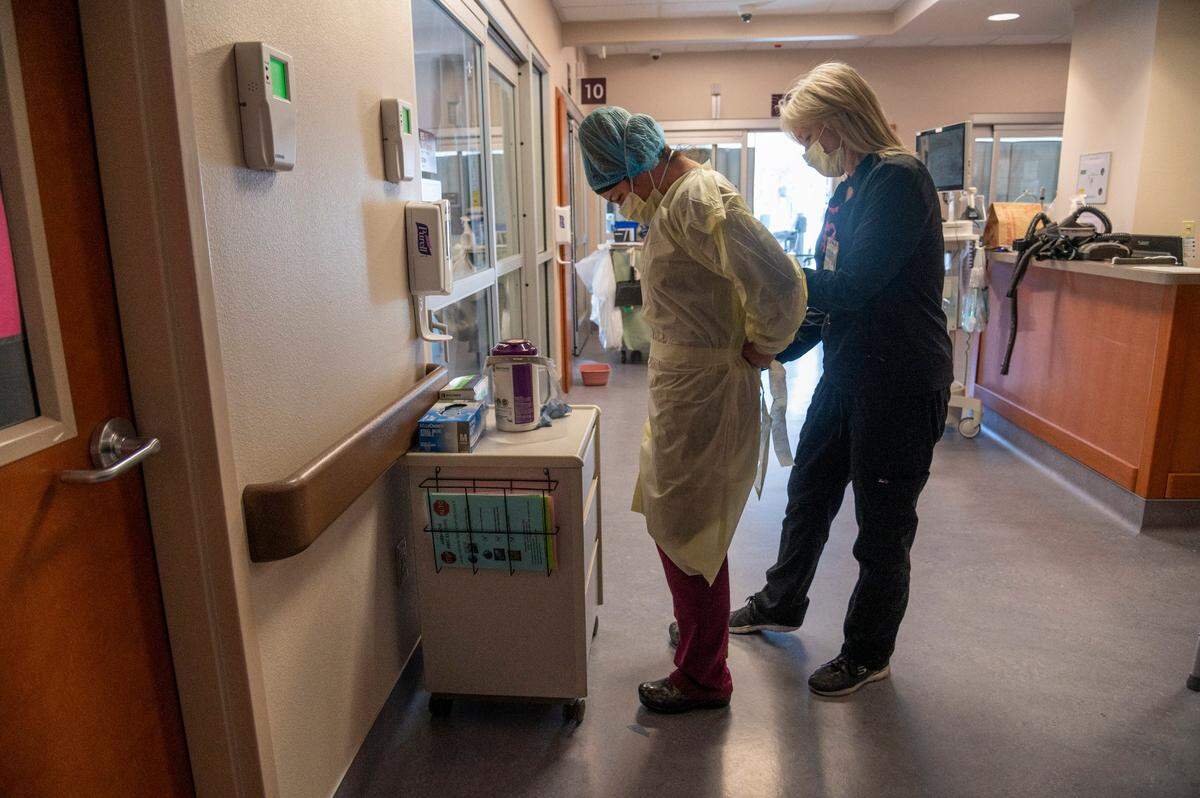
Hospital staffing may be a bigger concern than bed numbers, though. Barton Memorial in South Lake Tahoe last week called on five members of the National Guard’s Medical Strike Team, including medics, to work in their emergency department as supplemental staff.
Marshall has staffers home under quarantine due to exposure to COVID-19. Those exposures have typically taken place during their everyday lives in the community, officials said.
A lack of testing supplies is slowing the hospital’s ability to get results back quickly, a problem that has dated to the beginning days of the pandemic. That forces the hospital to burn through more personal protective equipment because patients must be approached as if they are infected until determined otherwise.
If Marshall’s ICU fills, officials say they will move some intensive care patients into the surgery department. If crowding gets worse, they have talked about assembling a temporary clinic at the county fairgrounds, three miles away, for patients with less acute illnesses.
Marshall CEO Nelson, through it all, says she is at heart an optimist. But, she said, “the next couple of months are going to be a roller coaster ride for everybody. We have to prepare for the worst.”
This story was originally published December 6, 2020 at 5:00 AM with the headline "‘A roller coaster ride.’ Inside a small town California hospital’s fight against COVID."