
Long before coronavirus, bubonic plague panicked California. A cover-up toppled the governor
A deadly medieval scourge, never before seen in North America, had arrived in San Francisco — and California was in denial.
After bubonic plague killed its first victim in San Francisco in 1900, the city’s business elite, in partnership with the governor, engineered a brazen but unsuccessful cover-up. Hundreds died before the disease was vanquished.
The outbreak panicked the nation, worsened anti-Asian sentiments in Chinatown, where the disease first surfaced, and eventually toppled the governor who abetted the cover-up. The scientist who led the effort to contain the plague is considered the father of the federal government’s preeminent medical research agency, the National Institutes of Health.
Now another dreaded disease is afoot, stoking fears and sparking debate about how best to minimize its spread. As state and federal officials wrestle with the spread of coronavirus through Northern California — a patient at UC Davis Medical Center is the first confirmed U.S. case of unknown origin — San Francisco’s bubonic plague pandemic of the early 1900s could provide a cautionary tale.

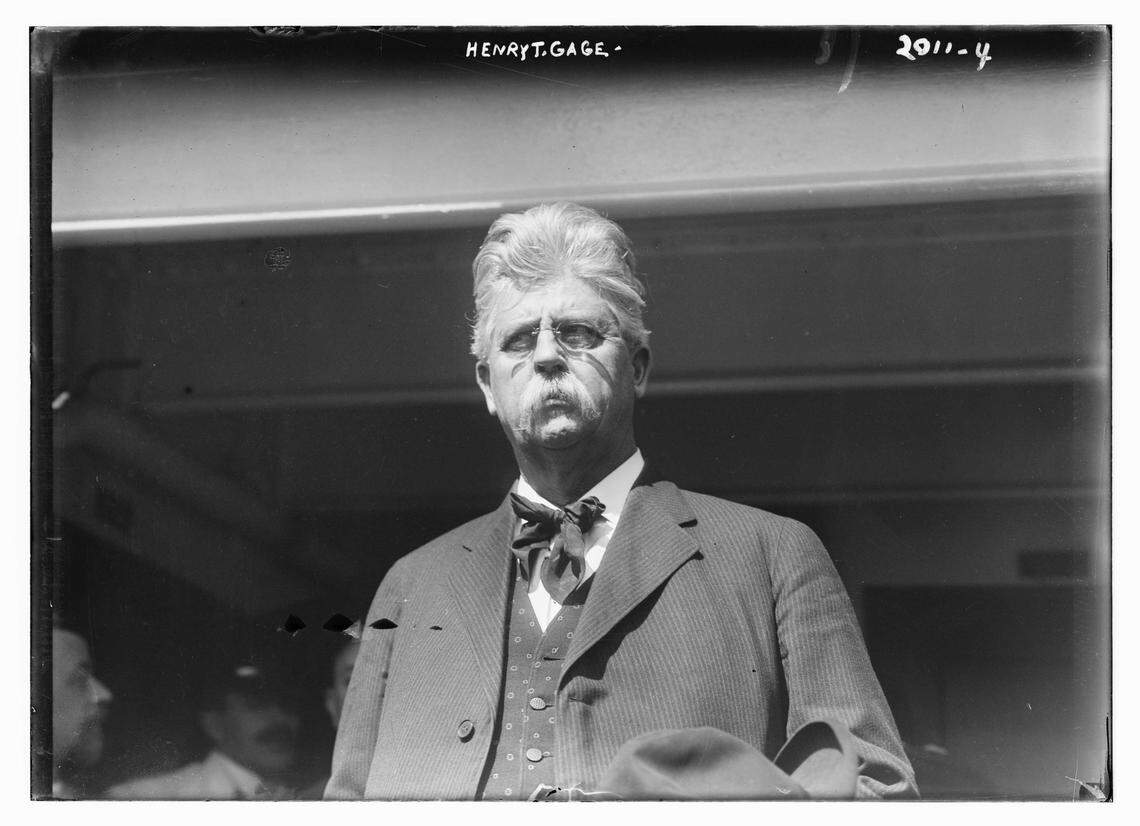
When the plague came to San Francisco, business and government leaders were afraid of undermining the city’s shipping trade with Asia. Gov. Henry Tifft Gage repeatedly tried to discredit the federal government scientist who was trying to curtail the pandemic — even accusing him of starting the crisis by planting plague bacteria on cadavers. At the same time, Gage helped suppress an independent medical report confirming that bubonic plague was present in San Francisco.
“It was pretty crazy. There was a widespread cover-up,” said Marilyn Chase, a UC Berkeley lecturer and author of “The Barbary Plague: The Black Death in Victorian San Francisco.”
In its official history of the case, the National Institutes of Health called it “one of the most infamous chapters in U.S. public health history.”

More than a century later, the spread of the coronavirus has sent political leaders scrambling, in the United States and overseas. In China, where the virus originated, President Xi Jinping has been roundly criticized for trying to suppress information about the dangerous virus and the disease it causes, COVID-19.
Political opponents and some medical experts have blasted President Donald Trump’s handling of the coronavirus problem, saying he has repeatedly tried to downplay the potential danger. Even as Trump announced Wednesday the government was stepping up its response, the president contradicted federal medical experts about the inevitability of the virus’ spread and said, “This will end.”
California officials have complained that the federal Centers for Disease Control and Prevention had been slow to put proper testing protocols into place for the coronavirus. The patient admitted to UC Davis Medical Center languished in the hospital for several days before the CDC agreed to test her for the coronavirus.
“Testing protocols have been a point of frustration for many of us,” Gov. Gavin Newsom said Thursday.
For historians, it’s not surprising that political leaders struggle to come to grips with the enormity of a global public health problem. They don’t want to shut down commerce. They have a legitimate interest in not causing unnecessary panic. The balancing act can be difficult.
“These are all classic issues that arise any time there’s an international outbreak,” Chase said.
But she added that attempting to silence the story will always fail.
“History tells us that politically motivated and economically motivated cover-ups ... at the expense of people tend to backfire,” she said.
Dr. David Morens, a senior scientific advisor at the National Institutes of Health and co-author of the NIH history of the San Francisco case, said: “One lesson is about the importance of transparency and being upfront, and letting the science speak .... It’s important not to muzzle the scientists.”
Morens said he believes the public is getting the correct facts about the coronavirus. “Up til now, the true information has gotten out,” he said.
Plague arrives in San Francisco
Joseph Kinyoun was the son of a Confederate soldier from Missouri. He became a microbiologist and was working in New York for the Marine-Health Service, a federal agency that tended to the medical needs of sailors. Kinyoun was founder of the Hygienic Laboratory, a one-room operation used for diagnosing cholera, smallpox and other diseases. The laboratory is considered the forerunner of the National Institutes of Health.
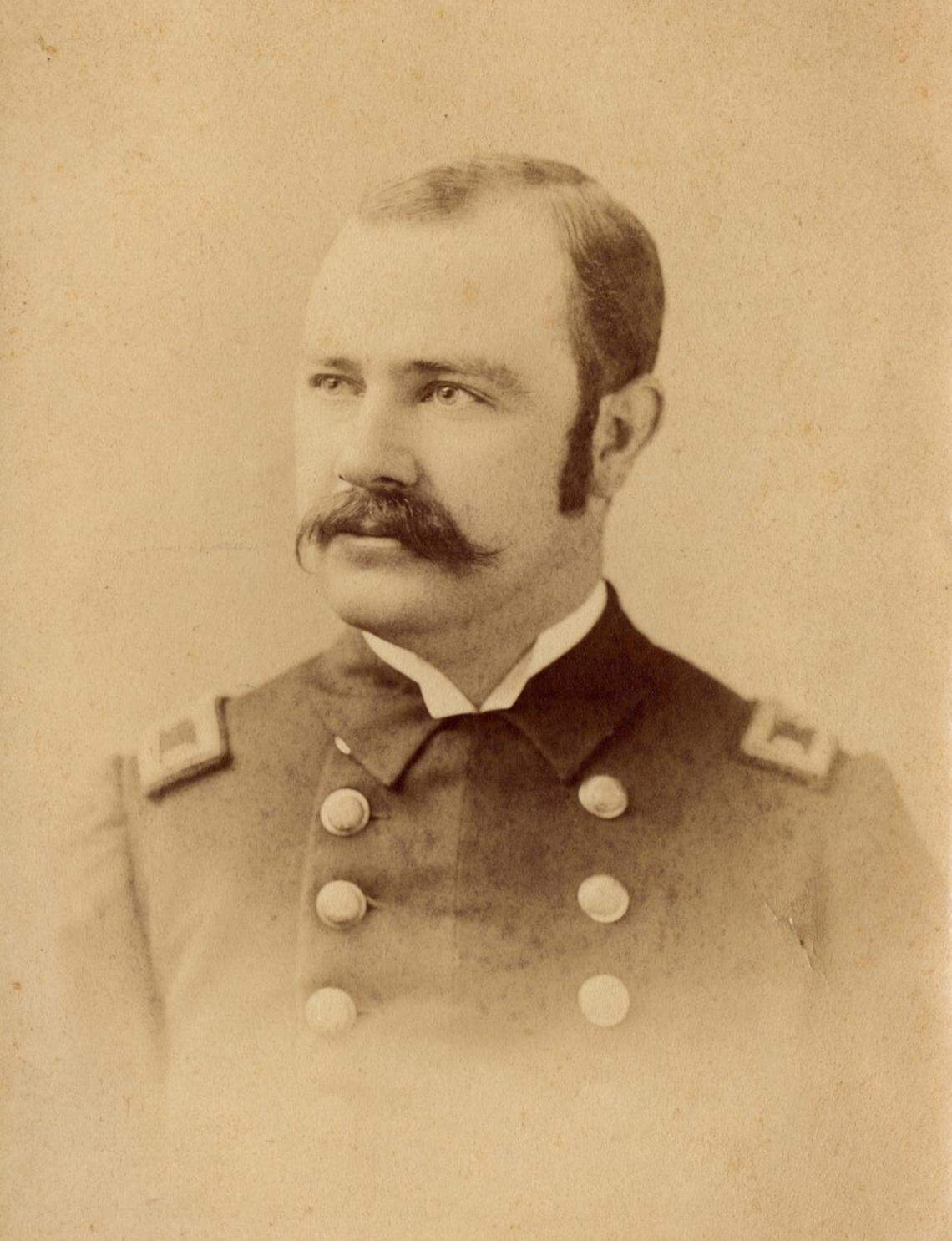
In 1899, Kinyoun got on the wrong side of his boss, Surgeon General Walter Wyman, and was exiled to a remote outpost on Angel Island in San Francisco Bay. His job was to run a quarantine station that checked ships docking in San Francisco for the plague and other infectious diseases.
Not long after he arrived, two sailors from a Japanese merchant ship were found dead in the Bay. The city’s board of health believed it was bubonic plague but Kinyoun didn’t believe it. He was right, but in making his point he alienated much of the local medical establishment, a development that would haunt him later, according to an account by David K. Randall, author of the book “Black Death at the Golden Gate.”
Ironically, 1900 was the Year of the Rat in Chinese culture. Bubonic plague, carried by fleas that feed on infected rats, was on scientists’ minds everywhere. The plague had killed millions in Europe, Asia and Africa in the 14th century and one-fifth of London’s population in the 1600s — and was making its way through Asia again as the 19th century drew to a close.
Within months of dispensing of the case of the two sailors, Kinyoun realized the plague was coming to San Francisco, for real. Bulletins from Hawaii reported that the plague was spreading through Honolulu. Given San Francisco’s prominence as a port, it was only a matter of time before it would appear in California.
The first confirmed case, a Chinese immigrant named Wong Chut King, died in March 1900. Kinyoun began quarantining boats arriving from Hawaii, Australia, Hong Kong and Japan. City officials quarantined Chinatown itself, a decision affecting thousands of residents.

“People in Chinatown were scapegoated to a terrible degree,” Chase said. “Racism and a very racialized quarantine were very much a part of it.” It didn’t help that Kinyoun had a lousy bedside manner who treated patients more like specimens than people.
“People in Chinatown called him the wolf doctor,” Chase said.
As panic spread and more people died — including white people not living in Chinatown — state officials tried put a lid on the story. State officials refused to publicize an independent commission’s report that confirmed Kinyoun’s findings that bubonic plague was present.
“Governor Gage and California politicians suppressed the report,” according to the historical account by the National Institutes of Health.
Gage denied the existence of the plague in a report to the Legislature in January 1901. The governor spoke of “the false and exaggerated reports concerning the alleged existing of bubonic plague in San Francisco,” according to the current state librarian, Greg Lucas.
San Francisco’s newspapers were in on the cover-up, publishing stories that downplayed the threat. “Danger of Plague has Passed and Vigilance will Insure Complete Safety to the City,” the now-defunct San Francisco Call proclaimed on June 1, 1900.
A governor driven from office
Eventually, though, news of the plague got out via a medical journal and, according to Morens, reporting by The Sacramento Bee. State officials allowed the federal government to take charge of controlling the plague on one condition — that Kinyoun be removed from his job. The scientist left the city in July 1901 for Asia, where he continued investigating epidemics.
“He was a good guy who was thrown under the bus,” Morens said.
Over the next few years, the plague gradually eased off in San Francisco, only to resurface a year after the 1906 earthquake. Chase said a total of 280 cases were recorded between 1900 and 1910, with 172 people dying. The disease continued spreading, killing as many as 40 people during an outbreak in Los Angeles in 1924.
That was the same year Henry Gage died. By that time he was living in Los Angeles and was long removed from the governor’s office.
His mishandling of San Francisco’s plague doomed his political career. Lucas said the Southern Pacific railroad barons who had backed Gage had become embarrassed by the governor’s repeated attempts to squelch reports of the plague.
“It got to a point where everybody knew he was lying,” Lucas said. The railroad executives “were losing the PR battle.” At the 1902 state Republican convention, they pulled their support for Gage, ending his time as governor after a single term. The railroad executives backed George Pardee.
Pardee served one term as governor and then returned to his old job. He was a doctor.
This story was originally published March 1, 2020 at 4:20 AM with the headline "Long before coronavirus, bubonic plague panicked California. A cover-up toppled the governor."