
Hunting meshes surprisingly well with California’s progressive values. And now it’s fading away
I stood over the deer as it took its last breath. There were tears in my eyes.
It had been at least a decade since I’d killed a California deer. The last time I did, my grandfather was with me. He died in 2016 at age 80. Ever since, I’d carried around his hunting knife in my gear. I was waiting to use it on the next buck I’d killed.
But before I put blood on grandpa’s knife that frosty morning in October, I pulled out of my backpack an orange piece of state-issued paperwork. A “deer tag.” Through tears, I filled it out and tied it to the four-point buck’s antlers.
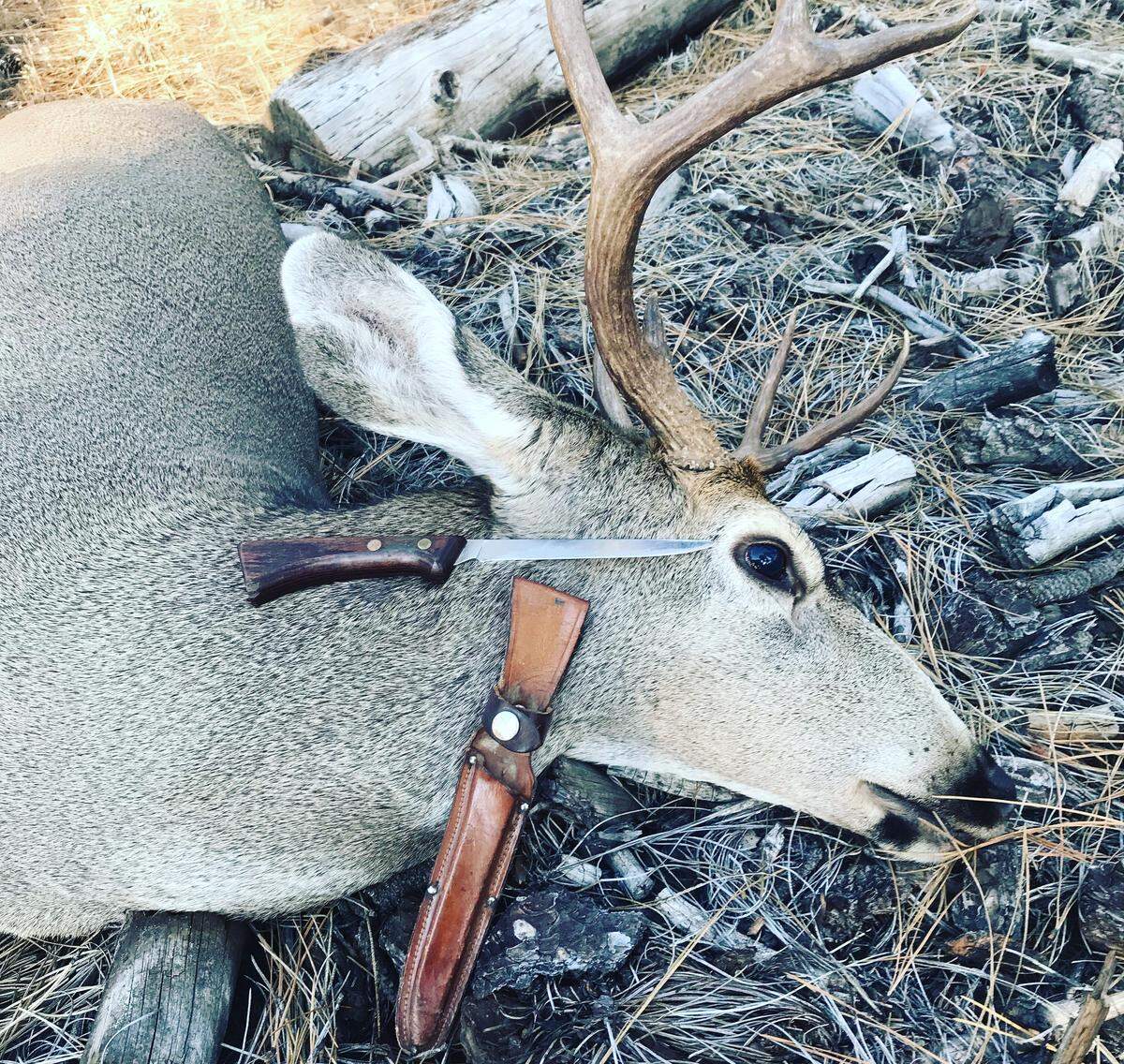
In its own way, that act of filling out my hunting permit was profound. It linked me to my past and with it to an American tradition that’s in danger of fading quietly away.
The growth of cities and changing attitudes about the outdoors and animal rights have caused the “sport” of hunting to dwindle across the country. We know from hunting regulators all over the U.S. that the demand for hunting licenses has fallen dramatically.
This has a paradoxical impact on wildlife in California and elsewhere. State agencies in all 50 states collect hunting revenues that pay for habitat programs protecting not just hunted animals like deer and ducks but also endangered species.
In California, around a quarter of the Department of Fish and Wildlife’s budget is paid through hunting and fishing licenses and taxes on hunters’ firearms and gear. California’s 235,000 licensed hunters play an outsized and critical role in supporting habitat and wildlife that our 38 million fellow Californians enjoy. And their numbers are falling dramatically. There were nearly 700,000 hunters in 1970 when there were almost half as many state residents.
It’s why I don’t wince (too much) when I spend more than $500 each year on the various hunting licenses, permits and application fees to hunt on my favorite public lands in California, which has by far the most expensive hunting-license system in the country.
I know my money is going to something important and noble — something uniquely American.
And for you Californians who may look at hunting with horror, you might be surprised how much the system we have in place meshes with your progressive values. Hunting is an intensive science funded by consumers. Hunting is a highly regulated system built to ensure sustainability. Hunting is meals of healthy, natural food. Hunting is habitat protected in perpetuity.
America’s hunting values
California can draw a direct line to the ideals of Teddy Roosevelt, an avid hunter who killed 512 animals with his son on a single African safari and who would spend weeks away from the White House in the American frontier on hunting trips. He is the grandfather of our national system of public lands and of the philosophical belief system that guides every state and federal wildlife agency today.
Every fall, I say a silent “thank you” to Roosevelt when I hunt ducks and geese on the Lower Klamath National Wildlife Refuge in Siskiyou County, where I grew up. Roosevelt established it in 1908 as the nation’s first federal refuge for waterfowl — one of the vast tracts of public lands he helped set aside for the benefit of future generations.
“I should much regret to see grow up in this country a system of large private game-preserves kept for the enjoyment of the very rich,” Roosevelt wrote back in 1893. “One of the chief attractions of the life of the wilderness is its rugged and stalwart democracy; there every man stands for what he actually is and can show himself to be.”
Roosevelt’s “stalwart democracy” is the cornerstone of what’s now known as the North American Model of Wildlife Conservation, a set of seven principles guiding wildlife agencies. Chief among them: a democratic and highly regulated hunting process that anyone — rich or poor — can enjoy.
We all own our state’s wildlife under what’s known as the public trust. In order to hunt, you need to buy a permit like my deer tag to take one of those animals from that trust.
It doesn’t matter if you own the land the buck is standing on or not. You’re facing misdemeanor poaching charges if a game warden catches you killing it outside of a short hunting season or if you violate any of the other hunting rules in a book of regulations about as complex as a state vehicle code.
The North American model also bans the sorts of market hunting that has time and again devastated wildlife populations across the globe.
By the time Roosevelt became president, commercial hunting helped wipe out the sky-darkening flocks of passenger pigeons on the East Coast and nearly did the same to the American bison, which were once so numerous early white explorers of the Great Plains described herds so large they took days to pass.
Killing a few to save many
A wildlife-management system based so heavily around hunters paying the government fees to kill animals isn’t one that our urbanized society would create today. But it’s the one we have.
And I’m proud to play a part in it. I know strict hunting regulations and scientific management of game populations are why no species hunted for “sport” has gone extinct from overhunting in the U.S. since hunting regulations were implemented early last century. If anything, the opposite has occurred.
If it wasn’t for hunters’ license fees, there’d almost certainly be no bighorn sheep or elk left in California. Hunter-supported programs brought those animals back after unregulated subsistence hunting, unchecked agriculture and unabated development decimated them after the Gold Rush.
Meanwhile, more than 90 percent of the state’s wetlands have been drained and paved or tilled over by cities and farms. Before it was developed, much of California’s Central Valley, from Bakersfield to Red Bluff, was seasonal marshland used by millions of migrating birds and other wildlife, like pronghorn antelope and tule elk.
Now almost all of those “natural” tule-filled wetlands left in the state are intensively managed public wildlife refuges funded and used by duck hunters like Roosevelt’s Lower Klamath or the Yolo Bypass Wildlife Area on the outskirts of Sacramento. The others are private duck clubs paid for by hunters’ membership dues.
In exchange for us hunters killing a few ducks and geese on those managed lands each year, endangered and threatened wetland species like the tri-colored blackbird and the giant garter snake have a safe, permanent place to live between California’s freeways, crops, subdivisions and strip malls.
Keeping the tradition alive
It was on one such precious piece of public wetland — Gray Lodge Wildlife Area north of Sacramento — that my buddy, Eric, and I took my 14-year-old nephew, Tanner, on a recent weekend. We were passing along a tradition that’s such a meaningful and important part of our lives to the next generation of hunters — the same thing my grandfather and father did for me when I was a boy.
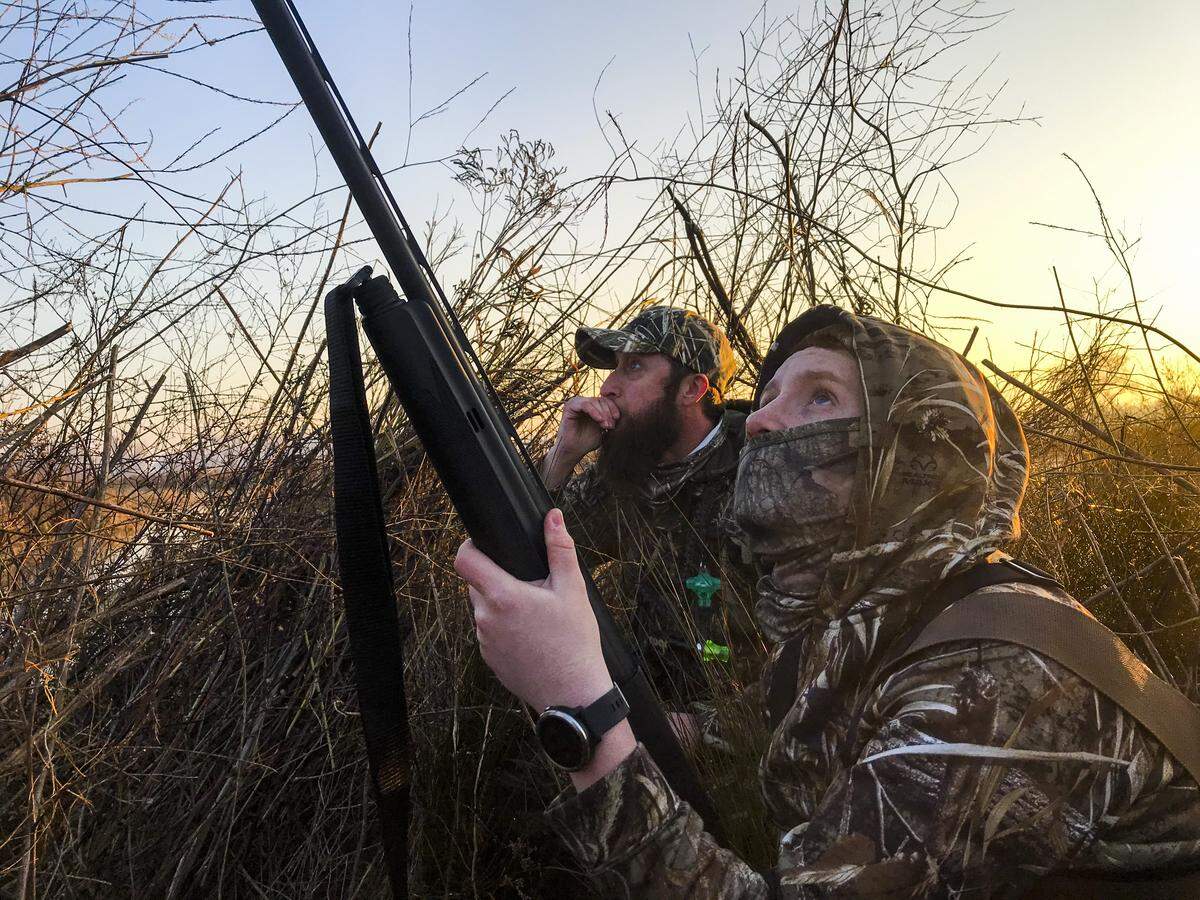
With a series of squeaks and clucks from his plastic goose call, Eric called down two white-fronted geese into close shotgun range directly over the handmade blind we’d built between the tules.
“Shoot ’em, Tanner!” Shoot!” I said in a frantic voice that did little to encourage the hyped-up kid to take his time and actually aim. We were jazzed for a reason. White-fronts are arguably the tastiest of all of California’s waterfowl. They’re so good hunters call them the “ribeye of the sky.”
Tanner slapped my 20 gauge to his shoulder and, without even looking down the barrel, fired three rapid shots in the general direction of the geese. That night’s dinner flew away unscathed in the direction of the rising sun.
It was maddening. It was hilarious. It was a memory Tanner, Eric and I will never forget.
And that’s precisely the point of the junior waterfowl hunting weekend in the Central Valley. Bringing kids into the field is one way the state is trying to keep its flagging hunting tradition alive.
For one weekend a year, state wildlife officials hold a two-day duck and goose hunting season exclusively for kids under 17. Kids who’ve passed a state hunters’ safety and education course, carry a license and have an adult chaperon can hunt public lands like Gray Lodge without competition from adult hunters.
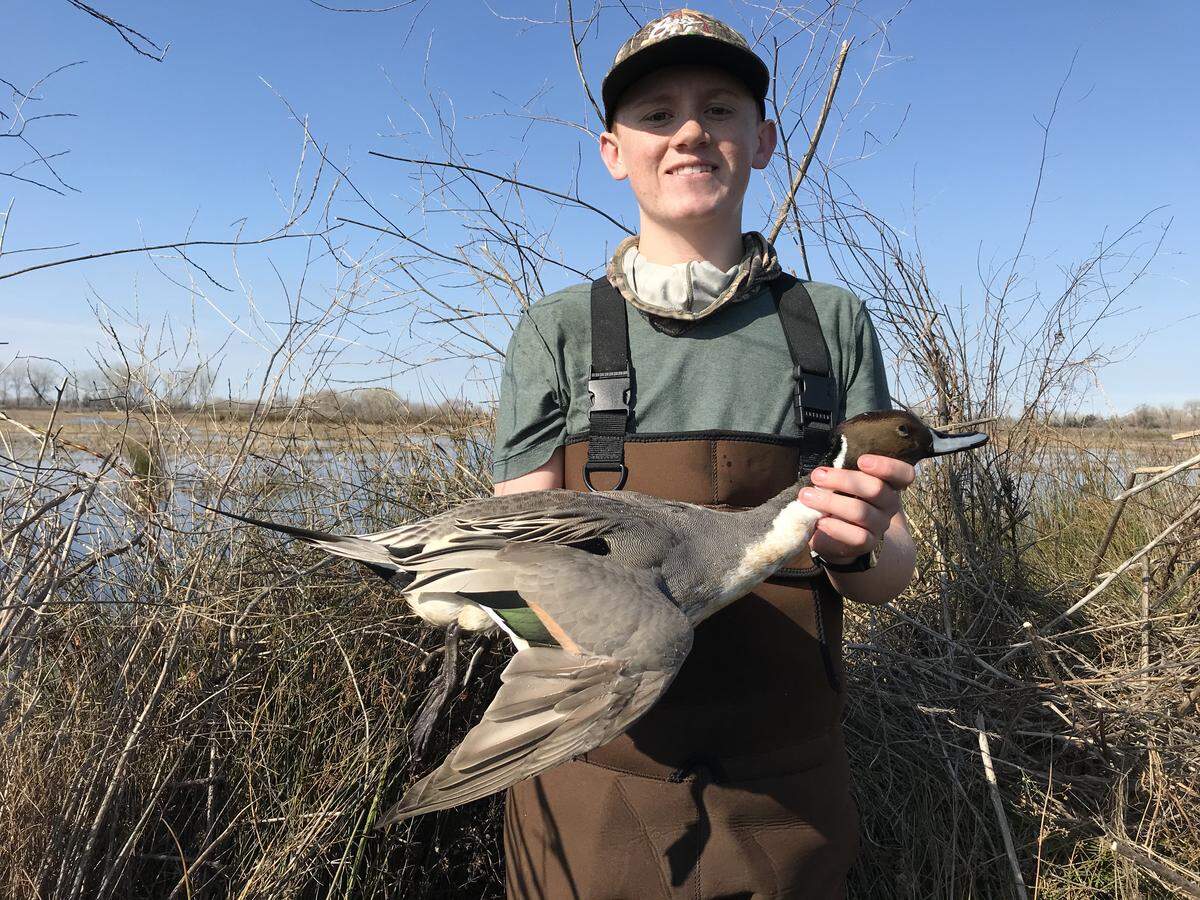
Tanner shot better when the nerves wore off. He ended up bringing six ducks home for dinner. One of them was a gorgeous pintail drake, fat from feasting on the neighboring flooded rice fields — a trophy on any hunter’s dinner plate.
There were no tears for Tanner when that morning was over. He felt nothing but elation.
But my hope is there may come a day — perhaps when I’m long gone — that he, too, is overwhelmed by that same sense of history, meaning and memory I had on that frosty October morning when I looked down at the buck I had taken from our sacred public trust.
This story was originally published February 20, 2020 at 4:42 AM with the headline "Hunting meshes surprisingly well with California’s progressive values. And now it’s fading away."