Smoke from wildfires a greater risk to kids and seniors than first thought, scientists say
As massive fires raged through California in the fall, a group of scientists gathered in San Francisco to discuss new findings about how air pollution like wildfire smoke impacts health.
Among their alerts: The risk to adults over the age of 65, as well as babies and fetuses, is higher than previously known. The likelihood of an older adult experiencing a heart attack or stroke increases soon after being exposed, while smoke exposure can harm a baby’s developing lungs and cause low birth weight for fetuses.
These health risks and more were discussed at a symposium about the health effects of fine particulate matter — tiny inhalable particles from combustion engines, wildfires, refineries and other sources — hosted by the Bay Area Air Quality Management District.
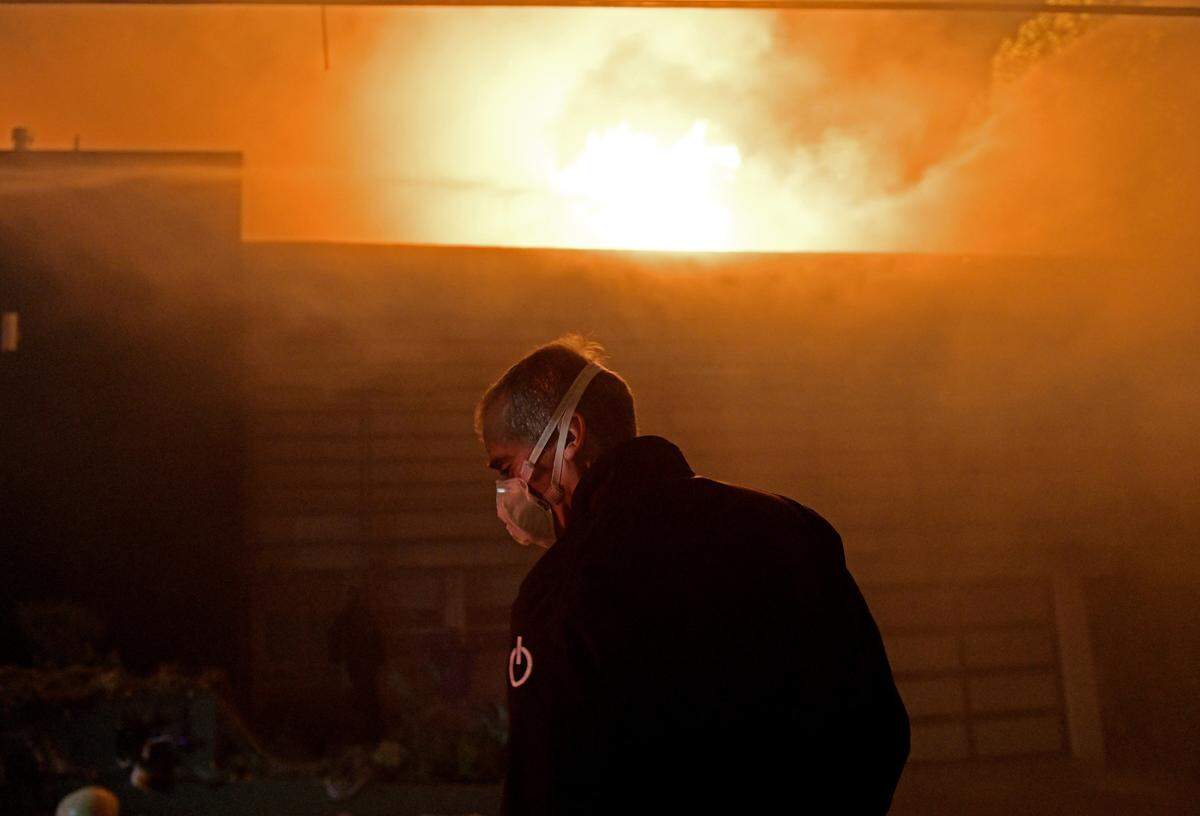
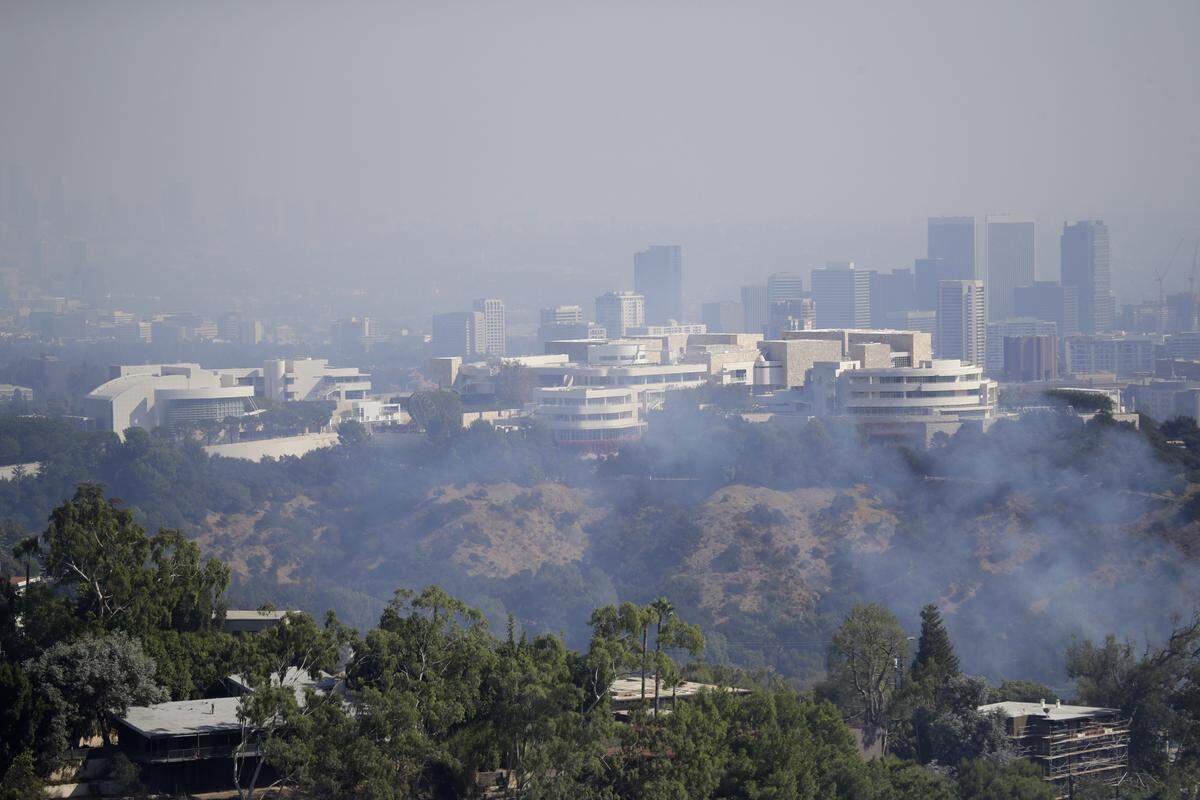
In late October, wildfire smoke from the Kincade Fire in Sonoma County, the Getty Fire in the Los Angeles area and other smaller blazes impacted air quality across California, including parts of the Bay Area, Central Coast and Los Angeles, creating unhealthy conditions for sensitive people throughout the day.
When air quality is poor, children, pregnant women, older adults and people with existing heart and lung disease should reduce exposure by staying inside and closing doors and windows.
Masks are widely considered to be unhelpful unless they are the N-95 respirator variety and properly fitted.
Health risks not taken seriously
Despite the risks, thousands of people in the worst air continued outdoor activity as usual, prompting members of the air quality district to ask whether they should do more to inform people.
“People are really unaware of the health risks of wildfire smoke,” said Severin Borenstein, a member of the BAAQMD Advisory Committee. “A high school track team should not be running when the (Air Quality Index) is over 150.”
Short-term exposure to fine particulate matter has been found to exacerbate asthma and chronic obstructive pulmonary disease, and increase hospitalization and mortality, according to Jason Sacks, a senior epidemiologist in the Center for Public Health & Environmental Assessment with the EPA.
Long-term exposure is even more concerning. It can affect lung function for adults and can alter lung development in children, resulting in lifelong effects. On top of that, scientists recently recognized a relationship between particulate matter exposure and effects on the nervous system and metabolic effects.
And the risks of major neurological disorders, such as dementia, Alzheimer’s, autism spectrum disorder and stroke, go up when people are exposed to fine particulate matter, according to one study.
Generally, people of color and low socioeconomic status have the greatest burden of particulate matter exposure and health risk, according to John Balmes, a physician and member of the California Air Resources Board.
Scientists have not identified a safe level of particulate matter exposure.
“There is no evidence of a threshold,” said Jason Sacks, a senior epidemiologist in the Center for Public Health & Environmental Assessment with the EPA.
Former EPA Administrator Gina McCarthy said that air quality and climate change are linked, and that to protect public health, we need to stop burning fossil fuels.
Sources of air pollution
Wildfire smoke is not the only source of particulate matter in California.
Dust from agricultural fields and pollution from oil refineries and other fossil fuels are among the constant sources that regularly affect large populations across the state.
“The winds that fed fires here (in Northern California), created a lot of dust in the air (in Fresno),” Balmes said. “Those dust particles have health effects, and if they carry biological material with them too, those have health effects as well.”
The warnings issued Monday echo the findings of recent research.
In 2017, a multi-city study of 60 million people found that long-term exposure to particulate matter correlates with premature mortality, even at levels below current national air quality standards.
“How severe are PM health effects? I think increased mortality is pretty severe,” said Christopher Frey, environmental engineering professor at North Carolina State University.
Find out the air quality in your community from official monitors at AirNow.gov or find crowd-sourced data from AirVisual.com.
This story was originally published October 28, 2019 at 5:33 PM with the headline "Smoke from wildfires a greater risk to kids and seniors than first thought, scientists say."