Modesto OKs affordable apartment building downtown. When will construction start?
AI-generated summary reviewed by our newsroom.
- Construction to start next month on 79 low-income apartments at Seventh and J.
- Funding package totals $68.8 million, relies on $32.3M state grant and tax credits.
- Seventh Street Village links to transit and bike network; ready by late 2027.
Construction will begin next month on 79 low-income apartments in downtown Modesto, after changes to the design and funding.
The project will have four stories of housing above a street-level garage at Seventh and J streets. It will be just a block from the Transit Center’s buses and future trains and will tie into downtown’s emerging bicycle network.
The City Council voted 6-0 on Nov. 4 for design changes to fit within the building’s $68.8 million budget. It also revised about $12.2 million in transportation elements.
The monthly rents will range from $512 to $1,895, depending on apartment size and household income. Applicants must make between 30% and 80% of Stanislaus County’s median income, which is $95,000 for a family of four.
The building will be called Seventh Street Village and could be ready by late 2027. The apartments will have one, two or three bedrooms.
The project relies heavily on state and federal subsidies, but officials hope it will spur market-rate housing nearby.
The housing shortage is keeping employers from moving to the county, said David White, chief executive officer of Opportunity Stanislaus. The apartments will be six blocks from its VOLT Institute, which trains people for manufacturing.
“They could enjoy a good quality of life and have a place to stay and have a job nearby,” White told the council. “The reason I love this project is it’s right in our downtown. It’s accessible.”
The city core has only two large apartment complexes to date, both built for seniors on 17th Street. Ralston Tower opened in 1974 and Tower Park in 2016.
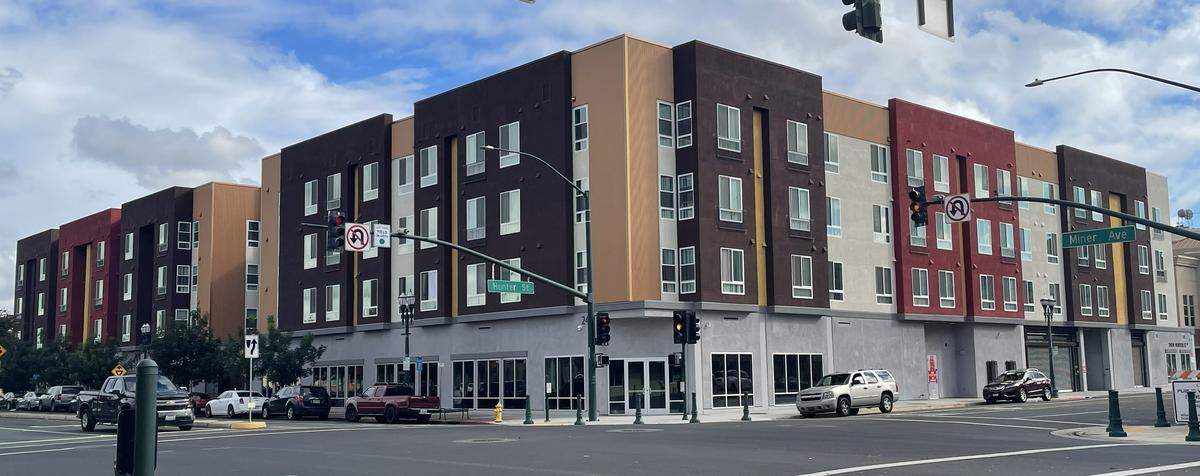
The city partnered on the new project with Visionary Home Builders of California. The Stockton-based nonprofit ran into rising costs for labor and materials, CEO Carol Ornelas told the Modesto council.
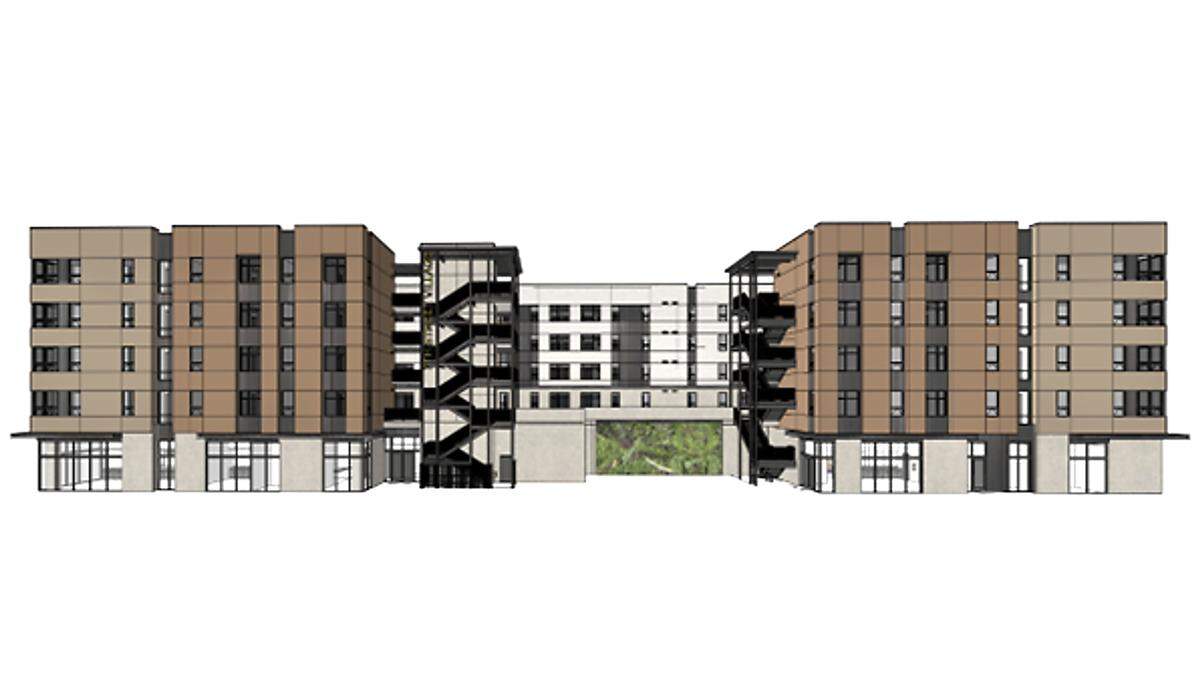
How did the partners trim construction costs?
The project had an estimated cost of $70 million when announced in 2023. The building changes just approved include:
- One floor of parking rather than two, reducing the spaces from 110 to 51. Ornelas said tenants with disabilities will be guaranteed spots. Others will rotate between garage and on-street parking.
- Two staircases rather than three. The building also will have elevators.
- Stucco rather than brick on the facades.
- A less elaborate rooftop garden and mezzanine.
- No small grocery store on the ground floor. It still will have a Head Start preschool for residents.
- No basketball court. The complex still will have two playgrounds and a teen center. And it will offer an air-conditioned space for anyone during extreme heat.
Councilmembers said they liked the fact that none of the money comes from Modesto’s general fund. This includes covering any other cost overruns.
“It’s revitalizing our downtown,” Councilmember Nick Bavaro said. “We’re going to have access to a train, bike paths.”
He was joined in the vote by Mayor Sue Zwahlen and Councilmembers Eric Alvarez, Rosa Escutia-Braaton, Chris Ricci and David Wright. Member Jeremiah Williams recused himself because he owns property near the site.
What’s coming for people on foot, bike and transit?
Seventh Street Village got $32.3 million from a state program that seeks to reduce the cost and climate impact of driving. It is called Affordable Housing and Sustainable Communities.
The Transit Center is a bus hub now and will be a stop for Altamont Corridor Express trains as soon as late 2026. The apartment project includes sidewalk upgrades near the depot.
The new building will be half a block from I Street, which will soon get bike paths in a separate project from Seventh to 17th streets. Cars will be allowed in only two of the current four lanes.
The grant funding initially called for a bike lane also on Ninth Street, between I and L streets. It would have extended the route that runs south from Briggsmore Avenue.
The city staff rethought that idea because that part of Ninth is a state highway. Any changes would require a lengthy approval process from the California Department of Transportation. The Union Pacific Railroad also must review anything near its crossings.
Grant money will instead go to smoothing the way for cyclists between the northeast corner of downtown and the Dry Creek Trail. It will involve Rue de Yoe and parts of La Loma Avenue, Burney Street, Downey Avenue and I Street. The city staff dubbed it “Bike to the Farmers Market,” which is on 16th Street.
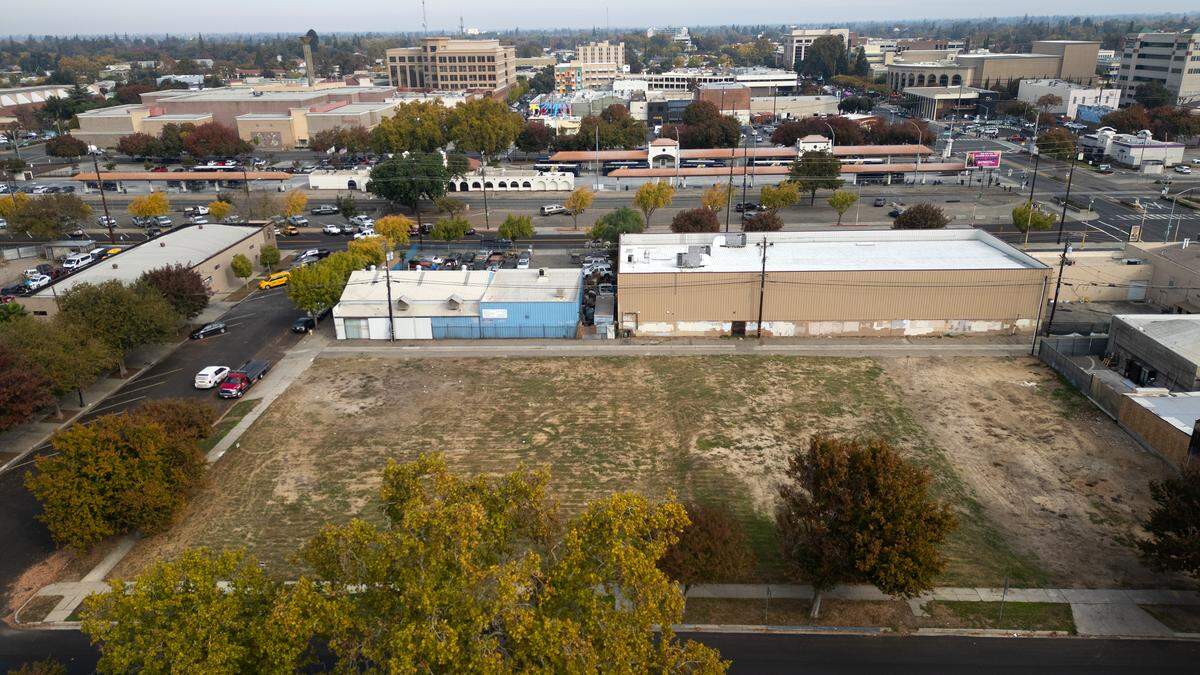
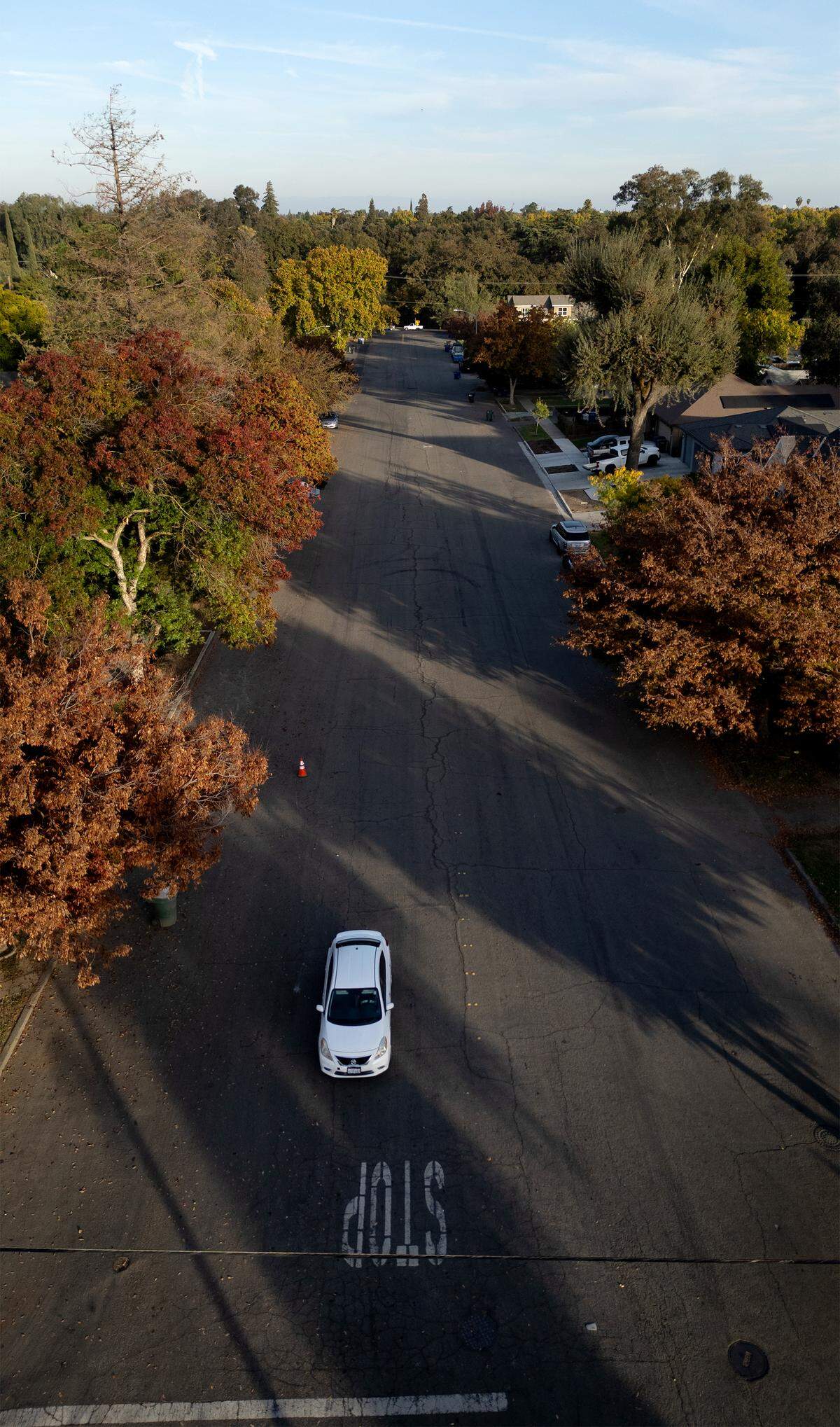
Cyclists still will face slow-going because of the maze of streets where the diagonal downtown grid meets surrounding neighborhoods. The Dry Creek Trail, on the other hand, is the opposite: four paved miles entirely separate from cars.
How is the project funded?
- The $32.3 million grant from the state climate program
- $31.2 million in federal tax credits for investors. They will pay reduced income taxes in exchange for the lower rent payments.
- $7 million in other federal housing money allotted to the city.
- $5 million from Measure L, the county sales tax for transportation
- $3.3 million from deferral of the city developer fees for five years. The levies account for demand on various city services.
- $987,500 from the Raza Development Fund, a Phoenix-based lender focusing on Latinos.
The revised project was endorsed by Brian Gini, the co-CEO of Collins Electric Co. and a former downtown resident. He said Visionary Home Builders erected a similar complex in Stockton that has boosted nearby businesses.
“There are good people that live there, solid people that live there, and people that are just looking for a space to raise their families,” Gini said.
This story was originally published November 12, 2025 at 10:28 AM.