Valley air advocates question plan to generate power with wood pellets from Tuolumne forest
Some of California’s over-dense timber could be turned into pellets that produce electricity overseas.
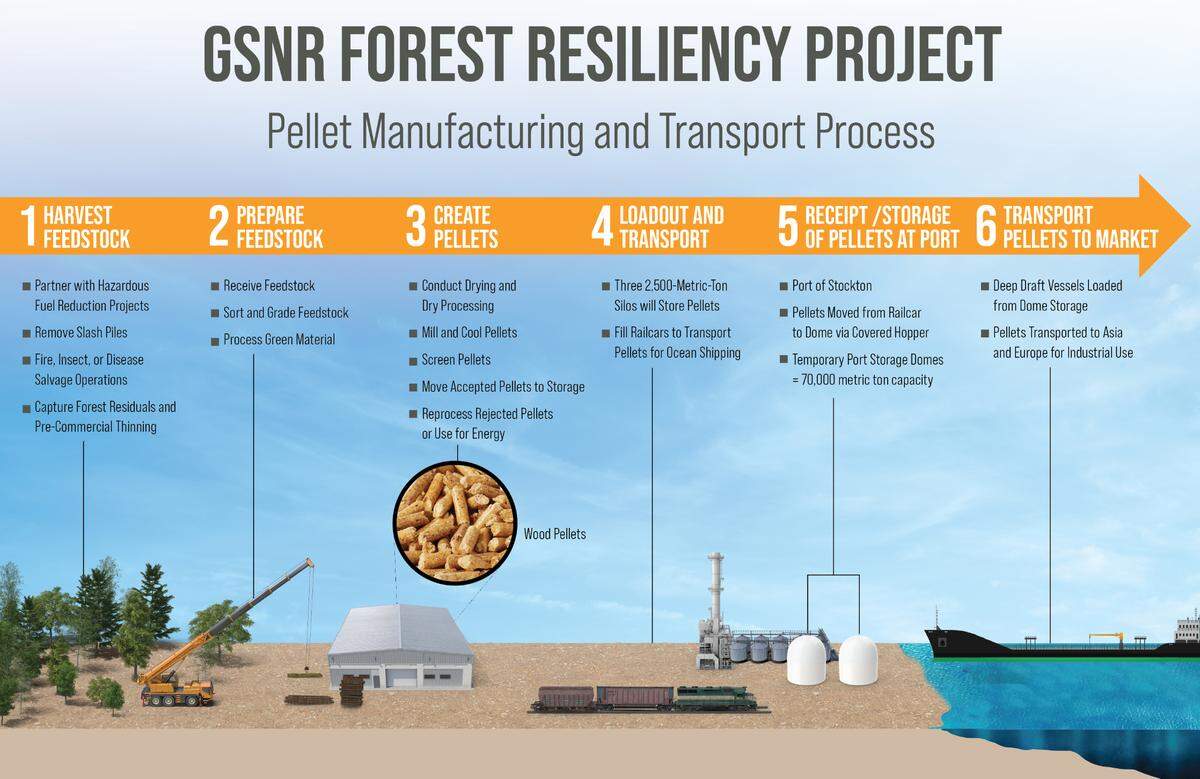
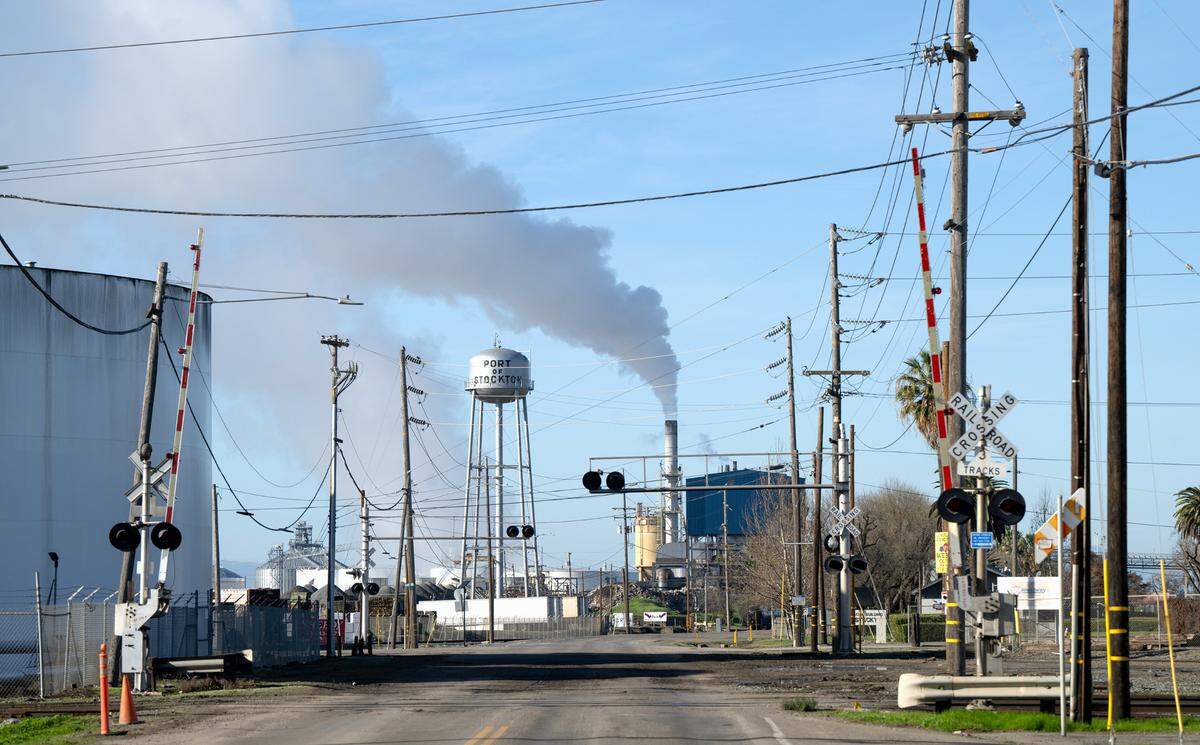
One pellet plant would be in Tuolumne County, the other in Lassen County. Each would deliver the product by rail to the Port of Stockton, where it would be loaded onto ocean freighters.
Backers say the operation would be a major step toward reducing the wildfire risk here while helping other nations shift from climate-harming coal and oil.
Critics say it would worsen the Central Valley’s air pollution and stress the forests that supply the wood. They also object to the sheer size of the project, a nearly 25% increase in the port’s current tonnage.
The venture, Golden State Natural Resources, expects to employ 55 people in Tuolumne, 60 in Lassen and eight in Stockton. The public has until Jan. 20 to comment on its draft environmental impact report. Operations could start as soon as 2027 in Lassen and 2028 in Tuolumne, if several government bodies sign off.
The Modesto Bee asked a basic question: Why not just burn the pellets in California power plants, sparing the expense and climate impact of ocean shipping?
Maybe someday, said an email from Carolyn Jhajj, communications director for the project. “Currently, the domestic fuel pellet market is too small and uncertain to sustain fuel treatments at the scale necessary to accomplish the fundamental forest treatment goals of GSNR’s proposed project,” she said.
Jhajj added that domestic use is possible in the future, including aviation and other fuels, but they “are still emerging and too speculative for our environmental review.”
GSNR estimates that using wood in place of coal overseas could reduce climate impacts by about 70%. The accounting includes emissions from manufacturing and transporting the pellets.
Rural county coalition launched project
GSNR is a nonprofit corporation formed by the Rural County Representatives of California. The group advocates for 40 counties on state and federal matters. It is pursuing the pellet project with the affiliated Golden State Financing Authority. This body already helps residents with home purchases and energy conservation.
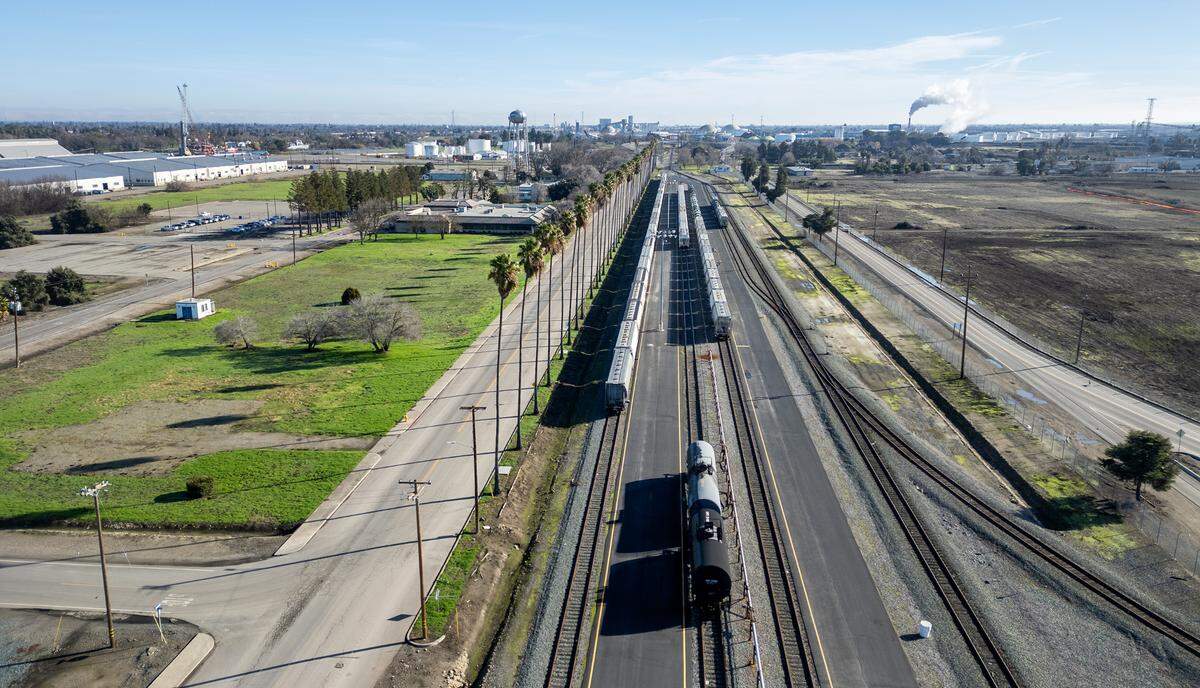
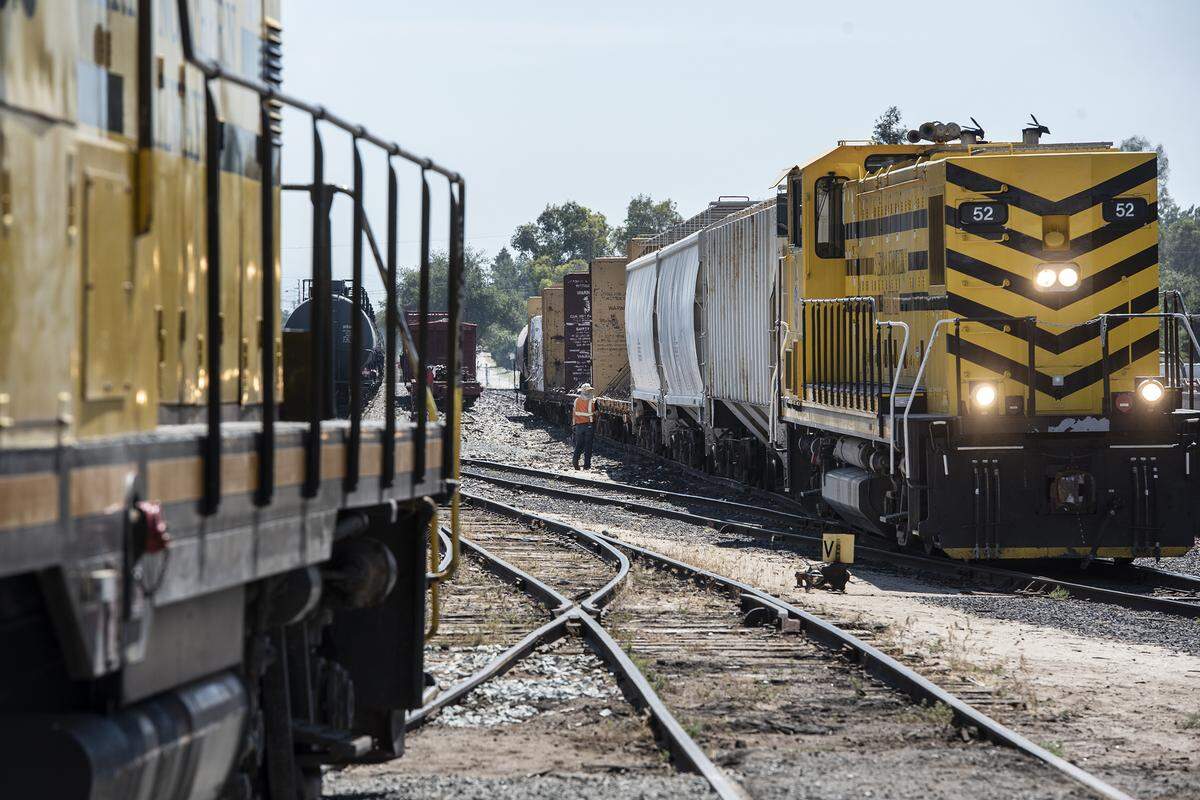
The Tuolumne plant would be just off Highway 108 at La Grange Road. It would be served by the Sierra Northern Railway, which runs between the Sonora area and Riverbank. The railcars would continue on to Stockton on the Burlington Northern Santa Fe Railway. The loaded ships would head out on the San Joaquin River toward San Francisco Bay and the Pacific Ocean. The EIR says Japan, Poland and the United Kingdom are among the possible destinations.
The project emerged amid a growing consensus that California forests have too many trees per acre. This has led to disasters such as the Rim Fire of 2013, which spread across about a quarter-million acres in Tuolumne County. More recent blazes in the Sierra Nevada and other ranges have done even more damage.
Landscape used to burn lightly
The woods got so dense in part because of a century-plus of suppressing the small fires that used to keep the fuel down. They were sparked by lightning and Indigenous people for millennia. The 1800s brought the first loggers, who mostly cut large pines, leaving the more fire-prone firs and cedars behind.
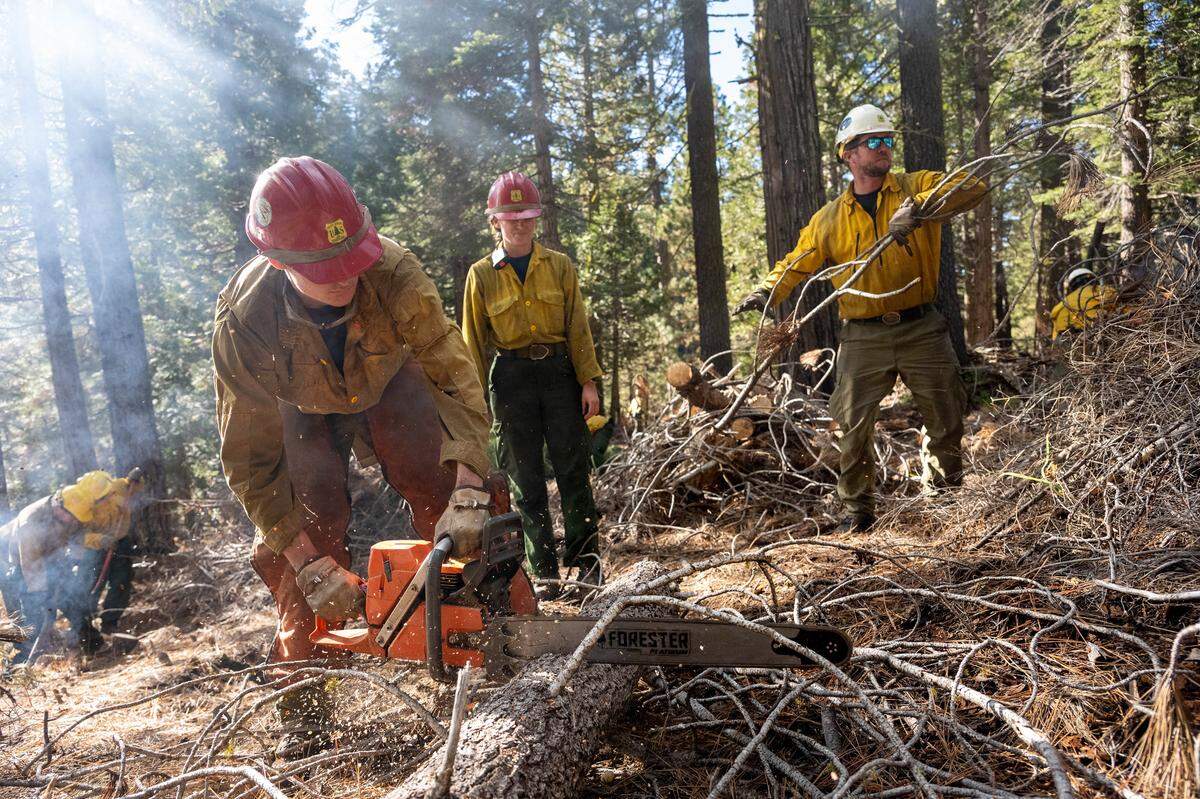
The industry has since revamped many sawmills to make use of skinnier logs, including the two in Tuolumne County. The pellet project would use even smaller trees, along with woody debris from logging and sawmills.
This material already is used on a smaller scale in Tuolumne. Wood chips produce electricity at Pacific Ultrapower off Highway 120. Right next to the project site, American Wood Fibers makes pellets for home heating and grilling, as well as shavings for animal bedding.
Finding markets for forest undergrowth allows the remaining trees to grow bigger and store more carbon. Prescribed burning helps maintain this landscape, a nod to Me-Wuk ways in the central Sierra.
The Tuolumne pellet plant would serve public and private timberland from Fresno County to the Lake Tahoe area. Trucks would deliver the raw material on dirt and paved roads that snake through the mountains.
The other plant would be along Highway 299 in the northwest corner of Lassen County. Its service area would extend from Butte and Plumas counties to southern Oregon.
GSNR plans each year to send about 7,000 railcars from the Lassen plant and about 3,000 from Tuolumne. The locomotives mostly burn diesel, although cleaner sources are part of the state’s climate goals. BNSF Railway would carry the Lassen pellets on its own tracks part of the way and on the Union Pacific Railroad on the rest.
Groups want to block ‘this nefarious project’
The Natural Resources Defense Council was among 13 groups protesting the plan in an Oct. 22 news release.
“This nefarious project,” said NRDC forest advocate Rita Vaughan Frost, “will threaten the health of south Stockton neighborhoods, pollute the environment and waste precious time and energy that California needs for legitimate wildfire prevention measures. It must be stopped.”
The NRDC is a well-known environmental group, working in numerous countries. The same goes for pellet project critics such as the Sierra Cub and the Center for Biological Diversity.
Some opposition is local. It includes Little Manila Rising, which works on behalf of Filipino-American and other south Stockton residents. Modesto-based Valley Improvement Projects also questions the project.
“We are committed to thoroughly reviewing this draft environmental impact report,” VIP policy director Matt Holmes said in the release. “Our air quality, lives and livelihoods depend on it.”
Mixed reaction from one conservation group
The plan drew a mixed response from the Central Sierra Environmental Resource Center, based in Twain Harte. It endorses logging in crowded stands as long as larger trees are spared, as well as local biomass burners such as Pacific Ultrapower.
The new project simply may be too massive, Executive Director John Buckley said in an email. It would exceed the total fuel treatments already planned in the central Sierra by the U.S. Forest Service, he said. Buckley suggests a pilot project that could scale up if it proves worthwhile.
He also said the pellet project could remove trees with trunks as wide as 30 inches. He prefers no more than 16 inches.
Buckley noted one benefit from the project: Some of the vegetation thinned from the woods is now burned on site by the Forest Service so it does not stoke extreme wildfires later. Sending it to a power plant would eliminate this local pollution source while also displacing fossil fuels overseas.
Buckley said the project would nonetheless have emissions as the wood is trucked to the pellet plants, moved by rail to the port and then shipped around the world. This “will directly conflict with California’s efforts to fight climate change and reduce fossil fuel energy use,” he said.
How many trainloads of pellets are planned?
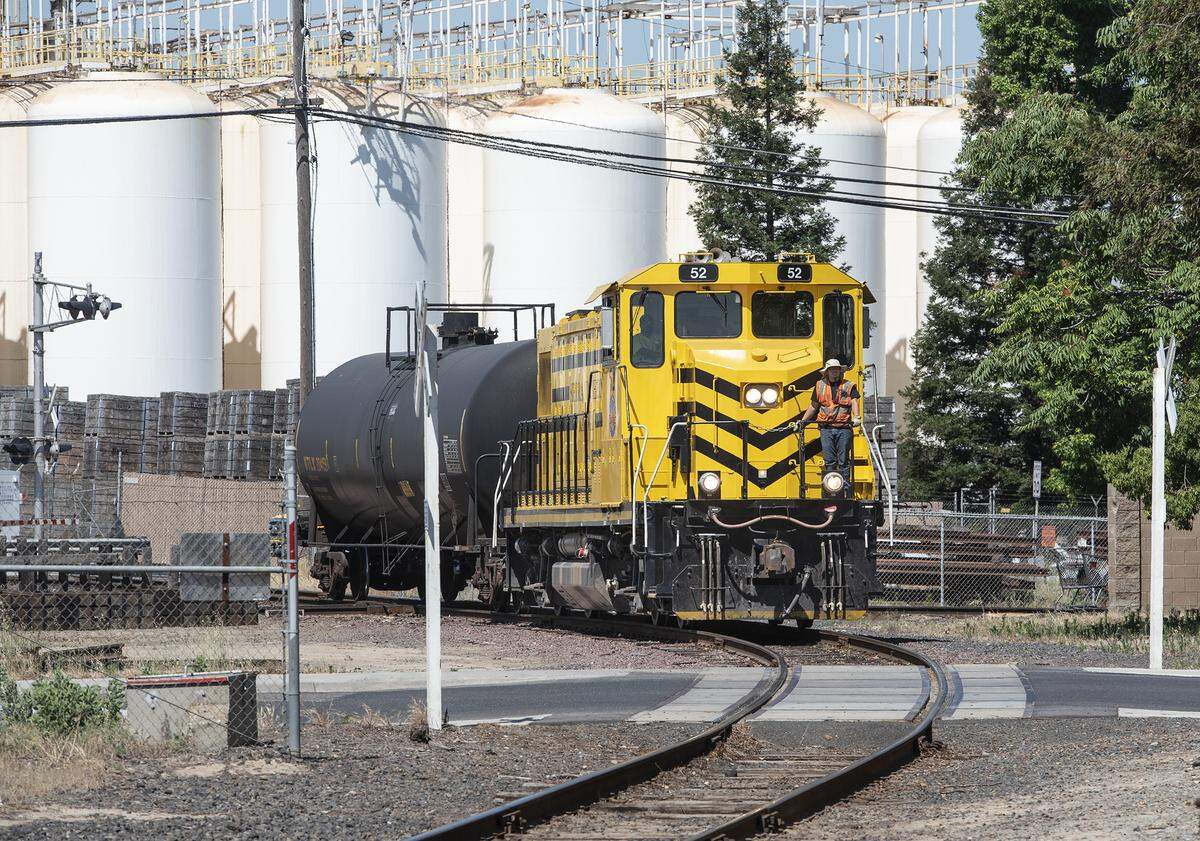
GSNR plans about 70 trainloads of pellets from Lassen County each year and 30 from Tuolumne. Each could have up to 100 cars, typical of modern railroading.
The Sierra Northern Railway already has several shorter trains a week to the Sonora area and back. The eastbound freight includes propane for home heating and turkey feed for Diestel Family Ranch. The line hauls lumber, gravel and empty propane tankers on the return trips.
The pellet trains would switch to the BNSF in Riverbank. The draft report said this stretch already has a daily average of 10 freight trains in each direction, along with six Amtrak round trips.
The pellets would add about 1 million tons to the Port of Stockton’s annual volume, which totaled about 4.3 million tons in 2023. The top products were cement, coal, renewable energy and fertilizer. A total of 288 ships from five continents paid a call. Stockton can handle deep-hulled vessels thanks to dredging of the San Joaquin River bottom a century ago.
The pellets would be shaped and sized for efficient burning. They look much like wine corks, with lengths between 0.24 and 1.57 inches.
Can pellets save the planet?
Burning carbon is the top culprit in climate change. Experts say it already has brought extreme heat and storms and could raise sea levels and disrupt agriculture in the future.
Coal is the most carbon-intensive of fuels, from mining to shipping to burning. The draft report said wood pellets would have their own emissions along the supply chain but this is more than balanced by the healthier forests in California.
The report calculated that the pellet project would add 302,916 tons of carbon to the atmosphere each year, vs. 1.05 million for coal.
The project needs land-use approvals from Tuolumne and Lassen county supervisors and an agreement with the port commission. It already has a 20-year contract with the U.S. Forest Service regarding use of public land. Other federal and state agencies will handle permits involving air, water, wildlife and other concerns.
Some critics have warned that the project could involve Drax Global, a major biomass user based in the United Kingdom. It has been criticized for clearcutting forests in the southeastern United States for use as pellets overseas.
The project addressed this on its website: “Unlike methods used in other parts of the country, GSNR’s forest management activities will be more selective, targeting overgrown areas while limiting the impact to healthy native tree stands.”
This story was originally published January 8, 2025 at 2:30 PM.