Help wanted: Modesto restaurants, retail understaffed as they struggle to hire more
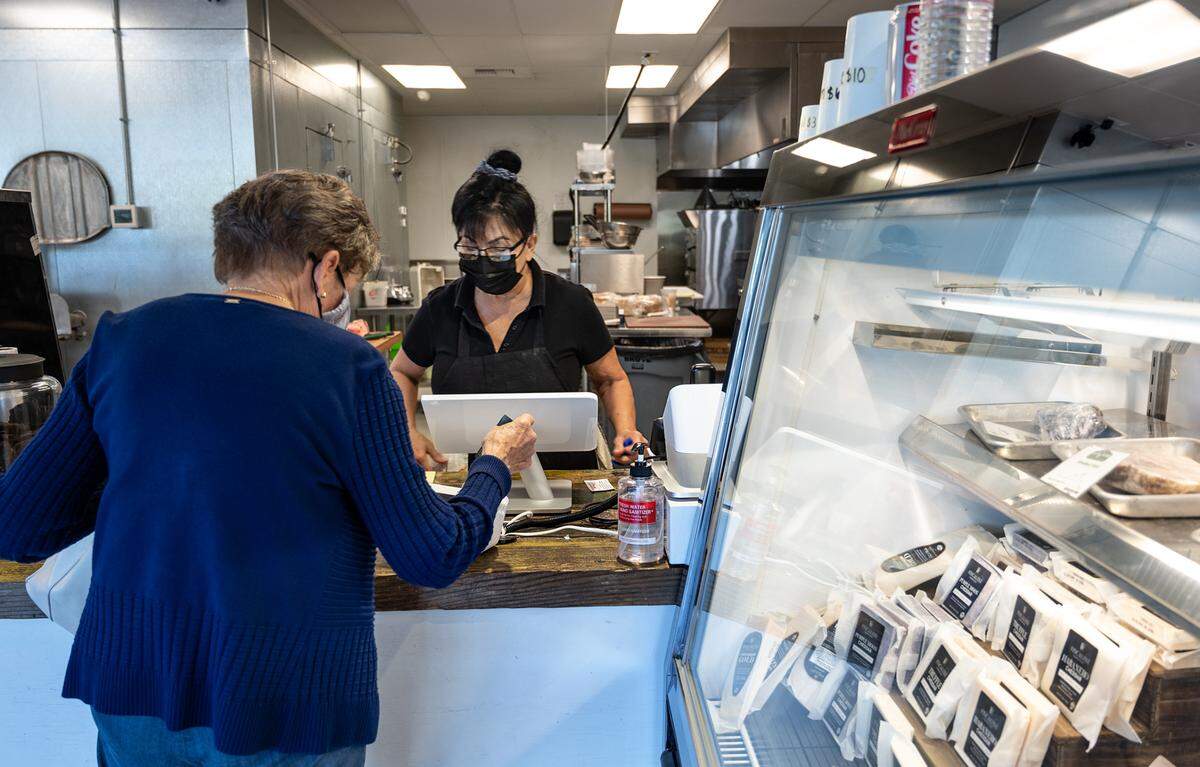
Like many local businesses, the Village Butcher grocery store and restaurant in Modesto has seen the effects of the coronavirus pandemic in phases.
First, said owner Matt Soderstrom, there were stock shortages as people hoarded groceries. So, he largely shuttered his kitchen to focus on providing the essentials. Then home cooking took over, and his choicer meats sold out. Then meal prep options took off for people tired of making dinner every night.
And the latest challenge the McHenry Village shop has faced is not unique, either: understaffing.
“(It) caught me kind of off guard,” Soderstrom said. “It seemed like we were at the light at the end of the tunnel, and there was a lot of reason for optimism. Businesses were opening and our employees and our customers were getting vaccinated. So then to have one more hiccup, or one more speed bump come this late in the game was kind of surprising.”
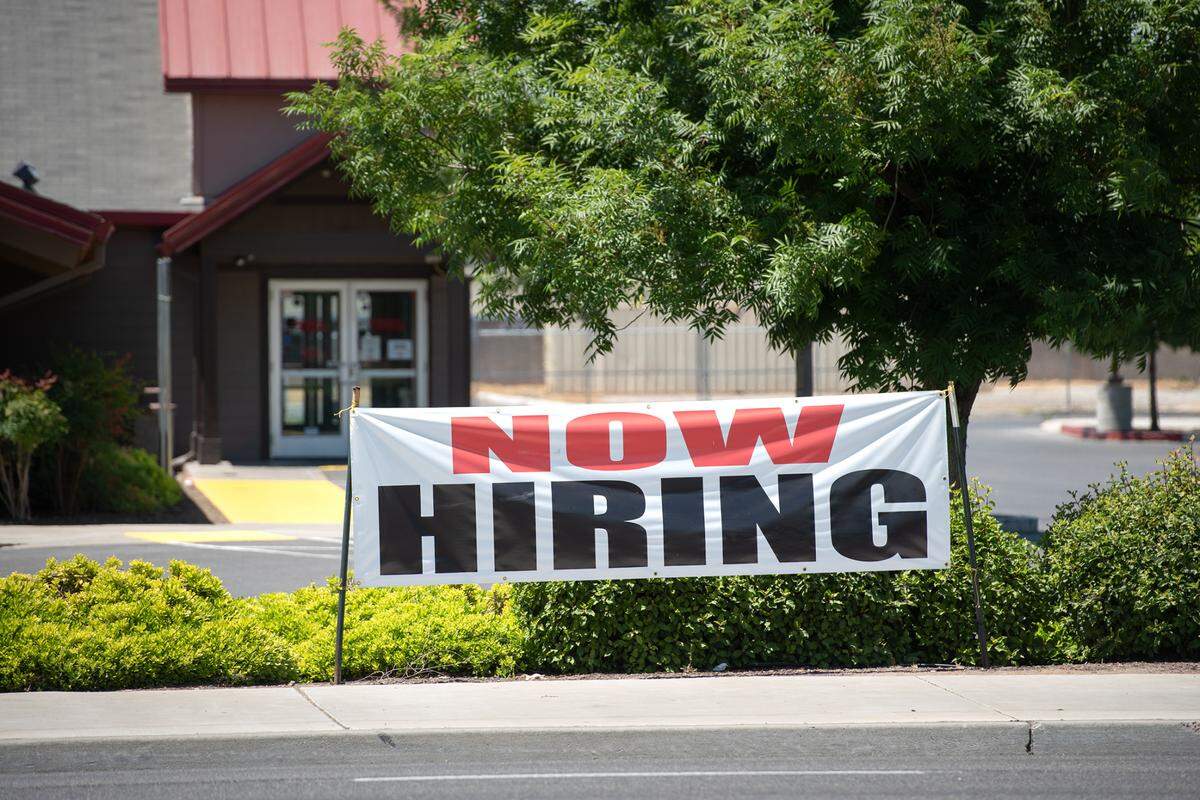
Staffing shortages across the food service and retail industries are evident, with big chains advertising signing bonuses outside their locations and smaller businesses reducing their hours due to a lack of staff. In an economy still reeling from the pandemic, which shuttered businesses across the country and cost millions their jobs, recovery has been slow and rocky.
Even though California has gained jobs over the past few months, a new report from the California Budget and Policy Center shows the state is still down more jobs than it lost in the 2008 financial crisis.
Lower-paying industries have hardest road
The majority of recent job gains are in the state’s lowest-paying industries, the report found, but those industries still have 15% fewer jobs than they did before the pandemic started. In contrast, moderate- and higher-paying industries are each posting 5% deficits.
According to the report, 61% of the hospitality and food service jobs have not been restored, as well as 68% of the “other services” jobs, which include salons.
The Village Butcher, which opened in mid-2019, has had a staff of about eight throughout the pandemic. Soderstrom said he would like to have two more, to help operations run smoother.
“We’ve had to stop producing certain menu items that are more labor intensive,” he said. “We’ve had to really kind of strategize and prioritize in terms of what generates revenue and what’s highest priority.”
While some have been quick to point at the enhanced federal unemployment insurance benefits during the pandemic as the reason for the hiring difficulties now, Jeff Michael, executive director of the Center for Business and Policy Research at the University of the Pacific in Stockton, said a number of factors contribute to the shortage. Among them are the fact that so many restaurants and retailer are hiring en masse now, as pandemic restrictions ease and customers return.
Evidence of the hiring surge can be seen at Modesto’s Vintage Faire Mall, which on Friday held a mass job fair to help 25 of its shops fill new positions as business increases. Mall spokeswoman Annie Amies said that while the center regularly holds job fairs for its retailers, this has double the number of retailers with triple the openings available.
“This one is larger, but also a greater need right now,” she said. “There’s just a great need for good employees.”
Modesto Junior College student Alexis Yin attended the job fair hoping to find a part-time job for summer. Yin said she’s been looking for jobs for a few weeks and has come across many employers eager to hire.
“A lot of places are hiring, especially for the summer,” she said. “I’m sure I’ll get offers.”
Child care a factor in workers return to jobs
But finding them continues to prove tricky. Another contributing factor is online school, coupled with a lack of available child care. That has forced many parents — especially women — to stay home with their children.
According to the latest state data, about 11% of California women 16 and older were unemployed and seeking work, on average, each month during 2020, compared to 9.5% of men. In 2019, by comparison, the unemployment rate was the same – 4.1% – for California women as it was for men.
Michael said instead of just preferring to collect the extra $300 in unemployment instead of working, people have used the benefit to be selective about when and how to rejoin the workforce. Health and safety concerns have kept other people from returning to higher-risk jobs with a lot of public contact, Michael said.
“There are a lot of factors there on a personal level that affected things and then you just got an enormous number of employers trying to step up really quickly, all at once,” he said.
Robert Wilson, owner of the Divine Swine grill and bar in Modesto, said he’s down to about half the staff he employed before the pandemic hit.
The day he spoke with The Bee, the Roseburg Square restaurant didn’t open for lunch. “One person called out sick, and I did not have anybody to fill that spot with,” Wilson said.
Pre-pandemic, he employed about 30. Now, Wilson has a staff of 17. He’s been actively hiring for a few months now, and the applicants he’s seen have been qualified, “there’s just not very many of them.” Wilson has retained only three staff members from before the pandemic, and he said most of the employees he put on furlough didn’t return to work, choosing to use their unemployment benefits instead.
Divine Swine is looking for both kitchen staff and servers, but Wilson said he can’t keep up with bigger chains that can give monetary incentives to new hires.
“The only thing that we can offer as an incentive is just a great working environment and to be a part of something they can be proud of,” he said. “I just can’t keep up with the Burger Kings and the McDonald’s of the world. They have large corporate backers and quite frankly I’m pretty happy when I can get through a month without losing some money at this point.”
Modesto restaurants can’t find experienced staff
Like the Divine Swine, north Modesto’s Smoky’s Neighborhood Grill also is hiring. Owner Mike Nelson has kept the same core five staff members throughout the pandemic and said he’d love to hire four more. But after receiving few takers for the minimum-wage plus tips positions, he realized he’ll have to train new staff from scratch instead of looking for experienced workers.
“I know a lot of experienced chefs, they left the industry (during the pandemic) or started their own food trucks or other things,” Nelson said. “I have no problem teaching (new employees) the trade. Beggars can’t be choosers right now.”
Alissa Anderson, a senior policy analyst at the California Budget and Policy Center and author of the jobs report, said although there’s been optimism in the past few months that the country has “turned a corner” on the pandemic, there’s still a lot of work to be done.
Anderson said the industries experiencing staffing issues — like restaurants and retail — are among those that show the “strongest hiring.” Like Michael, Anderson said a variety of factors, from health considerations to a lack of available child care, to interest in other industries, may be keeping workers from restaurant and retail jobs.
“It’s really hard to take a full-time job — especially in the restaurant industry — when you have unpredictable hours,” she said. “It could be that people who used to work in restaurants and bars have actually found work elsewhere, maybe safer work.”
Still, Anderson said the Central Valley is recovering slightly faster than the rest of the state: 52% of the jobs lost during the pandemic are still gone in Central Valley counties, compared to 56% in California as a whole, according to data from the Bureau of Labor Statistics.
The region is less dependent on the hardest-hit industries, like the leisure and hospitality sectors, and has benefited from warehouse job growth due to the pandemic e-commerce boom.
Some workers change industry for flexibility, safety
And not all food industry and retail jobs are finding it challenging to fill slots. The Modesto-based Save Mart grocery chain has offered additional hazard pay to its employees since the pandemic started in mid-March of 2020. The company continues to provide weekly hazard pay to all of its 12,000 workers across its Save Mart, Lucky California and FoodMaxx stores and three distribution centers.
The chain has increased its hiring through the pandemic, and recruited many away from other industries. Save Mart Public Affairs Manager Victoria Castro said they haven’t had any problems hiring recently.
“In fact, most recently in the Central Valley, we have seen a steady interest of people wanting to work at Save Mart,” she said in a written statement. “Since the pandemic, we are seeing less job openings than usual and the openings we do have stay open for a shorter period.”
As more people return to the workforce, flexibility has become a key issue for some, including Modesto resident Tony Pastore.
The accounting student at Modesto Junior College recently started his orientation to become a substitute custodial worker with Modesto City Schools. Pastore said he wanted a job that was flexible and fit with his schedule, and a friend told him about various school districts that were hiring custodial staff.
He began his job search in earnest in March and sent off lots of applications he never heard back about. Pastore said he was surprised to see that businesses “have to really work to get employees now.”
“For the first time in a long time, companies are vying for employees, rather than people trying to get a job anywhere they possibly can,” Pastore said. “That puts a lot of power back into the employees’ hands. I think it’s time that places start valuing their employees a little bit more.”
Despite everything, some workers are still finding it hard to land jobs. One accountant from Atwater, whose primary employer made her position part-time during the pandemic, has been unsuccessfully looking for a second job to support her son and grandmother.
The accountant, whom The Bee is not identifying for privacy reasons, said she has had several interviews with different companies, for positions ranging from waitressing to working as a cashier.
“Those were the only jobs out there, but now, after being turned away ... it gets you down when I can’t get a job at Walmart,” she said.
Despite struggling to find staff and having to cope with the effects of the pandemic, Wilson said he and his staff at Divine Swine still feel “very fortunate.”
“People during the pandemic have shown how special they can be,” he said. “We’ve had so many of our regular customers or regular guests show us support, and remain loyal and shower us with confidence and understanding when there’s really no reason for them to do any of that other than just genuine kindness.”
This story was produced with financial support from the Stanislaus Community Foundation, along with the GroundTruth Project’s Report for America initiative. The Modesto Bee maintains full editorial control of this work.
To help fund The Bee’s economic development and children’s health reporters with Report for America, go to https://bit.ly/ModestoBeeRFA
This story was originally published May 24, 2021 at 5:00 AM.