Stanislaus County’s smaller downtowns were hit hard. Here’s how four are staying relevant
When Jennifer Brannon and her husband took over Lightly Used Books in downtown Turlock in January, they didn’t expect their first few months of operations to be upended by the COVID-19 pandemic.
“We started off, 65 days being open just doing amazing, having customers and great sales, when everything shut down,” Brannon said. “(Then) things slowed down quite a bit.”
The couple had to get creative quickly, starting curbside pickup for their books and fulfilling phone orders. Despite a rocky start, Brannon said she’s received support from both customers and the city of Turlock over the past few months that have made adapting easier. She’s been following the city’s updates on social media, and has applied for city funding.
Still, she said, businesses like hers are struggling, and further support — like money for property owners to allow them to forgive leases, or to go toward overhead costs — would go a long way to put owners on surer footing.
“People are still extremely supportive and trying to help as best they can with all the small businesses downtown,” she said, “especially with our bookstore.”
Brannon’s story is just one of many. As the pandemic swept the country and changed almost every facet of life as we know it, small businesses and smaller cities across Stanislaus County had to get innovative and pivot. City leaders and local chambers of commerce in these towns, including Ceres, Newman, Oakdale and Turlock, came up with plans to attract customers to small businesses, ensure the disbursement of federal and state funding and most of all, get creative to work around changing restrictions and stay-at-home orders.
Federal and countywide funding and grants were made available to businesses earlier in the year, disbursing funds through programs like the federal CARES Act stimulus, Paycheck Protection Program (PPP) loans, as well as local initiatives.
Data from the Small Business Administration show that Stanislaus County businesses received more than $747 million in loans, and individual cities earmarked hundreds of thousands of dollars for small business grants. According to Opportunity Stanislaus, Turlock allocated $800,000 in grant funding to its businesses, while Oakdale made available $450,000 and Newman disbursed $100,000.
Losing the ‘human touch’ in Ceres
In Ceres, CARES Act funding was needed for “public safety” and other projects, said economic development manager Steve Hallam, but the city endeavored to support its businesses in other ways, through outreach and information-sharing about grants that were available to owners.
Ceres has a small downtown, Hallam said, which makes it easy for staff to “take an afternoon and walk around and hit most every store, or shop or merchant, and just touch base personally, with how they’re doing, what their needs are, if there’s anything we can do to help them.”
But the pandemic saw the loss of some of that “human touch” in connecting with businesses new and old. In-person visits turned into calls and emails, but Hallam said he still writes each new business a handwritten note to welcome them into the city.
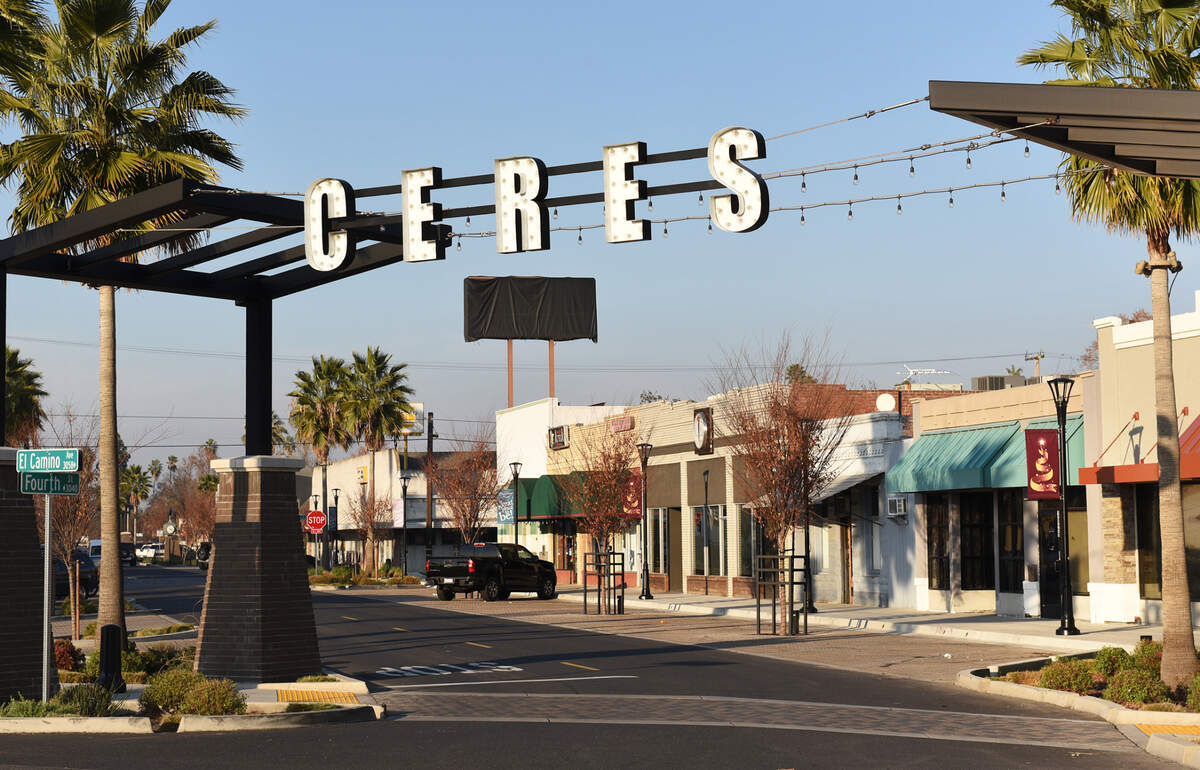
Renee Ledbetter, president and CEO of the Ceres Chamber, said that since the pandemic started, she’s seen businesses close across the downtown. The Ceres downtown is small, encompassing just a few blocks to the east of Highway 99. The local bank and pharmacy are among the most prominent businesses on 4th Street, which is marked on one end by an arched sign that welcomes passers-by to the downtown.
Ceres began a downtown revitalization project in 2015, updating the facades of retail buildings, adding new pavement to the downtown area and incentivizing businesses and shoppers to invest in the area. Now, the downtown is dotted with restaurants, small shops and a hair salon, but with the pandemic, there are more empty storefronts, too.
People like Ledbetter are trying to make sure the remaining businesses are supported as much as possible. The chamber, which itself is made up of mostly volunteers, took over the job of information gatherer and distributor when the pandemic hit, sending out email blast updates about new regulations and opportunities.
One of those regulations was a relaxation on outdoor dining rules this summer, in addition to outdoor signage, Hallam said, an effort to make the process of pivoting to takeout and outdoor-only dining easier this year.
But despite the city and chamber’s best efforts, closures happened. In a downtown as small as Ceres, Ledbetter said, it’s been “really disheartening” to see the effect of the pandemic on businesses, as three or four closures can already change the face of the area landscape.
“I wish I could say that we could do more,” Ledbetter said, “but it’s affected all of us in a variety of ways.”
Justin Smernes, a pharmacist who owns the Ceres Drug Store, said that because so many people have been quarantining this year and seeing their primary care doctors less frequently, he’s noticed certain illnesses — like colds — are down, resulting in fewer customers.
Smernes said he’s taking the pandemic “one day at a time, letting people know that we’re here,” and focusing on promotion and letting local customers know his business is still up and running.
Beyond the impact on his own store, he said the pandemic has had a ripple effect in Ceres.
“The traffic in downtown has really declined and fallen off,” he said. “When you lose two restaurants, a clothing shop, other small businesses ... there’s just not a lot of foot traffic anymore, which overall hurts every business downtown.”
Ledbetter said support for local businesses isn’t just crucial for their survival, but important for a whole community.
“(The investment) comes back to them because later on, when we get back to a normal world, we’re going to have our youth groups looking for sponsorship and donations and things like that, and if we want support from our businesses, then we have to support our businesses now,” she said.
Injecting funds in Turlock, other cities
In anticipation of the holiday season, Ceres is one of a number of cities — including Oakdale, Turlock, Modesto and Newman — accepting the RAD Card program, a countywide gift card that doubles money spent at local establishments. Designed to boost spending at local businesses, the card will double the money available for each purchase up to $100.
Shoppers in Turlock said that while incentives like the RAD Card are a good idea to boost spending this holiday season, they’re already more focused on shopping local than in other years. Helping their communities is a priority for many shoppers this year, as they’ve seen firsthand the effects the pandemic has had on practically everyone’s lives.
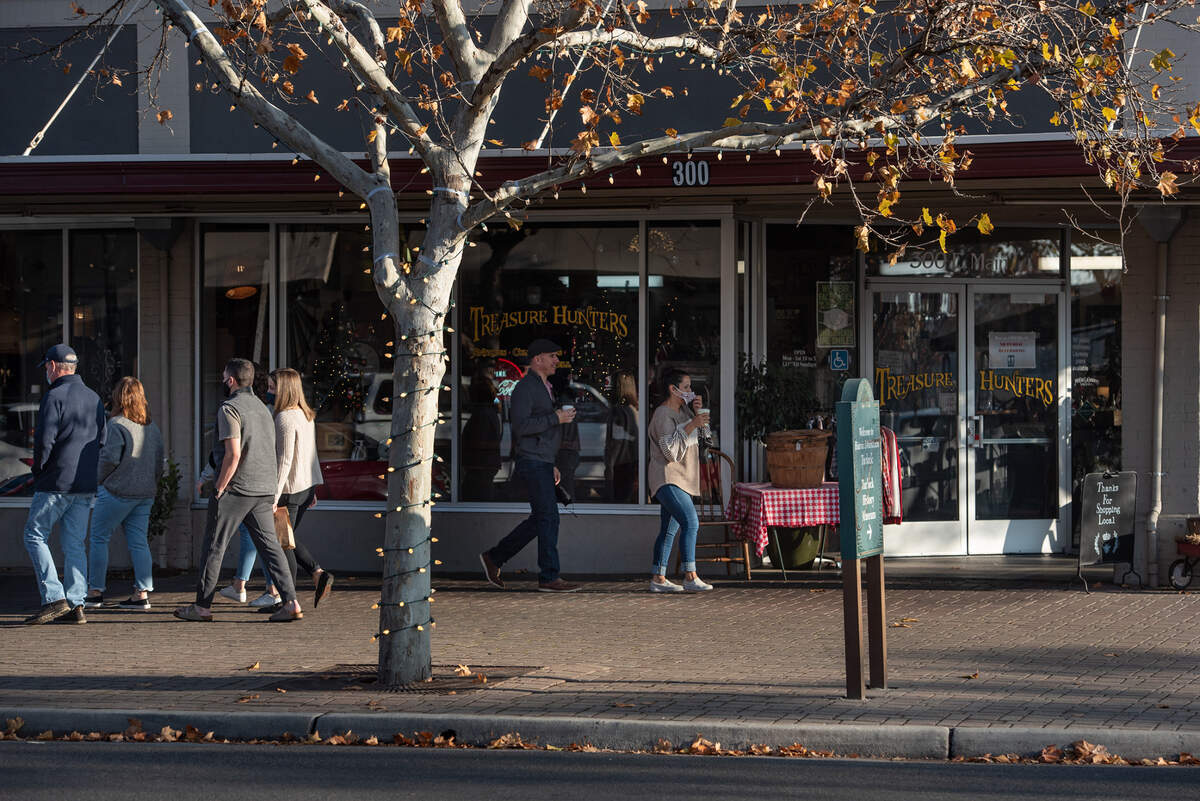
Maryn Pitt, the city’s business ombudsman, said that though Turlock only has a population of 73,000, its primary retail area — which includes both the downtown and the shopping complexes off the freeway — can attract up to 300,000, making support for downtown businesses vital.
In addition to the city’s box and chain stores, Pitt said the downtown — which is dotted with restaurants and cafes, as well as boutique stores — is a “big draw,” with people coming to shop from all over the county.
The city’s $800,000 in funding for local businesses is in the process of being divided up, as Pitt and her team evaluate applications from local proprietors and work to disburse funds to as many owners as possible.
They’re also looking to businesses themselves for cues on what support would be most helpful, whether that be information about health guidelines or tips for online marketing.
“We’re trying really hard to be creative and to pivot and to accommodate the needs of the community and also really the business community,” Pitt said, “to do what we can to support the efforts within the limitations that were given from the state.”
Getting creative in Newman
One such initiative is the Facebook page “Turlock To Go,” which Turlock resident Kadi Ingram-Porter started in March, when the pandemic first hit. Created as a place for people to consolidate information about what restaurants and cafes were offering to-go options, the group quickly grew.
“Turlock To Go” now boasts over 11,000 members and counting, and Ingram-Porter has since started sister groups for other cities. The second-largest, “Modesto To Go,” has over 8,600 members.
“It really caught on because there’s an absolute need for it, because we’ve never been through a pandemic,” Ingram-Porter said. “We’ve never had our whole environment closed down. People are scared and they’re really looking for answers and they’re looking for guidance and to see what’s going on out in the world.”
Ingram-Porter said the feedback to the group has been overwhelmingly positive, from restaurant owners and customers alike, and the online community continues to boost sales.
Word-of-mouth recommendations like the Facebook groups — where businesses and customers alike can share new options and deals — are proving instrumental in keeping restaurants afloat.
In Newman, Irwin Ravago, the owner of The Grille, said he and his staff are trying their best to be creative and accommodate the restrictions under the statewide stay-at-home order, which once again prohibits indoor dining in restaurants.
Ravago said his regular customers have given the restaurant “a lot of support” during the pandemic, especially as they began relying on takeout and delivery options. With the latest restrictions in place, Ravago said he’s developing new, family-style menu items that are better suited to takeout. Still, he said it’s been challenging to keep up the numbers this year.
Stephanie Alcauter, who owns Santi’s Mexican Grill and Banquet in Newman, said the support of customers who remain loyal to her business is “everything.”
“Their support is all we have,” she said.
Alcauter is in the process of applying for a loan to support her restaurant, but she said that the new slate of restrictions — and the fact that not all restaurants are following the guidelines — have made this year especially hard.
To support restaurants like Alcauter’s, the city started a series of weekly farmers’ markets this summer, as well as a fall festival. The program, which ran for a number of weeks, proved instrumental to the survival of businesses in Newman, said Michael Passarelli, the president of the Newman Chamber of Commerce.
“Many of the restaurateurs and the people working for the restaurants told us, ‘It would have been really really hard without what you guys have done,’” he said.
Passarelli said the farmers’ markets and Newman’s “Main Street Eats” initiative, aimed at increasing outdoor dining during the warmer seasons, were so successful that the city plans on holding them again next year, pandemic or not.
Michael Holland, Newman’s city manager, said outdoor dining not only helped restaurant owners retain customers, but also ensured they were able to retain other staff. Takeout is only part of a restaurant’s business, he said, “but you also have servers, waiters, busboys and those kind of people that need money too; they have families and they’re trying to support people.”
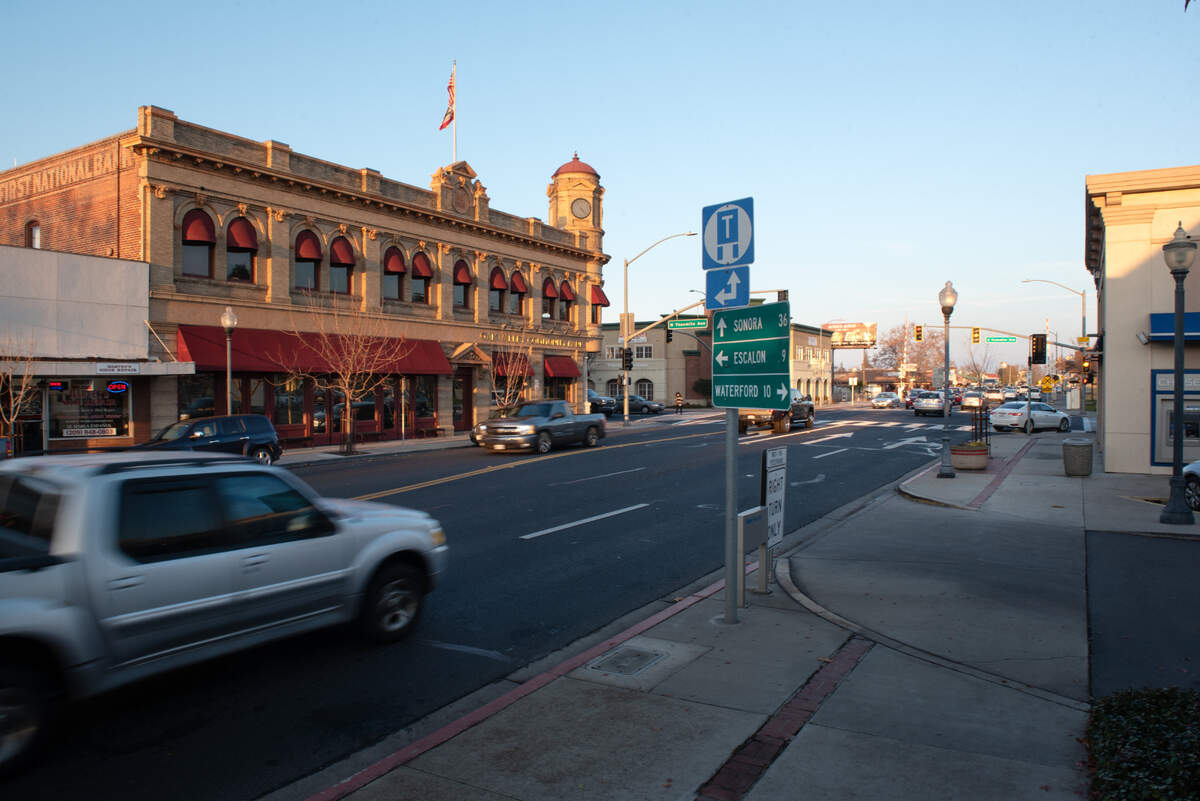
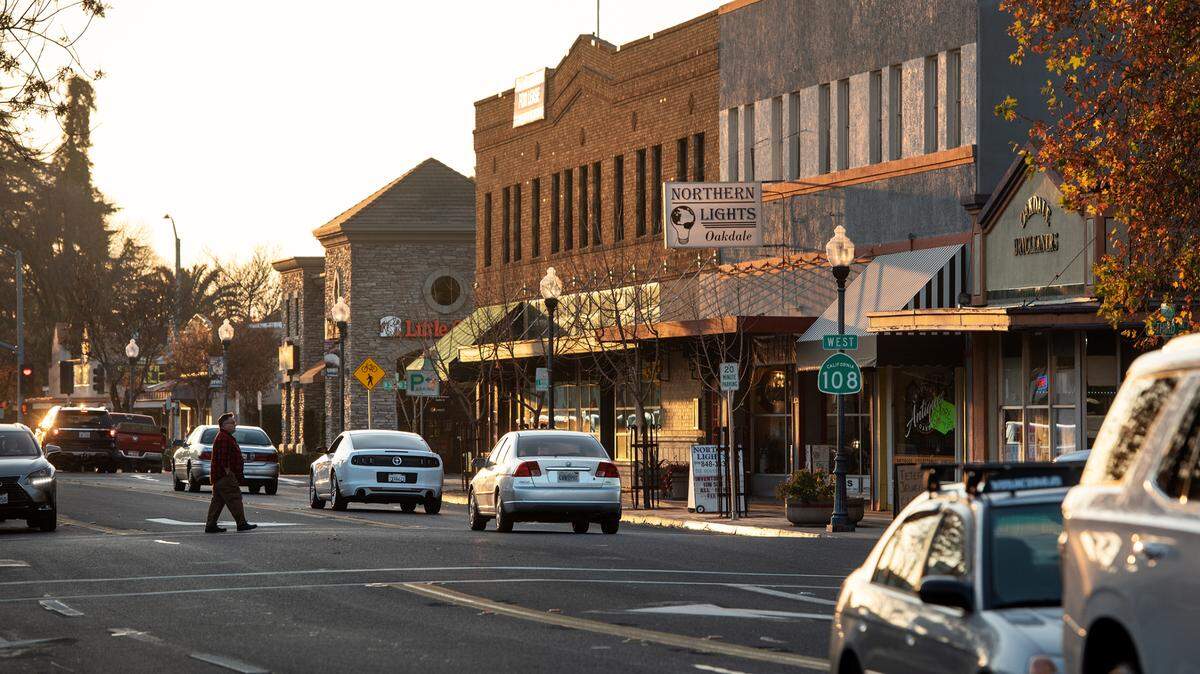
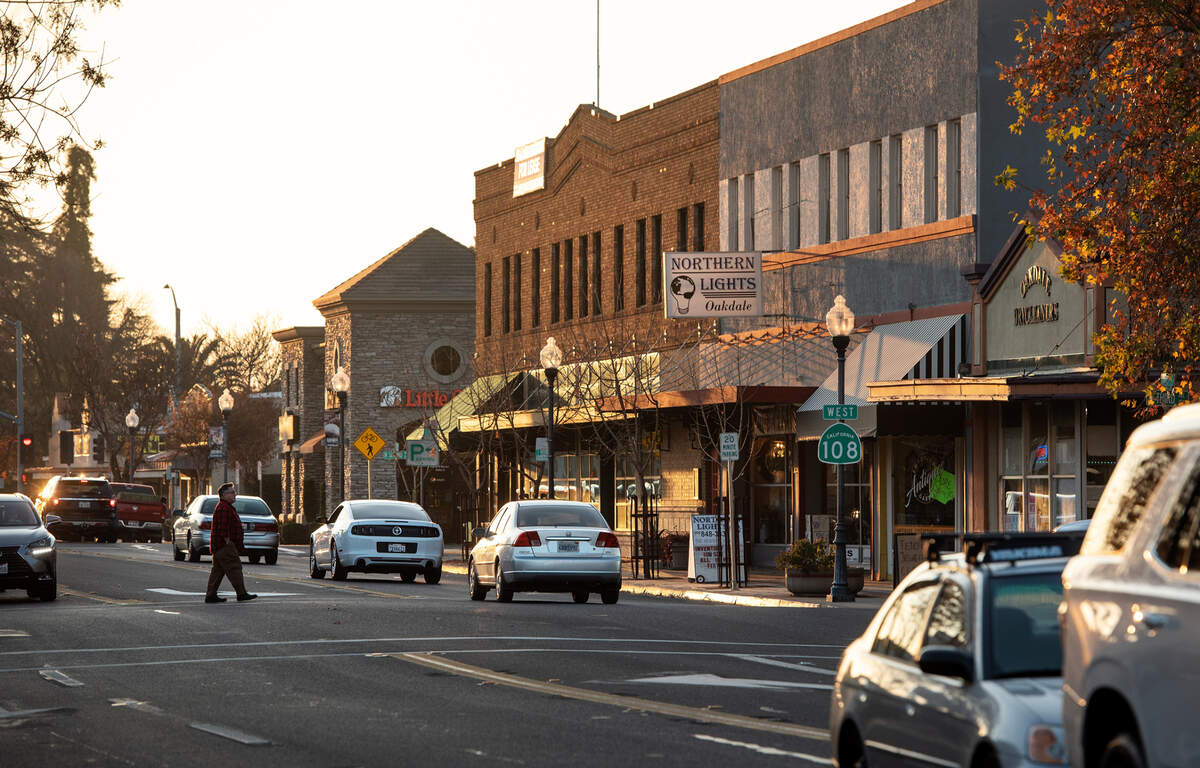
Oakdale working hard to support business
Oakdale also made the most of increased outdoor dining when the weather was still warm. City manager Bryan Whitemyer said the city purchased barricades to loan out to businesses to allow them to block off space for outdoor seating.
The city used COVID-19 funds to buy the barricades, Whitemyer said, to save businesses the expense of purchasing them themselves.
Initially, Oakdale had set aside $250,000 in CARES Act funding for its businesses. After an initial round of funding was disbursed, city staff asked for an additional $200,000 to be made available for local businesses, bringing Oakdale’s total funding up to $450,000.
“We’ve been pretty progressive and aggressive,” Whitemyer said. “When you consider the amount of our stimulus funds that we received, I think we put almost 50% of that back into our local business economy. That’s something that we’re very proud of.”
Fred Salazar, who owns Beggars Banquet Antiques in Oakdale, said he’s experienced a decrease in foot traffic in the last few weeks due to the stay-at-home order, despite the holiday season.
He’s still getting customers to his business, he said, but they’re more cautious.
“It’s a sticky situation,” he said. “It’s day by day.”
Despite getting an SBA loan, Salazar had to close his business for over four months, and he said the store “lost a lot of money.”
Since then, he’s increased his sales on EBay and displayed items directly in his shop windows, a tactic that helped him sell four guitars. Salazar said he will be doing promotional work with the city’s visitor center to help boost his sales, and stressed that “the community helps each other if they buy locally.”
Trisha K. Brown, the CEO of Oakdale’s Chamber of Commerce, said that uniqueness is what businesses need to lean into during the pandemic. And any support for businesses should take into account the needs of individual vendors.
“Every business is different, and every business is trying to adapt to what they can and abide by the restrictions,” she said.
For Brannon and her Turlock bookstore, 2020 has been an unprecedented year.
Though community and city support have helped her and her husband keep their business running, she said she never could have expected just what a toll the past months would take.
“Just starting out as a business is difficult, but starting out in a pandemic has definitely aged us quite a bit,” she said.
This story was produced with financial support from the Stanislaus Community Foundation, along with the GroundTruth Project’s Report for America initiative. The Modesto Bee maintains full editorial control of this work.
To help fund The Bee’s economic development and children’s health reporters with Report for America, go to https://bit.ly/ModestoBeeRFA
This story was originally published December 23, 2020 at 4:00 AM.