Stanislaus farmworker committee fails to get members. Organizers not surprised
AI-generated summary reviewed by our newsroom.
- Stanislaus County struggles to fill 10 farmworker seats on new advisory board.
- Fear of retaliation and lack of community trust deter farmworker applications.
- Organizers urge outreach in safe spaces to boost credible farmworker input.
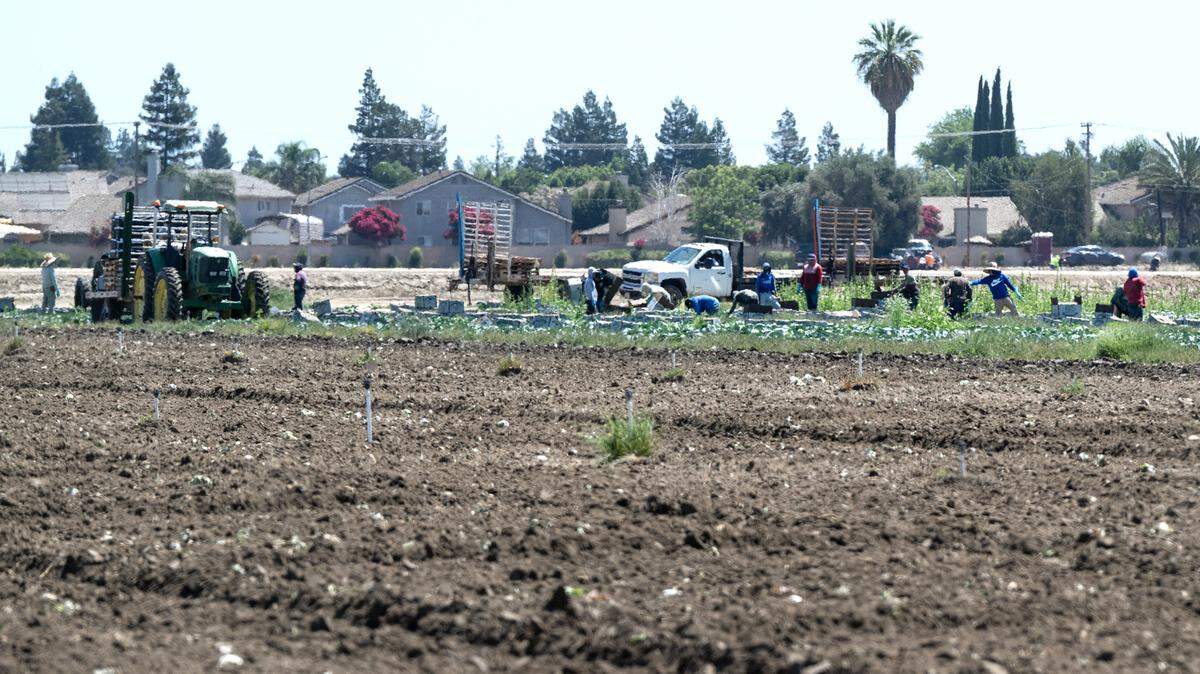
A newly created advisory board to give Stanislaus County farmworkers an opportunity to hold people in power accountable has struggled to get off the ground as few have signed up to fill the positions.
The Stanislaus County Board of Supervisors approved a Farmworker Advisory Committee in November. But since applications opened at the beginning of the year, the county has struggled to fill the 10 vacant farmworker positions necessary to establish a functioning board.
The goal of the Farmworker Advisory Committee is to create a bridge between farmworkers and the county and a forum for farmworkers to express their needs and work on solutions around housing, health, employment conditions, immigration and safety-net services.
“We want to support our farmworkers because they’re important and critical to the success of agriculture and they’re super important to our community in Stanislaus as a whole,” said Linda Pinfold, Stanislaus County agricultural commissioner.
Noé Páramo, director of the sustainable rural communities project at California Rural Legal Assistance Foundation, has applied for the board seat reserved for a community-based organization. He said he’s not surprised there are challenges getting farmworkers to apply. There were issues in building community trust even before the application opened in January.
“Since January, we’ve seen fear and uncertainty in the farmworker community with regards to the federal administration’s targeting of undocumented immigrants,” he said. “Why would you go and connect with a government entity that has not shown diversity or inclusiveness of farmworkers to the extent of creating a farmworker advisory committee?’
Each position on the board comes with a per-meeting $100 stipend for up to six meetings a year. All meetings are free and open to the public. The application is available in both English and Spanish and interpretation will be available for all meetings.
“We definitely need to work together to have input from the workers,” said Ana Andrade, a community leader with a doctorate in transformative studies who has been advocating for more farmworker involvement in decision-making. “Especially as we move forward to create economic stability for the county.”
Pinfold said the biggest challenge has been getting farmworkers to apply, though the application opened in January. The newest deadline, announced July 11, is July 15. Previous deadlines have been extended to allow for more applicants.
“This application has been open, just no one is signing up,” Andrade said. “When you think about the political climate, it makes sense that people would not sign up now.”
There are two farmworker positions available for each county supervisor’s district, 10 farmworker members total. The board has four other positions: one member from the agricultural industry, one farm labor contractor, one community-based farmworker-serving organization position and one member from the county’s Agricultural Advisory Committee.
“It’s geared so that everybody who works with farmworkers is involved,” Pinfold said. “So, yeah, there is a farm labor contractor representative, there is a grower representative – but they’re definitely in the minority to the farmworkers.”
Páramo made comments during the planning process that the committee’s composition leaned too heavily toward the ag industry, which could create problems. “You have farmworkers and you are putting the farmworkers in the middle of a potential employer raising issues,” he said. “It could be fear of retaliation, ICE, keeping your employment.”
The committee is advisory, so it doesn’t make final decisions, but it is subject to open-meeting laws like the Brown Act.
Páramo said there are about 24,000 to 30,000 farmworkers in the county, 90% are of Mexican descent and around 60% to 70% of them are undocumented. He said there are concerns about committee members being exposed by participating.
“Because now you’re in public because it’s an advisory committee,” Páramo said. “It will have a chilling effect.”
Kahrla Arias, a member of the Latino Community Roundtable who worked to create the new advisory body, said the power dynamics of the committee were a barrier. Not only are there potential employers as members of the board, but the structure of a Brown Act’s public meeting is intimidating.
“These kinds of committees are not meant for people who aren’t already in a circle of power,” Arias said.
Andrade said she has been working with the county to create safeguards like translation and advisers for farmworkers on the committee so that they aren’t facing retaliation for things brought up in the committee.
Arias said part of the reason the committee is failing to attract members is because the county is not actively engaging farmworkers where they feel safe and supported. “[Farmworkers] do show up in safe spaces with trusted messengers and organizations,” she said.
Andrade said she’s not against the committee, she helped establish it. She wants farmworkers to give the county feedback, to be at the table, to create solutions because without that, it widens a gap in access.
“My concern would be, you’re closing it, you’re creating this committee without any input from farm labor – that’s where I have a concern,” Andrade said. “Because then why have a farmworker committee if there are no farmworkers?”
People can inquire about the committee at 209-525-4730 or agcom50@stancounty.com.
This story was originally published July 15, 2025 at 11:56 AM.