TID farmers will get full water allotments, and then some, thanks to wet weather
Farmers in the Turlock Irrigation District will get full water allotments after three years of drought cutbacks.
The 5-0 board vote Tuesday morning followed a staff report on the impressive rain and snow in the Tuolumne River watershed.
There’s even enough to allow extra deliveries at season’s end to help with groundwater recharge, irrigation distribution manager Mike Kavarian told the board. That practice can bolster aquifers stressed during dry times.
The irrigation season will run from March 2 to Nov. 1, though it could be delayed by further rain. TID supplies about 149,000 acres stretching from south Modesto to north Merced County and west to the San Joaquin River.
The district provided just 27 inches of water last year, measured vertically over the season. That was about 60% of the accustomed amount. The deliveries were capped at 34 inches in 2021 and 42 inches in 2020.
Farmers will have no cap in 2023 and will move off the dry-year rate structure, which encouraged conservation. They will pay a flat fee of $60 per acre, then $4 for the first 2 acre-feet on that land, $6 for the next 2 acre-feet, $15 for the next acre-foot and $20 for each acre-foot beyond that.
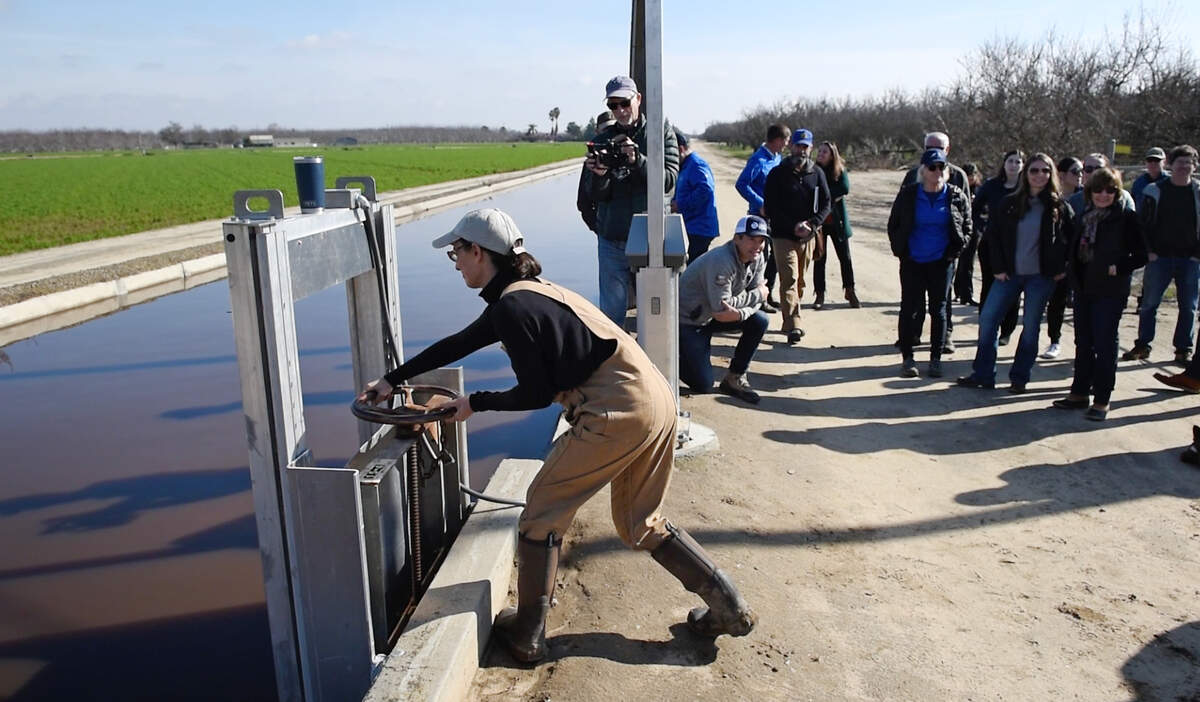
Many farmers can get by with middling amounts of water thanks to drip lines and other efficiencies. Those who still do flood irrigation can receive a final shot for groundwater recharge in midautumn.
TID this summer also could start supplying river water to a treatment plant for Turlock and Ceres homes. The project, nearing completion south of the Geer Road bridge, is designed to reduce the cities’ reliance on wells.
The Modesto Irrigation District, which also taps the Tuolumne, has not yet set an allotment or start date for the 2023 season. During a Feb. 14 meeting on a possible water rate increase, officials projected that it would be at least 42 inches.
The snowpack was at 175% of the historical average for Feb. 19, utility analyst Olivia Cramer told the TID board. It had topped 200% after the heavy storms of January and eased back over a few dry weeks. The main part of the storm season typically runs from November through March.
Don Pedro Reservoir, shared by TID and MID, was at 105% of historical average for Feb. 20, the California Department of Water Resources reported. Its vast capacity, along with senior water rights, help these districts recover faster from droughts than many parts of the San Joaquin Valley.
San Francisco diverts a smaller share of the Tuolumne to four Bay Area counties. It, too, can expect ample supplies in 2023.
The same goes for the Stanislaus River, where the Oakdale and South San Joaquin irrigation districts hold senior rights. It also is part of the federal Central Valley Project, which planned an announcement Wednesday of the allotments on the West Side down to Kern County.
This story was originally published February 21, 2023 at 5:19 PM.