
Bees complete almond pollination, growers hoping for big yields
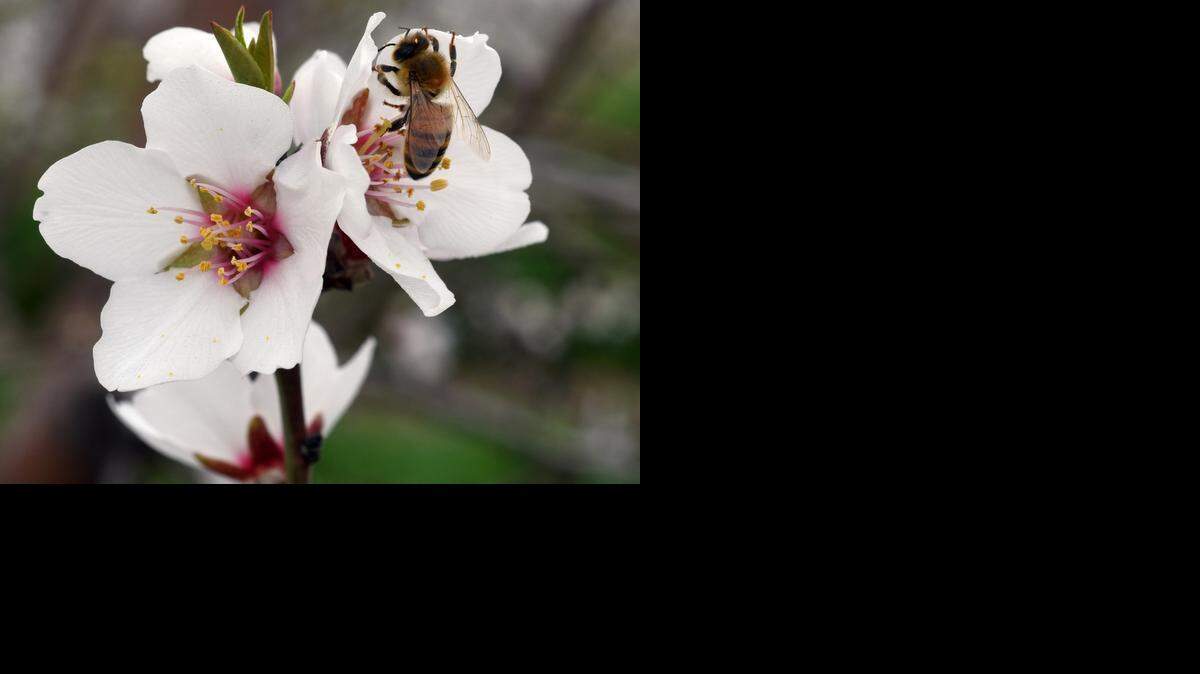
Millions of winged workers have nearly completed their pollination of more than 800,000 acres of California almonds – one of the state’s largest and most valuable crops.
Every year, beekeepers from across the U.S. bring their hives into California’s almond orchards for pollination. The process takes several weeks, and this year almond growers and industry officials say the bees did their job.
“The bee supply was good, and the weather was just about ideal,” said Bill McKinney, a grower just north of Modesto. Mild days with little wind are best for getting the bees out of their boxes and up into the trees.
Beekeepers have already begun pulling their hives out in some parts of the San Joaquin Valley, while others have about a week left.
Growers and beekeepers say they are thankful that a majority of the hives were healthy and in good shape. In previous years, hives have been hit by major losses due to causes including disease, pesticides and colony collapse disorder, a mysterious phenomenon that has wiped out some hives.
This year, beekeepers say they are still battling with diseases and parasitic pests, including the varroa mite. A health assessment of the nation’s 2.6 million colonies is expected this spring.
“I know some beekeepers who lost more than 50 percent of their hives while others lost very little,” said Gene Brandi, a Los Banos-based beekeeper.
Still, despite the losses during the winter months, beekeepers were able to build up their hives in time for pollination.
“The hives were adequate and had good strength,” said Mel Machado, director of member relations for Sacramento-based Blue Diamond Growers, which has processing plants in Salida and Turlock. “By and large there were no shortages, and people who needed bees got their bees.”
The demand for bees has been strong in California as the almond industry flourishes. Producing acreage has grown 50 percent from 2000 to 2014. The cost of pollination also has jumped. Ten years ago, growers paid between $45 to $75 a hive. This year, the range was $165 to $200 a hive, said Joe Traynor, a Kern County bee broker. And most farmers rent two hives per acre.
Almond growers hope the favorable weather continues. An early bloom poses the potential for frost damaging the immature nuts. Although rain is desperately needed, any moisture this time of year may require growers to apply a fungicide.
“We have already had a light frost, but it wasn’t an issue,” said Fresno County almond grower John Diener. “This has been as good a year as any for blooms, and it remains to be seen what kind of yields we will get.”
McKinney said the blooming periods for various almond varieties overlapped well, which is helpful for strong pollination. About 90 percent of his orchard was at the “petal fall” stage as of Monday, meaning the flowers have dropped and nuts can start to develop.
A lack of surface water and brackish groundwater is expected to take its toll on this year’s almond crop, but to what degree is still unknown. Diener said some ranches on the west side of the San Joaquin Valley looked “pretty rough.”
Last year, almond growers produced 1.85 billion pounds, down from 2 billion pounds the previous year.
“The indications are that it may be difficult to sustain that, but at this point we just don’t know,” Machado said. “We have some fairly good, young orchards and that will help.”
Modesto Bee staff writer John Holland contributed to this report.
This story was originally published March 2, 2015 at 11:03 PM with the headline "Bees complete almond pollination, growers hoping for big yields."