HUD report shows some promise in effort to reduce homelessness
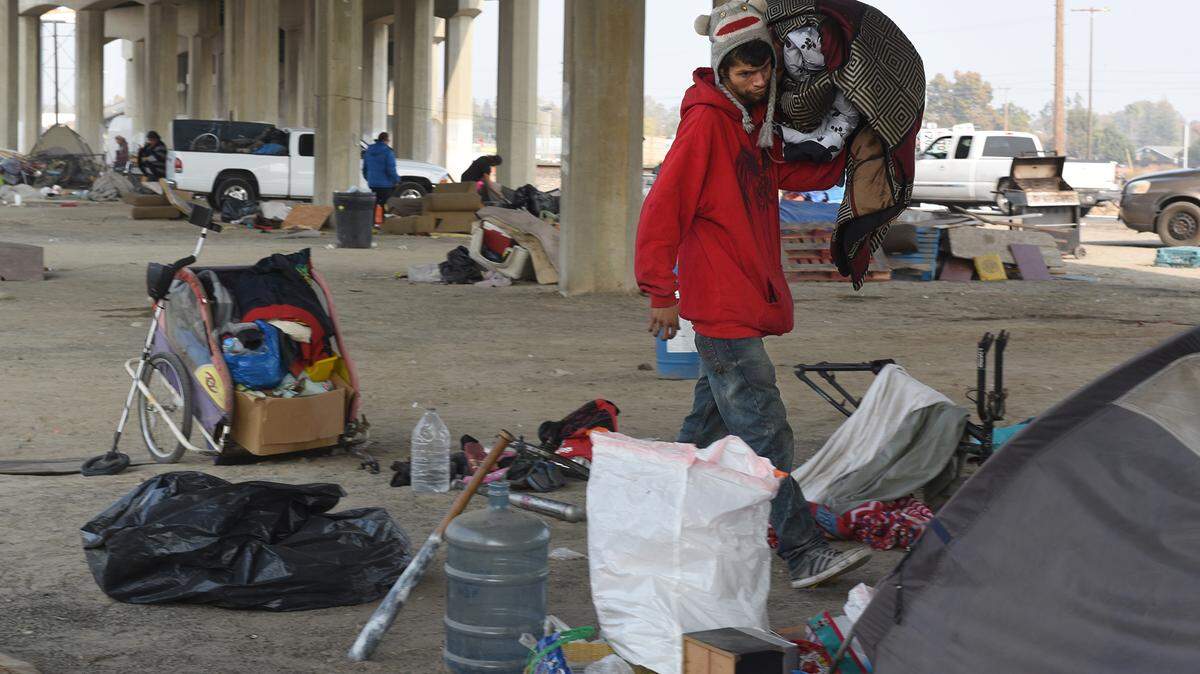
A new federal report provides a possible glimmer of hope for the homeless crisis that has gripped many cities up and down the West Coast.
The number of people living on the streets in Los Angeles and San Diego, two epicenters of the homelessness crisis, fell this year, suggesting those cities’ efforts to combat the problem could be starting to pay off.
The number of homeless people in Stanislaus County and its cities fell by 18.4 percent, but the annual count was under new leadership and faced organizational problems and did not have enough volunteers. Homeless service providers have said the tally undercounted the number of homeless people. But organizers are taking several steps to improve the next count.
The U.S. Department of Housing and Urban Development on Monday released its 2018 Annual Homeless Assessment Report to Congress.
These reports are based on annual counts conducted in January across the United States by what are called continuums of care, which include local governments, homeless service providers and others. The local continuum is called the Stanislaus Community System of Care.
These annual tallies are called point-in-time counts and are a snapshot of homelessness. They should not be considered definitive. And homeless advocates urge caution about reading too much into one-year trends in the counts.
In Los Angeles, the count fell by 3 percent after a sharp increase the year before. Peter Lynn, executive director of the Los Angeles Homeless Services Authority, said that can be credited to six months of stepped-up homeless services after Los Angeles County voters raised taxes to help in 2017.
Later that year, Los Angeles city voters approved a bond issue to provide more affordable housing – a factor Lynn said will start showing up in future counts.
Cities in California, Oregon and Washington have driven an overall spike in the number of homeless people nationwide in recent years.
This year’s count continued that trend, showing 552,800 people without homes across the country, up by about 2,000 from 2017, according to the HUD report. It was the second consecutive increase after seven straight years of declines.
The number of homeless in California topped 129,972. The Stanislaus Community System of Care count totaled 1,356 people. The 2017 count turned up 1,661 people. And previous counts have totaled from about 1,100 to 1,800 people throughout Stanislaus County.
San Diego saw a decline in total homelessness and those on the streets. After a hepatitis A outbreak spread among the homeless population and killed 20 people in 2017, the city turned to industrial-sized tents to house hundreds of people.
As the tents went up, officials also cited people camping on downtown streets. Encampments downtown cleared out quickly, but the number along the San Diego River doubled.
Nationwide, the overall increase this year was driven by a 2 percent rise in the unsheltered homeless population – those living in vehicles and tents and on the streets – along with 4,000 people in emergency shelters after hurricanes, wildfires and other disasters, according to HUD. The numbers of homeless veterans and families continued their long-term declines.
At a time when rents are rising faster than wages – especially for lower-income people – an essentially stagnant count is a not a bad sign, said Steve Berg, vice president for programs and policy at the National Alliance to End Homelessness.
“Given what’s going on with rental housing, it’s not exactly good news. But it means communities are pushing back against the headwinds,” Berg said.
The homelessness data picture is incomplete because several West Coast communities with large populations, including San Francisco, Portland, and Orange County, did not conduct new counts of unsheltered homeless populations this year. They will do fresh surveys in January.
Homelessness has exploded along with a soaring economy in several West Coast cities in recent years and has become a hot local political issue. From 2015 through last year, voters on the West Coast approved more than $8 billion in spending – most of it in tax increases – to address homelessness.
HUD Secretary Ben Carson said on a conference call with reporters Monday that no one should be declaring victory over homelessness despite decreases in certain cities. “We still have a long way to go even though there’s been significant progress,” he said.
Modesto Bee reporter Kevin Valine contributed to this report.