
Dodging Deportation: When ICE comes calling, this Stanislaus County group jumps into action
The fear of deportation has intensified the past two years for undocumented immigrants living in Stanislaus County and throughout the Northern San Joaquin Valley, advocates say.
A construction worker returning to his home near Modesto High School was one of five people in Modesto taken into custody in late February by officials from U.S. Immigration and Customs Enforcement, also known as ICE. The Modesto apprehensions were part of a Northern California ICE sweep that resulted in 232 arrests in four days.
The Modesto man was returning home to pick up a tool he forgot, said Kim Martinez, community organizer for Faith in the Valley in Stanislaus County.
She said ICE officials in a gray sport utility vehicle had photos of the man to identify him and apprehended him in front of his home.
“They follow you, stalk you and wait until you get out of the house,” said Martinez, whose duties include advocating on behalf of immigrants in this county.
(Click here: Modesto mothers await knock from ICE ... )
The man had been deported from the United States three years earlier, so he was immediately processed for “express deportation,” Martinez said.
Advocates are fearful more undocumented immigrants without serious criminal convictions will be caught in a wide net as President Donald Trump’s administration calls for more immigration enforcement.
That’s why Faith in the Valley, a nonprofit group that offers help to under-served residents in Stanislaus, Merced, San Joaquin, Fresno and Kern counties, launched the Valley Watch Network in September and created rapid response teams.
These teams of volunteers include “dispatchers” trained to receive calls from undocumented immigrants and their allies who report ICE enforcement activity, such as officials with ICE logos on their clothing or ICE insignias on their vehicles. Another group of volunteers goes out to neighborhoods to verify the reports, sometimes even to disprove rumors on social media, which can be a common occurrence.
Other volunteers are trained to respond to homes and help families after a loved one has been taken into custody. Since the nonprofit group has chapters throughout the Central Valley, members can assist immigrants and their families when they appear in court in Fresno, for instance, or visit a loved one who has been transferred to a detention center in Stockton or Bakersfield.
Ariana Martinez Lott, a rapid response organizer with Faith in the Valley, said it’s important to be with these families so they know they’re not alone and won’t hesitate to assert their civil rights, such as hiring an attorney to challenge a deportation order.
“This is working together across the valley to fight against this deportation machine,” she said at a recent rapid response training session at St. Paul’s Episcopal Church in east Modesto.
Members of that church already have donated several thousand dollars in hopes of starting a legal defense fund in Stanislaus County for undocumented immigrants fighting deportation.
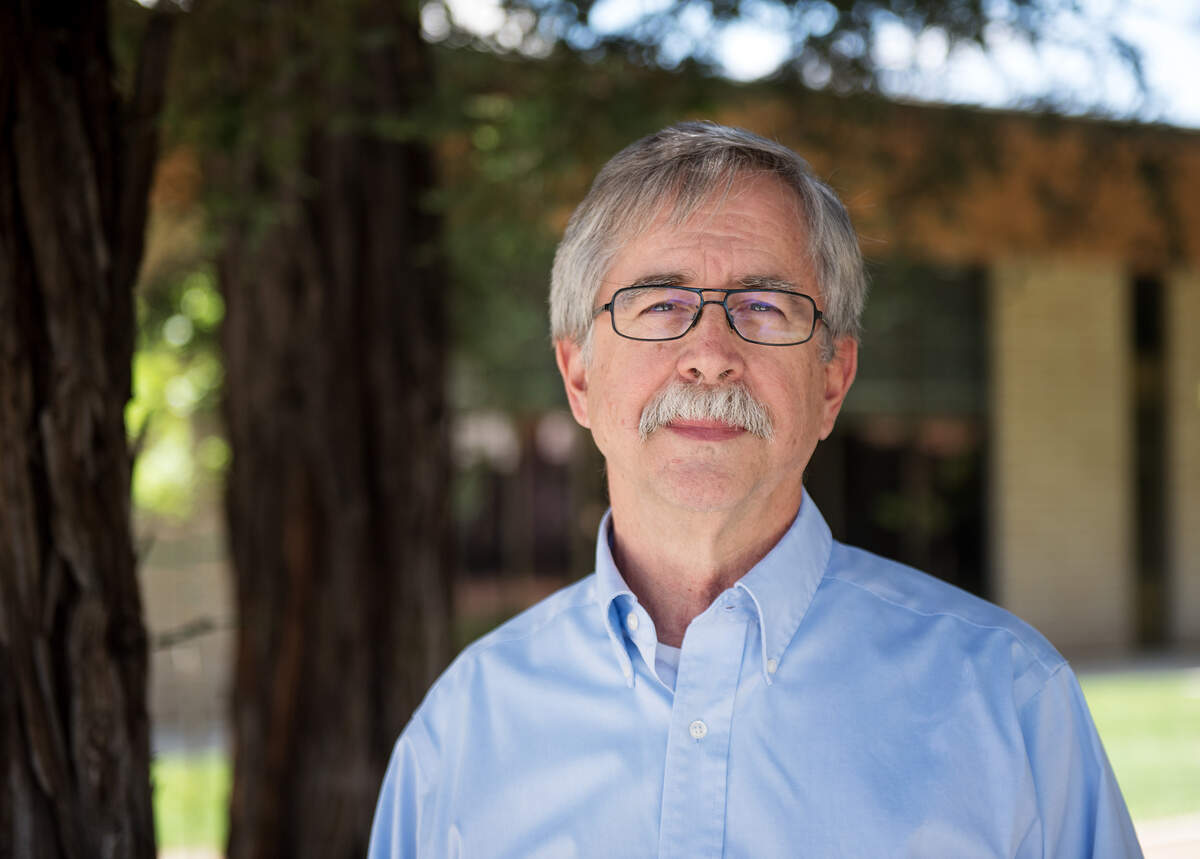
Tom Hampson is a rapid response volunteer and a member of St. Paul’s. He said the congregation sees the vulnerability of people who have lived in the area, some for decades, “abiding by the rules, paying their taxes, and suddenly they’re kind of yanked out of their homes, their jobs, away from their families. And it just feels wrong somehow.”
ENFORCEMENT SWEEPS
In early January, immigration agents conducted raids at about 100 7-Eleven convenience stores nationwide to open employment audits and interview workers. That’s not the kind of immigration enforcement advocates have seen in the Central Valley.
Martinez said ICE officials in the Modesto area have been using more aggressive tactics, following immigrants away from their homes. Advocates also say they’ve heard of ICE officials showing up at homes with assault rifles.
“They’re taking them fast,” Martinez said. “They swoop by, take the person and they leave.”
ICE does not publicly discuss tactics used in administrative arrests of those suspected of violating immigration laws, said Richard Rocha, an ICE spokesman for its San Francisco field office.
ICE officials argue that their agency’s focus is on national security, public safety and border security. But sanctuary laws, like those in California to protect undocumented immigrants, force ICE to conduct broader enforcement, including at-large arrests in local neighborhoods, instead of the more common route to deportation.
“For ICE, it makes more sense to devote resources to jails to focus on criminals where it’s safer for all involved and reduces the need for more visible enforcement efforts,” Rocha said.
ICE sometimes relies on the more aggressive Special Response Teams when agents believe they might encounter dangerous criminals. They say hardened criminals, such as drug cartel and violent street gang members, are not always cooperative when arrested to be removed from the United States.
Of the 232 arrested in the February Northern California sweep, ICE officials said 180 were convicted criminals, had been issued a final order of removal and failed to leave the country, or had been previously deported and returned to the United States illegally.
RUMORS
Social media sites, especially Facebook, have been a platform for false rumors about immigration enforcement operations. Advocates say they’re appreciative of residents sharing information, but unverified reports only breed more fear.
For instance, a common one is talk of immigration officials along Crows Landing Road in south Modesto, Martinez said. Once, a video was posted on Facebook showing what was believed to be ICE 12-passenger vans driving through Modesto. It wasn’t ICE, Martinez said, and the vans appeared to belong to a local law enforcement agency.
Along with verifying enforcement activity, the response teams are asked to meet with families after a loved one has been detained.
For those who are immediately designated for deportation, the teams must hurry to secure money and clothes before their loved one is sent out of the country, typically to a city where they have no ties, Martinez said.
Martinez met with the family of the Modesto construction worker who was taken into custody. He was held at a Stockton detention center. She spent the day with the family making calls concerning his whereabouts and sorting through paperwork. They raced to get a bag of clothes and $200 in cash to the man before he was sent to Tijuana, Mexico, where he had no connections.
“You’re leaving your country. You’re going to a place empty-handed,” Martinez said about those deported. “You’re probably going to end up in the streets. You’re going to need to buy some clothes and a bus ticket.”
CONSTRUCTION WORKER DEPORTED
She said the man’s family in Modesto worried all day until he was able to call. Martinez remembers a 2-month-old infant crying all day as the family nervously waited, “like (the baby) could actually feel all the tension and worry in the whole family.”
Financial assistance is key for the families left behind in the United States. Sometimes the family uses their rent money to quickly hire an immigration attorney. Sometimes they need help with clothes or food, and the rapid response teams are tasked with raising some of that money.
That’s why Faith in the Valley wants to establish a legal defense fund in Stanislaus County with an $8,000 donation from St. Paul’s Episcopal’s Church in Modesto. The organization started a similar fund in Fresno County, raising nearly $100,000, said Andy Levine, the Stanislaus chapter’s director. He said the average immigration case costs about $5,000.
Unlike criminal courts in the United States, immigrants have no right to a government-funded attorney. Advocates like Levine and Hampson say the $8,000 donation from the Modesto church was generous but not enough. They’re hoping other groups donate to this fund by the visiting Faith in Valley’s web site.
“We see this as a way to invite others in the community, other congregations, other non-profits to support folks in this very vulnerable moment,” Hampson said.
Estela Arreola, a Pitman High School senior, has volunteered to be one of the Modesto area dispatchers for the Valley Watch Network. She was born in the United States, but she has relatives who are undocumented immigrants.
She says she wants to help in any way she can because she worries some of her own family members will be taken away.
“My biggest fear,” she said, “is me not being there to help them if ICE shows up.”
For more information online about Faith in the Valley, visit its web site. You can also donate online to its legal defense fund and rapid response efforts to help undocumented immigrants in Stanislaus County.
What to know if stopped by ICE
Advocates with the Valley Watch Network give undocumented immigrants small red cards with written instructions in Spanish on what to do if U.S. Immigration and Customs Enforcement show up at their home or detain them.
- You have constitutional rights.
- Don’t open your door if a federal immigration agent is knocking at your door.
- Don’t answer any questions if a federal immigration agent tries to speak with you. You have the right to remain silent. You do not have to provide your name.
- If a federal immigration agent approaches you at your place of work, ask the agent if you are free to go? If the agent says “yes,” leave immediately.
- You have the right to speak to an attorney if you’re approached by a federal immigration agent.
The other side of the red card has statements written in English. Advocates instruct undocumented immigrants to declare their civil rights by handing the card to federal immigration officials that reads:
- I do not wish to speak with you, answer your questions, or sign or hand you any documents based on my Fifth Amendment right under the U.S. Constitution.
- I do not give you permission to enter my home based on my Fourth Amendment right under the U.S. Constitution, unless you have a warrant to enter, signed by a judge or magistrate with my name on it that you slide under the door.
- I do not give you permission to search any of my belongings based on my Fourth Amendment right. I choose to exercise my constitutional rights.
Source: Central Valley Immigrant Integration Collaborative
This story was originally published May 25, 2018 at 10:46 AM with the headline "Dodging Deportation: When ICE comes calling, this Stanislaus County group jumps into action."