
Drought’s economic harm ‘limited’
California’s punishing drought has fallowed farmland and yellowed front lawns, yet it will have little noticeable impact on the state’s overall economy or government revenue, at least in the short term, according to a new report by the Legislature’s nonpartisan fiscal analyst.
“While the drought is affecting many Californians and communities in different ways, we currently do not expect the drought to have a significant effect on statewide economic activity or state government revenues,” Tuesday’s report by the Legislative Analyst’s Office read. “That being said, we acknowledge the drought as a risk factor for the state’s economy, especially if its effects worsen or are prolonged.”
The drought’s effects have largely been confined to the state’s agricultural industry and ag-heavy Central Valley communities. Agriculture, though, makes up about 2 percent of the state’s economy, and agricultural jobs account for 3 or 4 percent of the state workforce, the report said, far from enough to drag down California’s $2.2 trillion gross domestic product.
“Even a substantial decline in agriculture’s share of the economy, such as occurred during and after the 1976-77 drought, probably would have only a limited impact on the overall state economy,” the LAO said, noting that the state’s overall GDP grew during those years.
Mike Wade, executive director of the California Farm Water Coalition, said the drought, despite the lack of a California-wide economic impact, has devastated people’s livelihoods in some parts of the state. “When you look at the economy of the Central Valley, agriculture is the economy,” he said. And if the drought raises the price of food produced in California, that will increase how much U.S. residents spend on food: 6.2 percent of disposable income vs. about 10 percent in other wealthy nations, he said.
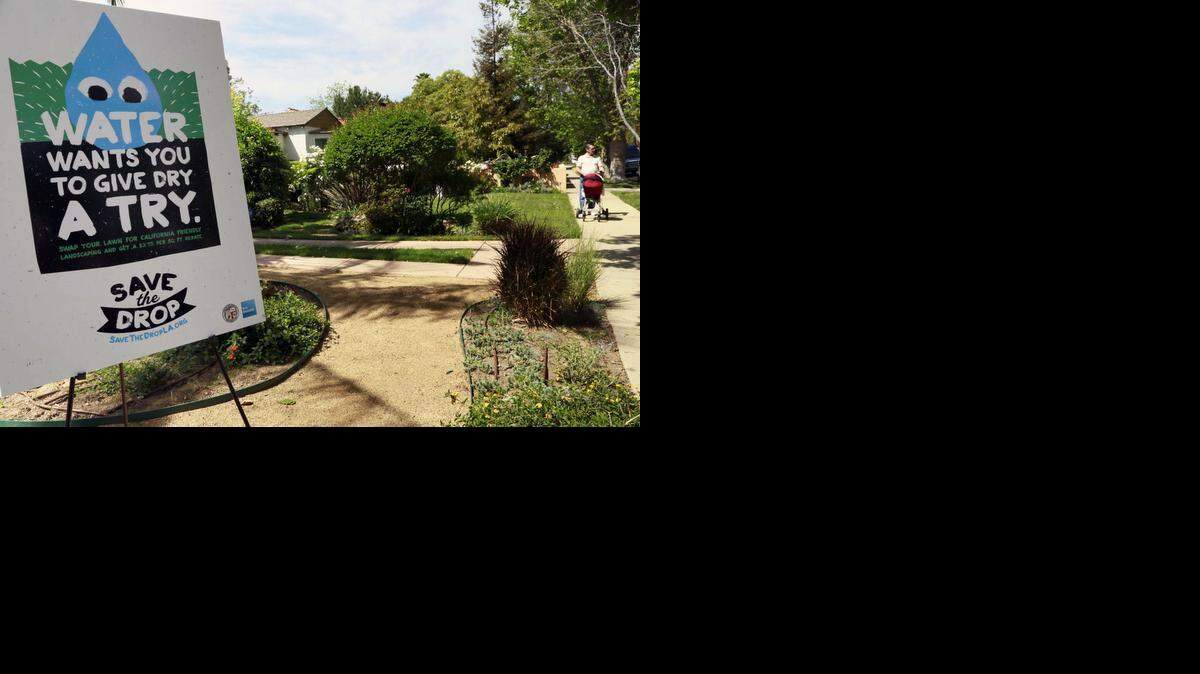
Among urban water users, cutbacks ordered this month by Gov. Jerry Brown could prompt changes in landscaping and construction standards. Yet those also are unlikely to hinder the state economy, the report said.
The biggest economic risk, the report said, is a continuing drought that leads to a slowdown in California’s homebuilding industry, a major part of the state’s economy. Demand for new homes already exceeds supply, and new limits to conserve water would reduce construction employment, business growth, and state and local government revenue, according to the LAO.
Also, a worsening drought could hurt consumer confidence and possibly cause people to pull back on purchases of cars, appliances and other major items, the LAO said. Such behavior would pull down the economy as well as government revenues, the report said.
Kurt Baerenklau, an associate professor of environmental economics and policy at UC Riverside, called the LAO report “a reasonable assessment of short-run costs” from the drought. But he questioned if the report overlooked some other possible drought impacts.
This story was originally published April 14, 2015 at 11:12 PM with the headline "Drought’s economic harm ‘limited’."