
Organ donor registry up 30 percent
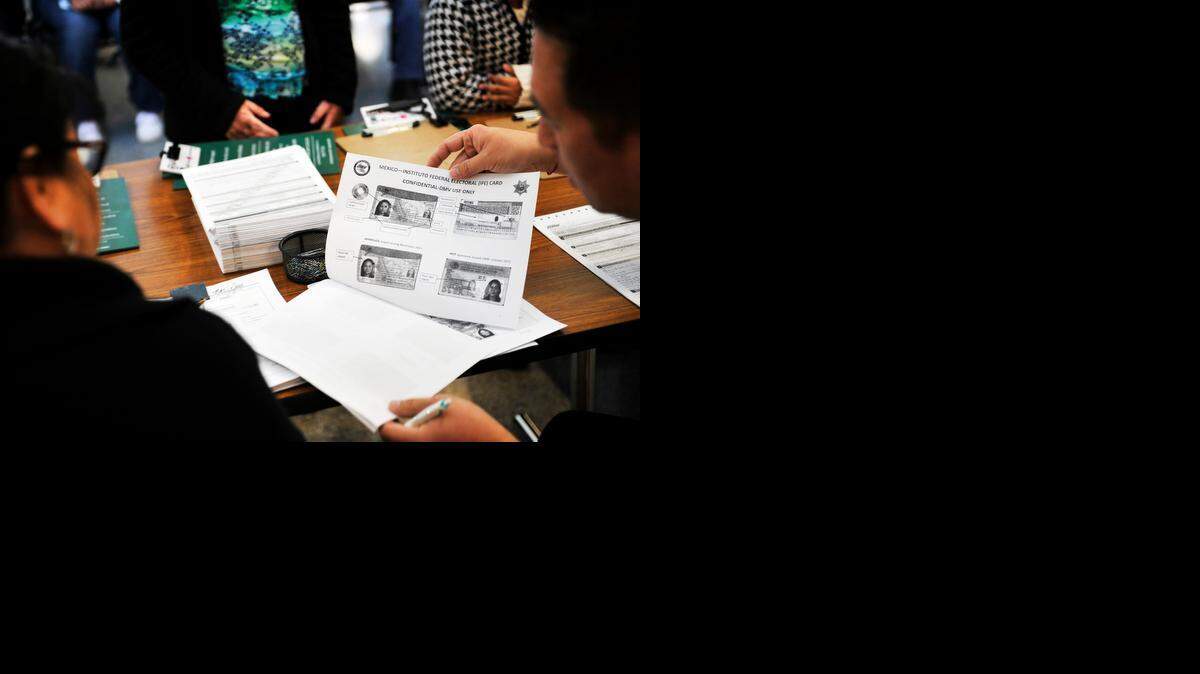
The California law allowing undocumented immigrants to get driver’s licenses may have an unexpected benefit for thousands of people waiting for organ transplants in the central San Joaquin Valley and statewide.
The California Transplant Donor Network says undocumented immigrants may have caused a 30 percent spike in the state’s organ and tissue donor registrations so far this year.
The immigrant drivers, many of whom are from Mexico, also could boost the number of Latinos on the donor registry who are more likely to match with Latinos waiting for transplants, the network says.
More than 147,000 people have obtained driver’s licenses since the immigrant driver’s license law, Assembly Bill 60, took effect Jan. 2, according to the California Department of Motor Vehicles. People who apply for a driver’s license in California are asked if they wish to register as an organ and tissue donor.
From Jan. 2 to March 3, 56,000 people signed up as organ donors, according to the donor network, the only federally designated organ recovery organization in Northern and Central California and Northern Nevada.
It’s got to be more than a coincidence that in the past three months — since AB 60 took effect — so many people were added to the donor registry, said spokesman Anthony Borders. “It’s the only spike that’s happened in the last few years.”
The network has not seen such an increase in the registry since 2012 when people were allowed to sign up via Facebook, Borders said. That campaign resulted in a tenfold increase to the registry, he said.
The DMV has yet to release donor numbers for undocumented immigrants issued licenses, so it’s not known how many of them are among the 56,000 new registered donors. But Borders said the DMV is the most popular route people use to sign up as organ donors — nine out of 10 people who sign up do so at the DMV, he said.
AB 60 allows anyone who does not have proof of lawful presence in the United States to apply for a California driver’s license. Undocumented immigrants must complete the same steps as anyone — an eye exam, have their photo taken and pass a written test.
Eleazar Valdez, 37, of Clovis, said he got a driver’s license under AB 60 and now can legally drive to jobs as a translator, photographer and caterer. He has a master’s degree in Latin American literature and would like to teach, he said.
When he got his driver’s license, he signed up on the donor registry because “it was the right thing to do,” he said. He would want to know “if something happened to me that my organs are going to be living in someone else.”
Marcella Corona, community development liaison for the transplant donor network, said the increase in donors could make a difference for Latinos in the Valley who are waiting for organs.
Donors are more likely to match someone with similar cultural and ethnic backgrounds, she said. Of the 23,000 Californians on organ waiting lists, 40 percent are Latino, she said. And 80 percent of Latinos are waiting for kidneys because of a shortage of donors.
Adriana Castillo, 44, of Fresno, is one of the state’s 7,000 Latinos waiting for a kidney transplant.
A Spanish teacher at Central High School-East, Castillo has polycystic kidney disease, a condition that can cause the kidneys to stop working. She has been waiting for a kidney for three years, and this semester she had to take medical leave from the classroom. She does dialysis at home four times a day to clean her blood of toxins that normally would be eliminated through her kidneys. Each dialysis session takes 30 to 45 minutes.
The donor registry is her best hope for a transplant, Castillo said. Most of her family is in Mexico and are not in positions to be donors. A sister, for example, is pregnant and has two toddlers.
Castillo said she is heartened by the increase in people who have signed up on the donor registry. “Unless you know an angel or a live donor comes my way and wants to donate a kidney, my hopes are on the donor network.”
This story was originally published March 14, 2015 at 9:50 PM with the headline "Organ donor registry up 30 percent."