
No relief for many Valley farmers
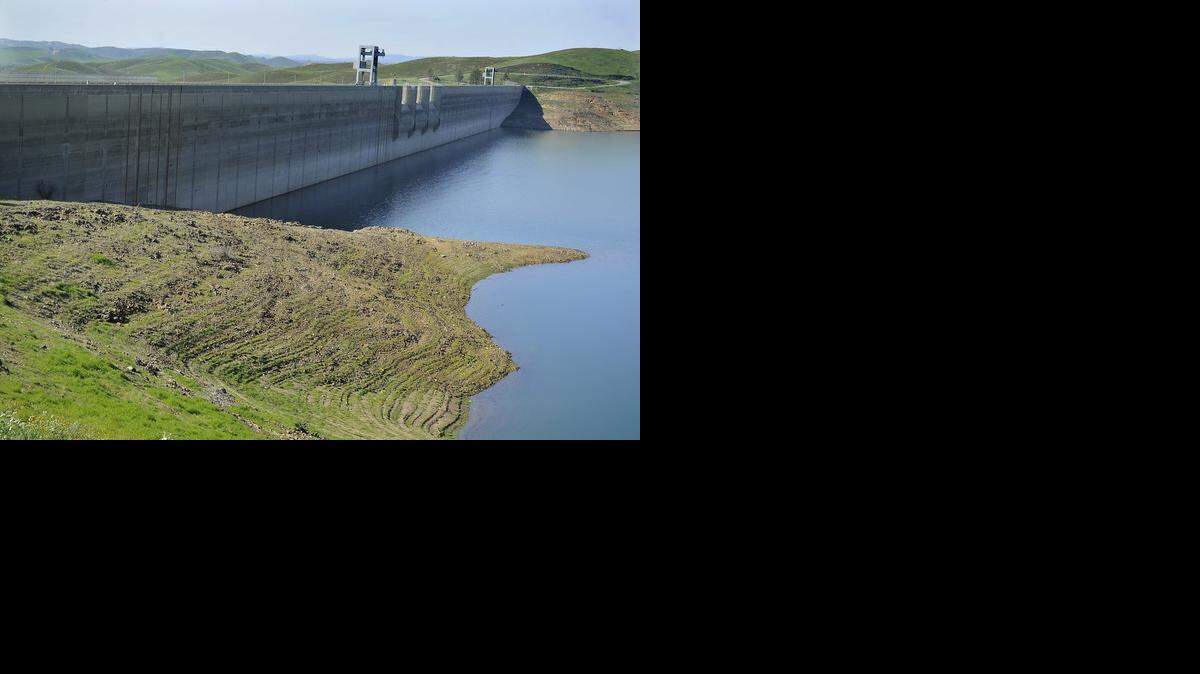
In the withering California drought, 15 water districts will deliver precious irrigation supplies to Kern County growers while 15,000 farmers face summer without their Millerton Lake allotments – a confusing repeat of last year.
How does the south San Joaquin Valley get some water in back-to-back drought years while the east side goes without? And, by the way, vast tracts of farmland on the Valley’s west side also will be shut out.
The difference: The Kern growers buy from the State Water Project. The east-siders and west-siders buy from the federal Central Valley Project.
The projects are California’s water titans, looking almost alike with reservoirs, canals and their gargantuan pumps in the Sacramento-San Joaquin Delta to export water.
But they are different, which can create a complex and uncomfortable flashpoint in the Valley. For one thing, the smaller state project has a somewhat lighter burden, because it does not have to provide more than 300,000 acre-feet of water for wildlife refuges as the CVP does.
The subtle difference is a big deal in a drought, when there is so little water to go around. Other below-the-radar differences, such as water-delivery pecking order dating to the 1800s, are magnified in a drought. Those with historic rights get their water first.
Still, the state project was able to deliver a tiny-but-welcome 5 percent last year. This year, with a little more rain in Northern California, the 20 percent looks a lot better than zero. Federal officials say they’re trying to do the same.
“People should know we are trying to be as creative as we can to provide as much water as we can,” said CVP operations manager Ron Milligan of the U.S. Bureau of Reclamation. “The State Water Project is cooperating with us to make this work.”
Both projects must scramble to deal with water quality issues and restrictions to protect fish. They also cope with the Golden State’s commitment to supply those with historic water rights. The system, which one expert called a “hopeless mess,” needs reform, because it is impossible to track all the usage, say water scholars.
Yet all of the 29 state contractors — the biggest being in Southern California and Kern County — are getting 20 percent of their contractual supplies this year.
History comes first
What’s holding back the larger CVP? It starts with big commitments to those who hold historic water rights.
The federal project must provide 2.6 million acre-feet of water for Sacramento Valley landowners and some San Joaquin Valley west-side farmers who have those historic water rights. Federal officials also must find some water for small city contractors, such as Orange Cove and Huron.
On the state project ledger is providing water for landowners with historic rights in the Feather River area, amounting to about 900,000 acre-feet, according to the state Department of Water Resources.
An acre-foot of water is 326,000 gallons, or a year’s supply for an average family in the San Joaquin Valley.
On another front, CVP contractors are interested in revisiting an agreement dating to 1986 that divides responsibility for supplying water to high-priority rights holders in the Sacramento Valley. The Cooperative Operating Agreement requires the CVP to provide water for 75 percent of those needs, while the state project puts up 25 percent.
In wetter seasons, there is enough water in Northern California to make up for the difference between the CVP and state project responsibilities. But that’s not happening in the drought, said Ara Azhderian, water policy administrator for the San Luis & Delta-Mendota Water Authority, representing west San Joaquin Valley districts on the CVP.
‘Growing disparity’
“There’s a growing disparity in the drier years,” he said. “It’s probably a good time to talk about it again.”
In Kern County, state water contractors don’t agree. Curtis Creel, assistant general manager of the Kern County Water Agency, said he has not seen a problem with it.
“The obligation is higher for the CVP in certain years,” he said. “But it’s equitable.”
Creel pointed out another difference in the projects — one that does not favor state contractors. Unlike the CVP, state water contractors pay for water deliveries whether they get them or not.
Kern farmers may have gotten 5 percent of their water last year, but they paid for 100 percent and still needed to buy other scarce supplies. The same thing will happen this year when they get 20 percent.
“I think the dialogue now should be about when this water crisis ends,” Creel said. “We have depleted reserves. It will take time to recover. One normal year of precipitation won’t do it.”
Why the difference in the finances? The state project was developed two decades after the CVP, which was built in the 1930s and 1940s with federal funding in a Depression-era economy. The CVP’s financing is far more forgiving than the state project because the federal government had deeper pockets and was trying to spur business.
Another difference: CVP customers are primarily farmers. About 70 percent of the state project’s customer base is urban, chiefly the Metropolitan Water District of Southern California.
‘Wild West’ water rights
Either way, nobody escapes the state’s mystifying water rights, which some scholars consider an old, “Wild West” approach. Longtime researcher and academic Michael Hanemann said California decades ago chose not to empower an agency to thoroughly vet water rights dating to before 1914.
Now there are more claims than there is water, said Hanemann, an economics professor at the University of California at Berkeley. Sorting out who gets water and who does not is a nightmare in a drought, he said.
“The state had the opportunity to reform in the 1940s and 1950s,” he said. “And it might have taken until now to do it. But at least it would have been done and in place for a time like this.”
Hyacinth mess
The drought isn’t the only problem now facing the state’s water movers. The growth of hyacinth, a water-loving plant in the Sacramento-San Joaquin Delta, is troublesome, too:
▪ Federal water export pumping has been slowed at the Delta because hyacinth can clog the pumps.
▪ State pumps in another spot of the south Delta have not been plagued the same way, so they have pumped a lot of water, the state Department of Water Resources says.
▪ The CVP should be able to make up the difference later this year, say water leaders. The state will ease back pumping and allow the feds to increase pumping.
This story was originally published March 7, 2015 at 9:29 PM with the headline "No relief for many Valley farmers."