Stanislaus siblings are patients in Sutter Health’s first robotic kidney transplant
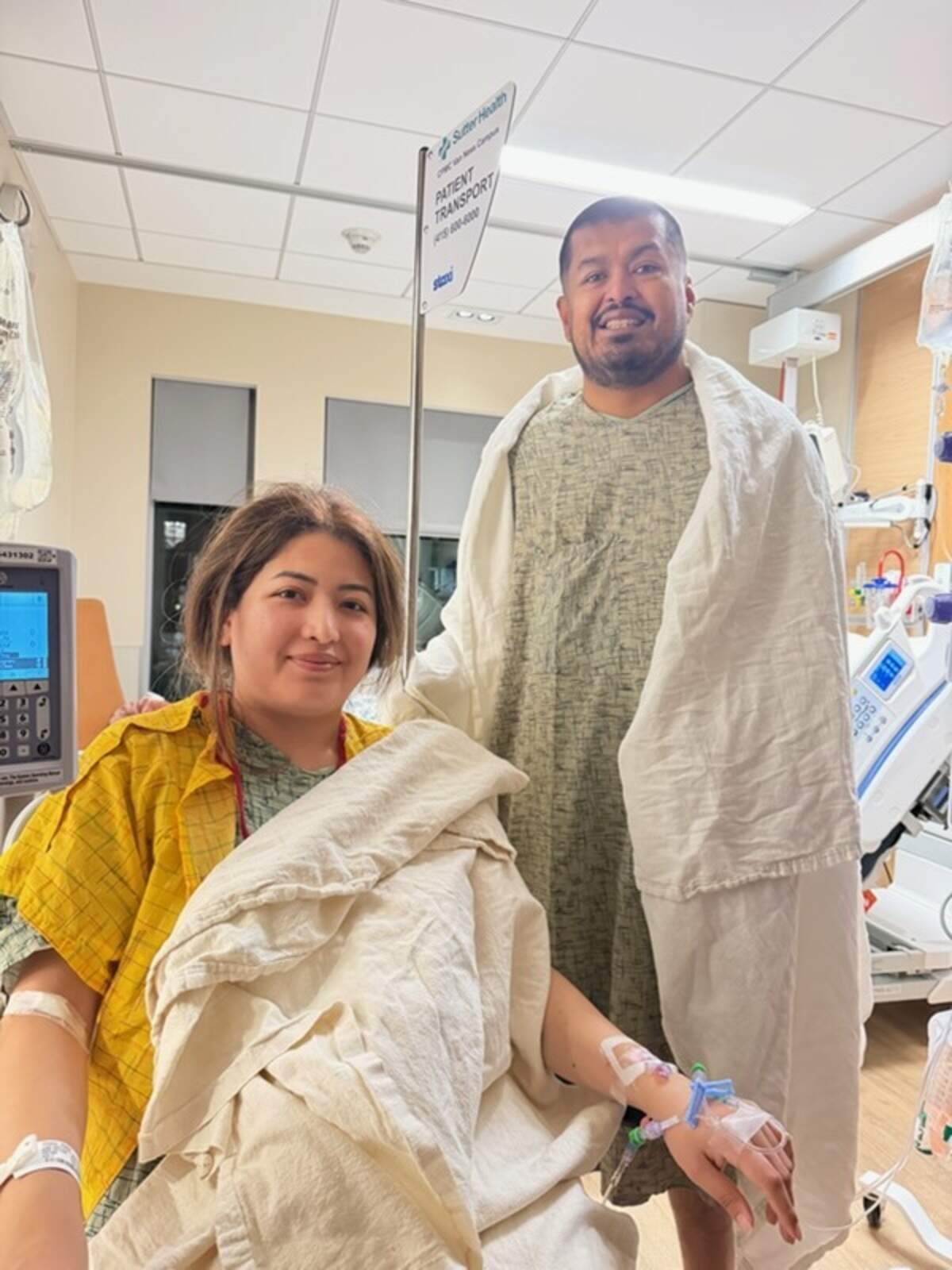
Sutter Health performed its first robotic-assisted living donor kidney transplant Tuesday on Patterson resident Juan Chavez and his sister Alyson Chavez, who lives in Turlock.
The procedure, done at Sutter’s California Pacific Medical Center Van Ness Campus in San Francisco, offers a minimally invasive approach that can reduce recovery time and improve outcomes.
Alyson, 28, donated her kidney to her 43-year-old brother after he was diagnosed with end-stage renal disease — the final stage of chronic kidney disease — in August.
While in Mexico last summer, Juan told his doctor friend that he was experiencing itchy legs. His friend recommended he do some blood work.
Juan did the test and found out his kidney functions were poor.
Both his wife and sister quickly started testing to see if they could potentially donate a kidney to him. His sister turned out to be a strong match.
Juan said he was nervous about the surgery — not for him but for his sister. He already had undergone peritoneal dialysis in September, but this would be Alyson’s first surgery.
He kept thinking she would back out, but she didn’t.
“She was very determined,” Juan said.
The two siblings are 15 years apart but very close. Juan practically raised Alyson after their father became bed-bound following a stroke. They have four other siblings.
Alyson said her brother would always take her on trips to Mexico, and the two talk every day.
“It’s not common that your brother will take you to his trips, too,” Alyson said.
She was nervous about the surgery but said the care team was very attentive the whole time and would check in on her to ease her nerves. They told her she could change her mind at any moment.
What’s the procedure like?
Each patient’s surgical procedure took about four hours.
Dr. Eric Miller, the kidney and pancreas transplant surgeon, said the overall procedure went swimmingly. He steered the da Vinci 5 robot, which is a laparoscopic tool that helps conduct complex procedures through its 3-D high-definition imaging and flexible robotic arms.
It allows surgeons to perform the operation without having to create a large incision, meaning less blood loss, less pain and lower risk of infection. It also means less narcotic use, which can be beneficial for patients with addictive behaviors.
This surgery is also more accessible to people of bigger body sizes, who might have been previously declined for transplant because of their weight.
“It’s fighting an uphill battle when patients are three days a week on dialysis, have no energy, their battery is dead all the time, and then you ask them to lose weight,” Miller said. “This gives us another avenue to possibly offer this as an option.”
Miller trained at Cleveland Clinic, which was the first hospital in the world to successfully perform a robotic single-port kidney transplant in 2019.
“It finally seemed like the right time to do our first here at CPMC,” he said. “I’m going to continue to work really hard to bring this to more patients because I really believe in it and I think that it’s where the field is heading in the future.”
While this type of procedure is not for everyone and patients need to be chosen appropriately, Miller said he’s hoping to expand it at Sutter. He aims to convert the majority of his cases in the coming year to the robotic approach.
Sutter’s CPMC, part of Sutter Health, performed its first kidney transplant in 1969. It is now one of fewer than 30 transplant centers nationwide actively performing robotic transplant procedures and one of California’s longest-running transplant programs.
A shortage of donors
As it stands, there is a larger population of people who need organ transplants than those who are willing to donate.
Most kidneys for transplantation come from deceased donors, but living donor transplants generally show better outcomes for recipients, allowing them to potentially stay off dialysis. Living donors also reduce wait time and allow for more flexibility in scheduling surgeries.
Miller said that most people aren’t aware that kidney donors can return to a full productive life with only one kidney, as long as they are carefully selected. All living kidney donors in the United States are also automatically prioritized for a kidney transplant if they ever need a transplant in the future.
“There’s no significant detriment to their quality of life, quantity of life, or risk of dialysis or kidney disease in the future, as long as health factors are taken care of,” he added.
He hopes that these minimally invasive techniques they are pioneering will encourage more people to consider donating their organs.
Smaller incisions mean faster recovery
It’ll take about three months for Juan to recover and six weeks for Alyson — which is quicker thanks to the robot’s smaller incisions.
Juan said his peritoneal dialysis surgery was far more painful than this one.
Alejandra Chavez, Juan’s wife, said he already looks much better after the surgery. Alejandra is a nurse at Sutter Memorial Medical Center.
She said she feels they were blessed with the right doctors, from the nephrologist in Modesto to the surgery team in San Francisco. Most of all, she’s thankful for Alyson.
“She’s a savior, she’s a warrior, she’s everything for us,” Alejandra said. “She gave him a new opportunity.”