What are kratom products? And why are Stanislaus shops not supposed to sell them?
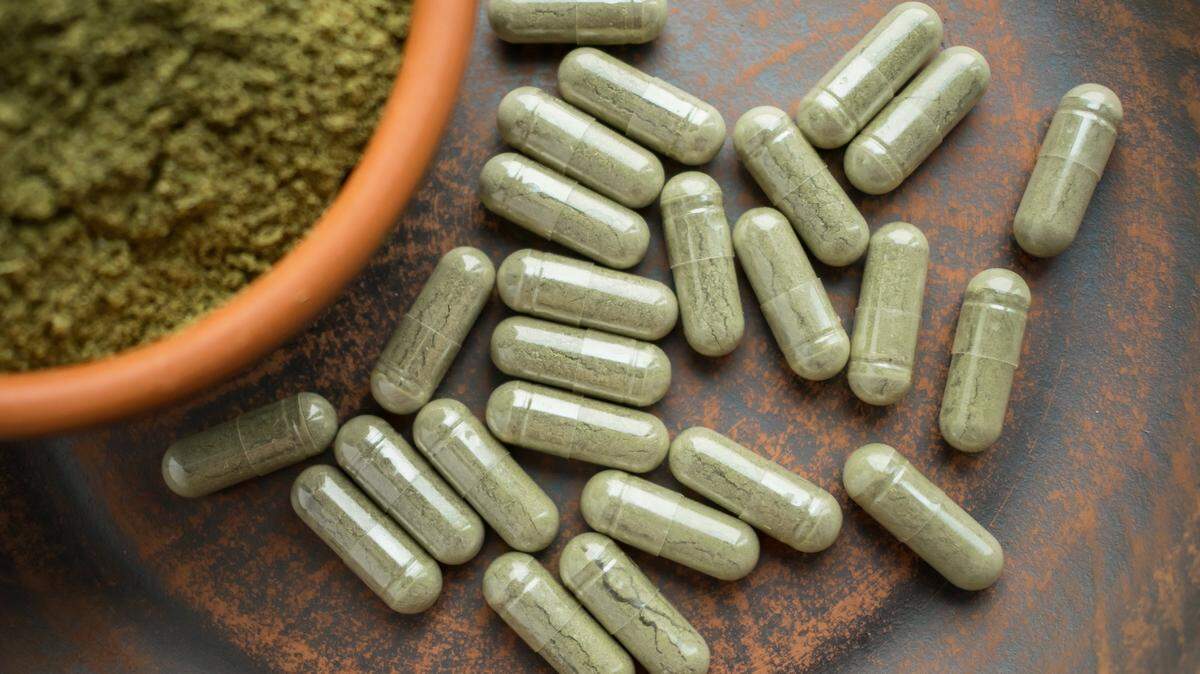
Psychoactive substances derived from the herbal extract kratom are in numerous products sold today across the nation, including in Modesto, and they’re increasingly showing up in law enforcement drug seizures.
A Centers for Disease Control and Prevention report last month noted a massive increase in adverse events caused by high-potency kratom from 2015 to 2025. Hospitalizations for kratom use increased from 43 nationwide in 2015 to 538 in 2025, the CDC report said. Last year alone, 549 hospitalizations occurred after people mixed kratom with other drugs or alcohol.
Kratom (Mitragyna speciosa) is a tall Southeast Asian plant with psychoactive effects. The crushed leaves are made into pills and powders commonly sold in smoke shops and convenience stores. These products may be sold as remedies for pain, anxiety and depression or marketed as dietary supplements.
Consumer products including tonics and “mind energy” drinks, which may contain both kratom and kava root, are now widely available in the United States.
Kratom is traditionally brewed in tea for pain relief and mood adjustment, but more and more products made from it emerged in the early 2000s. Around 2023, synthetics derived from components of the plant, such as 7-Hydroxymitragynine, or 7-OH, became a concern for health officials because of their dangerous potency, addictive qualities and risks of causing harm.
An overdose of 7-OH may produce symptoms of nausea and vomiting, sweating, rapid heart rate, trouble breathing, loss of consciousness, seizures and respiratory depression.
“When you think about something that’s more potent than prescription medication, already there should be a warning on these products,” Kelly Olson, director of clinical affairs for Millennium Health, said in a presentation to the Stanislaus County Opioid Safety Coalition last week.
Olson said kratom products are mostly unregulated and are poised to harm an increasing number of people. The CDC has been reporting more deaths tied to Kratom and California has begun a campaign to ban sale of the products.
Kratom can be purchased in powdered form, leaves, gum, pills and oil. The substance binds to receptors in the brain similar to opioids and in lower does may act as a stimulant, such as a tonic drink that was marketed to students at three universities. High doses result in sedation and euphoria.
Risks of the higher potency products are still being studied, but they include a depressed respiratory system, muscle relaxant effects and painful withdrawal symptoms. Olson said some people turn to kratom for pain relief if they can no longer get pain medication from their doctor, but information is lacking on whether the products are safely manufactured.
Olson added that more and more teenagers are vaping oils containing kratom. The products sold in smoke shops may be packaged with names like “Krave Kratom Powder” and “Seven,” which are chewable tablets containing 7-Hydroxymitragynine in flavors such as piña colada.
In Southern California, the 7-OH compound and alcohol were found in three adults who died of fatal overdoses reported in September.
The FDA has not approved kratom for medical use and took steps last year to restrict 7-OH opioid-like products.
Kratom products have been legal in the United States, though some states, counties and cities have banned them. The U.S. Drug Enforcement Administration considers kratom a drug of concern.
In the past year, the Los Angeles County health agency confirmed six deaths tied to 7-OH overdose, a state advisory said. “Although illegal to sell or manufacture for consumption, we are still finding kratom and 7-OH products for sale in gas stations, smoke shops, online and other retailers,” Dr. Erica Pan, state public health officer, said in October.
State action targets kratom products
Without passage of a new law, the California Department of Public Health declared in October that products containing kratom and 7-OH are illegal to sell under the Sherman Law. The health agency said those products may cause “addiction, serious harm, overdose and death.”
Pan said the products are dangerous and “the best way to protect yourself is to avoid 7-OH and kratom-related products.” Naloxone is able to reverse an overdose.
The California Department of Public Health has targeted kratom products based on a law permitting the state to ban products that are not FDA-approved. The Department of Alcoholic Beverage Control has notified licensed businesses it’s illegal to sell kratom products for consumption.
Venus McDonald, manager of Modesto Smoke Shop on Oakdale Road, said the business had carried several kratom products. The store has complied with the state, she said, taking those products off the shelves, but she disagreed with the action lumping all kratom-based products into the ban.
McDonald said the plant-based kratom products are all natural and some are not as bad as the highly addictive products containing 7-OH. “Anything taken in excess can be addicting,” she said.
The manager said many customers purchased the kratom products for energy, pain relief and other purposes. “The state told us they were banned, so we had to take them off the shelves. You have a lot of people in withdrawal,” she said.
The products are so widely available that consumers may not know what’s in them. Phoebe Huss, a UCLA student writer with the College Journalism Network, detailed how a company marketed the tonic drink Feel Free to students at the University of Southern California and two other colleges. The “wellness” drink in blue bottles, providing a mood lift, contains kratom and kava root and was promoted through athletic department sponsorships, according to a CalMatters piece last month.
People on a Reddit channel called r/Quittingfeelfree tell of withdrawal symptoms after extended use of 7-OH and Feel Free.
McDonald said she agreed the Feel Frees and another drink containing kratom are addictive.
No local ordinance related to kratom
Stanislaus County does not have an ordinance regarding kratom, but Fresno County leaders in November approved an ordinance banning the sale of kratom products if they contain more than 2% of 7-OH. According to The Fresno Bee’s reporting, county supervisors worried it was too easy for young people to obtain the products.
Some less potent kratom products can still be sold in Fresno County smoke shops to adults 21 or older, but the items must be kept behind the counter. Fresno County’s health department was handling enforcement of the restrictions.
Carissa Lucas, a Stanislaus County spokesperson, said by email the county is not considering a local ordinance related to kratom at this time.
Lucas said community members who encounter kratom or 7-OH products being sold are encouraged to report it to the California Department of Public Health Complaint Hotline at 800-495-3232 or submit an electronic report through the state.