Modesto has chemical mess to clean beneath properties. What’s gotten into air is less clear

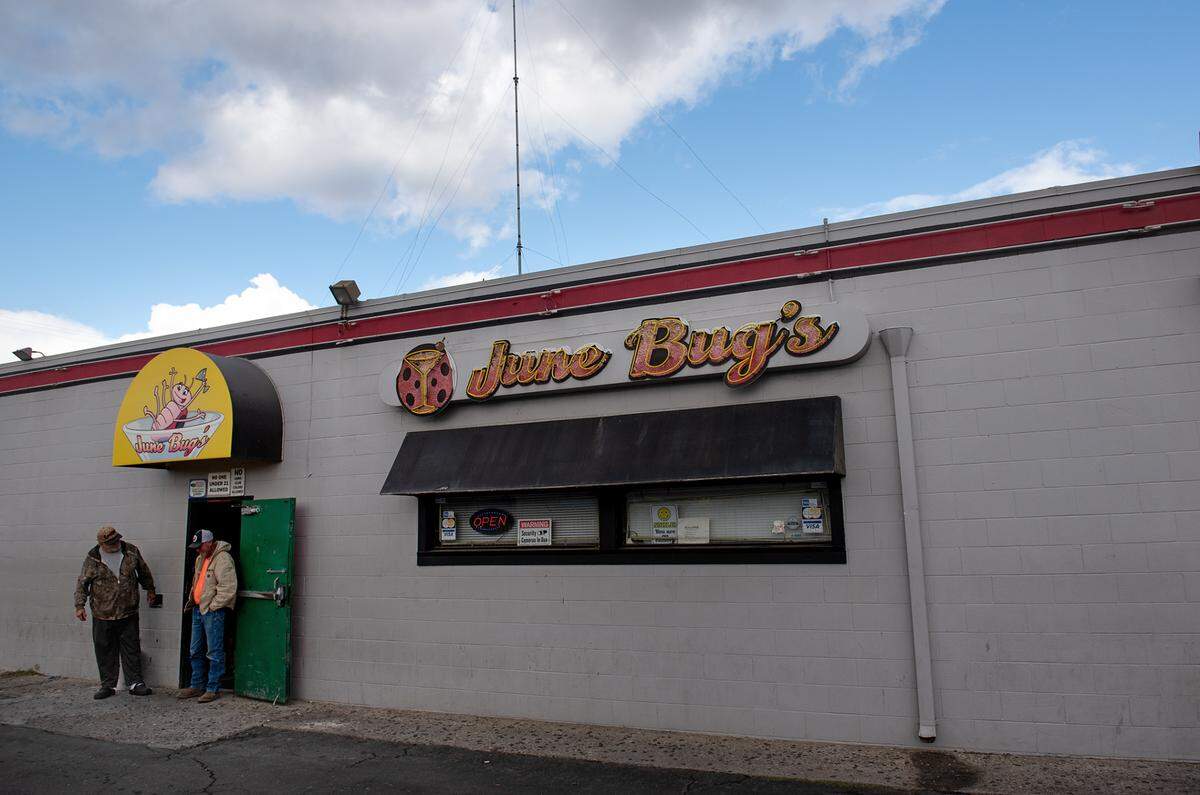
June Bug’s bar opens at 6 a.m. every day. As men and women leave the graveyard shift at Frito-Lay, Del Monte Foods, Pacific Southwest Container and other nearby food factories, they line up at the pool tables or take seats at the bar, where manager Cortney Bradshaw greets the regulars.
She keeps tabs on customers. She knows how many kids and grandkids they have, and when an elderly customer doesn’t show up one day, she calls to check in.
What Bradshaw doesn’t know is whether those she serves — and herself, for that matter — are safe breathing the air inside the bar. .
June Bug’s sits between two former dry cleaners that once used a dangerous chemical, tetrachloroethylene, or PCE. When the dry cleaners flushed PCE down the pipes, that chemical leaked from the pipes into the soil underneath the bar, and now, the California Department of Public Health (CDPH) is worried this likely carcinogen may have risen into the air the customers breathe.
“We’re kind of assuming if it was a major risk that they would let us know,” Bradshaw said, standing behind the bar as a banda song played. “Right now, we’re just kind of waiting to see how it goes.”
Since 1998, Modesto has been suing Dow Chemical and PPG Industries, the chemical companies that sold PCE. Last month, Modesto won more than $60 million in compensatory and punitive damages for another former dry cleaner site, the present-day el Cachon Bar.
But City Councilman Chris Ricci says those dollars come “with an enormous asterisk.”
“My understanding is that with the judgment, they get to appeal,” said Ricci, “and 99% of the time it gets reduced.” If the money does materialize, he said it would go toward “cleaning up the mess.”
City staff did not respond to multiple questions from The Modesto Bee about its cleanup plans.
Meanwhile, there are 22 other former dry cleaner sites in Modesto that suffered similar contamination and remain under litigation. June Bug’s is one of them.
A complicated cleanup
June Bug’s is tucked into an alleyway of a building at the intersection of Yosemite Boulevard and Phoenix Avenue. Inside, knickknacks tell the bar’s history: a cowbell hanging from the ceiling, a fish mounted above the liquor rack, a smattering of dollar bills clinging to the ceiling.
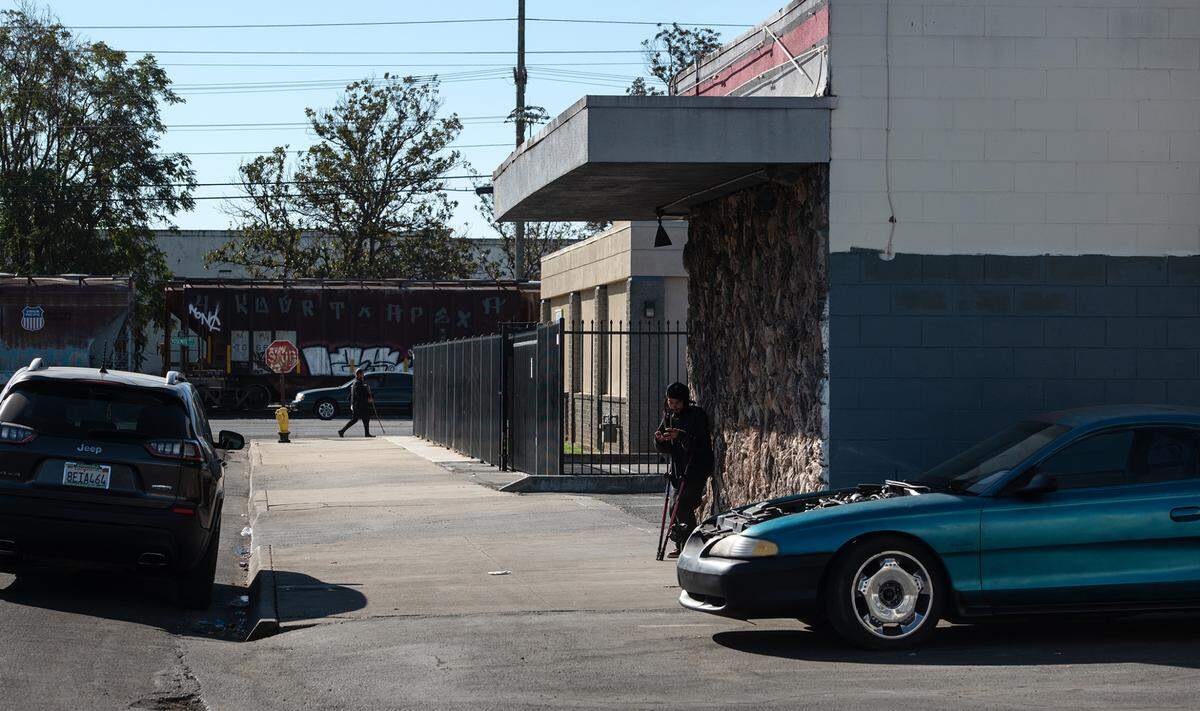
The bar shares a parking lot with an incoming cannabis dispensary. On the other side of the alley, running along Yosemite Boulevard, are Luigi’s Pizza, Sno-White Drive-In and a vocational training center operated by the IBEW electrical union.
All of the buildings and some nearby homes are at risk of contamination, according to the California Department of Public Health (CDPH).
In the early 2000s, the city detected unsafe levels of PCE in a municipal water source near the intersection, forcing the city to close a well and install technology to treat it. By December 2005, the well was operational again.
While the treated water was found safe, the soil was not. In 2012, the city sampled the ground near June Bug’s and found various spots where the level of PCE was 10,000 times greater than what is generally considered safe.
The city contracted a firm, Tetra Tech, to pump the chemical out of the ground over two years using a technology called soil vapor extraction.
One year in, Tetra Tech reported to the city that it needed to shut down the pump to comply with permitting issues from air quality regulators. Further delays with permitting and “subsequent vandalism” prevented the company from restarting.
In the same report, Tetra Tech said that despite just one year of cleanup, its efforts were sufficient. The company said it had removed 200 pounds of PCE, representing more than 97% of the chemical in the ground.
Tetra Tech did not respond to Bee requests for comment.
The California Department of Toxic Substances Control, which worked with the city of Modesto to oversee the project, said the chemical cleanup near June Bug’s was “determined to be successful” based on Tetra Tech’s report. A spokesperson from the department also shared that there are two other soil vapor extraction sites located at the present-day B&B Laundry at 1645 Princeton Ave. and Kwik E-Mark Beer Wine Lotto at 1425 La Loma Ave.
The biggest problem, however, is the air above the soil. PCE can move from the ground into the air of nearby buildings through a process called vapor intrusion.
Nonetheless, Tetra Tech estimated that the low levels of PCE in the soil correspond with low levels of the chemical in the air. The likelihood that people in these businesses develop cancer from PCE is less than one in a million, the report concluded.
Breathing it in
State Public Health disagrees with the company’s assessment. In its 2019 report, the CDPH acknowledged that the levels of PCE in the ground decreased substantially but expressed concerns about the level of the chemical in the air.
“The conditions that cause vapor intrusion differ from building to building (slab on grade, crawl space, heating and ventilation settings) and indoor air concentrations cannot be predicted from soil gas concentrations alone,” the report says.
In other words, a lower level of chemical in the soil doesn’t necessarily mean there is less PCE in the air.
Tetra Tech did test the air as part of a separate contract with the city of the Modesto, but only once, in 2012, and only inside the IBEW vocational training center next to the bar, according to CDPH. Data showed the air in the building’s bathroom could slightly increase a person’s risk of cancer. The other locations were deemed safe.
Over time, the risk of PCE contamination diminishes, but CDPH said these tests did not provide enough information to draw long-term conclusions about the safety of the air in the vocational training center or its neighbors, like June Bug’s. The report called on the city to test the air quality in all of the neighboring businesses and to run multiple tests in each location.
For Bradshaw, her biggest concern is a lack of information. She wonders if the owner of the building, who doesn’t live in the area, may have received more information. Without any more data on the building’s air quality, she doesn’t know if PCE is creating a health risk to her regulars or if the city plans to help.
“Modesto didn’t even call us to tell us that was a threat,” she said.

This story was originally published November 7, 2022 at 4:00 PM.