Stanislaus County sees big spike in overdose deaths in 2020. Did COVID-19 contribute?
Deaths from drug overdoses jumped 47 percent in Stanislaus County last year, an increase that officials attribute at least partially to the COVID pandemic.
In 2020, 122 people lost their lives to overdoses of illicit or prescription drugs, compared to 83 in 2019.
“We (know we) have more fatalities, because we track those trends.” said Dr. Bernardo Mora, medical director of Stanislaus County Behavioral Health and Recovery Services.
Even before the pandemic, use of illicit drugs and misuse/abuse of prescription medications was on the rise in the county and nationwide.
But COVID-19 accelerated drug misuse and abuse, according to the Centers for Disease Control and Prevention, due to the economic stress, loneliness, grieving the deaths of loved ones and uncertainty of the future.
For some, living through the pandemic’s disruptions of daily life triggered anxiety, depression, PTSD and other mental health issues at a time when accessing mental health services was difficult. In a CDC web-based survey, 13 percent of respondents reported starting or increasing substance use as a way of coping with stress related to COVID-19.
In addition, racial inequities and injustices, such as the killing of George Floyd and other unarmed people of color, were on graphic display contributing to the psychological trauma of 2020, especially for minority communities, according to the National Academy of Science, Engineering and Medicine.
Overdose deaths across the county
Like COVID-19, overdose deaths hit communities of color in the county the hardest.
ZIP code 95313, encompassing Crows Landing, had an opioid-related death rate of nearly 115 people per 100,000. The next closest is 95323 in the Hickman area at 58, compared to the low rate of 1.5 in the Turlock ZIP code of 95382 and a few ZIP code areas with no drug-related deaths.
About 85 percent of residents in Crows Landing are Hispanic/Latino, and about 1 in 7 people live at or below poverty.
Mora said the BHRS does not have prevention programs targeting specific neighborhoods, but there is a concerted effort to have information available in Spanish, as well as English, and that messages are delivered in multiple outlets, including radio and on buses to help reach the county’s diverse communities.
Nationwide, about 81,000 drug overdose deaths occurred in the 12 months ending in May 2020, the highest number of overdose deaths ever recorded in a 12-month period. More than 70 percent involved an opioid, alone or mixed with other drugs. Cocaine contributed to a little more than one-fourth of overdose deaths.
Hospital visits for overdose cases in the county followed a pattern consistent with other medical care during the pandemic. That is, a dramatic drop in March 2020, with a steady climb through the end of last year. Early in the pandemic people did not seek medical care due to fears of contracting the coronavirus in medical facilities.
Impact of opioids
Opioids contributed to about 57 percent of the 122 local fatal drug overdose deaths in 2020, higher than the 48 percent in 2019.
Opioids, also called narcotics, are a class of drugs used to reduce pain. They have high potential for addiction. The class includes naturally occurring products, such as morphine and codeine, derived from the pods of opium poppy plants. Heroin is a semi-synthetic opioid prepared from morphine. Synthetic opioids are manufactured and include prescription painkillers such as fentanyl, oxycodone and vicodin, to name a few.
Mora is also a member of the Stanislaus County Opioid Safety Coalition, a program with some grant funding and led jointly by BHRS and public health. The coalition is a collaboration of county agencies and community stakeholders who are working to prevent and reduce opioid misuse and abuse through education, prevention, treatment and recovery programs.
In a 2019 report from The Bee, Stanislaus County was identified as a hot spot for prescription narcotics, with distribution of more than 218 million pills, enough for 61 pills per resident per year, over a seven-year period from 2006 to 2012.
The number of opioid prescriptions declined 13 percent from 2012 to 2019.
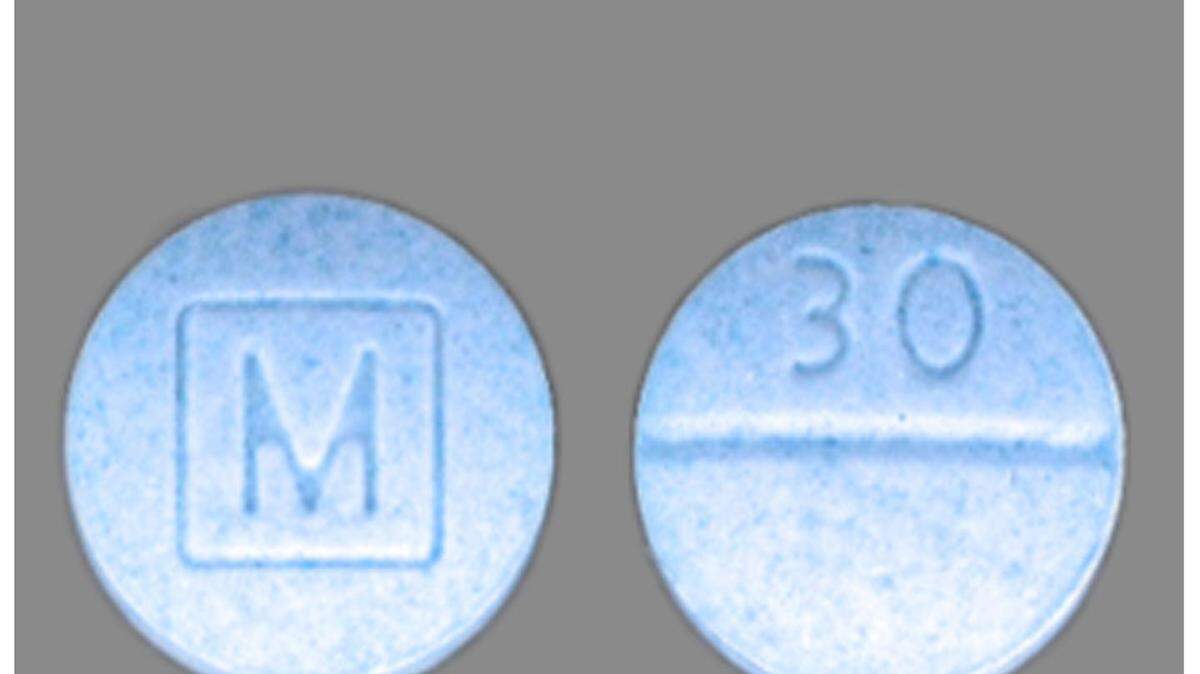
Although there’s been a decline in the number of prescriptions, circulation of counterfeit oxycodone pills, laced with fentanyl, have increased in Northern California and the Central Valley, including Stanislaus County.
“Counterfeit pills continue to be a problem in our area,” said Sharon Bear, spokesperson for the Modesto Police Department, in an email. “We’d like to remind people that any pills obtained without a prescription and not through a licensed pharmacy are not regulated and could be counterfeit and/or laced with harmful substances.”
The increase in overdose deaths noted in the fall of 2020 prompted local law enforcement and county BHRS to initiate a public awareness campaign about the dangers of the fake pills, as well as opioid use in general.
She said MPD didn’t see a significant increase in the number of drug-related arrests last year.
Are overdose deaths suicides?
Assessing the number of overdose deaths that are intentional as means for suicide is difficult.
“Most people who take their own life do not leave an explanation or a suicide note,” said Mora. “We don’t have the whole story.”
He said substance abuse disorders, depression and suicide are considered “diseases of despair,” and that some overdoses may be suicide but most people do not intend to kill themselves.
“They just want the pain, whatever it is, physical, psychological or both, they just want it to stop,” said Mora.
In Stanislaus County, deaths by suicide decreased in 2020, with 50 people taking their own lives, compared to 72 suicides in 2019. However, 2019 was an outlier compared to an average of 59 deaths in the previous five years.
With the rise in overdose deaths nationwide, last December the CDC issued a health advisory to alert public health agencies, law enforcement, first responders and others potentially involved in care of people at risk for a drug overdose. The advisory recommended expanded availability of naloxone, the anecdote for narcotic overdoses, and increased awareness about and access to treatment for substance use disorders.
Mora said, “We try to make sure everybody has good and current information so they know what resources are out there.”
Help for addiction or other drug-related issue can be found from BHRS at http://www.stancounty.com/bhrs/ or by calling 1-888-376-6246, and emergency help can be accessed via the crisis line at 209-558-4600.
This story was produced with financial support from The Stanislaus County Office of Education and the Stanislaus Community Foundation, along with the GroundTruth Project’s Report for America initiative. The Modesto Bee maintains full editorial control of this work. To help fund The Bee’s children’s health and economic development reporters with Report for America, go to bitly.com/ModbeeRFA.
This story was originally published May 7, 2021 at 5:00 AM.