‘It’s a heartbreak for us all.’ One year in, how has COVID-19 affected Stanislaus kids?
This is the first part of a two-part series on the impact the coronavirus has had on children.
Adolescence has some important tasks to master — school, relationships and growing up healthy, well-nourished and secure. And, don’t forget playing, which is serious work for child and adolescent development.
As Stanislaus County approaches the one-year anniversary of school closures due to the pandemic, students talked about their struggles and the impacts of a year lost.
“Losing my senior year has been a heartbreak for me. All of our first lasts we were supposed to experience are all gone,” said Allison Stiles, senior at Ceres High School.
“Our year will be history, (but the) class of 2021 was ripped off. It’s a heartbreak for us all.”
Stiles first talked with The Bee in 2019 about being a student-athlete coping with a chronic illness. At the time, she was a junior and said, “Sports are my whole life.” She was on the volleyball and track teams.
Child health experts are concerned about the long-term impacts of the pandemic causing uncertainty, fear, isolation and economic upheaval upon kids’ health, mental health and well-being.
The kids are feeling the weight of the past year.
Mental health through the words of the kids
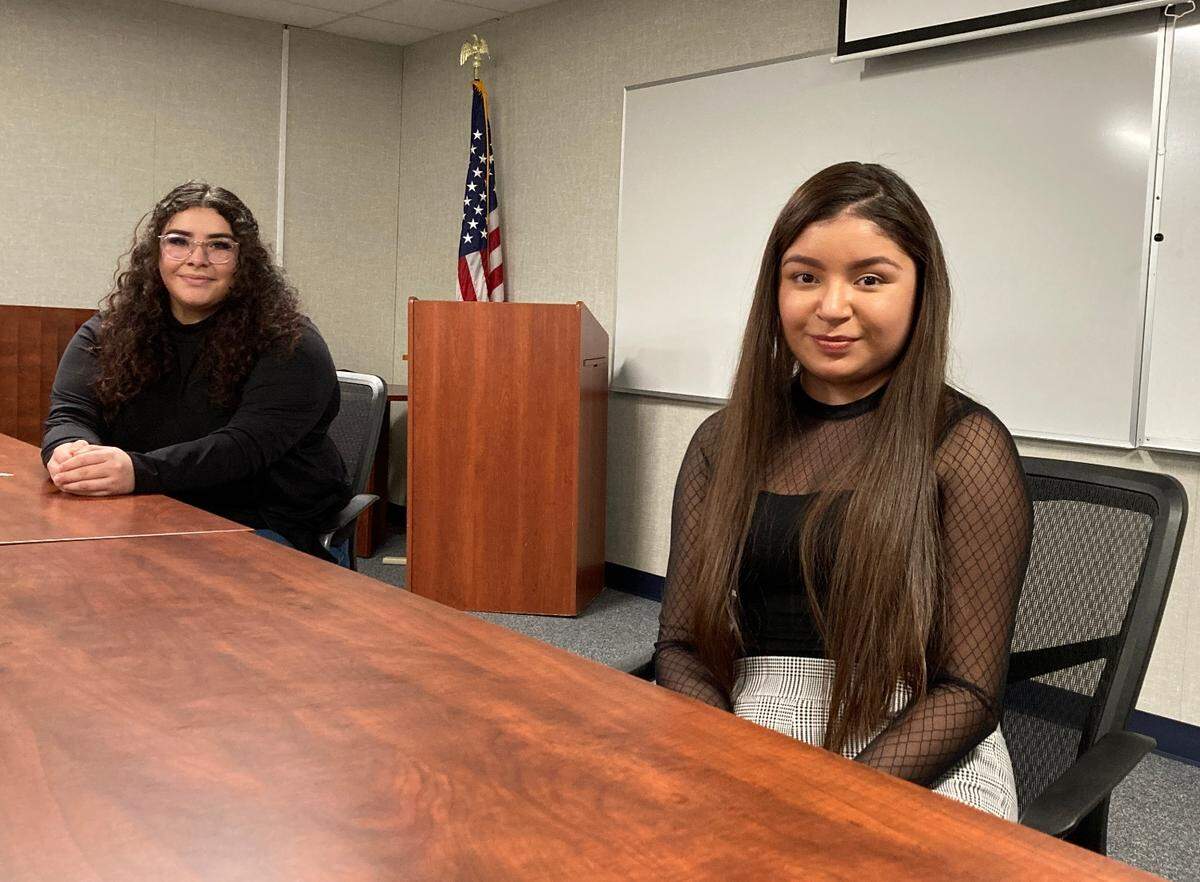
Four Denair High School students shared Stiles’ concerns. Masked and socially distanced, they sat down with Terry Metzger, superintendent of Denair Unified School District, and The Bee to discuss living through the pandemic.
“I should probably talk to someone,” said Estefany Flores, 18, a senior at Denair High. “It’s been hard for me. ... It’s really hard to open up to strangers. I’m more for in-person.”
Pureza Avila, an 18-year-old senior and student leader, said she undertook a survey of her peers to see how they were coping with the stress.
“The students said that their emotional health interferes (with their school work),” said Avila, “They feel exhausted and overwhelmed.”
She said students reported not feeling comfortable talking about their issues with adults, because they don’t feel adults understand them or take their problems seriously.
“My friends don’t really express their feelings to each other,” said Cooper Feldman, a 16-year-old junior, “We just don’t do that.”
Derek Coleman, 17, echoed Feldman’s sentiments that his male friends don’t discuss mental health, even though they keep in touch.
Flores, who is also class president, said she feels responsible for helping other students and misses seeing them.
“At Denair, we’re like a family. We’ve all grown up with each other. ... We know each other. I miss that connection.”
Metzger and the three other students said they also miss the support of others.
Kids miss classrooms, sports and friends
“Distance learning is weird,” said Stiles, “I’m going to graduate with sophomore-year learning, because I’m not learning anything at all.”
“I totally agree with her,” said Jay Simmonds, assistant superintendent for Ceres Unified School District. “Distance learning is as good as it can be, but it’s not great.”
Both Metzger and Simmonds said their districts’ teachers have done “an amazing job” adjusting, but distance learning has been really taxing for them, too.
“It’s not the same being at home,” said Coleman, “I get easily distracted. I can’t ask for help (from the teachers) all the time.”
Avila said she also misses the support from teachers and counselors, especially for guidance with applying for colleges.
All the students said they can’t wait to be back with their friends, fellow club members and teammates.
Stiles said without sports, she has taken up photography, but misses playing on a team.
“It’s been hard because I haven’t had sports,” Stiles said. “We just started going back to conditioning, which was really fun.”
Feldman plays basketball for Denair High and he said he has taken advantage of the extra time to practice his skills, but really misses playing with the team, especially the seniors.
“We don’t even get to say goodbye to the seniors,” said Feldman. “It’s really sad.”
Coleman has played football since he was 7 and said he has looked forward to his senior year on the Denair High team since he was little. He said losing that has been one of his biggest disappointments of this year.
In February, student athletes at Ceres High School, Denair, and other local districts were allowed to condition, but most school sport competitions are not yet permitted.
Research studies have shown that physical activity for kids has declined during COVID-19, more for adolescents than younger children. In addition to screen time for school, kids have spent more sedentary time for leisure activities, such as movies and video games.
Health experts are concerned about the long-term influence of a sedentary, on-screen lifestyle in childhood, especially layered upon the other losses during the pandemic.
Pandemic increases food, other struggles
Even before the pandemic, many kids in Stanislaus County were behind the curve for housing, education and health. 1 in 4 kids lived in poverty, more than 20% struggled with food insecurity, 3% didn’t have adequate housing and nearly half of county kids relied on public insurance from MediCal or Children’s Health Insurance Program (CHIP), according to the Lucille Packard Health Foundation.
Since the pandemic, unemployment and underemployment have increased poverty and food insecurity locally and nationwide. In California, 21% of adults living with children reported that their children did not have enough to eat in January, because they couldn’t afford food.
Local food banks have seen an overwhelming increase in demand, including many families new to needing their help.
In Stanislaus County, enrollment in Women Infants and Children program increased by 18%, comparing December 2020 to 2019, according to Veronica Plaugher-Macias, the WIC program coordinator at Health Services Agency. WIC provides education, support and access to food for low-income pregnant women and young children.
More than 3 million Californians have received a pandemic-EBT (similar to food stamps) through December 2020. The USDA issued waivers to allow school food programs to continue to feed their students during distance learning, mostly as “grab-n-go” meals.
Before the pandemic, county kids were not hitting some educational milestones: 39% of third graders read at grade level and only 27% of eighth graders meet math standards, both below the state average of 72% and 37%, respectively.
Learning loss during the pandemic has been documented for reading and math, and the losses are more severe for kids in rural areas, those who are low-income and students of color, with the digital divide as a major contributor.
Physical threats of the coronavirus
Although generally young people fare better with coronavirus infections than adults, nationwide more than 3 million children have been infected, according to the American Academy of Pediatrics.
In Stanislaus County, children 14 and younger account for 8.3% of the more 50,000 total COVID-19 cases, or about 4,200 cases. Those numbers do not reflect the traumatic impact upon children who are mourning the loss of more than 950 parents, grandparents, other relatives, friends and neighbors.
In addition to the direct effects upon health, COVID-19 has caused a drastic decrease in children receiving medical care for routine check-ups and sick visits.
Pediatric visits, for all causes, to emergency rooms at children’s hospitals dropped by 45% from March through August 2020, compared with the three previous years.
Golden Valley Health Centers, one of the county’s largest health care providers for children, reported declines in regular child check-ups early in the pandemic, which haven’t fully recovered.
Dr. Elaine Soriano, pediatrician with GVHC, said in an email that in the past six months, visits for children younger than 15 months have rebounded, but not for older children and adolescents. GVHC reached out to parents to encourage their return for routine care, especially for kids missing vaccines.
In California in 2020, compared to 2019, Vaccines For Children vaccine doses decreased by 12%, according to the California Department of Public Health. The VFC program provides vaccines for almost half of the 9.26 million kids in the state.
Measles vaccinations plummeted by 32%, increasing the risk for another outbreak in the state. Measles vaccine coverage in a population needs to be more than 93% to maintain herd immunity.
Stanislaus County children enjoy some of the highest immunization rates in the country, with 96% of kindergarteners being fully immunized. However, 2020 data are not yet available.
“In 2019, there were 1215 cases across 30 states of children getting the measles virus. With the decreased amount of youth receiving their vaccines due to the pandemic, it is not completely implausible that we may see cases like this once again,” Soriano said in a statement from GVHC.
She encouraged vigilance for families to be sure their children’s vaccines are up-to-date, especially with the plans for schools to reopen soon.
This story was produced with financial support from The Stanislaus County Office of Education and the Stanislaus Community Foundation, along with the GroundTruth Project’s Report for America initiative. The Modesto Bee maintains full editorial control of this work.
To help fund The Bee’s children’s health and economic development reporters with Report for America, go to bitly.com/ModbeeRFA
This story was originally published March 7, 2021 at 5:00 AM.