Here’s how Modesto area health officials feel about sending children back to campus
Some schools in Stanislaus County are offering only distance learning, a few have begun in-person learning for TK through sixth grade, and others are offering a hybrid model with a mix of the two. Nearly all districts are giving the choice to parents.
But it’s difficult for parents to know what the “right” choice is, with so much conflicting information about the risks and benefits of in-person classes, such as better learning and access to school-based services but higher risk of COVID-19 exposure, and the opposite for distance learning.
Local health care professionals, who are on the front lines during the pandemic, offered their opinions about choosing a child’s learning path during this uncertain time.
The consensus – there’s not one right answer. The decision is individualized and very personal for each family.
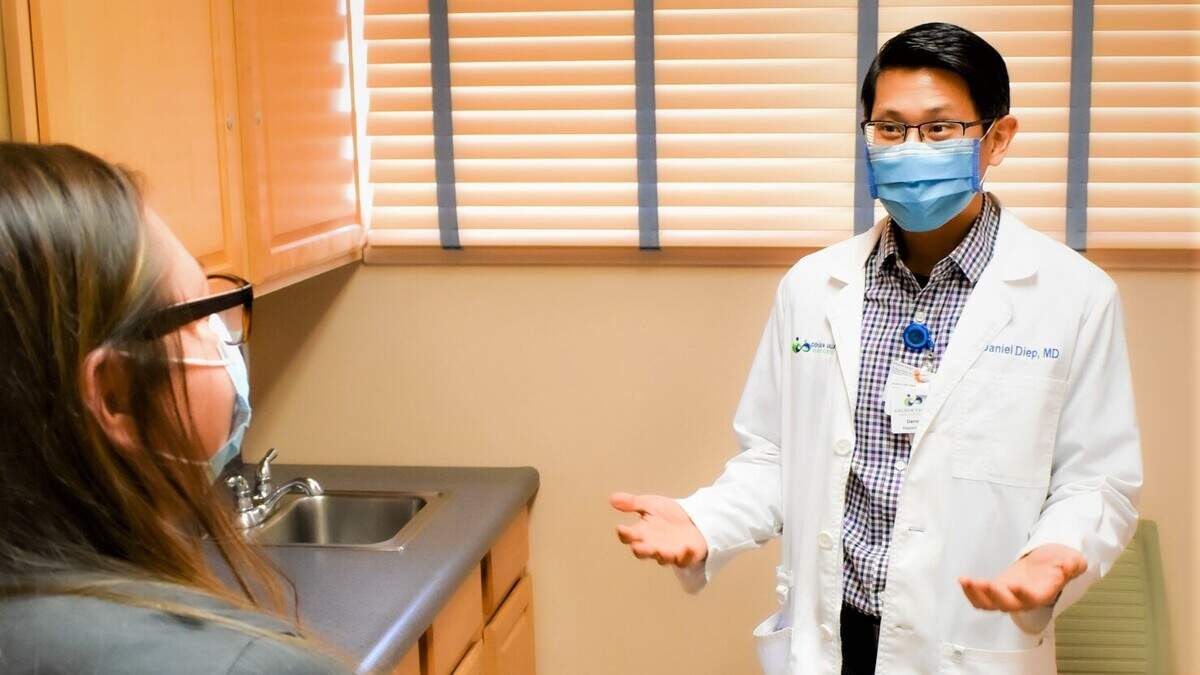
“There’s no one standard for all families,” said Dr. Daniel Diep, family medicine physician with Golden Valley Health Centers. He has cared for multiple clinic patients with COVID-19, with the majority being Latino.
“They’re trying to do what’s best for their children, but there are so many factors to weigh,” said Diep.
He has three daughters, ages 10, 13 and 15. The oldest is in public school with all distant learning and misses the engagement with her peers and teachers. The two younger girls attend a charter school with some in-person sessions, but still miss their extracurricular activities. He said, though, overall the girls are coping fairly well.
Sasha Jackson, family therapist with expertise in youth and foster teens, works in Patterson, Turlock and San Joaquin County. She shared Diep’s assessment that the decision is an individual one for a family, with weighing the risks of illness with in-person classes vs. the risks of isolation with distance learning.
“Different families have different emphases,” said Jackson, “I encourage my clients to do pros and cons of the benefits and risks for them. I try to empower them ... and help them figure out what works for them.”
She said the social interactions at school are as important as learning and that kids, especially young teens, can be particularly hard hit by social isolation.

Parents need to know school’s cleaning approach
Dr. Rosalio Rubio, an internal medicine physician who specializes in geriatrics, said he is also seeing the impacts of social isolation on his patients. Many of the seniors are staying home to be safe, but miss their adult children and grandchildren.
He echoed that the decision for attending school is an individual one but noted a concern for some families who live in multi-generational households, such as grandparents who live with school-age grandchildren.
“I have taken care of COVID patients in the hospital and many say their exposure was from their adult son or daughter or a younger relative,” said Rubio.
With seeing the unpredictable and dire consequence of the virus, Rubio said he takes it very seriously and counsels friends and patients to do the same when considering if their children should return to school.
“There’s not a right answer,” said Rubio, “Find out what the school is doing to prevent infections and then decide if that’s adequate for you and your kids.”
He had trepidation about sending his two children, ages 5 and 8, back to school, but was impressed with the school’s COVID-19 mitigation steps and last week, they returned to in-person classes two-days a week.
“It’s not black and white,” said Dr. Shea Osburn, pediatric hospitalist at Valley Children’s Hospital in Madera, about the decision to return to school or continue distant learning.
Hospitalists primarily care for patients admitted to the hospital, and Osburn said she has cared for children with coronavirus.
“For COVID acutely in pediatric patients, they seem to do pretty well, but they can definitely get it, and we don’t know what the long-term effects might be,” said Osburn.
Children with underlying conditions
She said older teens and those with underlying health problems seem to get more severe disease. They have also admitted quite a few kids with MIS-C, the severe inflammatory illness associated with COVID-19, since Valley Children’s is a referral center for the valley.
She recommends being cognizant of who is in their household, such as grandparents and medically fragile kids, their children’s ages, the family’s resources and the school’s policies.
Osburn’s 6-year-old returned to in-person learning because she’s comfortable with the measures that her daughter’s school has implemented.
“Each family has a different tolerance of risk, different social fabric and priorities,” Osburn said, “If your child is struggling with distant learning, they may need to be back in a classroom.”
However, she said for some parents the worry about the risks and their child’s compliance with wearing a mask may make it less stressful to keep them at home.
“It’s a very complicated and individualized decision,”said Osburn, “You are the person in the best position to make the right decision for your child and family.”
The American Academy of Pediatrics, Centers for Disease Control and Prevention, National Association of School Nurses and many other health organizations have issued guidance about returning to schools and child care.
For families struggling with the decision about the optimal learning path for their children, especially those with underlying health conditions, consultation with their primary care provider is encouraged.
This story was produced with financial support from The Stanislaus County Office of Education and the Stanislaus Community Foundation, along with the GroundTruth Project’s Report for America initiative. The Modesto Bee maintains full editorial control of this work.
To help fund The Bee’s children’s health and economic development reporters with Report for America, go to bitly.com/ModbeeRFA
This story was originally published November 12, 2020 at 7:14 AM.