Stanislaus County district sues e-cigarette company JUUL for harm to students, school
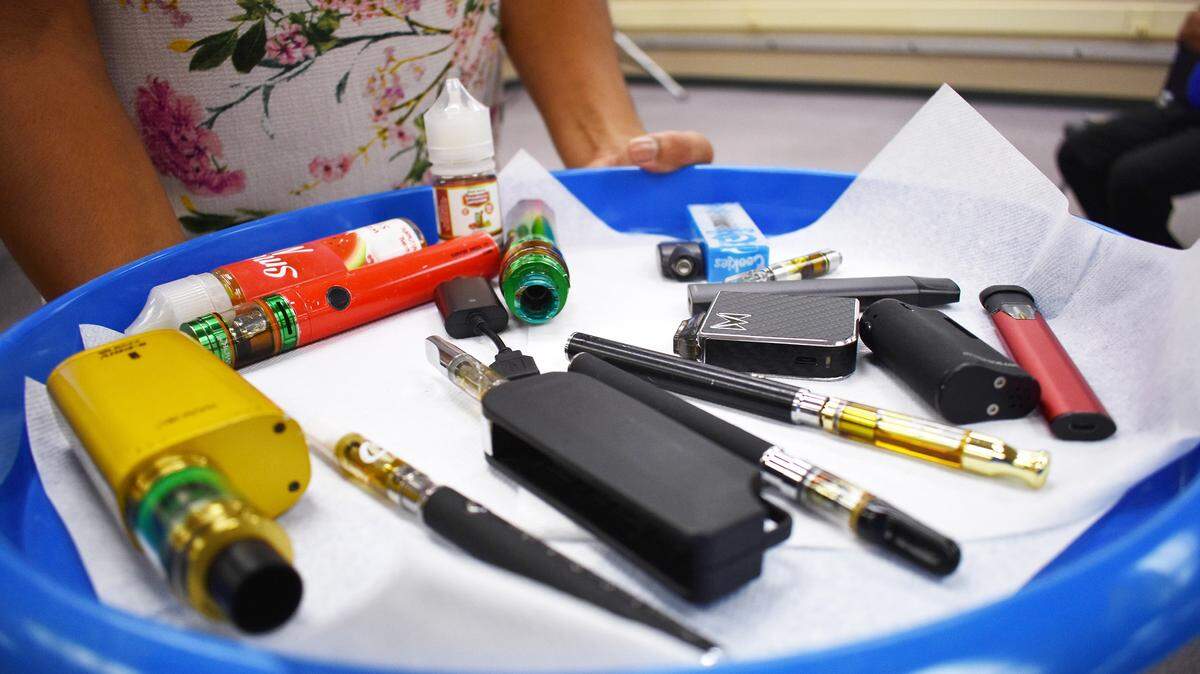
Claiming that vaping is a public nuisance and has caused harm to its students as well as its campuses, the Ceres Unified School District is suing JUUL Labs Inc. for its role in fostering the epidemic of youth e-cigarette use, including marketing practices allegedly targeting children and teens.
The suit states that vaping with JUUL pens has caused harm to CUSD students who use the devices, as well as those who don’t, due to disruption of the education and learning environment.
With the lawsuit, CUSD hopes to recover some of the expense inflicted upon the district related to student vaping.
CUSD is one of 10 school districts in California with lawsuits filed by the law firms of Baron & Budd, P.C. and Panish, Shea & Boyle, LLP against JUUL.
“Our superintendent received a letter from the law firms asking if our district was interested in participating in the suit,” said Jay Simmonds, assistant superintendent for student support services for CUSD.
He said Scott Siegel, CUSD superintendent, and the school board decided pursuing the lawsuit was a good idea because vaping has taken such a toll on their district.
“Student vaping is a significant problem, if not one of our worst,” said Simmonds, expressing concerns for student health as well as the costs to the district.
The Patterson Unified School District signed an affidavit as part of the lawsuit filed against JUUL by California Attorney General Xavier Becerra in November 2019.
No other Stanislaus County school districts are taking legal actions against JUUL at this time. However, more than a dozen lawsuits have been filed nationwide.
JUUL has 70% of the e-cigarette and vaping market, with about $224 million in retail sales last year. The company insists that its products are for adult smokers.
In an email to The Bee, JUUL said, “We remain focused on resetting the vapor category in the U.S. and earning the trust of society by working cooperatively with regulators, attorneys general, public health officials and other stakeholders to combat underage use and convert adult smokers from combustible cigarettes. Our customer base is the world’s 1 billion adult smokers and we do not intend to attract underage users. To the extent these cases allege otherwise, they are without merit.”
In Stanislaus County, 27% of 11th graders and 37% of the students in the continuation high schools have vaped, according to the 2018-19 California Healthy Kids survey.
Use of e-cigarettes rose by 900% from 2011 to 2015, with nearly 3.6 million middle and high schoolers using the devices. This is after almost two decades of decline of cigarette smoking by teens, from 28% in 2000 to about 8% in 2017.
Most of the lawsuits call out JUUL for contributing to the epidemic because of its marketing practices and products, including sleek, high-tech appearing devices and sweetly flavored nicotine liquid pods attractive to children and teens.
JUUL paid social media influencers to display their devices and used ad campaigns that featured 20-somethings who appeared younger, stylish and popular, the plaintiffs claim.
“If their target audience is adult smokers, why do they market sparkly pink vaping pens and bubble gum flavored pods?” said Vicki Bauman, prevention director at the Stanislaus County Office of Education. “Adult smokers don’t care about those things.”
The U.S. Food and Drug Administration sent a warning letter to JUUL for “engaging in labeling, advertising and/or other activities directed to consumers, including a presentation given to youth at a school,” in fall of 2018. The FDA, Congress and several state attorneys general are investigating JUUL’s marketing practices.
“It’s good that everyone is suing JUUL,” Bauman said. “They are marketing and targeting our kids, and as educators we have to protect our kids.”
Bauman said that in addition to the health threats, the vaping devices are costly for county school districts. Disposing of vaping pens and paraphernalia that are confiscated from students is expensive, because they’re combustible.
Schools also incur costs for extra monitoring for the devices by teachers and staff. Some middle- and high-schoolers are vaping in classrooms, bathrooms and elsewhere on school grounds, which is distracting.
Monetary values have not been specified in the CUSD lawsuit. The hearing date has been set for May 2020.
“In the meantime, we will continue educating our students and parents about the dangers of vaping, especially pneumonia and fatal lung injuries,” said Simmonds. “Hopefully, we’ll see fewer students vaping.”
This story was produced with financial support from The Stanislaus County Office of Education and the Stanislaus Community Foundation, along with the GroundTruth Project’s Report for America initiative. The Modesto Bee maintains full editorial control of this work.