
Will egg prices drop in California? Is there such thing as ‘eggflation?’ We asked the experts
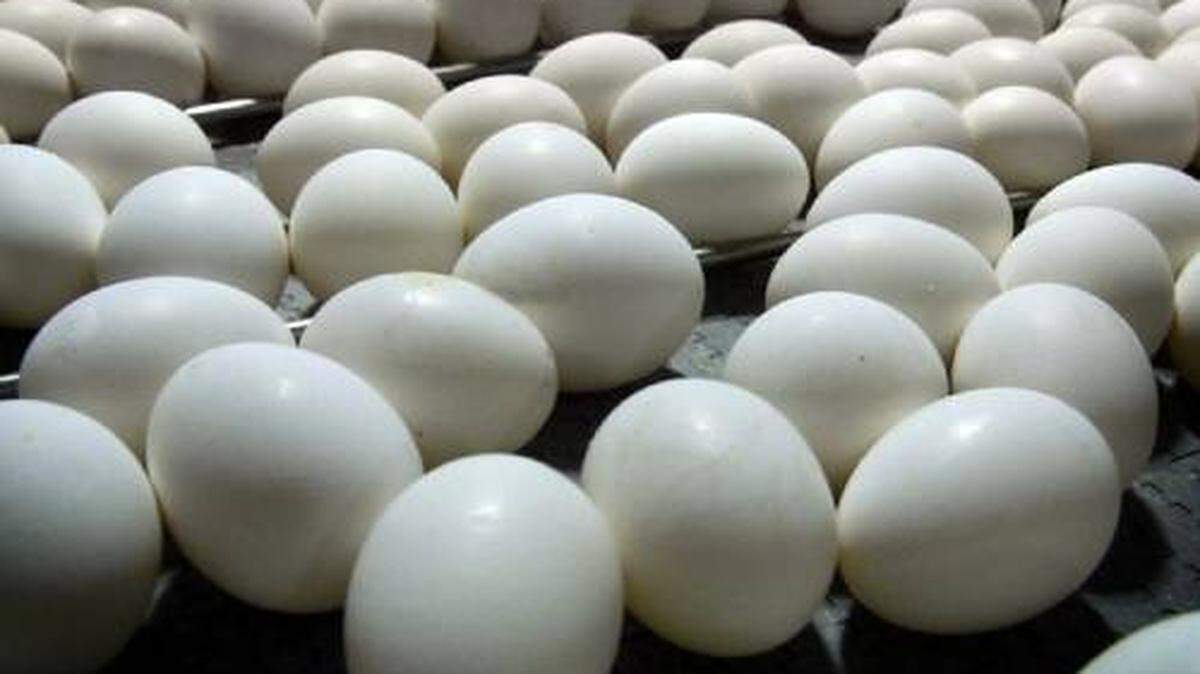
Egg prices should be dropping in California this year. But they’re still likely to be a lot higher than a year ago.
“The price should be coming down in the next few weeks/months because of increased supply,” said Bill Mattos, president of the California Poultry Federation, based in Modesto.
But California prices are expected to remain higher — often much higher — than elsewhere around the country.
The latest price for a carton of large eggs in California averaged $5.62 at the end of January, according to the U.S. Department of Agriculture. That’s down from $7.37 at the start of January, but far more than the roughly $4 a carton that’s the national average.
The agriculture department found that nationwide, retail egg prices were up 59.9% in December over a year earlier, when a carton of eggs in California averaged about $2.35 a dozen.
The Northern San Joaquin Valley leads the state in egg production. Most come from J.S. West & Cos., based in Modesto, and Gemperle Family Farms, between Turlock and Hilmar.
When will this California price surge end? And is it triggering something bigger, a reluctance of consumers to pull back on spending on other items?
Any timeline for when the egg price surge will end?
Answer: It’s hard to pinpoint a precise time. But “the good news is that we’re already seeing wholesale prices drop following peak holiday demand, and we anticipate that lower retail prices will follow,” said a statement from the American Egg Board.
Why are California egg prices so high?
Answer: California prices tend to be higher in general, and “we ban the sale of conventional eggs and require at least cage-free eggs. These are generally much more expensive,” said Daniel Sumner, a professor with the UC Davis Department of Agricultural and Resource Economics.
Why have prices spiked nationally?
Answer: The avian flu outbreak in the Midwest and East Coast is the major reason for the higher prices.
“We have lost up to 50 million layer chickens in the Midwest and East Coast, which hit the supply hard. It has taken a few months for these farms to repopulate their flocks and increase supply,” Mattos said.
Other factors, like price of fuel, seem to influence egg prices. How will that affect prices?
Answer: Mattos said the higher cost of eggs is also due to supply chain problems. And, he noted, “rising energy, feed and transportation costs are significantly higher than a year ago. So this has been the perfect storm.”
Has the Russian invasion of Ukraine and its effect on grain and fuel prices had any impact?
Answer: “About zero. The war contributed a little to higher corn and soy, which raised the cost of eggs a little, but that is just a very small part of high egg prices for consumers,” Sumner said.
Eggs, like gasoline, are prices familiar to consumers. If they see big spikes, do they start cutting back on other items?
Answer: Economists don’t see “eggflation.”
“We can’t say there’s a one-to-one relationship,” said Ataman Ozyildirim, senior director for economics at The Conference Board, which tracks consumer confidence. Confidence is usually dramatically jolted by unexpected events, such as the Sept. 11, 2001, terrorist attacks or the sudden onset of the COVID-19 pandemic in 2020.
In addition, eggs are not a huge part of a consumer’s budget. The federal Bureau of Labor Statistics, which compiles monthly price data, says eggs constitute a small amount of household’s expenses, roughly the same percentage as soup and ice cream.