Word is out on this Modesto gem. It has animals, insects and a planetarium
Right before my son moved away for college, we finally visited the Great Valley Museum.
I’d been lax in taking him there, at the Modesto Junior College West Campus, so we made it a point to finally go that summer.
It was bittersweet. Sweet because we enjoyed the museum and its exhibits, particularly its Science on a Sphere (more on that later). I bought him a T-shirt from the gift shop and we had a lovely time.
Bitter because my little boy was soon leaving us. That’s a tough one on a parent.
And now, the museum has hit its 10th anniversary this month. Time flies.
We were the only visitors while there, and I thought the Great Valley Museum with its planetarium was a hidden treasure. That perception stuck.
At the time, it may have been accurate, according to Arnold Chavez, Great Valley Museum & Planetarium director. Now, not so much.
“When I first started, yes,” Chavez said in an email interview about the hidden treasure question. “As the years have passed, I believe we’ve done a good job getting the word out about us.”
He doesn’t hear the comment “I never knew this was here!” as much as he once did.
Hidden or not, the Great Valley Museum remains a treasure, said Chavez, who became director in 2016 after serving as interim museum manager beginning in 2015.
“In my opinion, the real treasure of our museum is reminding guests (of) the beautiful lands of our Central Valley.”
When my son was little, my husband did take him to the museum’s former, far smaller spot across from the Modesto Junior College East Campus.
Then called the Great Valley Museum of Natural History, it had opened in 1980, according to Chavez.
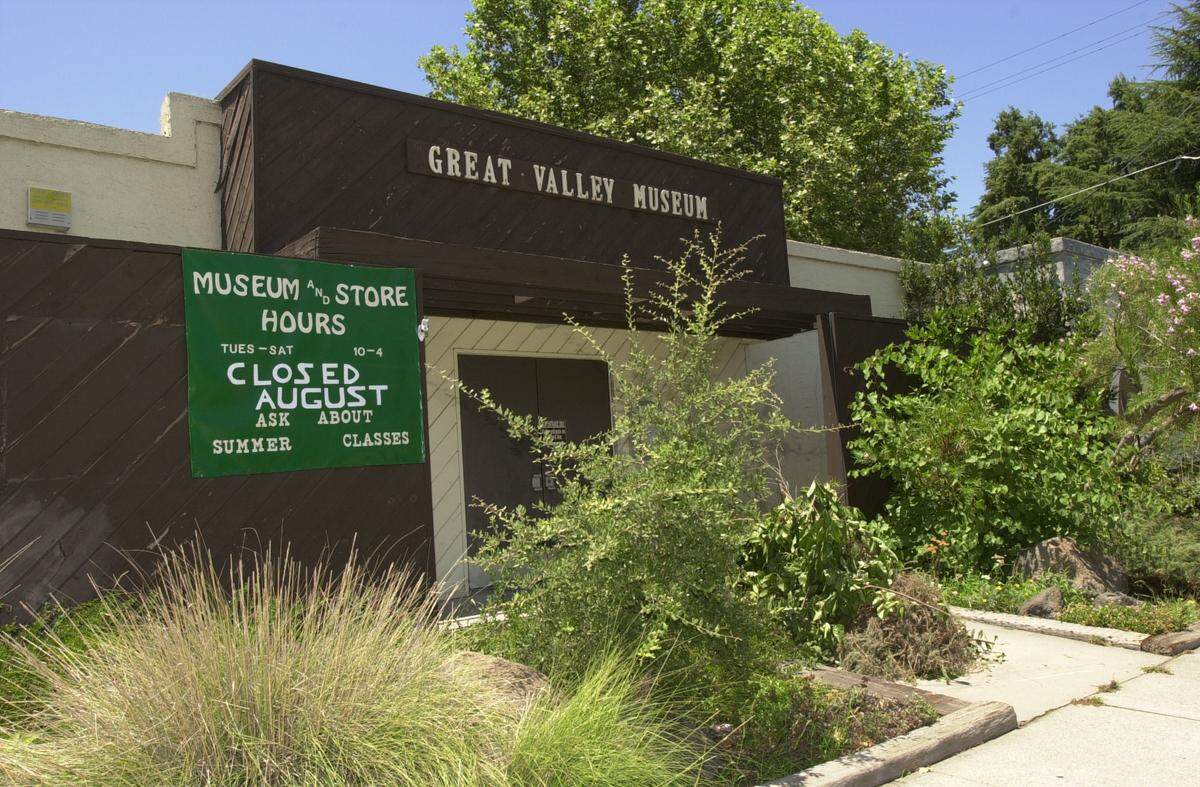
When it moved to the west campus, it joined the William R. Luebke Planetarium in opening to the public. The planetarium had been used only for astronomy courses prior.
The move was long in coming.
“Since its inception in 1985, the Great Valley Museum Foundation had been fundraising to (eventually) build a new museum on either campus,” Chavez said. In 2004, a $326 million bond passed for improvements at MJC and Columbia College. That led to creating the Science Community Center, with input from foundation board members to include the new museum.
On an average weekday (it’s open Wednesdays through Fridays and on Saturdays), the museum itself gets “a few dozen” visitors, he said. On an average Saturday, it’s 75 to 100.
Most are elementary-age children with their parents or grandparents. “MJC students also use the facility for courses, or just for fun,” he said.
The museum and planetarium also host school group tours and classroom outreach programs, a variety of science programs that travel to schools.
Science On a Sphere is one of the things to check out
Among the most popular attractions are the above-mentioned Science On a Sphere, as well as its live animals, according to Chavez.
Science On a Sphere projects more than 600 visuals onto a 6-foot-diameter sphere, ranging from ocean currents to ultraviolet visualizations of the sun, Chavez said.
It’s produced by the National Oceanic and Atmospheric Administration, according to the museum website, and shows “real-time worldwide events such as earthquakes, hurricanes and other phenomenon...”
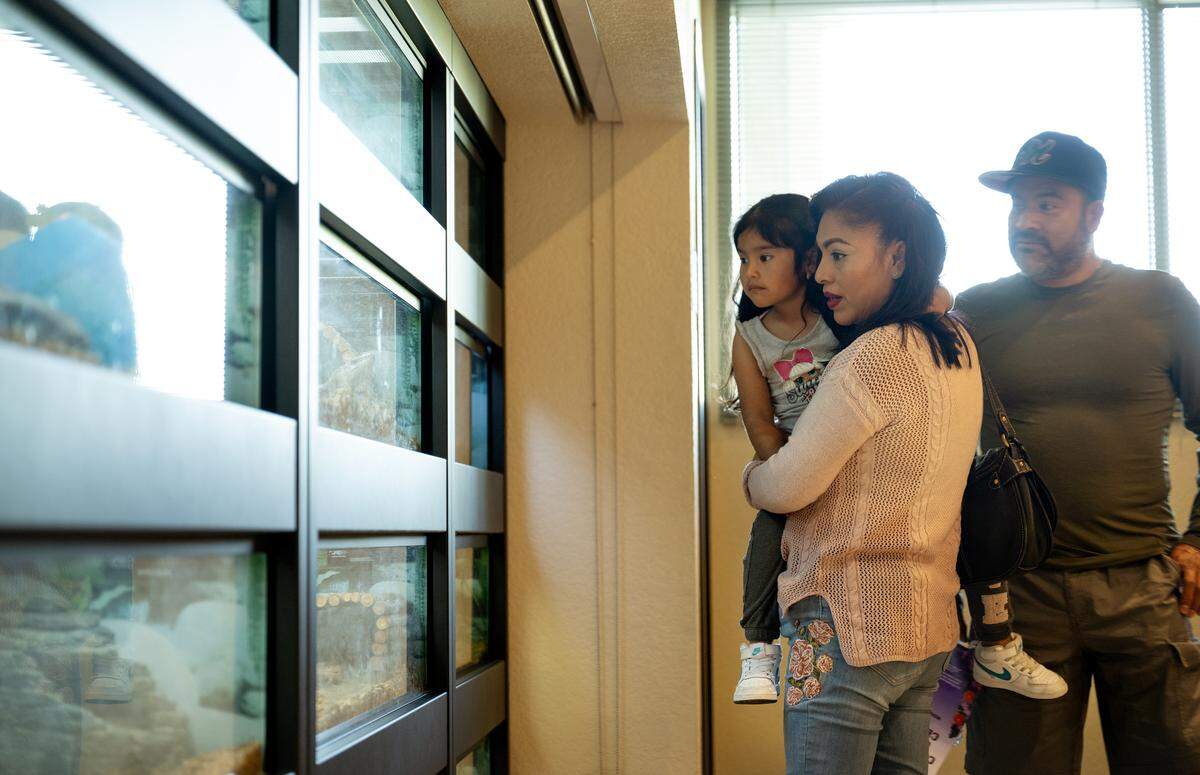
Great Valley also has hands-on activities, including a room that houses about two dozen animals and insects.
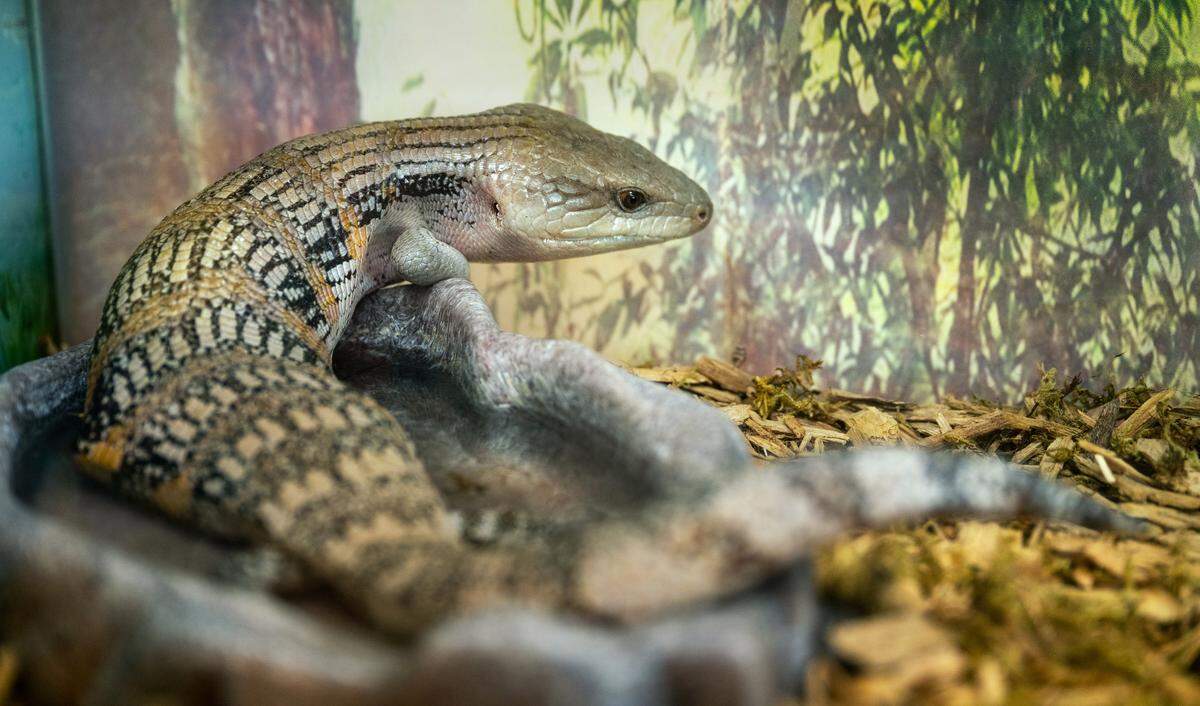
“Our various live animals of skinks, turtles, snakes, tarantulas, walking sticks always enlighten and educate our guests,” Chavez said.
The museum also features real samples of all the natural elements in the periodic table (except those that are radioactive or have a short half-life) with a touch screen to learn about each.
“You’ll of course learn about our (Central Valley’s) rich natural history...” Chavez said of other attractions.
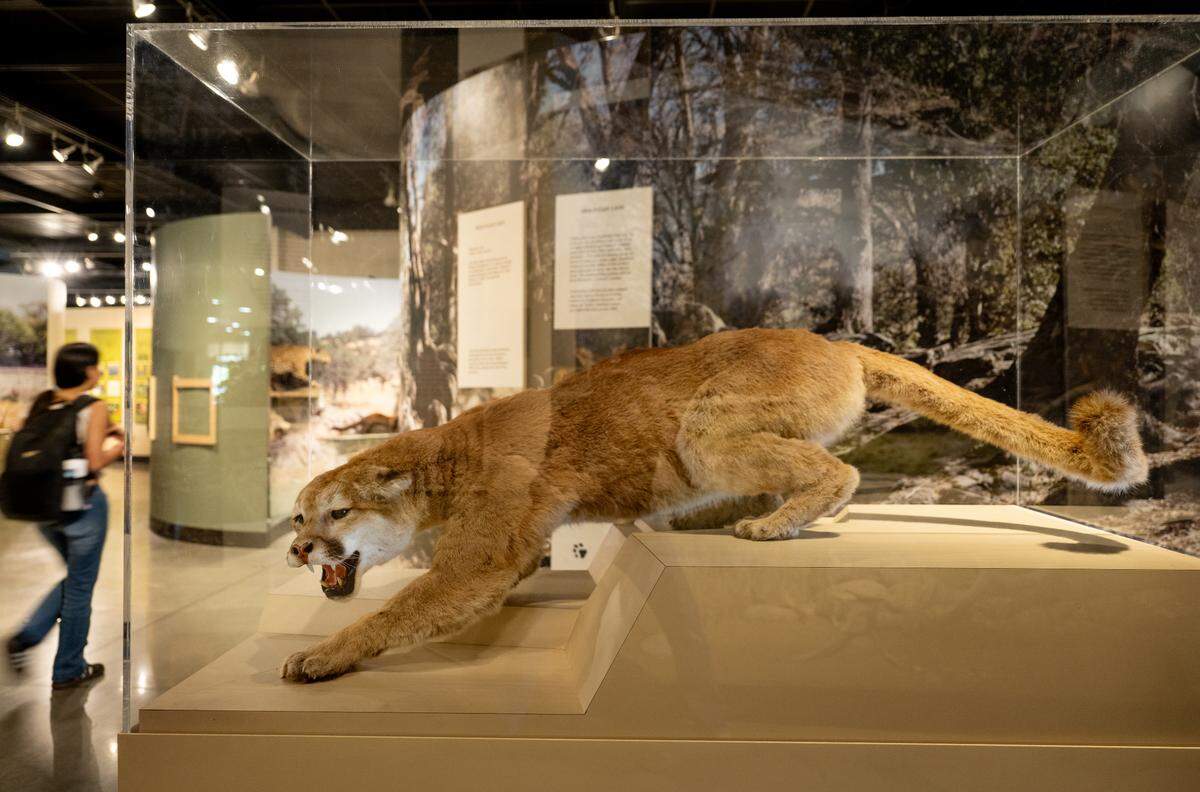
Those include over 200 taxidermy specimens and more, focusing on the five existing habitats found in California before colonial settlement and agricultural expansion, pre-1800s, he said.
While the main exhibits are permanent, there are others that rotate. They normally change out once a year.
“We currently have a temporary exhibit on the species Homo naledi that was discovered in 2013. One of MJC’s anthropology professors, Dr. Debi Bolter, was on the team that helped research the findings,” Chavez said.
Rotating shows in the planetarium draw audiences
Open only on the second and fourth Saturdays each month, Great Valley’s planetarium attracts about 75 people on those days, Chavez said.
The facility, which can accommodate 100, was named for William R. Luebke, an MJC astronomy professor from 1974 to 2009, according to Chavez. The professor was key in bringing the planetarium to the campus.
“We see him every so often — he brings his grandchildren for a visit,” Chavez said of Luebke.
According to the museum’s website, it displays “images of the night sky and full-dome planetarium films onto a 40-foot suspended dome ceiling...”
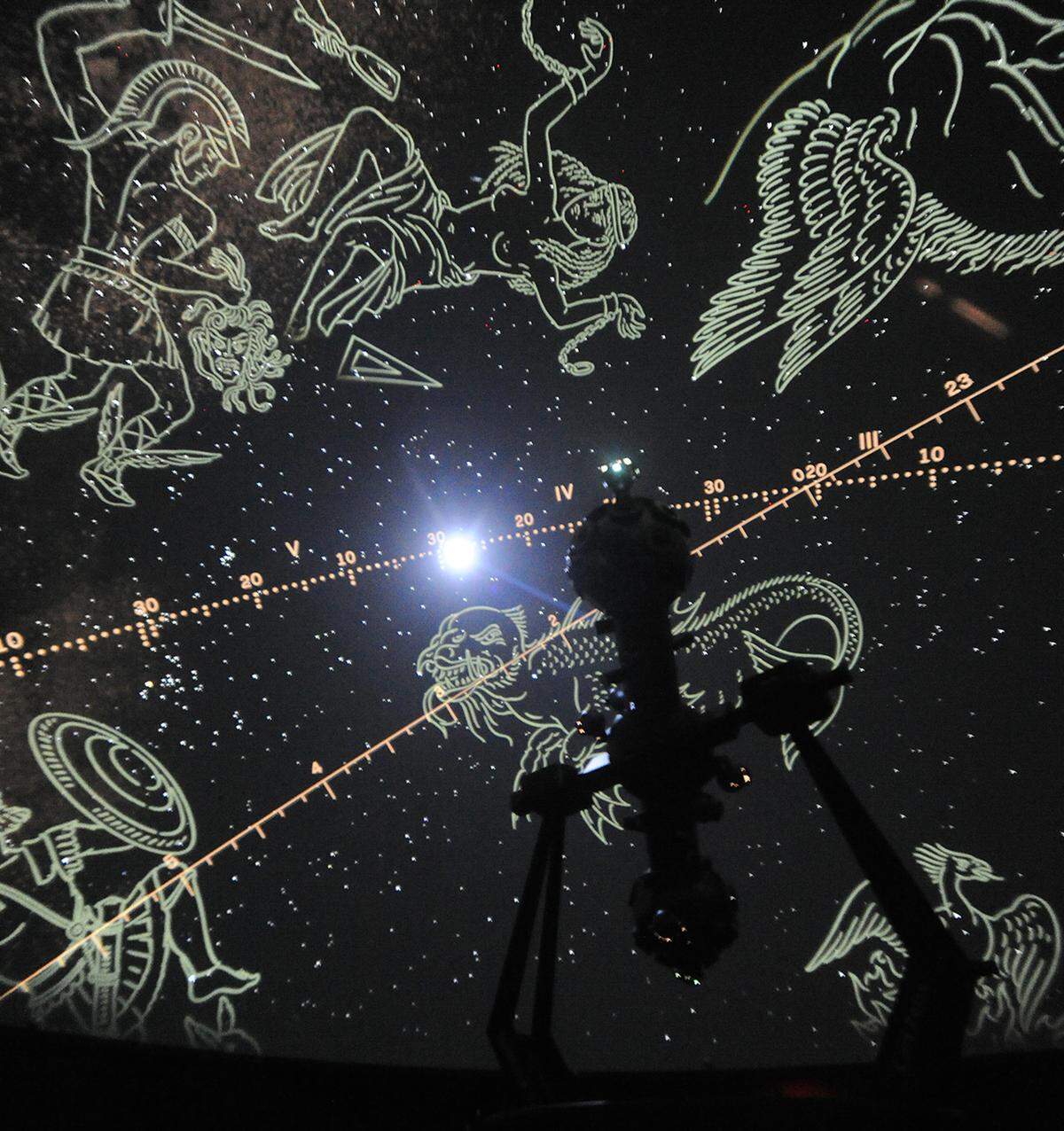
Planetarium shows rotate monthly and last about 30 minutes.
“In 2024, we updated our planetarium hardware/software to allow us to stream onto our dome. With that, we are able to use a website that allows us to rent a variety of shows,” he said. “You can think of it as the Netflix for planetarium shows.”
There’s another big draw to the facility: Science Night at the Planetarium, held the first Friday of each month, excluding May, September and January.
It’s the museum’s most popular event, Chavez said, and the only time with evening hours, 7 to 10 p.m., to visit the museum and catch a show in the planetarium. And it’s the only opportunity for public access to the campus telescope.
“We normally see around 250 guests on those nights. I would add another 50 for those that only come for the free telescope viewing and (student science) club activities,” he said.
Astronomy Club students point the telescope, located on the north side roof of the Science Community Center, to the night sky and talk about what’s being viewed.
While telescope viewing is free, regular admission prices for the museum and planetarium apply.
As noted, the museum has a gift shop, which gets good business, Chavez said.
“We pride ourselves on not carrying anything that you can find at Walmart or Target. All of our items are science- or nature-themed, with most of the items being priced under $15,” he said. “We also have a great little (selection) of nature books.”
How the Great Valley Museum is funded
It costs just under $500,000 annually to run the facility, according to Chavez. Some of that funding comes through admissions, tour fees, outreach program fees, memberships and donations. MJC and the Yosemite Community College District contribute the rest.
“The community has been so fortunate to have always had the administration of MJC and district support the mission of the GVM,” he said. “What we provide our students and community is worth so much more than the expenses we put in.”
Volunteers are a big part of the operation and help with school tours, live animal shows and exhibit demonstrations.
“We could not do what we do without them,” Chavez said. “They also remind our regular staff how lucky we are to work here because they are always so happy to come hang out with us.”
Good communication has led to higher visibility. Chavez believes the core is the museum’s outreach program and school tour visits. There’s a small marketing team of MJC students that assists with its social media presence.
“Of course, word of mouth is always a big help,” he said.
The Great Valley Museum is at 2201 Blue Gum Ave. in Modesto. It’s open Wednesdays through Saturdays, 9 a.m. to 3 p.m. Planetarium hours are the second and fourth Saturday each month, with shows at 11 a.m. and noon. There are certain regular days when the museum is closed, so check the website, www.mjc.edu/gvm/index.html, when planning a visit.
Museum-only admission is $8 general, $5 age 17 and under, age 55 and older and for military members; planetarium-only admission costs are the same.
Chavez said he hears good things from people who visit the Great Valley Museum.
“My small staff, students and volunteers are very dedicated in making this a top-notch museum that gives guests a wonderful experience and education,” he said. “We do have a 4.4-star review on Yelp and a 4.7 on Google reviews. I think that’s pretty good feedback.”
This story was originally published April 11, 2025 at 11:51 AM.