
Liberty can endure in dark times through hopeful resistance | Opinion
Liberty is irrepressible. This is the lesson of 250 years of American history. It is also the lesson of the modern world, which is creative and hopeful. Governments often seek to repress the creative energy of human freedom. But the denial of liberty gives birth to resistance.
Resistance rests upon hope and the power of imagination. Without this, repressed liberty can devolve into fatalism and despair.
The Declaration of Independence is a hopeful document. It famously states that we are endowed with inalienable rights to life, liberty and the pursuit of happiness. But the bulk of the document is a list of grievances against the British tyrant. It would be easy for people living under tyranny to become cynical, but the Declaration concludes on a hopeful note.
In declaring their independence, founding Americans hoped they would be protected by “divine providence” and “the supreme judge of the world.”
A similarly hopeful spirit can be found in George Washington’s General Order, justifying armed resistance to the British, issued on July 2, 1776.
“Our cruel and unrelenting enemy leaves us no choice but a brave resistance, or the most abject submission; this is all we can expect,” Washington wrote. “We have therefore to resolve to conquer or die.”
This statement of resolve was linked to hope about the chance of victory. He urged the revolutionaries to “rely upon the goodness of the cause, and the aid of the supreme being.”
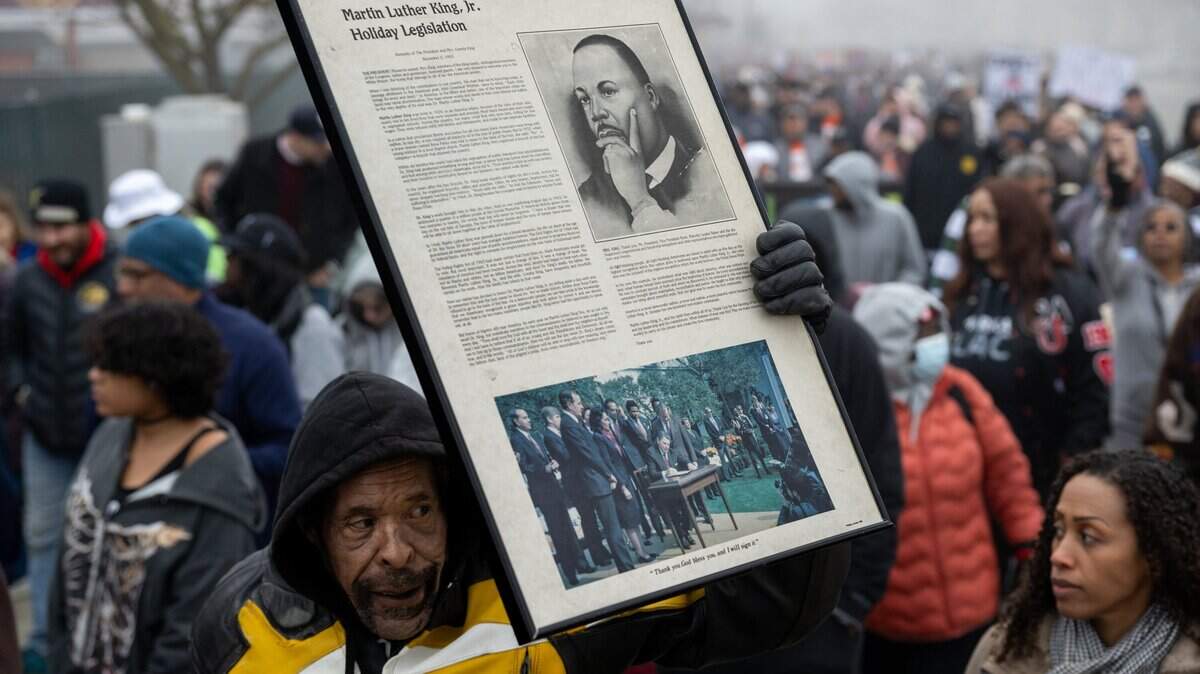
As the American experiment unfolded, the pursuit of liberty was accompanied by imagination and hope. The Black liberation movement, led by Martin Luther King Jr., encouraged nonviolent resistance in the struggle for liberty. As a Christian, King believed in radiant hope, and that the moral arc of the universe bends toward justice.
Hope is often religious and fundamentally the creative work of the human imagination. The imagination is, in turn, the spiritual manifestation of liberty. When liberty is repressed, we imagine things being different. The American revolutionaries imagined the end of British tyranny. The American abolitionists imagined a world without slavery. And liberation movements of the 20th century imagined a world freed of other kinds of oppression.
Each of these movements was inspired by the hopeful idea that human beings could improve reality. In the background were poets, philosophers and inventors who imagined a better world. Human freedom is an outgrowth of our nature as rational creative beings. As the poet Wallace Stevens once said, “The imagination is the liberty of the mind.”
Hope and imagination are manifestations of liberty. Free human beings are not content to simply accept things as they are. The human imagination extends beyond the status quo. We are engineers and architects who transform the earth. We are poets and musicians who conjure images and harmonies out of air.
We also have a deep sense of justice. When we are wronged, we resent the wrong. When our inalienable rights are violated, we react passionately. To say that these rights are inalienable is to declare that we refuse to allow them to be violated. It is to declare that governments can and must be better.
In the ancient world, the mass of humanity simply went along with the whims of the powerful. They could not imagine things differently, but the modern imagination sees the possibility of progress. We believe that individual liberty is fundamental, and tyrants deserve to be deposed.
Modern history reinforces the hope that it is possible to build a better world.
As we commemorate the signing of the Declaration, we should celebrate the sense of justice and the power of imagination that conjured this country into existence. Now, 250 years later, we ought to continue to imagine ways to enhance liberty and defend it against the tyrants of the world.
Understanding the history of resistance to repression can help inspire hope today. If prior generations were able to depose tyrants and uphold liberty, we should hope to continue that work today.
Andrew Fiala is a professor of philosophy and director of The Ethics Center at Fresno State.
This story was originally published July 5, 2026 at 5:00 AM with the headline "Liberty can endure in dark times through hopeful resistance | Opinion."