
Newsom uses fentanyl seizures at border to slam congressional GOP. ‘We’re doing our job.’
Good morning and welcome to the A.M. Alert!
NEWSOM USES FENTANYL SEIZURE TO SLAM HOUSE REPUBLICANS OVER BORDER BILL
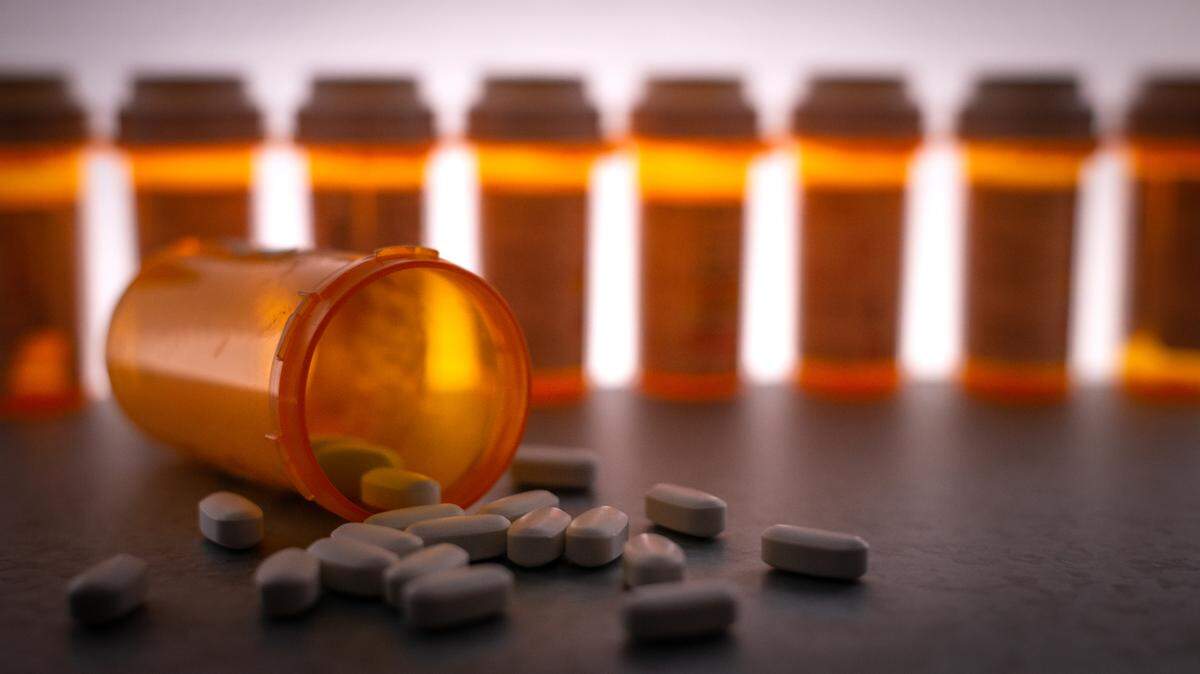
California Gov. Gavin Newsom used the seizure of half a million fentanyl pills at the California-Mexico border last month to blast congressional Republicans for not passing Biden’s border security bill.
“We’re doing our job, while Republicans in Congress drop the ball and block the bipartisan border security deal that would further crack down on fentanyl trafficking. They continue to choose chaos for political gain over the American people,” Newsom said.
Newsom said that Republicans were acting at former President Donald Trump’s behest, to avoid handing President Joe Biden a big win in an election year. According to Newsom’s office, Biden’s border bill would fund more than 4,300 asylum officers, 100 immigration judges, local humanitarian efforts to help immigrants after they are processed and released from federal custody.
In February, the California National Guard seized more than 592,000 fentanyl pills at the border, and more than 340 pounds of fentanyl powder.
Last year, Newsom sent additional CalGuard service members to the border to assist in interdict drugs. That support led to the record seizure of more than 62,000 pounds of fentanyl in 2023, a 1,066% increase since 2021, according to Newsom’s office.
DEMOCRATIC AD CAMPAIGN TARGETS VULNERABLE CALIFORNIA HOUSE REPUBLICANS ON IMPEACHMENT
A new set of political ads is targeting vulnerable California congressional Republicans, including Reps. John Duarte and David Valadao, urging them to abandon House Republicans’ effort to impeach Biden, a Democrat.
The ads come courtesy of the Congressional Integrity Project, a group of Democratic strategists launched in 2022 that looks to counteract the power of the House majority.
The nationwide, seven-figure digital ad buy is targeting 18 House Republicans whose districts Biden won in 2020. Besides Duarte and Valadao, the ad buy also targets California Reps. Mike Garcia, Young Kim and Michelle Steel.
The ads argue that congressional Republicans like Duarte “stand with Donald Trump and MAGA extremist” in pursuing “shameless stunts and partisan distractions.”
“(Duarte) voted for a bogus impeachment inquiry, but he refuses to lift a finger to get the bipartisan border bill to the floor or pass legislation to lower drug prices for families,” the ad goes on to say.
You can watch the ads here.
PPIC USES 30TH ANNIVERSARY TO LOOK AT CALIFORNIA’S PARTISAN POLITICAL SHIFT
Youngsters today might take it for granted, but California was not always the sapphire blue stronghold it is today.
Elder millennials and older folks will recall that as recently late 80s, early 90s, the state was reliably Republican when it came time to vote for president. It was a big deal when Democrat Bill Clinton won the state (in a three-way contest with Republican President George H.W. Bush and independent Ross Perot) in 1992.
The Public Policy Institute of California, which turns 30 this year, is marking the occasion by looking back at how the Golden State turned blue.
In a blog post by Eric McGhee, the PPIC examined how 1992 was a “pendulum swing” year for California. The California Democratic Party seized control of the Legislature in 1996 and hasn’t relinquished control since.
According to McGhee, the Democratic shift began in California’s coastal regions, primarily the Bay Area and Los Angeles.
“This opened up a large gap in political preferences between regions that had been far more muted. Over time, the state’s inland regions have become bluer and now vote majority Democratic. But a large regional gap remains,” McGhee wrote.
According to McGhee, voting patterns for the Legislature and U.S. House “have increasingly aligned with voting in higher offices, especially president.”
In 1992, the two-party vote in the average congressional or legislative district different from the presidential vote by 6 percentage points or more. By 2020, the difference was 3 percentage points or less.
“The 2016 election briefly disrupted the trend, when voters were notably less enthusiastic about Donald Trump than about downballot Republicans. But the 2020 election marked a return to form,” McGhee wrote.
Though this partisan realignment has happened statewide, it hasn’t been uniform in its application. The southern San Joaquin Valley and the Inland Empire stand out as “notable exceptions” to that shift,” McGhee wrote.
“These shifts in voting patterns have divided the state into political regions with relatively predictable party outcomes. There are still some competitive races, but they are more concentrated in certain parts of the state,” he wrote.
NEWSOM RECALL CAMPAIGN CAN BEGIN COLLECTING SIGNATURES
California Secretary of State Shirley Weber on Tuesday gave the green light to Newsom’s political opponents to begin collecting signatures for another recall campaign against the governor.
The recall campaign has until Sept. 3 to collect 1.3 million signatures. Valid signatures must come from at least five different counties and in those counties must equal at least 1% of the last vote for governor.
County election officials then have until Dec. 4 to certify the results of their verification of signatures, and the lieutenant governor, Eleni Kounalakis, must call a recall election between 60 and 80 days from the date of certification of sufficient signatures.
QUOTE OF THE DAY
“Do not use our name! Ever. Take it out of your mouth. You don’t get to use our tragedy for your agenda. Not on my watch.”
- Assembly Republican Leader James Gallagher, R-Yuba City, responding to Gov. Gavin Newsom’s invocation of the burning of Paradise, California, at an event promoting a law to ban oil wells within 3,200 feet of homes and schools, via X, the platform formerly known as Twitter.
Best of The Bee:
California Gov. Gavin Newsom on Tuesday morning warned about the consequences of denying access to the abortion drug mifepristone, which the U.S. Supreme Court is set to hear arguments on as part of a challenge by anti-abortion groups, via Andrew Sheeler.
A California Assembly member must pay state election officials thousands of dollars for years-old fundraising errors related to the Legislative Black Caucus’ scholarship nonprofit foundation, via Lindsey Holden.
California shut down the office that tracks telework in state service. But data from two previously unreleased surveys obtained by The Sacramento Bee reveal new insights about departments’ and agencies’ stances on remote work and return-to-office, via Maya Miller.
California lawmakers are worried that taxpayers could be on the hook for a $300 million gap in a loan issued to Pacific Gas and Electric to keep the Diablo Canyon nuclear power plant operational until 2030, via Ari Plachta.
The federal government went to court against California’s prison agency Monday morning, asking for an order to stop the enforcement of a ban on beards for officers who wear facial hair because of religious beliefs, via Sam Stanton.
This story was originally published March 27, 2024 at 4:55 AM with the headline "Newsom uses fentanyl seizures at border to slam congressional GOP. ‘We’re doing our job.’."