
Q&A: Valley economy’s strengths and weaknesses put in focus
The University of the Pacific’s Business Forecasting Center in Stockton has spent about the last year assessing the Northern San Joaquin Valley’s economy and how local governments and other institutions can start coming together to create a comprehensive, regional approach to the Valley’s economic well-being.
The center received a $99,000 grant from the U.S. Economic Development Administration for the project. It is working with the Stanislaus Economic Development & Workforce Alliance and the alliance’s counterparts in Merced and San Joaquin counties to share the results of the assessment and identify opportunities for collaboration.
Center director Jeffrey Michael said this assessment is different from previous ones because its focus is on the Northern San Joaquin Valley and its connection to the Bay Area and Sacramento region. He said the Northern San Joaquin Valley has gotten lost when it is part of economic assessments and development efforts that focus solely on the San Joaquin Valley, which stretches from Stockton to Bakersfield.
The center will share the assessment’s key findings at a Nov. 19 conference at Modesto Centre Plaza. The conference is free, but attendees are asked to register in advance. More information is available at www.forecast.pacific.edu/nsjv.html.
Michael recently spoke with The Modesto Bee regarding this project.
There have been lots of studies and economic development efforts involving the Northern San Joaquin Valley. What is different about this one?
It is unique in its depth and comprehensiveness, and its focus on the three-county region as the southeast quadrant of the Northern California mega-region rather than the northern end of the San Joaquin Valley. We have finished 12 detailed white papers on the regional economic system, compiling virtually every bit of data available on the regional economy. Since this is too much detail for most people, we are working on a less dense executive summary for the Nov. 19 event.
One of the objectives of our effort is to get outside stakeholders, especially those in the Bay Area and Sacramento, to recognize the three-county area as a distinct planning area and embrace it as a participant in their own efforts. In order for that to happen, the three-county region has to create its own partnership. To that end, we have economic development leaders and analysts from the Bay Area Council and Sacramento Commerce and Trade Organization participating in our conference and we will be asking them their perception of the Northern San Joaquin Valley and for some advice on best practices of how they work together as multicounty regions.
What is the best-case scenario for the Valley’s economy, and how does it get there?
The three-county region should be able to reach the national average for per capita income; it is 15 percent below that level today. It’s hard to believe, but back in 1970, the area actually exceeded the national average for per capita income. But there is no going back to 1970. There are far too many people for even the most prosperous agricultural economy to support. The region grew cities without ever developing a competitive, service-based urban economy. I see four keys as 1) developing more competitive, higher-performing cities that build a critical mass of creative and professional workers; 2) making more positive connections to the Bay Area and larger Northern California mega-region; 3) developing higher-quality, higher-wage, capital- and technology-intensive jobs in the agriculture sector, even if that means fewer agricultural jobs overall; and 4) high-quality, cost-effective and responsive local public services, from cities to school districts.
What’s the worst-case scenario, and how does the Valley get there?
Hopefully, the Valley has seen its worst-case scenario. But if nothing changes, maybe it hasn’t. One critical challenge is to boost educational outcomes and workforce skills. Without significant improvement in these areas, the region risks falling further behind the state’s more prosperous regions and the nation as a whole.
Over the years, there has been talk about attracting high tech to the Valley, and recently there are efforts to attract tourists. Are tech and tourism part of the Valley’s future?
Tech and tourism are two pillars of the Northern California mega-region economy, but those won’t be realistic or competitive strategies for this region for a long time. I have been struck by how the tech industry outgrew Silicon Valley, and rather than grow toward the cheaper region with available space, it actually grew up the Peninsula into San Francisco – an arguably more expensive area with even less space. My daughter recently took a school field trip to San Francisco, and she told me she learned a new word, “gentrification.” It was the topic of the murals in the Mission district she was studying. There’s a lesson there. If you want to attract high-tech-knowledge workers, or tourists, a first step could be to build and support the creative sector. Tech and tourism are not sensitive to high rents, but the artists are. The artists are being driven out by the tech workers but need accessibility to … the Bay Area market. I would suggest that some of the effort going toward attracting tech and tourists also be used to attract artists and creative professions and build and sustain professional services.
The Valley has an image problem because of its high levels of crime, poverty and unemployment, and other social ills. How does the Valley create a new image for itself, and why is that important for economic development?
The most important part of changing the news and perception is to change the reality. But it can also help to change the brand. The San Joaquin Valley brand is accurate in terms of physical geography, but it is tarnished, and it is inaccurate in terms of economic geography. A regional identity or brand has to be accurate and descriptive to stick, and emphasize the stronger and growing connection to Northern California rather than the Southern San Joaquin Valley and Tulare Basin. I will toss out the “Northern California Crossroads” as an example of a label that may not be unique or exciting, but it is accurate and generates more positive associations to outsiders.
Why is regional cooperation important, and how do you achieve that? After all, Valley cities have a history of competing with one another for projects that bring in jobs and tax revenues.
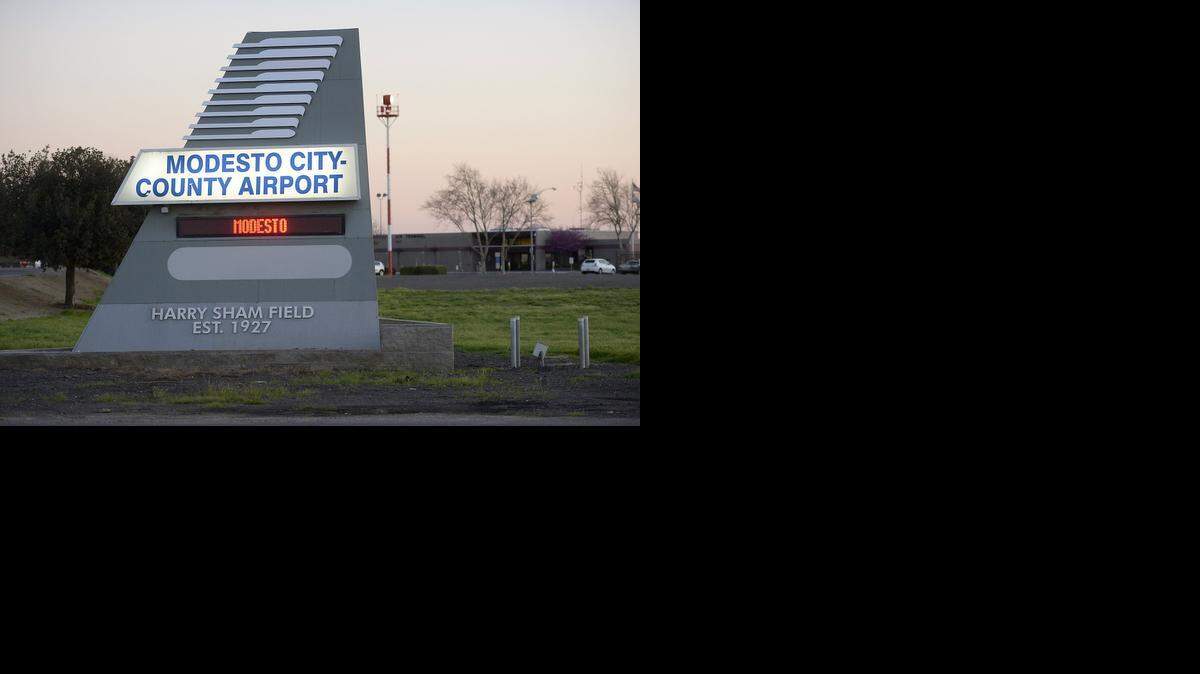
The region needs to achieve a critical mass for visibility in the marketplace that the individual cities and counties can’t achieve on their own. There needs to be more cooperative joint efforts to improve regional infrastructure. An example is transportation where we have a positive example in the regional support to extend the ACE train (from San Joaquin County to Modesto and eventually Turlock and Merced), and a negative example where all three counties have an airport struggling to sustain minimal passenger service. The region needs to recognize that economic development is not about zero-sum games such as incentives to move retail sales between neighboring communities. Cooperation can leverage resources for the benefit of the entire region. Changing established practices is difficult though, and one of the goals of the conference and the project is to engage economic development stakeholders across the region in a dialogue that identifies collaborative projects and strategies with the greatest benefits to the region. If the benefits of collaboration can be shown, we are optimistic it will build a foundation for further cooperation.
Bee staff writer Kevin Valine can be reached at kvaline@modbee.com or (209) 578-2316.