
Finding alternatives to agricultural burning in the San Joaquin Valley
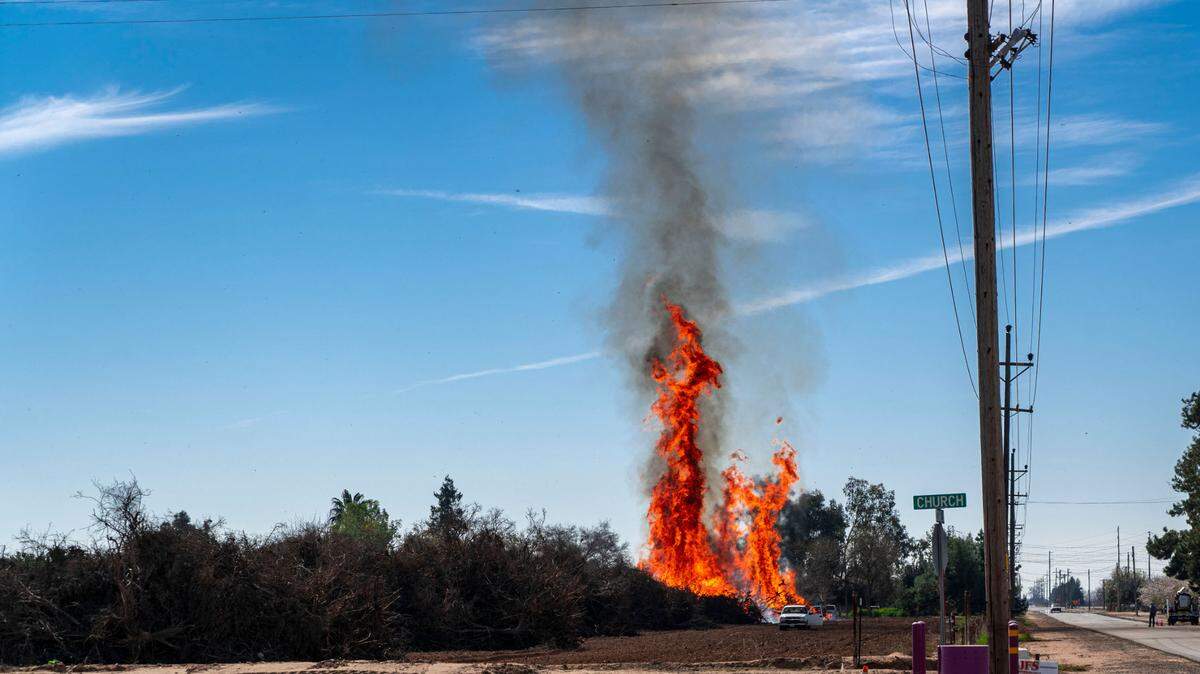
A hazy cloud of pollution burdens the residents of the San Joaquin Valley, so together we must get clear about how to end local air pollution.
As public health students, we prioritize the health and well-being of all populations. Air pollution is a relevant public health issue for Californians, particularly those who live in agricultural regions like the San Joaquin Valley. The COVID-19 pandemic has shed light on the importance of respiratory health and provides an opportune time to address the valley’s air pollution problems.
In February, the California Air Resources Board voted to phase out agricultural burning in the San Joaquin Valley by 2025. The valley has some of the worst air quality in the nation and as such has adopted some of the strictest air quality regulations. Agricultural burning is one of the leading causes of poor air quality and contributes to death, obesity, asthma, and other respiratory diseases.
Local legislators first attempted to ban agricultural burning in the San Joaquin Valley in 2010, but since then many delays and extensions have stopped this from happening. Eleven years later, the issue still persists.
Of the nearly six tons of particulate matter 2.5 (a type of air pollutant) produced statewide due to open agricultural burning, 36% occurred in the San Joaquin Valley. Federal and state funding is needed in order to provide for agricultural burning alternatives and incentives, and local growers must be provided needed education to apply alternative strategies to their agricultural practices.
Farmers are hesitant to stop agricultural burning due to the expense and how difficult it is to find vendors who can help with alternative solutions. The San Joaquin Valley needs financial support from the government and policies that support farmers as they attempt to phase out agricultural burning while also recovering economically from COVID-19.
Agriculture is an integral part of the San Joaquin Valley. However, the economic impacts do not outweigh detrimental effects to health and the environment.
Agricultural burning has become the norm because it is the cheapest and quickest way to dispose of waste. For farmers and ranchers whose livelihood depends on this industry, there must be financial support and incentives to participate in alternatives to burning.
Legislation is only one aspect of the solution. Next steps must include support for agricultural growers; support that empowers them to make positive changes in their business practices.
The California Air Resources Board recommends dedicating up to $30 million a year to agricultural burning alternatives. They include creating mulch, investing in special agricultural machinery, and looking at new ways of growing such as using greenhouses or hydroponics where farmers grow plants in water instead of in soil.
Some strategies to encourage adaptation of these ideas include providing opportunities for farmer awareness such as farmer training, compost education, and opportunities to visit farms that are successfully implementing burning alternatives. Agricultural growers must be a part of this process.
We call on all community members to make their voices heard and let California Gov. Gavin Newsom know they are passionate about the state fully funding agricultural burning alternatives at $30 million per year.
Agricultural burning impacts both the environment and our health. Together we must stop this form of air pollution. Our community, including children at risk of developing asthma, cannot afford to let poor air quality persist.
Agricultural burning contributes to dangerously hazy air in the San Joaquin Valley, so we must get clear about funding agricultural burning alternatives. Only after these efforts are fully funded will we be able to breathe a big sigh of relief ... a deep, cleansing breath of clean, fresh air.