Putting a face on Stanislaus COVID tragedy; the life and death of our own Charlie Brown
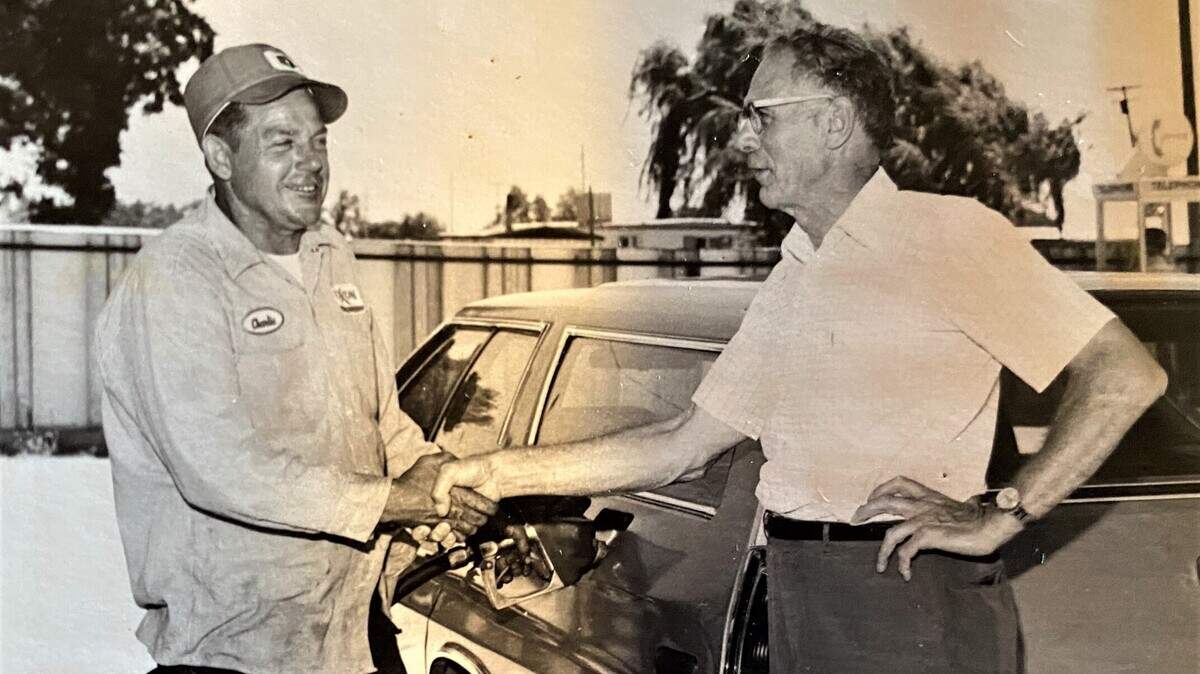
If your aging loved one is in a care home, and you can’t visit because of COVID-19, you tell yourself something like, “It’s for his own good. We miss seeing Grandpa, but not seeing him is the best way to keep him safe.”
That’s the only narrative you’re comfortable with. Telling this to family members, and to him, provides a measure of peace. It’s how you make your anxiety, and perhaps his loneliness, bearable.
Unless he catches it.
This is the story of one man who lived among us, selling gasoline, cold beer and bologna on a lonely stretch of rural road south of Ceres and west of Turlock. It’s a story tinged with Norman Rockwell Americana and tarnished with the tragedy of a son’s murder and a daughter’s fatal accident. It ended a couple of weeks ago in congregate living when the coronavirus took his last labored breath, surrounded by none of his 61 descendants.
“It’s the saddest thing,” said his daughter, Dianna McGill, “that we couldn’t be there when he died.”
Slice of Americana
The best chance people in this area had of running into Charles Laine Brown would have been in the 1960s and ‘70s at Charlie’s Market, a convenience store where Crows Landing Road meets Taylor Road, an oasis in the middle of farmland, as it remains today. It still bears his name although he retired years ago, leasing the business to other operators.
Travelers on their way to or from places like Modesto or Patterson might be waited on by his wife or five children, including 5-year-old Dianna. She helped slice fresh lunch meats and worked the cash register while Charlie pumped gas and fixed people’s cars in a shed he built of materials scavenged from an old Bay Area service station.
“If your car broke down, you would bring it to Charlie because Charlie’s not going to rip you off,” Dianna said. “If you didn’t have money, Charlie knew you’d be good for it. Your word was good enough.”
Born in Arkansas in 1933, Charlie came west five years later with his family, working oil fields in Bakersfield before settling for a time in Ripon. Illiteracy didn’t keep him from a job with the Carnation milk factory in Modesto before he and his wife, Joyce, and their young children took over the store at Crows Landing and Taylor roads, living in a home next door.
Because his given name matched that of the famous Peanuts comic strip character — which lives on each day in The Modesto Bee and thousands of other newspapers across the country — the Brown family had Peanuts-based knickknacks and decorated a pathetic Charlie Brown Christmas tree in December. In those good old days, Dianna said, Charlie would bury money in a coffee can for safe keeping so he would be sure to have enough for Joyce’s present.
Death takes adult children
Heartache struck in 1981 when a vehicle accident killed an adult daughter, leaving her three children to be raised by Charlie and Joyce. Worse was the shooting murder of son Steven at age 45 in 2005 at the family compound, arranged by a shirttail relative and carried out by that man’s nephew. The body was found by two of Steven’s school-age children, who sought help at Charlie’s home next door.
Dual trials of the culprits, Jerry Benge and Sean Benge, made history as the first in Stanislaus County to be tried together, heard at the same time by two different juries who separately decided their guilt. In January 2019, then-Gov. Jerry Brown commuted Sean Benge’s life sentence down to 25 years to life, making him eligible for parole in 2026.
“(The whole ordeal) took a lot out of my parents,” Dianna said.
Charlie and Joyce’s five children had given them 18 grandchildren, 36 great-grandchildren and two great-great-granchildren.
Joyce died of cancer three years ago, and Charlie has been a resident of Brandel Manor, an elder care home in Turlock. Their youngest grandchild, Conor McGill, paid regular visits before graduating in 2019 from Hughson High School and going off to study sports journalism at Arizona State University. He last saw his grandfather while on spring break in early March, not knowing that the coronavirus would change everyone’s life only days later.
And, not knowing that the virus would end his grandfather’s.
Dying alone
Many will recognize another Turlock rest home, Turlock Nursing and Rehabilitation Center, as the site of an early COVID outbreak that killed 21 residents, and sickened 101 residents and 60 employees. Brandel’s recent outbreak, meanwhile, as of Thursday had killed 16 residents while infecting 52 residents and 33 employees, according to its website.
Nursing homes account for 40% of COVID deaths nationwide.
Charlie Brown, 86, was among the Brandel victims. He contracted COVID roughly 18 weeks after the care home went into quarantine, and death came quickly.
“It never should have happened, once they locked down the facility,” Dianna said. “Here we thought family members were going to be safe, but he wasn’t. And it wasn’t fair that my dad had to die alone.”
The family celebrated his life at a small graveside ceremony in a Ceres cemetery. Masks were mandatory.
“I was at peace, knowing he had lived such a great life,” Conor said. But people can be haunted by regret if they wait too long, he said, or if COVID guidelines hamper in-person visits or embraces.
“If you have grandparents who are still alive,” he said, “go see them, no matter how busy you are.”
This story was originally published August 16, 2020 at 4:00 AM.