Online-only Stanislaus State shouldn’t charge full student fees during COVID
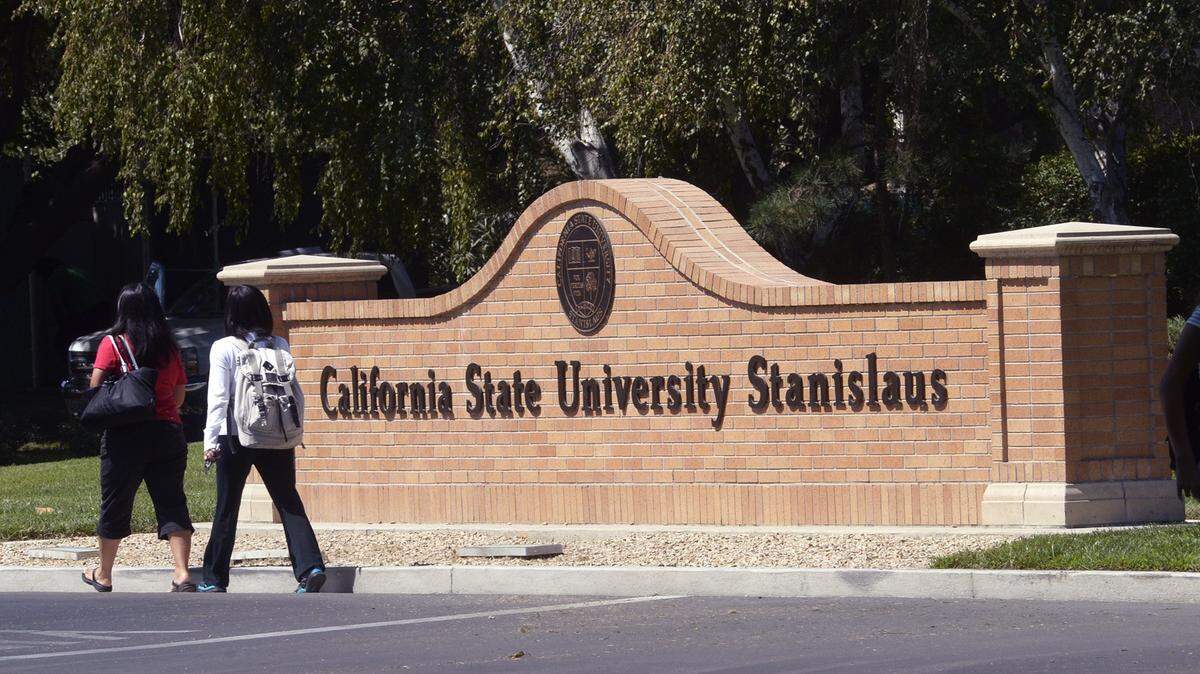
A student’s petition to lower fees at COVID-closed Stanislaus State University ended up being among the most successful of its kind in the United States.
Not successful in persuading university officials to actually charge less money — that was never going to happen. But Avery Reed’s online petition snagged more signatures than any among 175 similar efforts across the United States, except at Fullerton State in Southern California and Grand Valley State University in Michigan.
Reed, a 19-year-old Stanislaus State sophomore, told me she wasn’t active in protests while growing up down the road in Turlock. She didn’t learn the ropes from similar anti-fees drives, and didn’t coordinate with them. She just got mad at the idea of paying a lot of fees for services she’ll never receive on a campus closed by COVID-19, and decided to take action.
“I shared it on my Instagram and Twitter pages, and just hoped it (would get) picked up from there,” she said. People retweeted and posted it on other social media, The Modesto Bee featured it in a news report, and as of Wednesday, 5,110 people had signed the petition.
Considering that Stan State’s student population was 10,600 last December, that’s an impressive achievement. It’s hard to get half the people in anything to sign something objecting to government fees or taxes, no matter how unfair.
Change.org is hosting at least 175 online student fee petitions, including Reed’s, most related to the coronavirus. Of those, 50 got very little traction, drawing 50 signatures or less, including powerhouses like Wake Forest, Northeastern, Clemson and San Diego State. More than 130,000 people have signed; the average drew 750 signatures.
So Reed’s results are impressive.
But of course, it didn’t work. A few weeks ago, she and thousands of other Stan State students forked over big bucks to not step foot on campus in the fall semester. Online-only classes begin Aug. 24.
Yearly tuition and fees come to about $7,500 for full-time undergraduates at the Turlock campus, according to a CSU system estimator. Included are $1,700 in mandatory fees covering such things as the student center, “materials services and facilities” and “instructionally related activities.” Most students, it seems, won’t see a return on that investment this semester because they won’t be there.
I get the university’s argument that some services continue even though the campus is closed, such as the food pantry, health center and computer center. Students can participate in Zoom exercise classes, and some buildings must be kept in shape for when classes resume. I also understand that most agency budgets are in dire straits from virus-related revenue drops.
But anyone who has been through the college experience knows how hard life as a starving student can be. Many are newly out on their own, without the financial or emotional support they’d enjoyed at home, and some are desperately poor.
Full disclosure: I got a graduate degree at Stan State in 1992, enjoyed my time there and will forever be grateful for knowledge gained and relationships forged. My wife and I became parents just before my last semester, and I joined the staff of The Modesto Bee soon after.
California laws spelling out what the government can and can’t charge have become increasingly clear in recent times, and the basic rule makes good sense: They can’t charge us taxpayers for services we don’t receive. If a student never steps foot on campus, she should not have to pay the same amount she would if she came to school every day.
The CSU system’s policy says fees can be refunded in “exceptional circumstances” when it can be shown “that the fees and tuition were not earned by the University.”
If a pandemic shutting down campuses — and many restaurants, stores and other businesses, affecting nearly every soul across the globe — doesn’t qualify as exceptional circumstances, what ever would?