
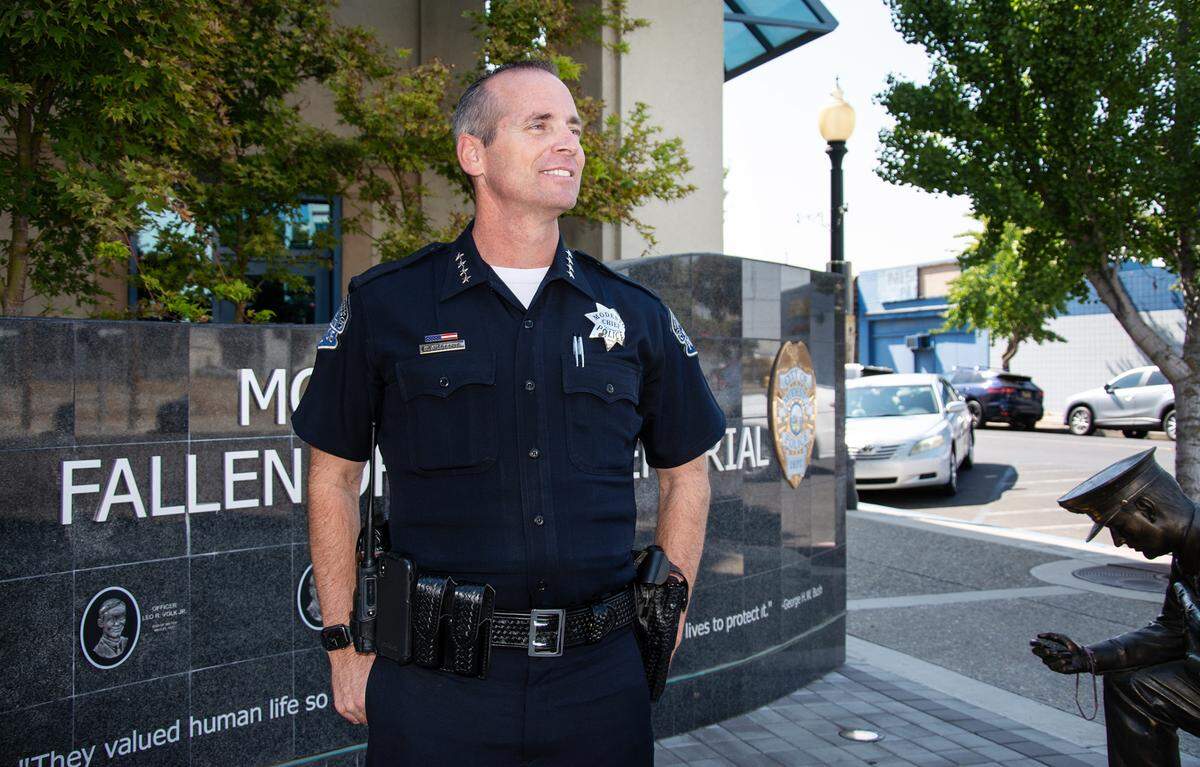
Modesto police: Occupying force or public guardians? Chief Gillespie weighs in
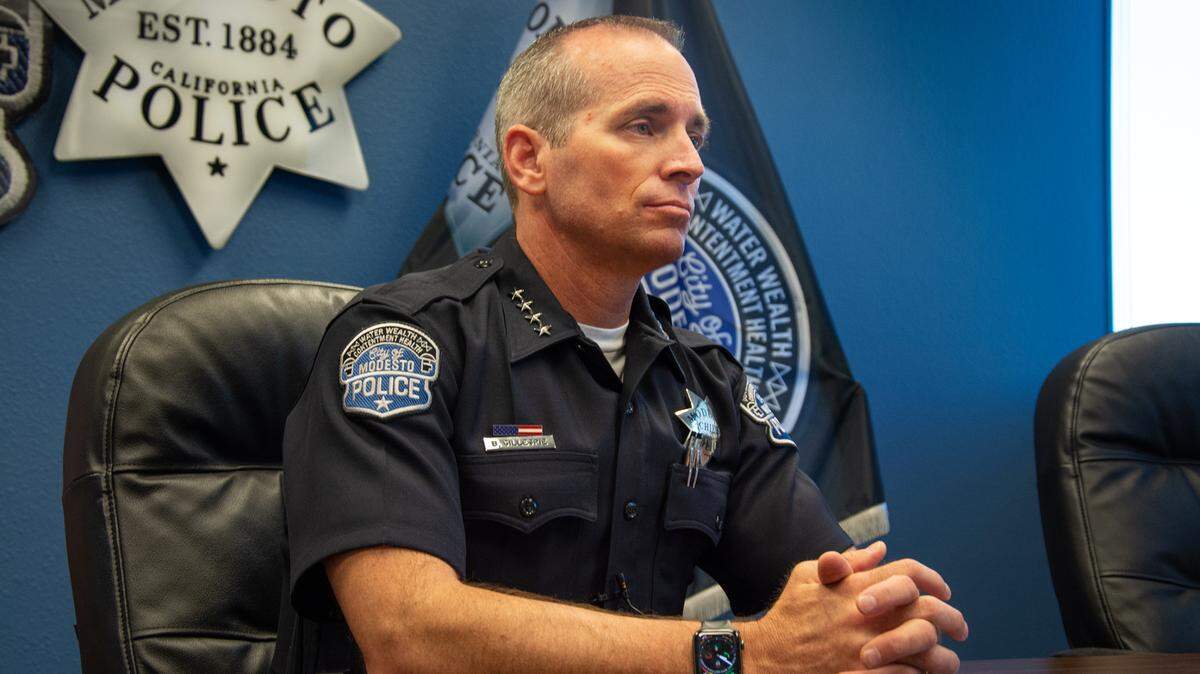
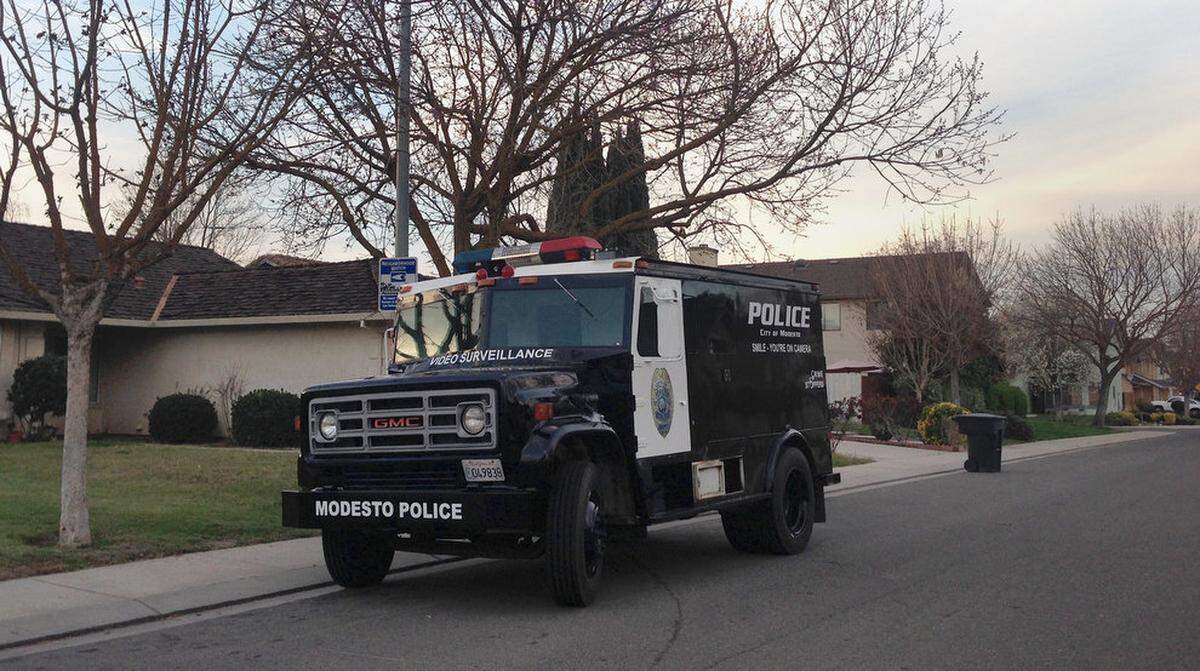
When former Police Chief Galen Carroll several years ago introduced Armadillo armored surveillance vehicles to Modesto, with “Smile — You’re on camera” printed on the side, his future successor had this reaction: “I thought that was the stupidest thing ever.”
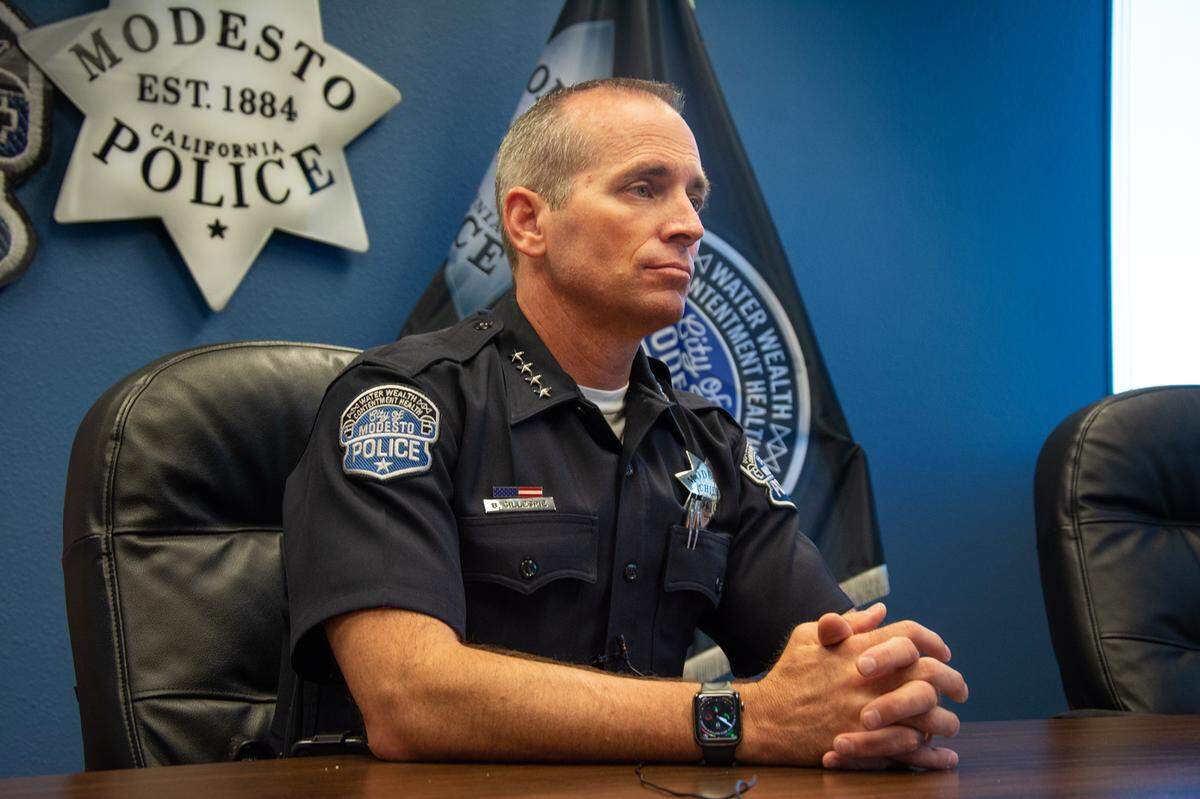
That amusing recollection, from current Police Chief Brandon Gillespie in a recent discussion with The Modesto Bee Editorial Board, proved to be just a set-up. Gillespie then admitted he was wrong and Carroll was right; the two armored cars haven’t been denounced as symbols of an occupying force but embraced and requested by neighborhoods now on waiting lists for visits.
In a wide-ranging 90-minute interview, Gillespie also shared enthusiasm for a brand-new department airplane and for relatively new alternative response programs meant to help people who struggle with homelessness, addictions or mental health. All — CHAT (Community Health and Assistance Team), MCERT (Mobile Crisis Emergency Response Team) and park rangers — are working, he said, and will be beefed up soon with proceeds from Measure H, the sales tax voters approved in November.
Here are excerpts from the discussion, edited for brevity and clarity.
Q: What’s the latest on antisemitic literature in Modesto?
A: There has been constant contact with the rabbi of our Jewish synagogue, and we’re keeping them updated. It’s a matter of continuing to investigate and being aware of what’s going on, but then balancing whether we have a criminal act or if it’s a First Amendment (free speech) right.
Q: Any other domestic terrorism groups you’re keeping your eye on?
A: In (today’s) state of society, when you have super-divisive political factions, you worry about extremists on either side taking it to the next level of violence. We keep constant communication open with the FBI.
Q: Tell us about the new Community Police Review Board.
A: I’m excited about where we’re going. I want to police our community the way our community wants to be policed. We had a process and we had recommendations from the Forward Together committee, and I fully support it. I don’t want (the Police Department) to be viewed as an occupying force. Community policing should be at the core of what we do and the only way that happens is through relationships.
Our officers want to go out and do the best job they can, take bad people to jail and improve our city. And I need to protect them and allow them to do that. I can’t say, “Here’s how you need to do your job,” and then because somebody doesn’t like it on social media, say, “Just kidding — that’s not how you do your job and now you’re in trouble.” That’s not fair to anybody who signs up for law enforcement. So it’s a balance between looking at public expectations and perceptions, but also what the law says, and as best you can, trying to try to keep both parties happy.
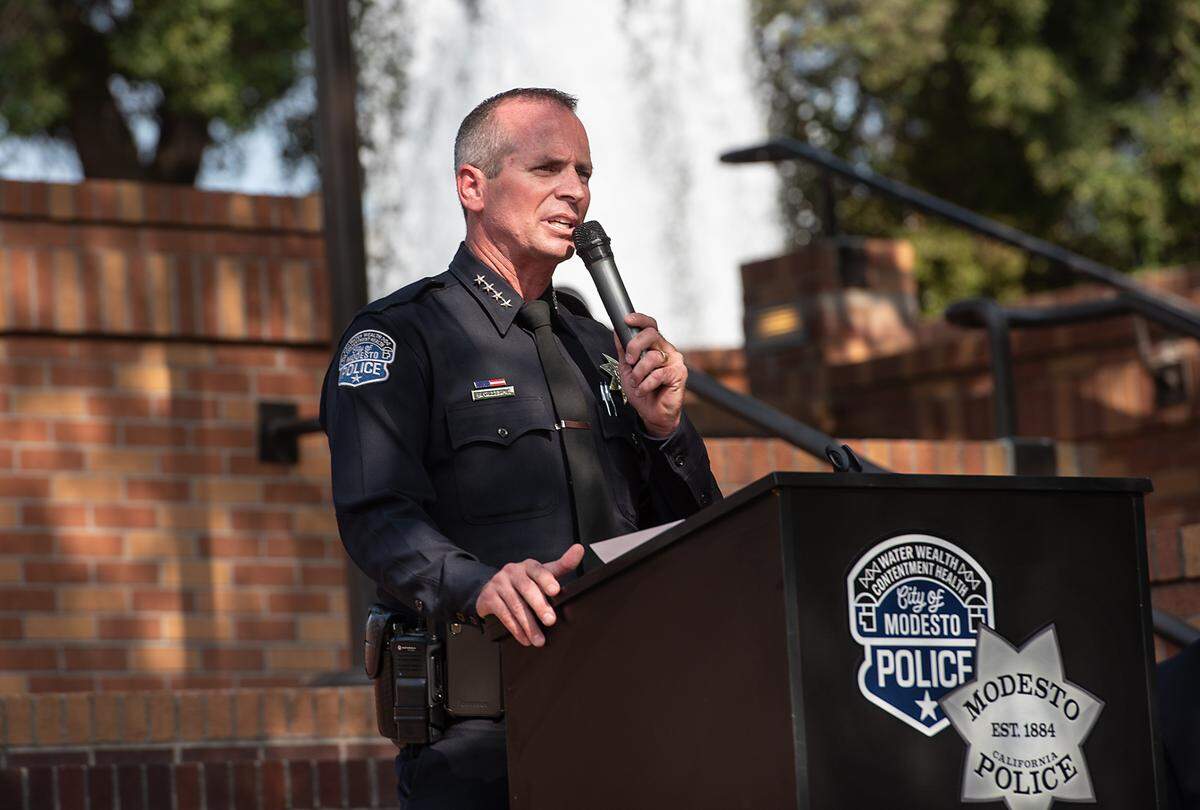
Q: How do you learn what the public expects?
A: Our cultural relations class, I cannot be more proud of that program. When I hear perspectives from a minority community member who says, “Every time I get pulled over by police, I’m afraid I’m gonna die, I’m gonna get shot and killed,” I can think that’s the most ridiculous thing in the world, but to that person, it’s reality. So I need to figure out what I can do when I’m approaching them to make them not feel like that.
So how do we have a dialogue? After every cultural relations class, I leave with goosebumps because you have community members, many who’ve been incarcerated, many who have had very bad experiences, they’re talking about the friendships they develop (with officers). They literally exchange phone numbers and get together. Now, as a police officer gets behind them (in traffic), the officer is speeding up to see if it’s their buddy. I plan on continuing this. The thing we’re still trying to figure out is how do you scale this? (A few) community members out of a city of 220,000 is not enough. But if you make it 100, can you really develop these close relationships? We haven’t found the secret secret sauce yet. But it’s really a powerful class.
Q: Should other law enforcement agencies do Forward Together?
A: I think that’s an individual community decision. You have to have what’s right for your community.
What I didn’t want here was a gotcha — I didn’t want people just looking to nitpick everything we do and trying to fire cops. That’s not productive or a healthy way to go about this. You have cities under consent decrees that have these boards that are very aggressive and the police can’t do anything right. I don’t want our (officers) to be afraid of the CPRB. And I’ve constantly told them, “If you go out and do your job, and you do it the way you’re trained, you’ve got nothing to worry about.” And believe me, there’s a lot of skeptics, but one of the things I told them is, “Look, everybody was terrified before Forward Together; has your job changed (since)?” And the resounding answer is no.
(Police) have a seat (at the table) now. And if our citizens or experts in the field come back and say, “Hey, we think you should consider doing this differently or improving on this,” why would we not want to do that? As the police chief, I’m going to take that information and make the changes that are appropriate, but there’s things they may suggest that I don’t agree with that we may not implement, and that’s OK, too.
I’m not going to make a statement that every community should have one. It just depends on what their community wants.
Q: Tell us about your park rangers.
A: Families should be back in parks and not afraid of needles on the ground and people sleeping in bathrooms. (Modesto has) 76 parks, and 10 have a lot of calls. Homelessness is not a crime. If they want to enjoy the park, they have an absolute right to do so. But you can’t use drugs, drink, sleep in bathrooms, have your dog off leash or whatever. We know when we have (rangers) in parks consistently, people are uncomfortable doing illegal behavior and they go somewhere else.
Q: What about chronic department vacancies?
A: It’s been a struggle, but everyone is starting to realize that the future is bright and it’s worth hanging in there. (First), the community realized they want a better Modesto and they voted for Measure H, partly because they want more law enforcement. (Second) was a comprehensive recruitment package the City Council approved, (attracting) new hires and lateral (transfers from other agencies, and higher signing bonuses for both). Finally, after labor negotiations a new contract was ratified.
I can train all the people in the world but we’ve got to keep employees here. We’ve had a godawful attrition rate the last four or five years. This is a super, super busy city and always will be, and you have to be able to thrive in that environment.
Q: Would you rather train new hires or attract lateral transfers?
A: With the younger generation, you don’t have to break bad habits. The downside is they’re green. So I need both. But I’m not in the game of just filling vacancies with bodies. I refuse to sacrifice quality for quantity.
Q: What is your biggest worry?
A: I want the community to be happy, and I need our officers to be safe. My charge is to give them the training and tools and resources they need to do the job well so they go home to their families at the end of the day.
I don’t want to be a city where people walk in (a store) and steal as much as they want and nobody will do anything. I want to drive down crime smartly (with the new airplane, surveillance cameras and armored cars).
You go to the Bay Area and there’s all kinds of cities whose police don’t have access to cameras because the people don’t trust them. Our community is not there. I think our community trusts our Police Department. What keeps me up at night, it’s that balance; we don’t want to lose the trust of our community.
Q: Do you have a message to the public on Measure H?
A: Despite all the reasons not to vote for it, our community stepped up and taxed themselves to make our city better. Now it’s in our court to deliver on what the community expects, and I’m adamant that we’re going to deliver. That’s a promise.
BEHIND THE STORY
MOREWhat are editorials, and who writes them?
Editorials represent the collective opinion of the The Modesto Bee Editorial Board. They do not reflect the individual opinions of board members, or the views of Bee reporters in the news division. Bee reporters do not participate in editorial board deliberations or weigh in on board decisions.
The board includes McClatchy Central Valley Executive Editor Don Blount, Senior Editor Carlos Virgen, Opinions Editor Juan Esparza Loera and California Opinion Editor Marcos Breton.
We base our opinions on reporting by our colleagues in the news section, and our own reporting and interviews. Our members observe public meetings, call people and follow-up on story ideas from readers just as news reporters do. Unlike reporters, we share our judgments and state what we think should happen based on our knowledge.
Read more by clicking the arrow in the upper right.
Tell us what you think
You may or may not agree with our perspective. We believe disagreement is healthy and necessary for a functioning democracy. If you would like to share your own views on issues or events important to the Modesto region, you may write a letter to the editor (200 words or less) using this form, or email to letters@modbee.com.
Support The Modesto Bee
These conversations are important for our community. Keep the conversation going by supporting The Modesto Bee. Subscribe here.