
How California can prepare for wildfires before they break out | Opinion
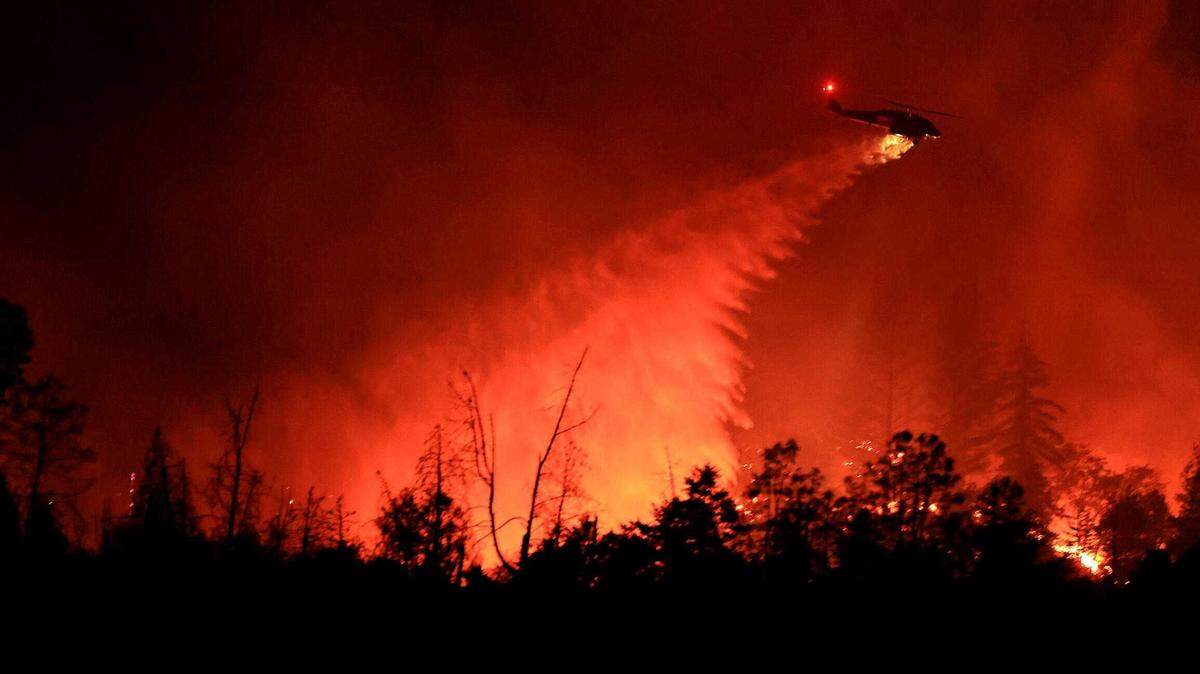
California spends billions of dollars each year in wildfire mitigation. Yet, for all the money and effort we invest, we still don’t know where the greatest risks are or if our investments are actually reducing them.
The Palisades Fire exposed serious flaws in California’s risk assessment and funding strategy: The Los Angeles Times revealed that the state denied over $3.8 million in prevention grants for Pacific Palisades and Malibu while directing funds to lower-risk areas. Though the region was labeled a very high fire hazard zone, the state still lacks the granular, high-tech forecasting tools needed to target mitigation investments — like fuel breaks and home hardening — where they will matter most.
This is not a problem that is unique to California, but we are uniquely positioned to lead the way with a real solution.
The California Senate passed a comprehensive wildfire package in response to the Los Angeles fires. The most important component of that package is Senate Bill 326, co-authored by Sen. Josh Becker, D-San Mateo, and Sen. John Laird, D-Santa Cruz, which would ensure that California is using cutting edge technology to assess risk, prioritize treatments and track progress in real time.
Additionally, the legislation instructs existing grant programs to prioritize communities that adopt “Zone 0” ordinances. These rules require clearing vegetation within five feet of homes most at risk of fire. It’s part of California’s push to stop waiting until fires break out and start reducing the risks ahead of time.
As SB 326 heads to the Assembly Appropriations Committee and then the governor’s desk, it will be judged against many competing priorities. In a constrained fiscal environment, the Assembly should prioritize passing legislation to help the state make better mitigation decisions that improve outcomes and drive down costs.
New, commercially available technologies already in use in certain California communities can help the state assess risk, target treatments and track progress in real time at a fraction of the cost that it might have taken five years ago.
The return on investment is clear: focusing mitigation on the highest-risk places saves far more in damages than it costs up front. One wildfire analytics firm found that $9 million in targeted investments in defensible space and fuel breaks could have prevented the billions in losses from the Eaton Fire.
SB 326 will help California make those investments and put our state on the path toward long term resilience.
Matt Weiner is the founder and CEO of Megafire Action, a non-profit organization committed to ending the megafire crisis by reforming our systems for land management, wildfire response and community resilience.
This story was originally published August 28, 2025 at 2:29 PM with the headline "How California can prepare for wildfires before they break out | Opinion."