
Gavin Newsom’s ‘California miracle’ became a coronavirus nightmare. Can he fix it?
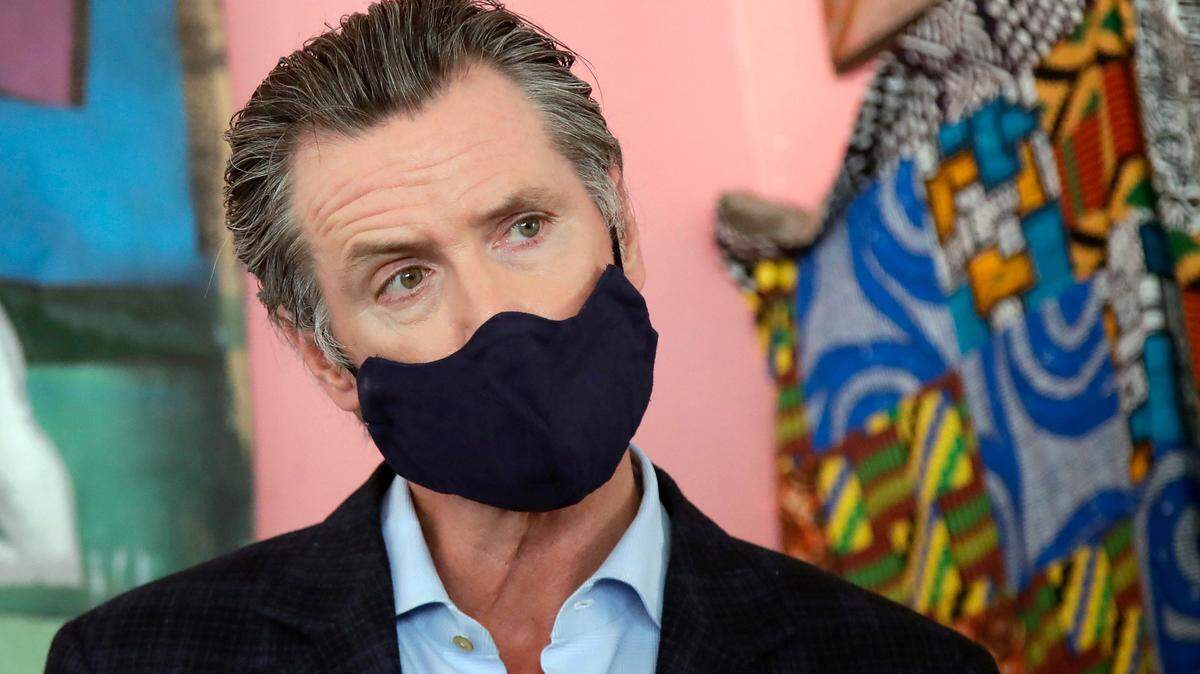
Click the California Nation player above to hear former gubernatorial advisors discuss Gov. Gavin Newsom’s handling of the coronavirus.
Even before the coronavirus pandemic hit California, some Sacramento insiders were using a curse word – one defined by the Cambridge Dictionary as “a situation or event that is badly organized, unpleasant, and full of confusion” – to describe Gov. Gavin Newsom’s administration.
The first half of the word: “S---.” The second half: “show.”
Dysfunction is normal in a fledgling operation. It can take time to sort out how things work. Ready or not, however, the Newsom administration now finds itself facing an unprecedented emergency.
All governors must confront crises. Between earthquakes, wildfires, floods and budget meltdowns, crisis management is a big part of the job. Last week, I discussed Newsom’s performance with four experts who advised California governors through previous disasters.
All agreed on some key things. First, no governor has ever dealt with anything like COVID-19. Second, Newsom’s statewide stay-at-home order was the right move and saved lives. Third, his initial approach – with clear metrics for testing and contract tracing – provided a welcome contrast to President Trump’s flailing response.
Finally, they agreed that Newsom’s leadership – strong and decisive early on – unraveled in May.
“There was a zigzag in policy,” said Steven Maviglio, who helped advise Gov. Gray Davis during the energy crisis in 2000.
It’s still not clear why Newsom reversed course. Polls showed strong voter support for the shutdown. Yet he rapidly reopened the state in violation of his own guidelines. His shift coincided with the rise of a small but intense protest movement against the shutdown.
Newsom appeared to be “caving in to the vocal minority,” said Elizabeth Ashford, who advised both Gov. Arnold Schwarzenegger and Gov. Jerry Brown.
“Once you sort of let that … hole in the dam open, it’s going to burst,” Ashford said.
“Newsom has never had to face the kind of blowback that comes with the job and it’s not clear he was ready for that,” said Phil Trounstine, who advised Gov. Davis.
We are facing the consequences of Newsom’s surrender. With over 459,000 infections and counting, California now leads the nation … in new infections.
“In a crisis like this, you see the strengths and weaknesses of your political leaders with clarity,” said Joseph Rodota, who advised Gov. Pete Wilson after the 1994 Northridge earthquake.
Rodota said Newsom’s early response showed he could be “quick, decisive and energetic.” But the governor’s weaknesses – including a tendency to be “all over the map” – undermined his success.
“You’ve got him spending cycles on regulating hair salons while prisoners are being transferred who have the virus,” Rodota says, noting major COVID-19 outbreaks in California prisons like San Quentin. “The nail salon problem is not something I would ever have brought to the attention of a governor. The prisons, however …”
Newsom apparently ignored early warnings that prisons might become coronavirus hotspots. Instead, he focused on rolling out glossy “first in the nation” programs that often turned out to be more hype than help.
“One of the biggest criticisms of this governor from the get-go is that he runs government with a press release every day and there’s not a lot of attention to follow up and detail,” Maviglio said.
In May, for example, Newsom tapped billionaire Tom Steyer to co-chair a commission to reopen California’s economy but it has fallen off of the radar, Maviglio said, “bogged down in disagreement and a lack of focus.”
In addition, Newsom announced a statewide program to deliver restaurant meals to senior citizens, causing call centers to get flooded with requests for a program that wasn’t ready to go.
Why did Newsom focus on false promises instead of the big things, like making California a world leader in testing and contact tracing? It seems clear from the national coverage he pursued that Newsom was using the state’s coronavirus response to boost his national profile for the inevitable White House run.
Not anymore.
“As soon as the numbers started spiking in California, he disappeared,” Rodota said. “He’s not seeking out these high-profile national positions.”
I’ll address Newsom’s presidential ambitions in a separate column. For now: How can he regain control of this disaster?
First, he must accept his central role as the manager of this crisis and stop trying to offload responsibility to local leaders.
Second, he must focus. Stop the half-baked announcements and rambling monologues. Tell California how you’re going to solve the big problems like rising infections, testing, contact tracing. Provide a clear plan for making schools safe and protecting seniors.
“He failed to use California’s awesome financial power to buy or invest in the millions of tests we need,” Trounstine said.
“The governor needs to throw away the PowerPoint and start using the laser pointer,” Rodota said.
Finally, Newsom must pivot to real solutions before voters realize how badly he botched this. Despite his grave missteps, a recent poll by the California Endowment showed that 67% of Californians stand behind the governor.
In addition, 53% of voters believe the pandemic will only get worse and 61% said they fear getting COVID-19 more than they fear losing income. At some point, those voters might realize that it was Newsom – not Trump – who turned the “California miracle” into a coronavirus nightmare.
Today, however, Newsom has tremendous political capital. This is the moment to spend it. He must think big, focus like a laser beam, knock heads, eliminate chaos and – at this consequential hour – deliver on the courage and boldness he has often promised but rarely delivered.
This story was originally published July 27, 2020 at 8:52 AM with the headline "Gavin Newsom’s ‘California miracle’ became a coronavirus nightmare. Can he fix it?."