Modesto professor’s cabin got buried in heavy snow. He’s using it as a lesson about weather
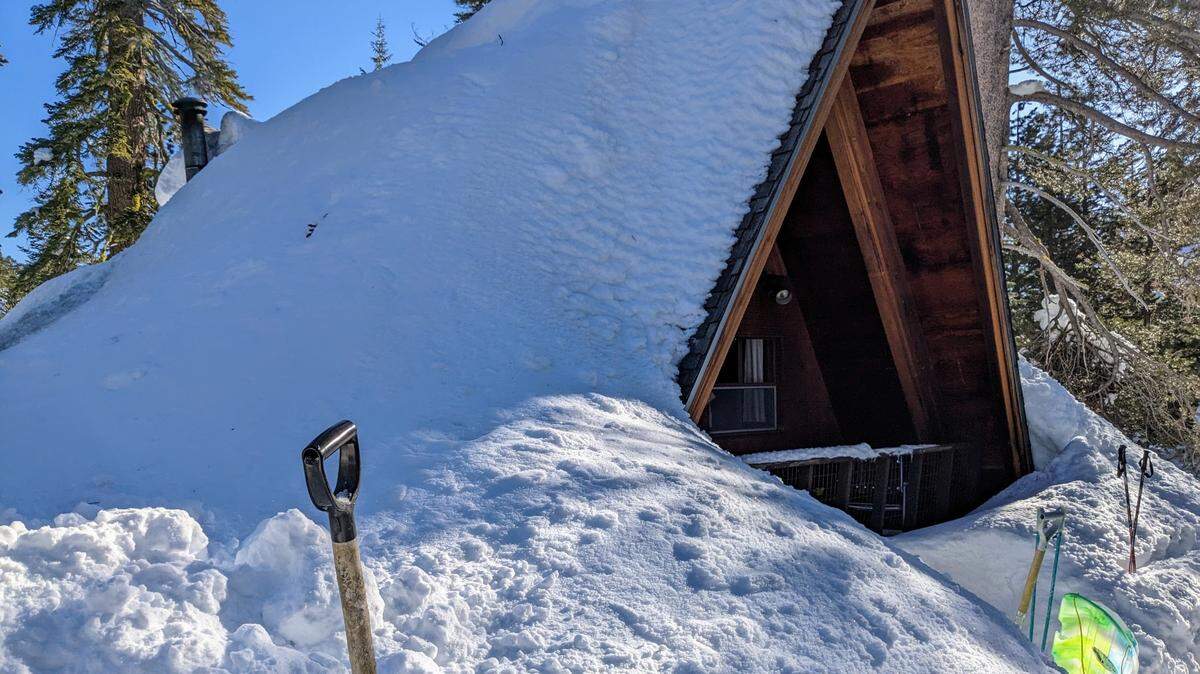
Professor Noah Hughes covers weather in his earth science classes at Modesto Junior College. This winter, he has had an up-close view at his Sierra Nevada cabin.
Snow has buried much of the first floor of the two-story getaway at Bear Valley, along Highway 4 about 7,100 feet above sea level.
“I have been up in Bear Valley, digging out my cabin from snowmageddon,” Hughes said by email Friday, March 3. The Modesto Bee had contacted him for a story about the chances of even more snow in the spring.
The central Sierra snowpack stood at 197% of average Tuesday, the California Department of Water Resources reported. The National Weather Service forecasts even more through Monday.
The record was set in 1983, with 230% of the average snow. Storms usually fade in April and May, but not that year.
Hughes said his cabin’s A-frame construction has helped it withstand the snow. The family used a shovel and other means to gain access.
The professor then had time to discuss the outlook for spring. He said the forecast models he tracks do not yet show a risk of major flooding.
Hughes pointed to comments last week on a YouTube video by Daniel Swain, a climate scientist at UCLA. Swain said the flood threat could be from snowmelt on sunny days, or from rain eroding some of the pack.
Hughes chairs the Climate & Sustainability Task Force at MJC. It formed in 2019 to promote teaching about climate change and ways that the two campuses could conserve energy and other resources.
A key message: The planet is generally warming, but the Sierra can still get massive snowfall. Climate change also could reduce rainfall totals while concentrating them in years such as 2017 and 2023.
The recent storms have boosted reservoirs and aquifers after three below-average years. Hughes said they are just a start in dealing with groundwater overuse.
“That would take many years like this over a decade or three and/or improvements in groundwater management ...,” he said. “As it is, much of this water will not end up back in the aquifers, thanks to outdated water law, older infrastructure and resulting bureaucratic red tape. Whatever the reservoirs can’t hold, most of it will end up in the ocean.”
This story was originally published March 7, 2023 at 12:52 PM.