Hundreds gather outside Tom McClintock’s Modesto office to oppose cuts to Medicaid
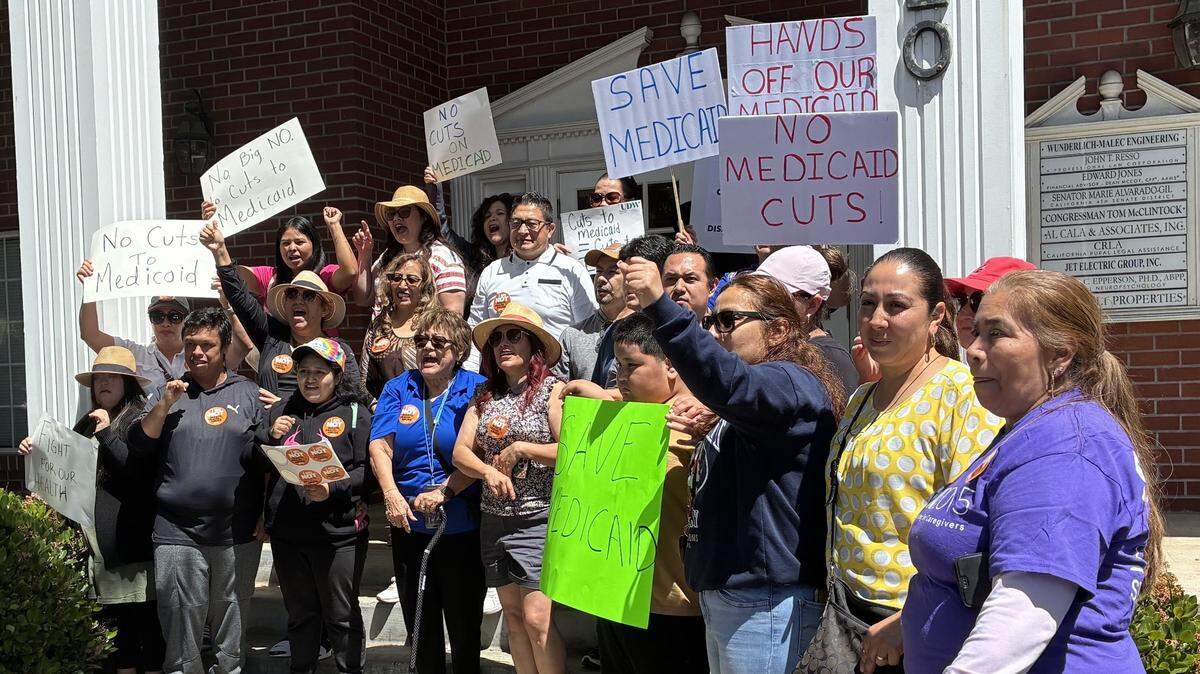
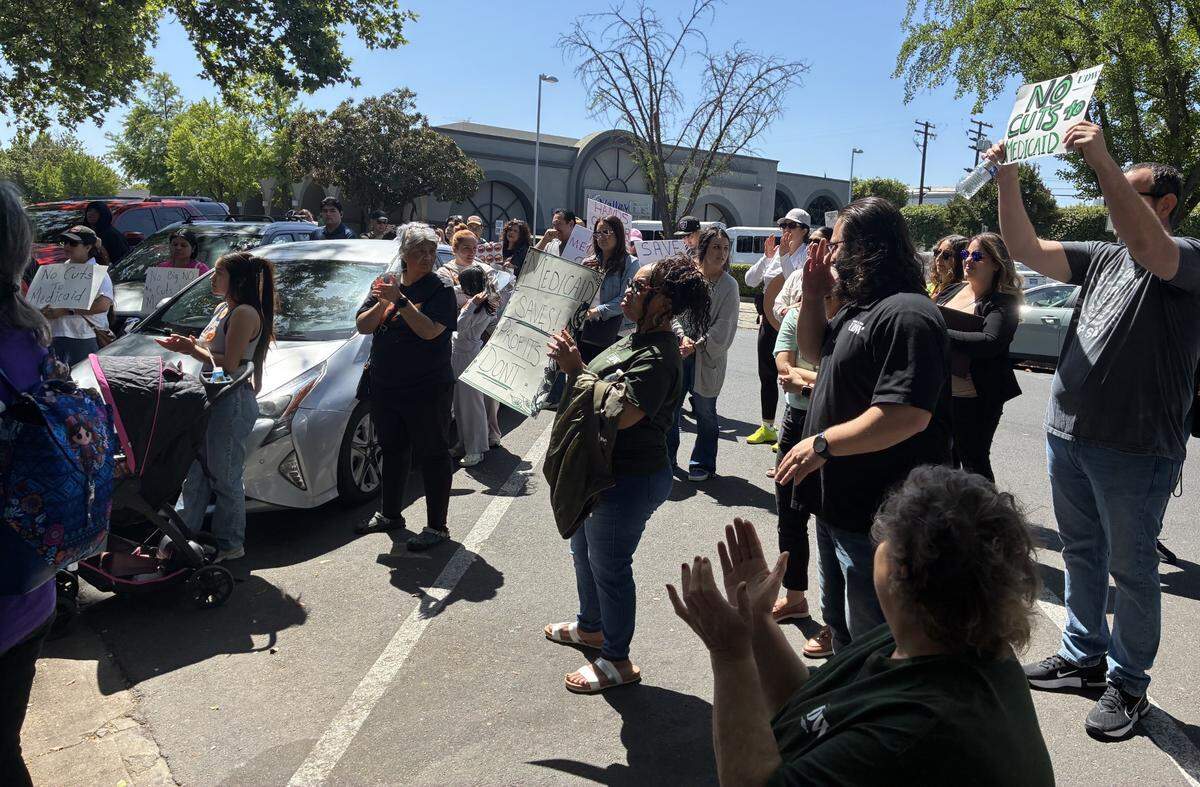
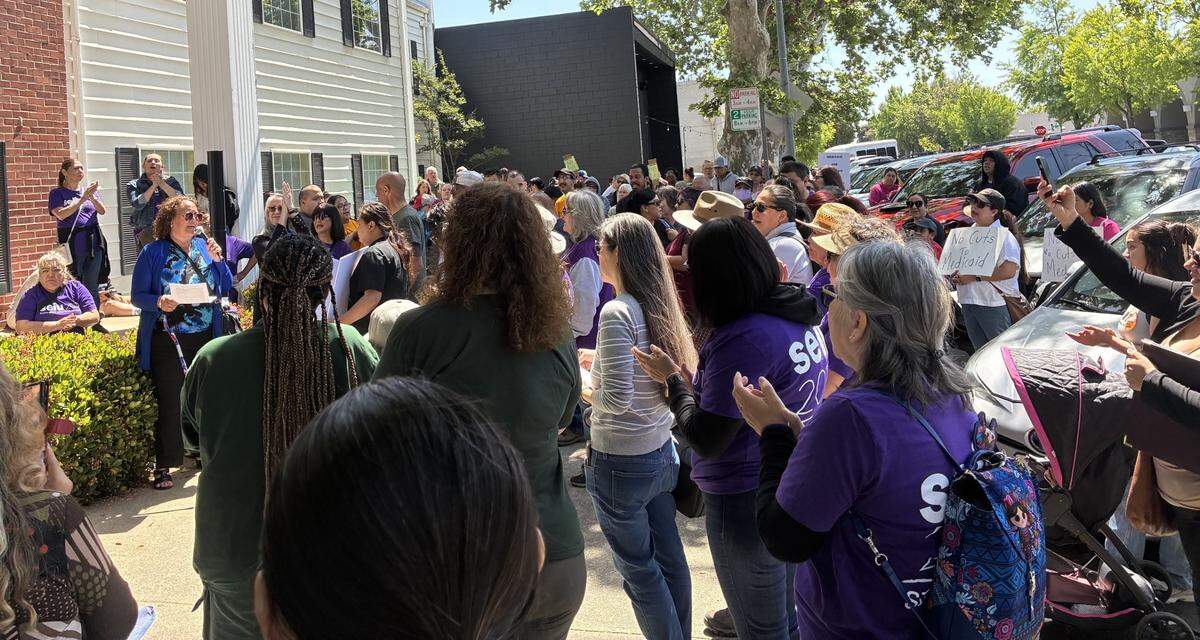
About 200 disability advocates, caregivers and people with disabilities protested at Rep. Tom McClintock’s Modesto office on Wednesday afternoon.
Chants of “Save Medicaid” and “Si se puede” rose from the crowd amid speeches by organizers as they gathered in front of the building at 1020 15th St.
In Stanislaus County, 47% of residents use MediCal, California’s version of Medicaid health care for people with low income.
As demonstrators circled around the back to the accessible entrance and over to McClintock’s door, they found it still locked and dark, as it has been since at least April 14.
Mohamed Rashid has lived in Hughson for 32 years and resides in McClintock’s district. He said he went to the congressman’s office to “advocate not just for myself but for the disability community as a whole. We’re not waste, we’re not garbage and we deserve equal rights like everyone else.”
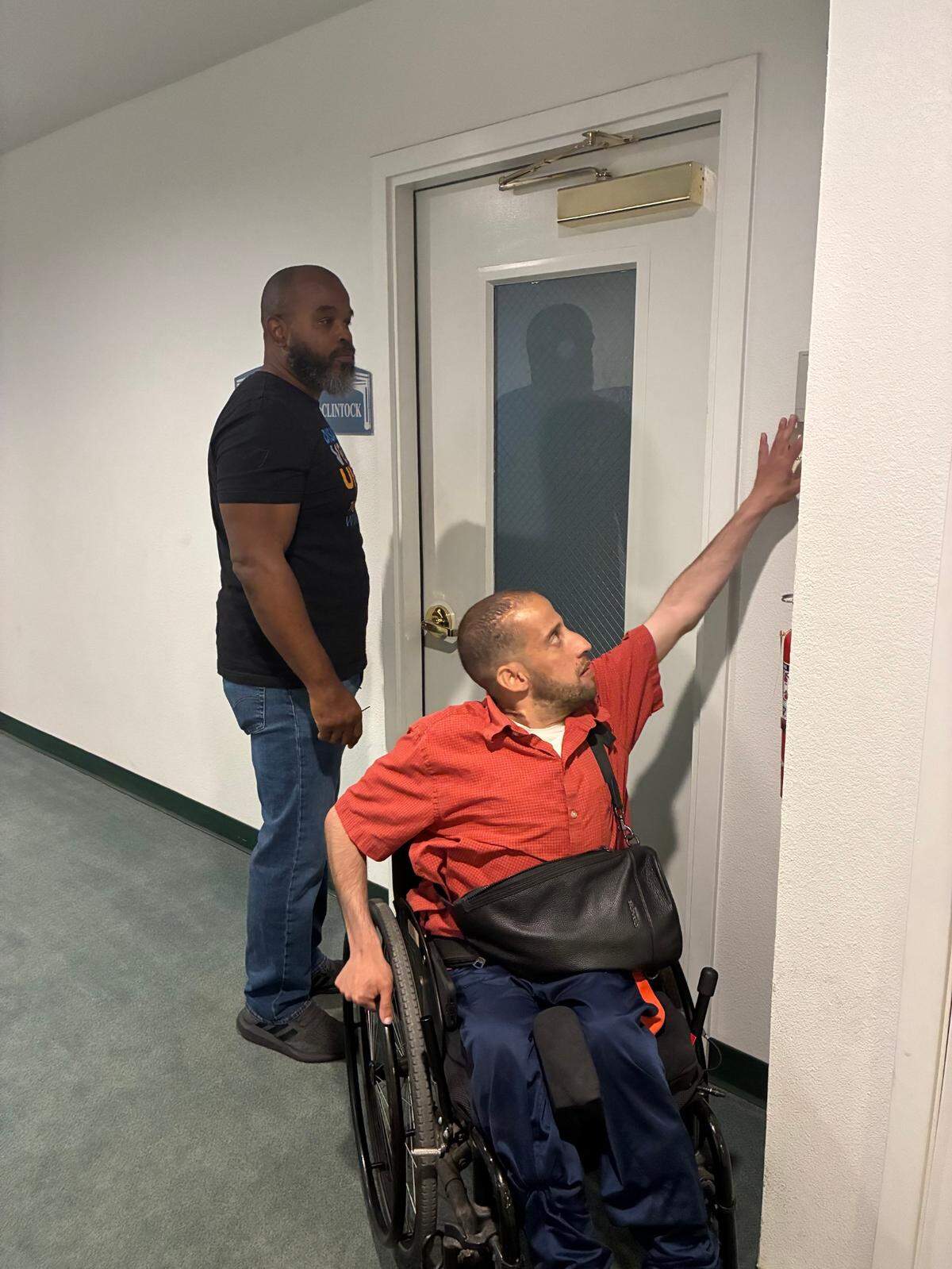
He was one of the constituents who tried to speak with the representative just before noon and found the door locked with a doorbell out of reach for wheelchair users.
“It’s really sad that they didn’t have a representative for his constituents,” he said. “And it’s very pathetic, it just goes to show what kind of leader he is.”
Elizabette Guecamburu is a writer, farmer’s daughter and disability advocate. She has a neuromuscular disability and relies on MediCal. She, too, had hoped to speak to the House representative.
“When we finally got in, it was locked and there was nobody there.” She said her main takeaway was this: “Hiding from your constituents doesn’t make us go away and too many people are affected to say it doesn’t exist.”
Jennifer Cressy, spokesperson for McClintock, provided this response regarding the office closure: “We recently lost both our Modesto staff members. Bob Phelan, our field representative, tragically passed away Feb. 28, and shortly thereafter Alfredo Miranda, our office manager, accepted a position in Southern California. We are in the final phase of interviews to fill these vacancies and hope to have the office reopened in the next few weeks. In the meantime, incoming calls are being forwarded to El Dorado Hills and the Modesto office is open by appointment.”
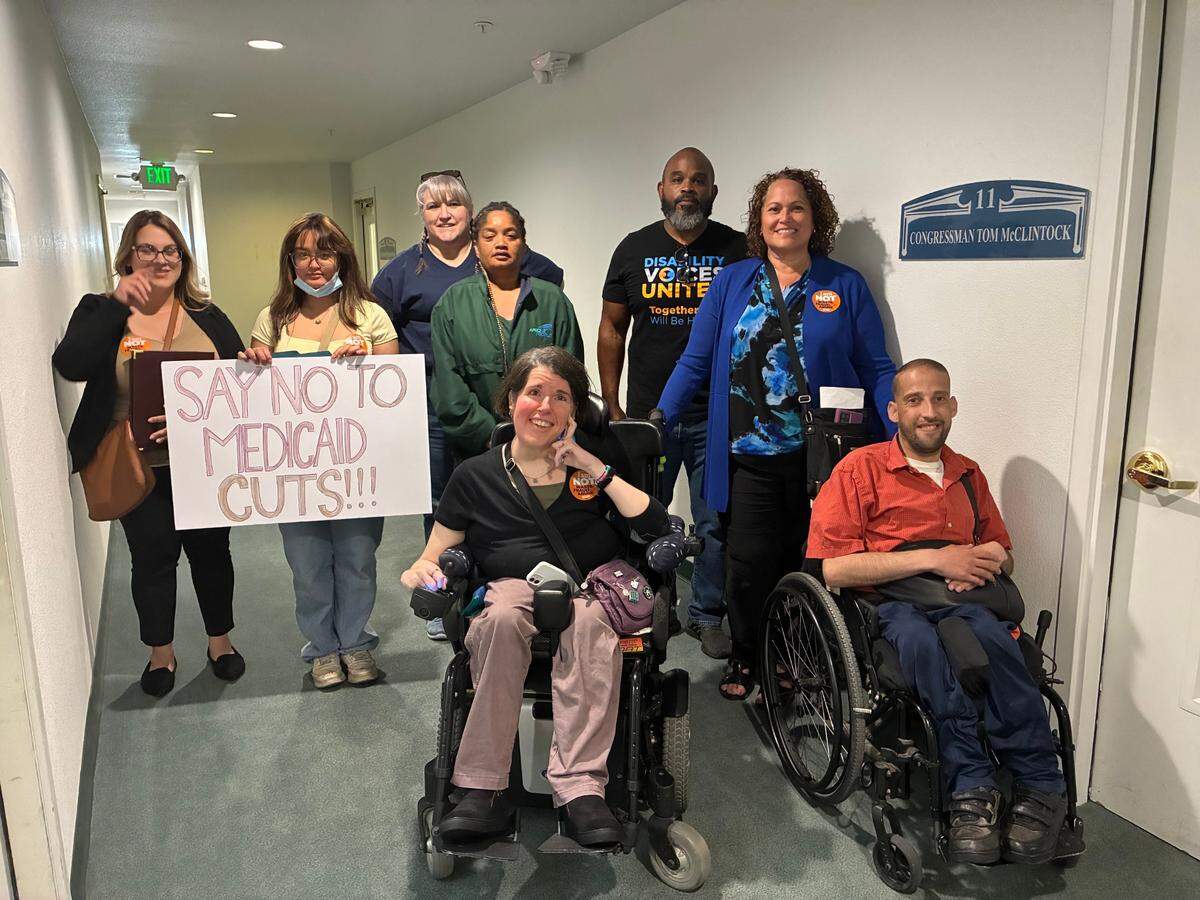
Guecamburu said the route into the building itself was inaccessible for her wheelchair. It has overgrown bushes and a narrow path she almost fell off. She said the back door required an able-bodied person to let her in.
Leinani Walter, executive director of the Valley Mountain Regional Center, works with people who have developmental disabilities. She said she is advocating so they can continue to lead dignified lives with humane care.
“I would remind Rep. McClintock that if you choose to cut Health and Human Services, you are going to harm people, their health, their welfare in the community, and you’re going to increase, I personally think, health and safety risks,” she said.
Medicare, the federal program that provides assistance for people over the age of 65 and those with specific disabilities, often goes hand-in-hand with Medicaid and Social Security, which together provide income and support for people who are disabled with low income.
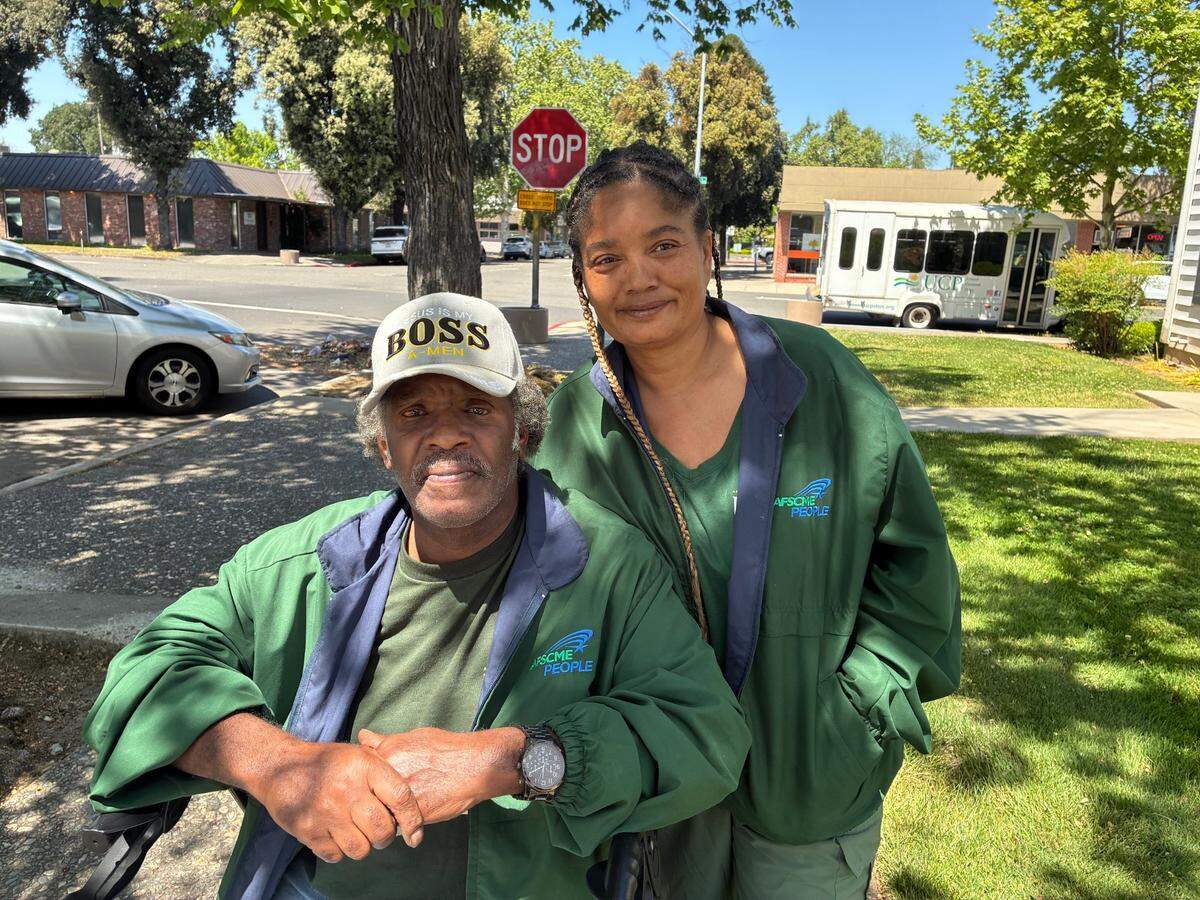
Willie Grayce Jr. and his in-home caretaker, United Domestic Workers member Chantal Turner, have lived in Modesto their whole lives. “Without people like her, we’re in trouble,” Grayce said. “I don’t have a lot of money, I don’t have a big retirement disability where I can lay back.”
Many of the participants wore stickers that read “I am not Waste, Fraud and Abuse.”
Walter said she not only thinks continuing to support community-based systems like in-house supportive service and care workers is the right thing to do, it’s more cost-effective.
“It’s hard for people to understand that because they think in-home support is expensive,” she said. “It’s not.”
She added that 40% of the Valley Mountain Regional Center’s budget comes from Medicaid.
Turner said one of the things she’s most proud of is making sure Grayce gets out and enjoys his life. “I can see he’s happy because we go places – we don’t just stay home,” she said. “I make sure he goes to all of his doctor’s appointments and sees his family.”
Cressy gave this statement on McClintock’s perspective on MediCaid:
“Medicaid spending has nearly doubled in 10 years and now costs more than the entire defense budget, taking $6,900 a year from an average American household to support. The budget resolution anticipates long-overdue common-sense reforms such as restoring the work requirement for able-bodied adults, prosecuting fraud and ending services to noncitizens. Left-wing groups oppose these reforms and are instead advocating for a crushing tax increase that would cost a family earning $75,000 a year an additional $1,500 in new taxes next year.”
The cost of Medicaid has increased since 2014 largely due to expansions under the Affordable Care Act for who qualified for aid. The state of California additionally extended MediCal to all income qualified residents in 2024, including undocumented people. Georgia is the only state that currently has a work requirement for Medicaid.
The House budget resolution that McClintock voted for in April calls for a $880 billion cut or more which is expected to come largely from Medicaid over the next 10 years.
Guecamburu said the proposed cuts would decimate care for people like her. “Do we want the legacy of the era in history to be the one where we failed our most vulnerable? No, we don’t.”
Walter said disability isn’t a political issue, it’s enjoyed bipartisan support.
“Disability doesn’t have a party,” she said. “Your work is to represent all of us, and you’re in a community that needs you and needs your voice.”
This story was originally published April 24, 2025 at 11:36 AM.