Rare video of chimpanzee using tool caught on trail cam. See ‘curious’ moment
In 2015, a photograph of a lone male lion in the Congo Basin of Gabon in west-central Africa took the world by storm.
Lions had long been absent from the region, or so researchers thought, but decades-long conservation efforts seemed to be paying off.
The discovery sparked a new project from Gabon’s National Park Agency and Panthera, the wild cat conservation organization, to monitor feline movement and behavior in Gabon’s Batéké Plateau National Park.
Part of that research included the installment of trail cameras throughout the park, as researchers hoped to catch a glimpse of a lion or leopard, the focus of their study.
But on Jan. 27, as the research team pored over hours of video footage from inside the park, they discovered something else entirely.
“It was probably the 100th or 150th video we had reviewed from the savannas and forests of the park, and all of a sudden the entire team let out a yell of excitement as this was the first time we had seen footage as incredible as this in the park,” Alex Botha, Panthera wildlife restoration coordinator in the Batéké Plateau National Park, told McClatchy News in an email.
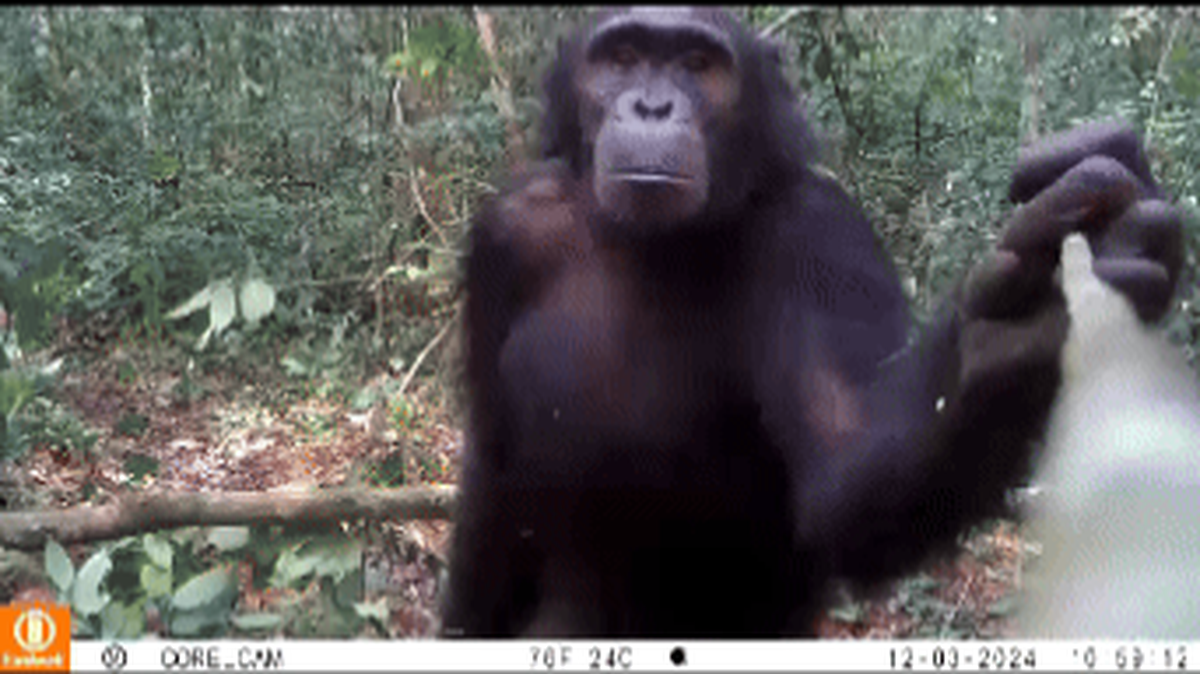
Looking back at them wasn’t a cat at all, but rather a female endangered chimpanzee — and she was using a tool.
The chimpanzee approaches the camera and appears to recognize that it is different from her environment, video footage shows. She picks up a long stick, uses it to probe the camera and then appears to sniff the end of the stick that touched the camera.
Footage of the “curious” interaction has now been released for the first time and was shared with McClatchy News by Panthera, on behalf of Panthera, Gabon’s National Park Agency and Gaboma Multimedia and Productions.
Based on previous reports, the video is the “first-ever footage” of a chimpanzee using a tool in the park, Panthera said.
“There is an entire publication devoted to the reaction of great apes to camera traps across tropical Africa. Interestingly, there hasn’t been any report in this publication on using tools to probe cameras, it seems therefore that this aspect is indeed very rare,” Tobias Deschner, a primatologist with Osnabrück University, told McClatchy News in an email.
“On the other hand, tool use by chimpanzees is well documented in tropical Africa. However, most footage of chimpanzees using tools comes from groups that have been habituated to human presence,” Deschner said. “To capture non-habituated chimpanzees while using a tool is rather rare, particularly in an area such as the Batéké Plateau that is relatively undocumented in comparison to other populations in the region.”
So far, chimpanzees have mainly been observed using tools for feeding, such as putting sticks down into bee nests for honey, Deschner said. Using a tool to instead dig, or in this case probe an unknown and “potentially dangerous object,” shows chimpanzees’ ability to generalize their knowledge to similar but different situations.
The chimpanzee population in Gabon is already unique compared to other groups due to their behavior of cracking open tortoises to eat the meat inside the shell, as well as putting insects on their wounds and the wounds of their group, Deschner said.
“Camera trap footage has allowed for comparisons of chimpanzee behavior across a high number of sites in tropical Africa, including Plateau Bateke,” Deschner said. “From such analyses we know, that the presence or absence of termite fishing is an indication of a cultural behavior in chimpanzees, but that even at sites where chimpanzees do fish for termites, they do so with different techniques, just in the same way that humans have cultural differences in food acquisition and preparation.”
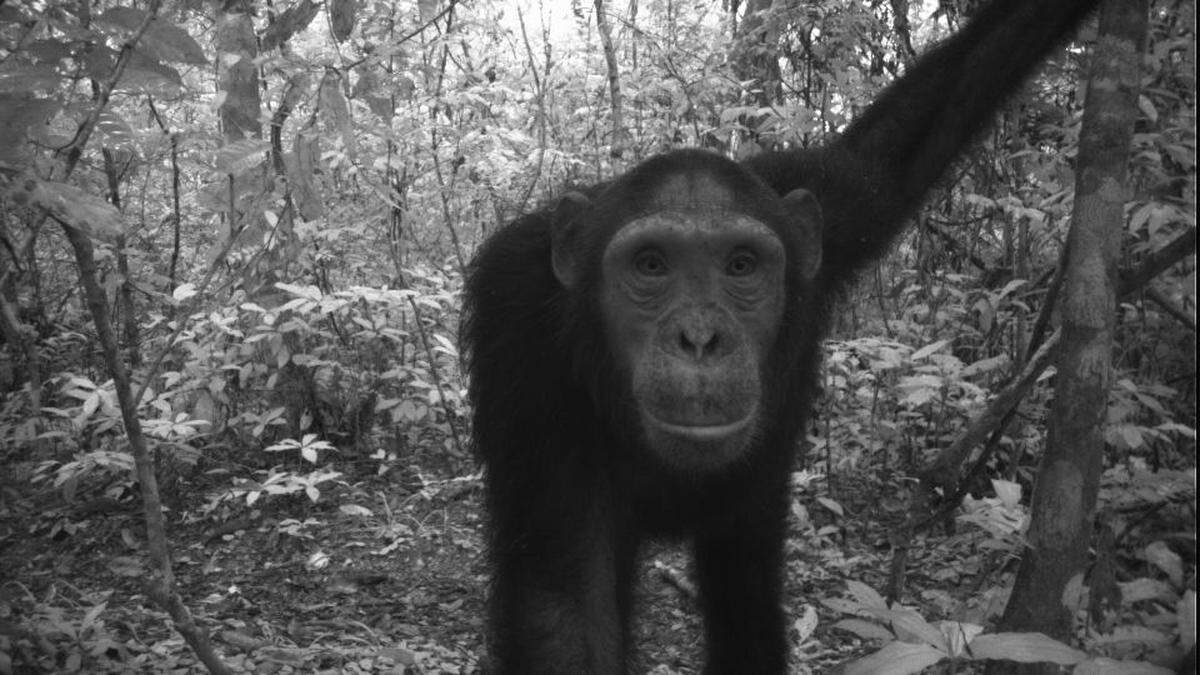
Chimpanzees are endangered, according to the International Union for Conservation of Nature’s Red List of Threatened Species, and their numbers are decreasing across central Africa.
“Chimpanzees have been recorded by the Panthera/ANPN cameras in forests, savannas and saline beaches across the park, but chimpanzee sightings are always special because of their endangered classification by the IUCN,” Botha said. “Needless to say, we were all shocked but more importantly, excited that the years of conservation efforts are positively influencing mammal populations in the region, including our closest living relatives, the chimpanzee.”
The park was designated as a protected area in 2002 following research by Philipp Henschel, who documented the “uncontrolled poaching and unregulated bushmeat hunting” taking place there, Botha said.
When Henschel first studied the park, chimpanzees were “extremely rare,” Botha said, but today they are seen in multiple different environments within the park.
“Field teams also regularly hear chimpanzees when patrolling the landscape and our findings suggest that populations are reproducing as evident from the recordings of juveniles,” Botha said. “In addition to chimpanzees, prey species are regularly encountered while on patrol, and elephants are regularly seen in the saline beaches across the park, with many of these encounters including 10-20 elephants in a single sighting.”
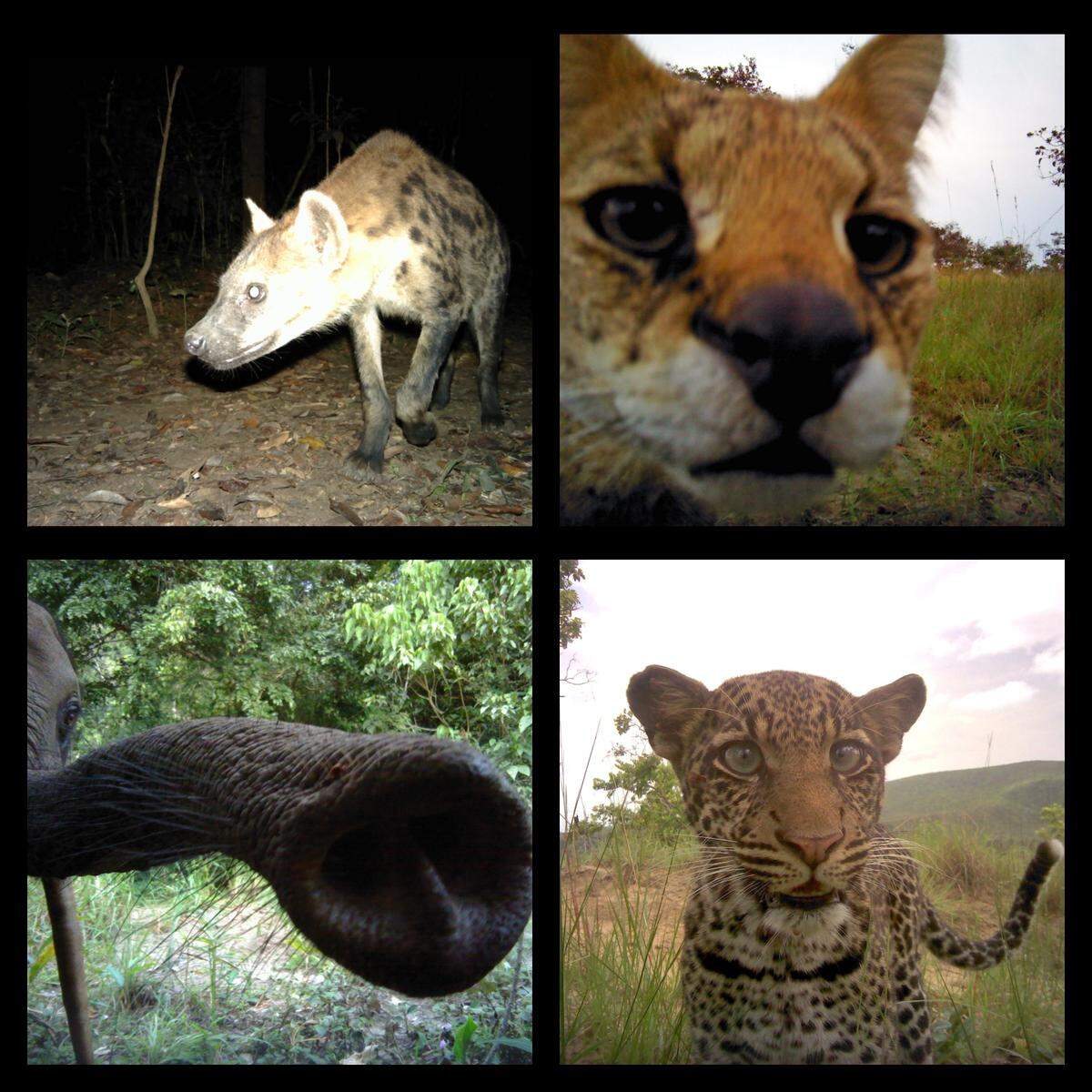
A lion translocation project, led by Gabon’s National Park Agency and Panthera, is slated for 2025 following the discovery of a lion in the park a decade ago.
Batéké Plateau National Park is in southeastern Gabon, near the border with the Republic of the Congo.
This story was originally published April 11, 2025 at 1:17 PM with the headline "Rare video of chimpanzee using tool caught on trail cam. See ‘curious’ moment."