Mother’s death led Stanislaus State student to work against healthcare bias
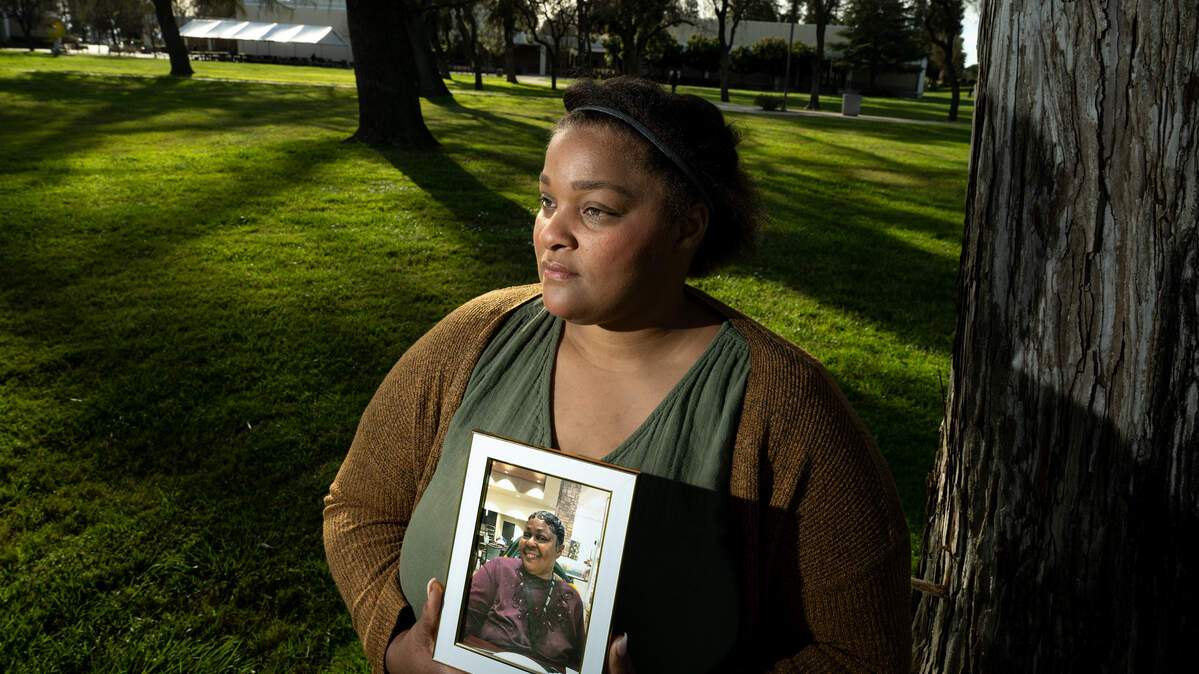
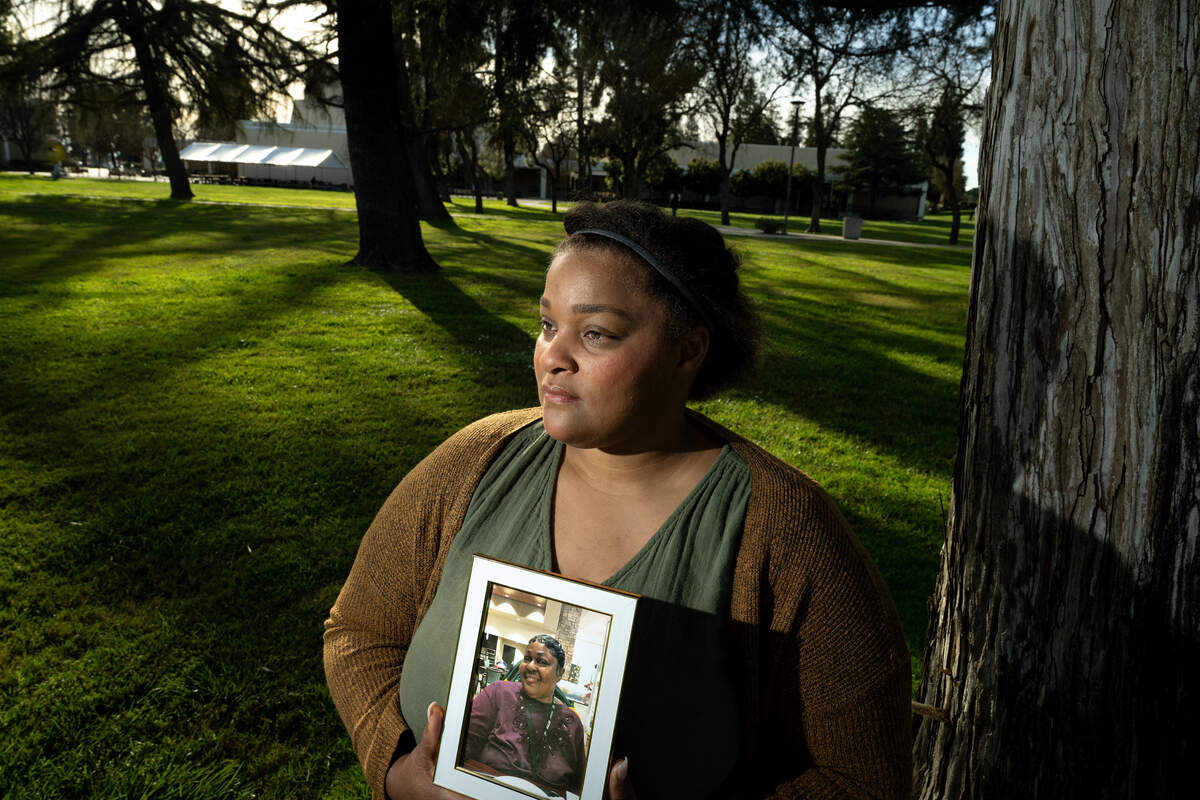
When Tammica Gipson was a graduate student at Stanislaus State, her mother had multiple strokes, at least 10. The first was when her mother was 52 years old. The strokes resulted left-side body paralysis, cognitive impairment and severely reduced vision.
Still in school, Gipson became her mother’s full-time caregiver. But in November 2024 DeAnn Hawkins died.
Seeing how her mother was treated in healthcare spaces motivated Gipson to create a training for community health workers on what’s called intersectionality.
“It’s personal for me. My mom’s death was very traumatic. But what made it even more painful was witnessing how she was treated in the healthcare space. It was just very evident that my mom wasn’t always seen as a whole person,” Gipson said.
As part of her university studies, she created a training program to help address issues of implicit bias in healthcare. Working with the nonprofit An Insightful Journey, Gipson offered her training at Golden Valley Health Centers.
Gipson said her mother being a plus-size Black woman “shaped how providers engaged with her,” and that “as her daughter, personally, I felt powerless.”
“For example, there’s a perception that Black women have a high pain tolerance. My mother didn’t. She didn’t receive enough morphine, and she suffered,” Gipson said. She added that her mother’s symptoms were at times dismissed by healthcare workers.
Integrating grief into her graduate studies
As Gipson was grieving, one of her professors connected her with a former student, Dejamarie Crozier. Crozier is the founder of An Insightful Journey, which is focused on helping “underserved and marginalized populations by uplifting their stories to support their health and well-being.” An Insightful Journey also partners with the CSU Stanislaus master’s of social work program.
Crozier, too, lost her mother while she was a graduate student at Stan State. She shared with Gipson a TED Talk by civil rights advocate Kimberlé Crenshaw on intersectionality.
Crenshaw, a law professor at UCLA and Columbia, coined the term intersectionality and defines it as “a lens through which you can see where power comes and collides, where it interlocks and intersects. It’s not simply that there’s a race problem here, a gender problem here, and a class or LBGTQ problem there. Many times, that framework erases what happens to people who are subject to all of these things.”
It was a quote that stuck out to Gipson and offered an explanation for “what I had witnessed in my mom’s personal care.”
“My mom wasn’t just a patient. She was a Black woman. She was a plus-sized woman. She was navigating systems,” Gipson said, and some of them failed her. “And those are systems that I hope to change.”
Crozier said she shared the TED Talk to help Gipson cope. As Gipson became more immersed in understanding intersectionality, Crozier suggested she “integrate her grief into the [master’s] program.”
“I told her at the time, you’re going to finish this program,” Crozier said. “If that means that we have to integrate your grief into this program as a means to get through it and process it and still keep your mom’s memory alive, I’m there to support you through that.”
Building, presenting intersectionality training
Gipson’s master’s program involved working on a community project, and in spring 2025, Gipson partnered with An Insightful Journey, where Crozier and COO Kayshaun Brooks helped her create a training on intersectionality. The first step was collecting data on experiences of bias in local healthcare institutions, whether that be because of race, gender, disability, or language.
By asking people to share their experiences with bias in treatment, language barriers, insurance, physical access and more, Gipson found that “these disparities are not caused by just one factor. Instead, they’re shaped by overlapping identities,” according to a description of collected data.
The training aims to help people understand intersectionality, layered identities and how it applies in the context of patient care.
For her final project in the program, Gipson developed the training further to present it to Golden Valley Health Centers’ community health workers, which she did last month. According to the GVHC site, community health workers “connect patients and community members to health care access and wellbeing services and collaborate with community-based organizations.”
Gipson said the 90-minute training had most participants reflecting on instances where they hadn’t applied it in the past, and how they could apply it in the future.
“They were so engaged and they were so into it, and they were just hungry. They were so hungry for it,” Gipson said. “I think it made me hungry to do it again.”
An Insightful Journey awarded Gipson a $1,000 scholarship for health equity work. Crozier and Brooks expressed their gratitude to GVHC for its partnership. “We are highly grateful for them,” Brooks said. “We were excited to see that they took a risk on us, and it paid off.”
Gipson said it was fulfilling to create training to change the experiences of patients seeing discrimination in healthcare.
“I’m making my mom proud. I’m making her proud,” Gipson said.
This story was originally published March 6, 2026 at 2:00 PM.