Modesto Junior College begins repatriation of Native American ancestors, artifacts
As cultural resource preservation director for the Southern Sierra Miwuk Nation, Jazzmyn Gegere Brochini helps return ancestors and cultural items to their rightful tribes through the repatriation process.
One case involving a museum in Massachusetts became deeply personal.
She was able to repatriate the remains of her great-aunt’s brother back to her. One of her late relatives had long felt upset that the ancestor had never been brought home, her grandpa told her.
When the remains finally were repatriated, Brochini said she could see the healing take place in her great-aunt’s eyes. Being able to return a member of her own family, she said, reaffirmed exactly why she does this work.
Enacted in 1990, the Native American Graves Protection and Repatriation Act, or NAGPRA, requires agencies and institutions that receive federal funding to return Native American “cultural items” in their possession or control to lineal descendants and culturally affiliated tribes and organizations.
CalNAGPRA, passed 11 years later, applies to any California agency or museum that receives state funding.
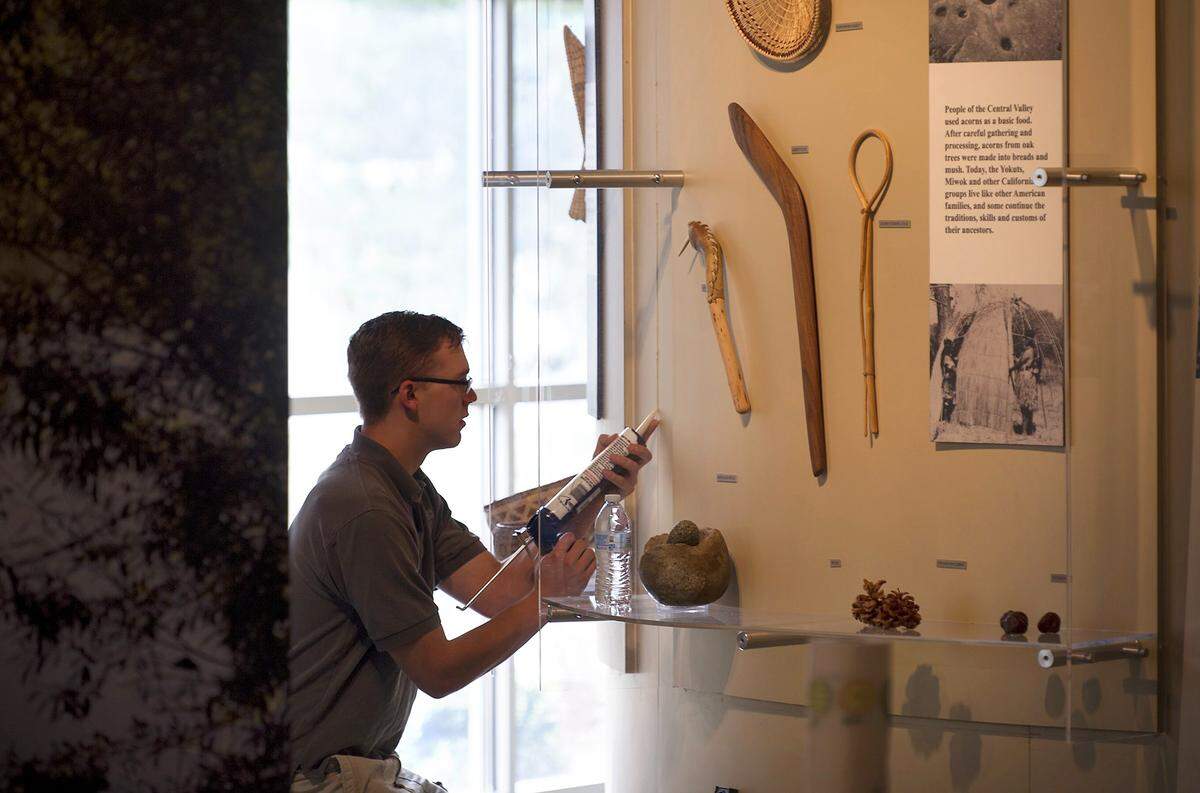
The Great Valley Museum, which is connected to Modesto Junior College, stopped displaying its exhibit on the Yokuts and Me-Wuk tribes in fall of 2024 to start the repatriation process. The items are now concealed at the museum, with a taped sign explaining the ongoing consultations.
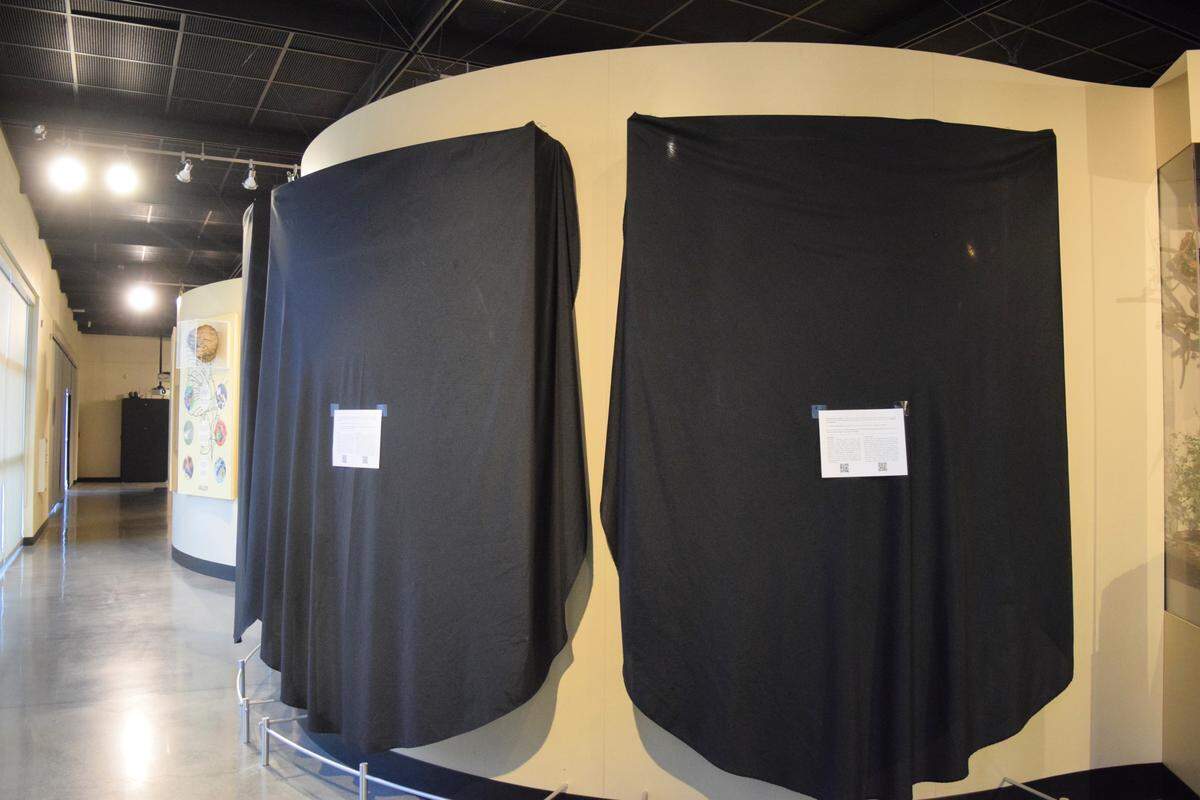
The exhibit has been in the museum since it opened in its current MJC West Campus location in April 2015. GVM also had a Native exhibit in its prior location on Stoddard Avenue. Some of the same items were on display at the old GVM, which had been around since the 1970s.
The bulk of the museum’s Native exhibit comes from the Österberg Collection. Many of the artifacts were collected from the college’s science and anthropology departments over the years.
“One of the tricky things about NAGPRA is that they’re asking you, as the institution, to look through all your cupboards and find everything — which there’s a lot of cupboards,” said MJC President Brian Sanders, who used to run GVM.
MJC spent the first six to eight months since closing the exhibit figuring out the initial steps and identifying a consultant. The college eventually partnered with the firm Bernstein & Associates to identify and assist with the repatriation of the cultural items. The contract from October 2025 to October 2027 costs $100,000.
Sarah Schrader, vice president of college and administrative services, has been tasked to lead the NAGPRA efforts. While she wears a lot of hats at the college, she calls this her “heart work.”
“I like to be able to spend time on it because I feel like this is what we should be doing, giving these items back to the people they belong to,” Schrader said.
She said she isn’t aware of how many items are in GVM’s possession, but they include artifacts — such as arrowheads and baskets — and ancestral remains, which may include a single bone or ashes.
Sanders said he doesn’t believe the college has many things that would be considered “sacred items.”
“Part of what NAGPRA is to dive in and figure out what you do have, and if it is sacred things, to treat them in an appropriate way,” Sanders said. “Kind of clear your house of the things that you shouldn’t be in possession of.”
Because MJC is a teaching institution, the items were often used in the classroom, such as for human anatomy. However, the college has since moved to using plastic models.
Schrader said that a few years ago, the items in the anthropology collection identified as Native American were removed and put into storage, and they have not been used in classrooms or for instruction since then.
Some of the items also may be replicas, which the consultant will work to identify.
At this point, the college has handed over the inventory to the consultant while trying to find what else needs to be included. Once that is done, the consultant will review the inventory, upload it to the federal website and then assist the college with the communication to the tribes.
Then, the tribes will identify items and claim them if they are theirs. They can also give the college consent to keep the items.
Sanders said it is difficult to know which tribe the items belong to, so it’s imperative to have a professional organization help with the process.
“The hard part is, a lot of items are donated and there’s no record,” Schrader said.
Schrader said beginning the process took so long for MJC because it was brought to her attention by the anthropology department only around the fall of 2023. MJC has seen a lot of turnover with its presidents, so once Sanders was brought on, it was finally able to become a priority.
The process is anticipated to take 12 to 18 months, according to the consultant’s estimates.
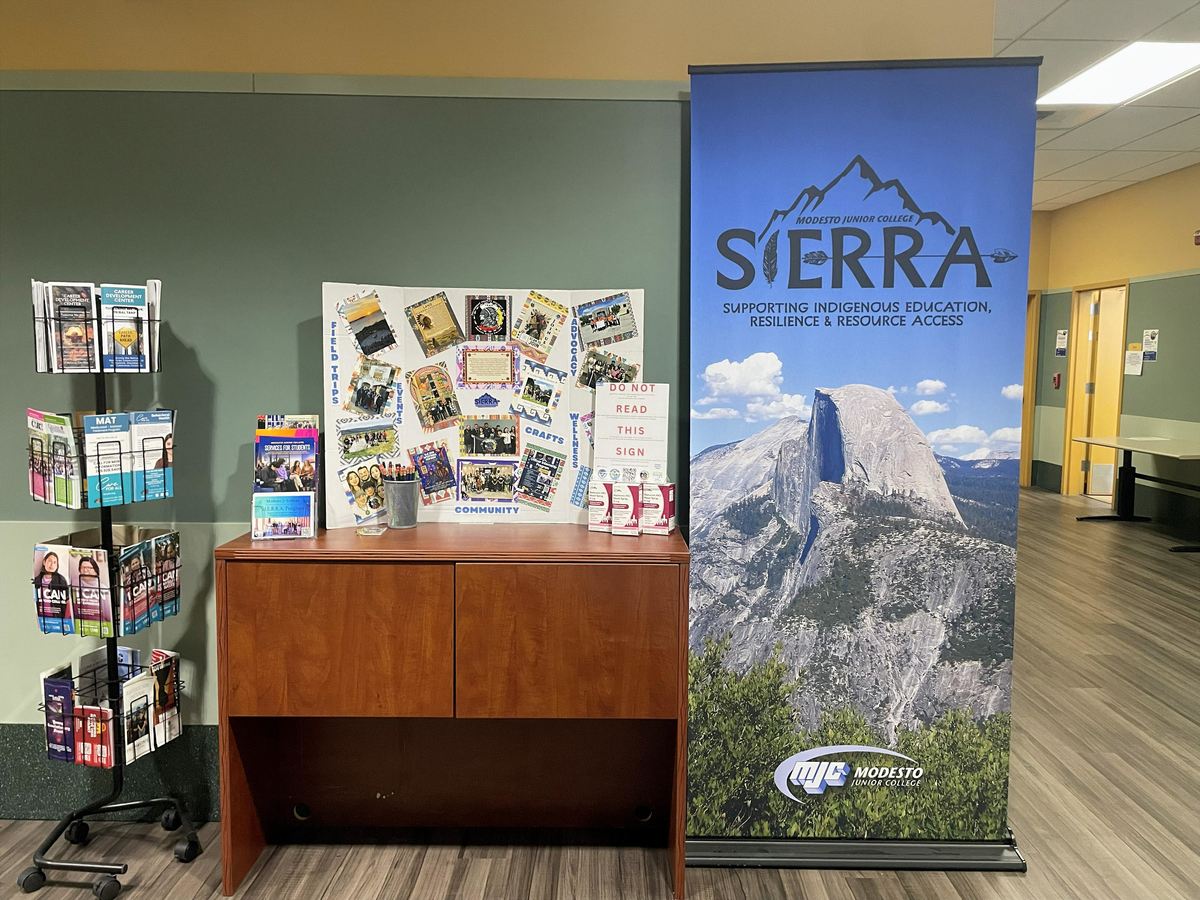
Schrader said they hope to eventually involve Native American students in the process. MJC has a program called Supporting Indigenous Education, Resilience and Resources Access, or SIERRA, and a club called the Indigenous Peoples Alliance.
Learning to say no
Before NAGPRA, people often donated items, such as old vehicles or materials, to the college or museum, Sanders said. While these donations could provide the donors with a tax write-off, they placed the burden on the college to ensure compliance with the law.
“We’ve also learned not to just accept stuff off the street,” Sanders said.
Schrader added that the college is hoping to have a policy in place regarding accepting items once the NAGPRA process is over.
Science has changed its approach a lot in the past few decades. Resources would just be stolen from local areas and brought to a museum, like in an Indiana Jones movie, Sanders said.
“It’s pretty disrespectful when you think about it in retrospect. We’ve learned a lot,” he added.
Institutions who missed the NAGPRA deadline, like MJC, cannot apply for grants and must self-fund to get into compliance. Only once in compliance can they apply for grants to fund additional work.
NAGPRA originally required institutions to complete summaries by 1993 and inventories by 1995. Updated federal regulations that took effect in 2024 added new requirements, including a January 2029 deadline for certain institutions to update existing inventories. In California, CalNAGPRA accelerated the process, requiring campuses to complete preliminary inventories and summaries by January 2022.
Regardless if an institution has the funding or not, it has no choice but to comply to avoid fines and bad press.
Jacob De La Rosa, adviser of MJC’s Indigenous Peoples Alliance club and program specialist for its SIERRA program, said it frustrates him when institutions claim they are waiting for funding before starting the repatriation process. It’s a sensitive process, but it needs to happen, he said.
De La Rosa is from the Choctaw Nation of Oklahoma. He came to MJC about two years ago and said he brought up NAGPRA, but said Schrader really took it upon herself to start the process.
“It’s better now than never,” he said.
Sometimes, tribes do not respond to consultation invitations. Many of those in charge wear multiple hats other than overseeing NAGPRA for their tribe and regularly receive letters from hundreds of agencies.
The tribes also do not get any compensation for their participation per law, but it has become best practice for institutions to give reimbursements for travel expenses. Brochini’s grandfather used to have to make the trek on his own to participate in the repatriation process.
Due to the costliness of the compliance process, institutions have begun to rethink their acquisition policies.
Compliance with NAGPRA isn’t limited to institutions. Anyone who discovers human remains or cultural items on federal or tribal land is required to report them to the land manager or the tribe. Construction companies may also uncover such items during excavation.
Brochini, whose tribe is based in Mariposa County, said it works mostly with CalTrans and Cal Fire for NAGPRA-related work, less so with colleges. She said every time the tribe expressed interest in getting its cultural belongings or ancestors returned, it has been successful.
Her advice to institutions is to meet with tribes in person and maintain consistent communication. Not all members of the tribal council are computer savvy, she added, and some would prefer post mail or a phone call.
Providing closure
De La Rosa said it sometimes feels like Indigenous people are seen as dinosaurs — with their bones and artifacts displayed at a museum, on a shelf.
“These artifacts and these ancestral bones have been used to parade our people, to use as tokenism… almost like we’re nonexistent,” De La Rosa said. “We’re not models or something to be plotted for educational purposes.”
Given the community’s history of trauma and displacement, repatriation brings an immeasurable sense of healing.
“It’ll bring you to tears,” Brochini said. “It’s a very physical feeling that you experience when you’re able to provide healing, not only to yourself, to your elders, to your children, but also to the ancestors.”
This story was originally published March 17, 2026 at 3:26 PM.