
English learners get head start in healthcare through MJC nursing course
AI-generated summary reviewed by our newsroom.
- MJC launched a pathway course teaching medical terminology to English learners.
- Course prepares students with medical vocabulary ahead of eight-week CNA training.
- Grant funding from Yosemite Chancellor’s office targets nursing workforce gaps.
After graduating high school and passing her university entrance exam, Hangama Amirpoor was prepared to pursue her dream of becoming a doctor — until the Taliban banned secondary education for girls in Afghanistan after retaking power in 2021.
She eventually relocated to the U.S. and enrolled at Modesto Junior College, where one of her instructors announced a new course designed for English learners interested in becoming nursing assistants. She decided to enroll this fall semester.
A native Farsi speaker, Amirpoor said the language barrier has been her biggest challenge. Still, she learns new words every day and has been taking classes to strengthen her English skills.
“It’s going to take a long time to become a specialist, but I’m ready for that,” she said.
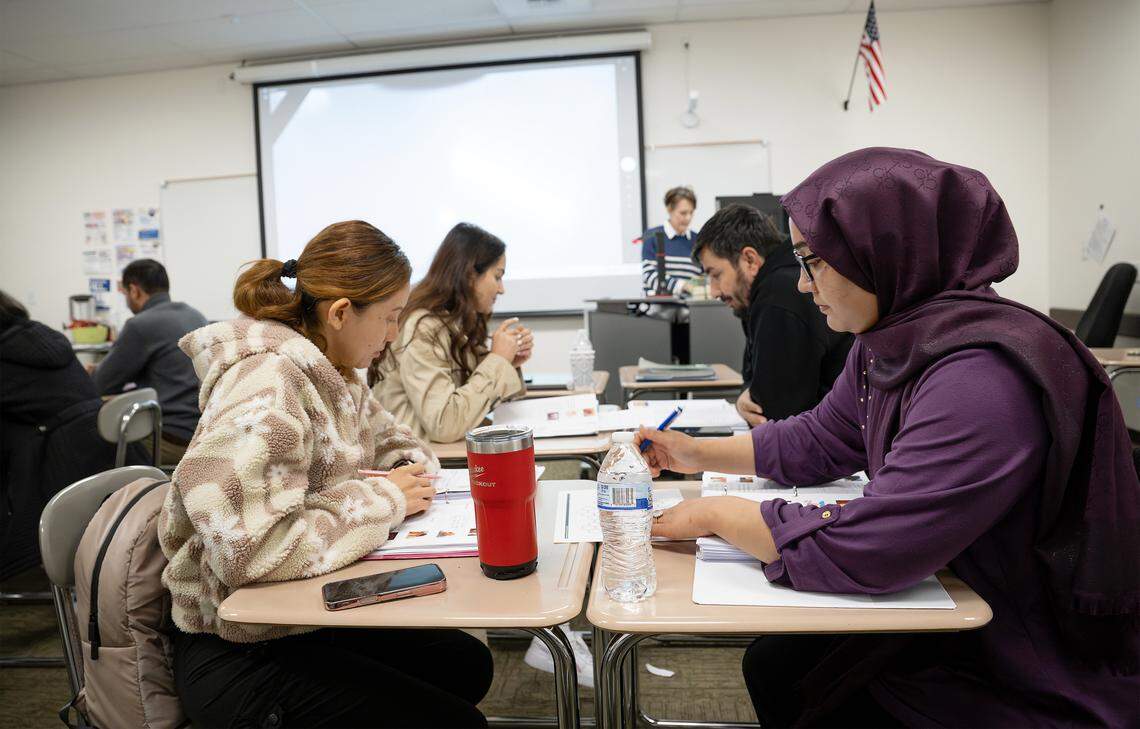
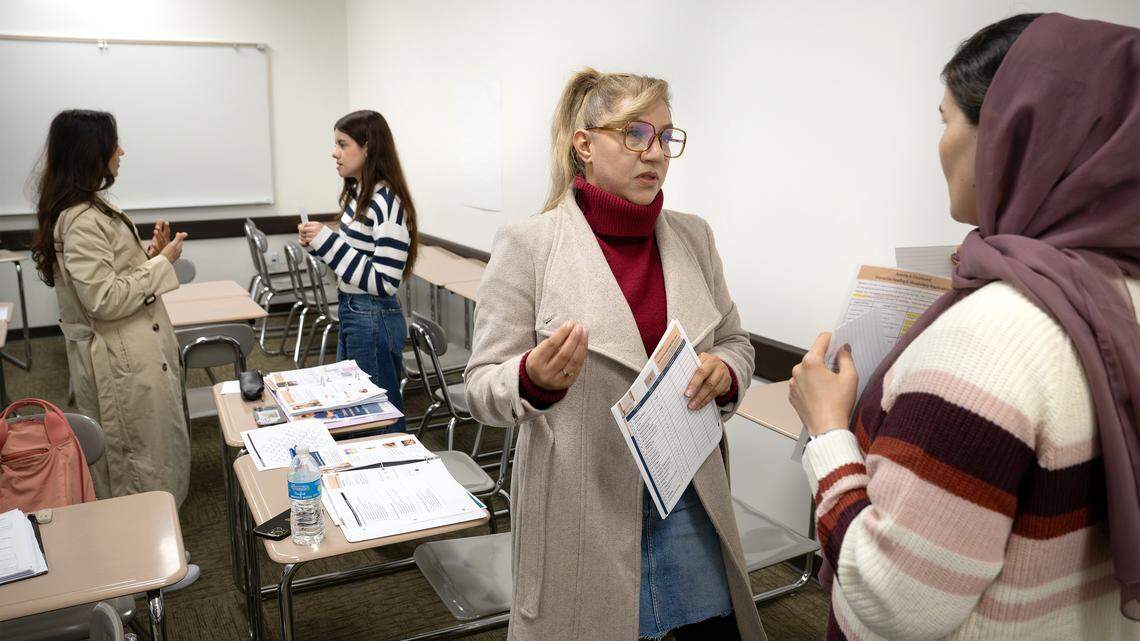
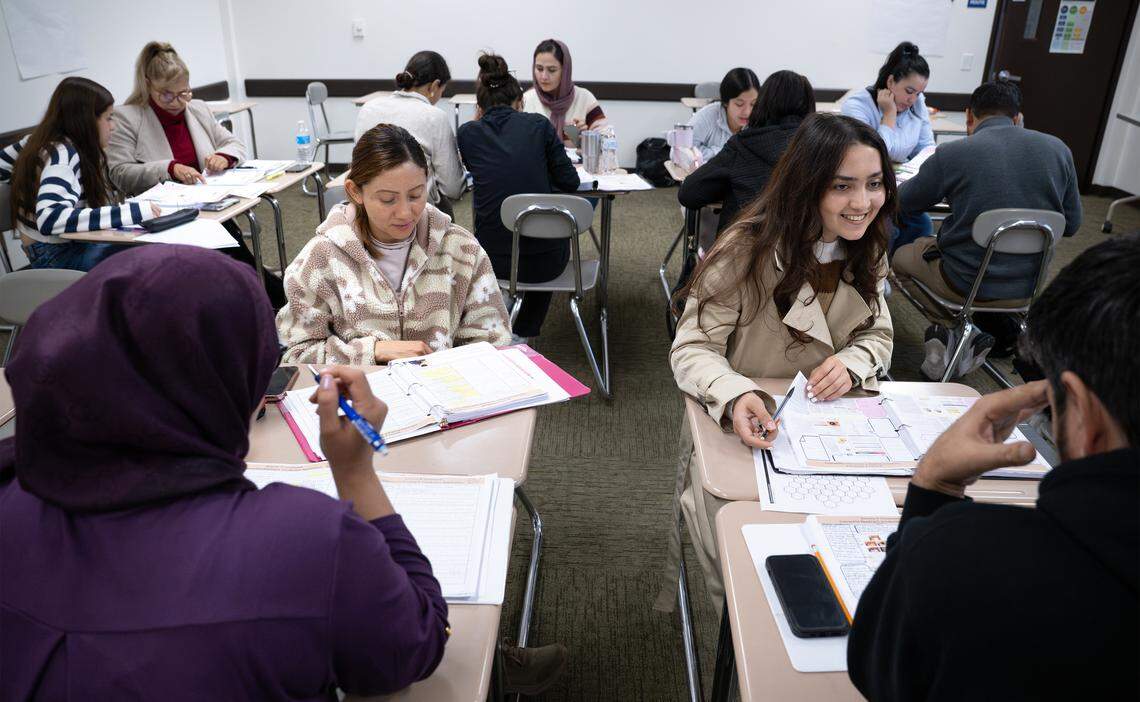
Amirpoor, 24, is among the first students to take the new course at MJC that gives English learners interested in healthcare a head start by teaching medical terminology a semester before the nursing assistant program begins.
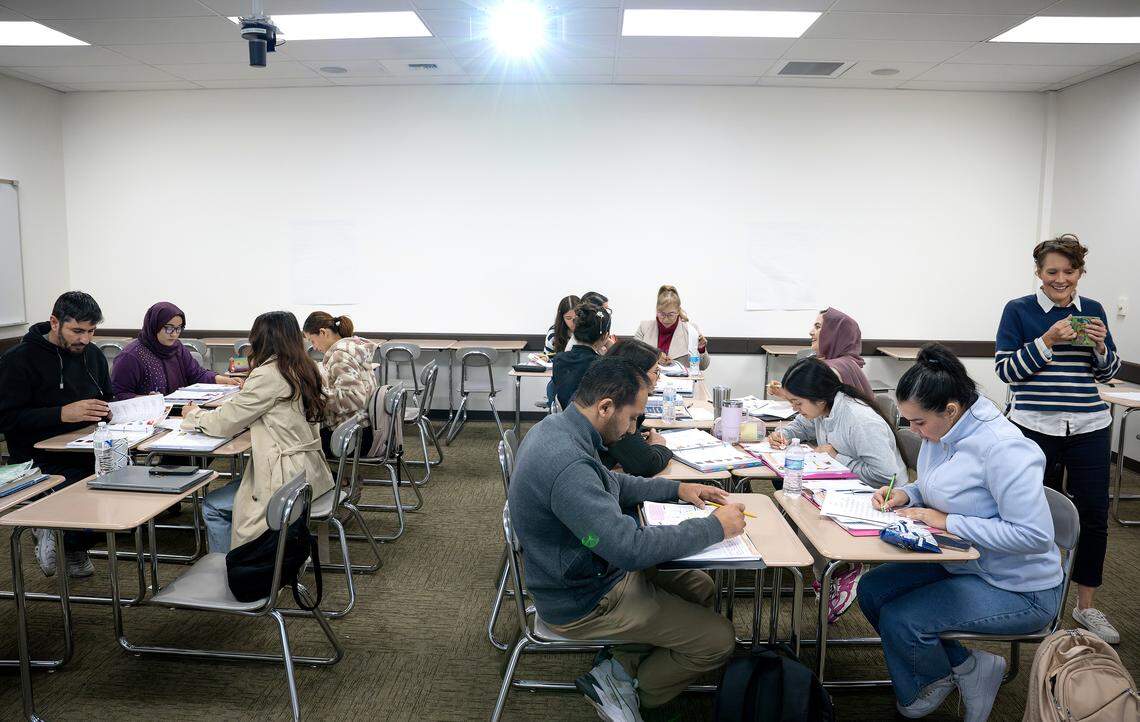
The class has 15 students, most of whom speak Spanish, Arabic or Dari as their first language.
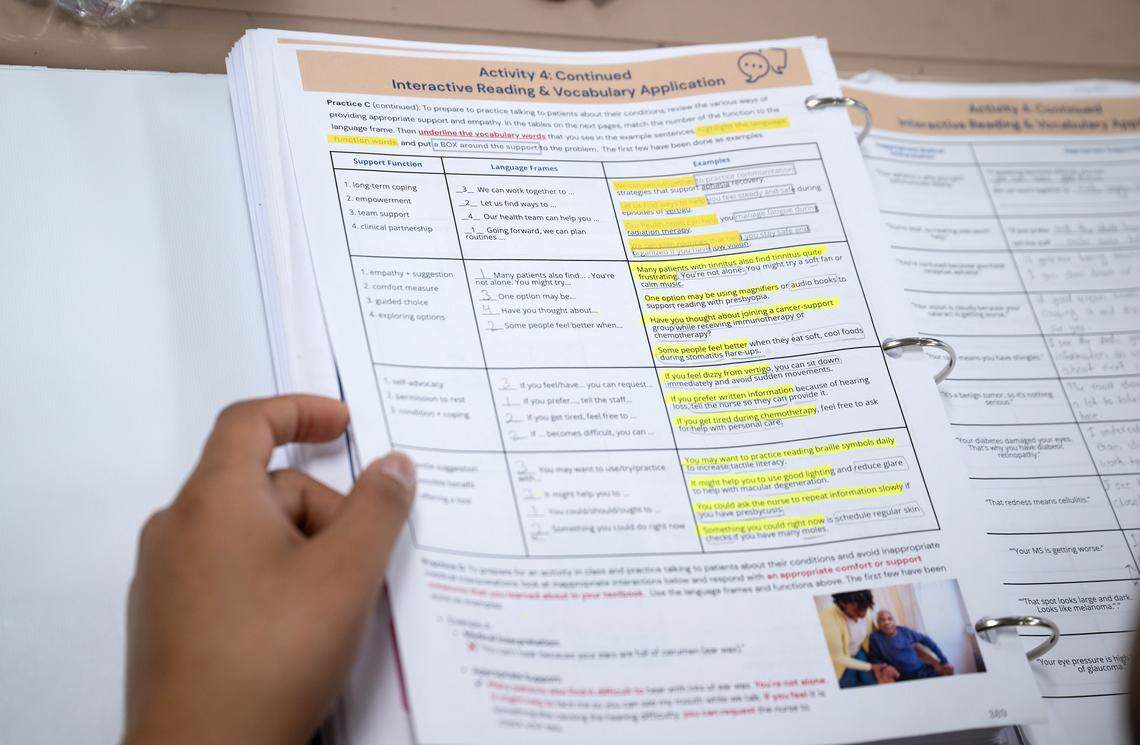
In the classroom, students — typically working in pairs or small groups — review vocabulary, simulate patient-nurse conversations and practice pronunciation (”benign” is pronounced bhe-nine, not ben-in, the instructor reminds). They also learn how to use supportive language when discussing diagnoses with patients.
Much of the coursework is structured around games, such as bingo or competitive Quizlet flashcards. During one class, students got to tour a memory care facility and speak with staff.
“Medical terminology is basically an additional language,” said Ruth Luman, who teaches the course. “It’s like learning two more at the same time.”
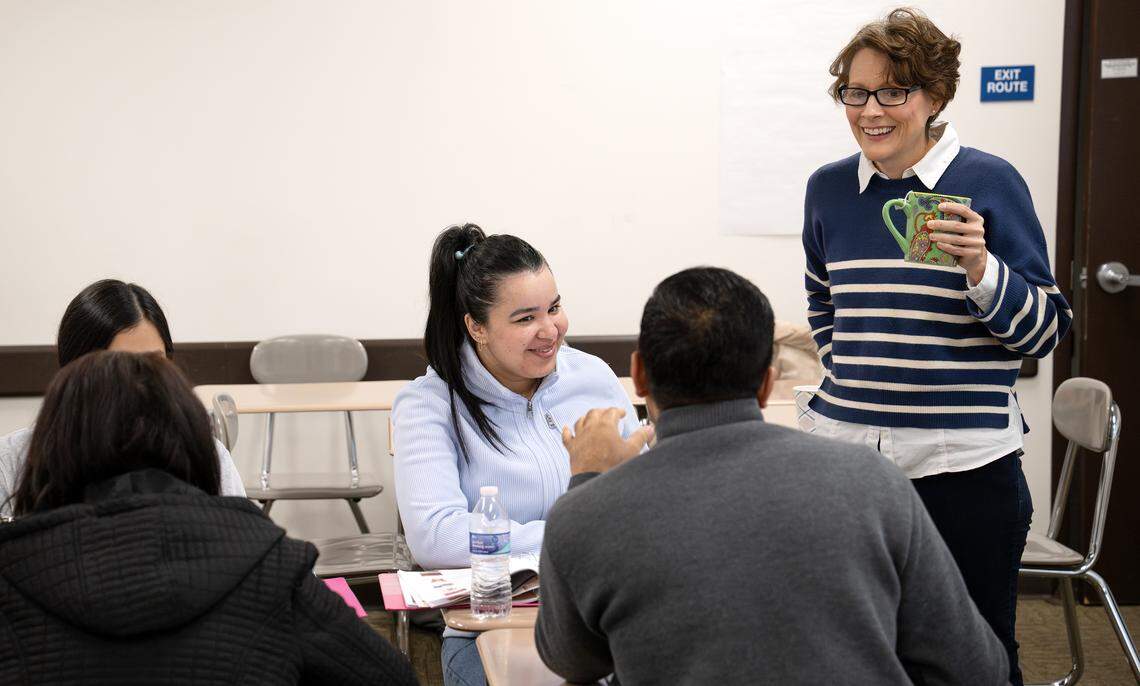
Students also take a second course focused on workplace English, tailored specifically to communication skills needed in nursing. Luman said many students understand the textbook terminology but struggle with water-cooler chats or small talk with patients. She said a lot of it has to do with confidence.
Luman has a background in teaching English as a second language, was once a nursing major and has experience volunteering in hospitals. Her husband is a physician who, she said, will visit the class during the final session to answer students’ questions.
Tonya Robinson, director of the college’s nursing assistant program, said the English learner course gives students a valuable head start by introducing medical terminology early. “It’s really going to help them succeed,” Robinson said.
In the spring, students will move into an eight-week course where they learn the skills required to become certified nursing assistants. The program includes 60 hours of theory and 100 hours of clinical training, giving students hands-on experience caring for patients in long-term care, rehabilitation and post-acute facilities.
The class will have roughly 95 to 105 students, 15 of whom are English learners.
After completing the training program, students must pass the state certification exam in English, which includes both written and skills components, to earn their certification.
While all the students in Luman’s current class plan to enroll in the nurse assistant program, she said some of her incoming students have other reasons. The class can help those interested in becoming a medical translator or a medical assistant. It’s also helpful from a patient standpoint, knowing more about the healthcare system and how to navigate it.
A lot of her students also want the medical knowledge just to be able to better help their families.
Shirley Miranda Brenes, dean of language arts and education at MJC, said the program is one of the best examples of what community colleges are supposed to do. She said it’s been especially rewarding to watch students not only improve their language skills but also gain the confidence to know they can succeed in a program like this.
“Learning anything new in another language is hard, but learning medical terminology and medical processes and preparing for that type of work that is both physically and emotionally challenging, it’s a whole other level,” Brenes said.
Having previously taught English, she has seen firsthand the daily challenges newcomer students face: learning a language, finding housing and managing bills. She believes these barriers may have previously discouraged many from pursuing careers like nursing.
Brenes said students often finish the English for Life and Work Program and take jobs at places like Starbucks and McDonald’s because supporting their families takes priority. Robinson, who has taught the nursing program for 20 years, doesn’t believe the language barrier has deterred students from pursuing it as a career. She does note, however, that English learners often need to put in extra effort, such as additional tutoring, to succeed.
Luman noted that the biggest challenge for her students is simply how busy they are. Many are parents or hold multiple jobs, yet they consistently come to class prepared, with their homework completed.
Maria Quijano enrolled in the course because her goal is to become a registered nurse. The biggest challenge, she said, is balancing school with raising her two daughters and helping with her husband’s business.
Quijano, 34, moved to the U.S. from Nicaragua 15 years ago. “This is my time to learn English and improve myself,” she said.
Funding opportunities for English learners
The Yosemite Community College Chancellor’s Office, aligning with its goal of expanding economic mobility, used Adult Education Office funds — allocated locally through the Stanislaus Mother Lode Consortium — to launch the program. Because of the growing need for healthcare workers, a specialized grant was created, focusing on helping English language learners enter healthcare careers.
Liliana Pulido, director of career program planning at MJC, manages the grant and handles its reporting. She said many refugee students arrive with medical experience from their home countries and this program gives them a chance to earn certification in the U.S.
The current grant cycle runs through June 2026, but MJC hopes strong student outcomes will help secure additional funding. “I hope we get more funding because so many students are interested, and we just want to keep this program alive,” Pulido said.
Brenes said MJC has offered an English learner class for child care, , too, also funded through a grant. She said they’re in preliminary conversations to develop a new program for culinary arts or for those interested in starting a catering business.
Students could get their food safety certification and take culinary courses at MJC. However, it will take time and money. “There’s no funding,” said Pulido. “That’s the only hard part.”
A regional need for nurses
Nearly 60% of California counties are experiencing nursing shortages. In Stanislaus County, state data show a supply-and-demand gap of -5.3%.
Robinson said the need for certified nursing assistants in the Modesto area is particularly high. She noted that enrollment in the program is strong, with many students joining each semester. The program also has strong partnerships with local nursing facilities, many of which often hire her students, including at Doctors Medical Center.
With the aging of the baby boomer generation, the demand for nursing assistants is expected to grow even further. “I want to retire myself. I’m part of the baby boomer group. I need to raise up nurses to take my place,” said Robinson, chuckling.
This story was originally published December 3, 2025 at 3:00 PM.
