
Stanislaus college students who depend on CalFresh dread suspension of benefits
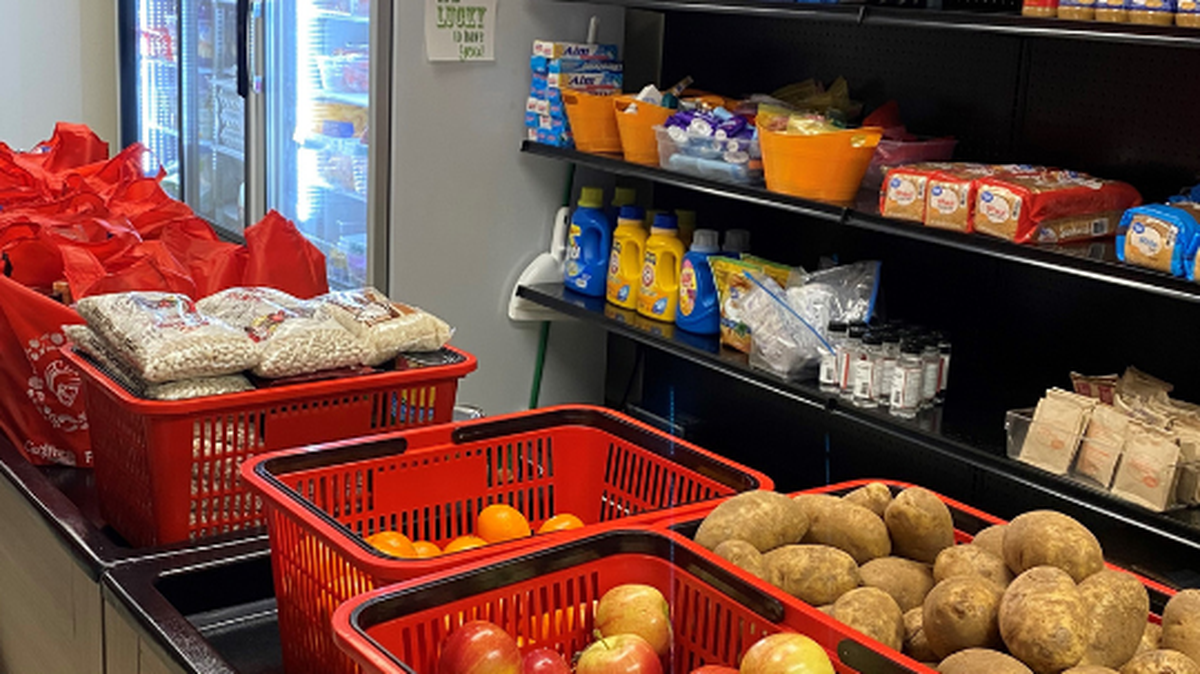
Savannah Parrish, a third-year computer science major at Stanislaus State University, is a part of a work-study program on campus. Prior to that, she said she was job-searching for almost nine months to support herself as a student. CalFresh benefits helped her stay financially afloat and access healthy groceries before and after she got her job.
As a prediabetic with high blood pressure and bad cholesterol, Parrish said she tries to be mindful of the food she eats. But with delays to her benefits, she will have to rely on food banks and the college’s food pantry in the next month.
“I have to change my budget up now. I can’t afford to go grocery shopping anymore,” Parrish said. “There’s no Thanksgiving, really, this year for me.”
At least 200,000 college students in California are enrolled in CalFresh. All of them will have to rethink food security and finances as the federal government shutdown, which started on Sept. 30, suspends Supplemental Nutrition Assistance Program (SNAP) – known as CalFresh in California – benefits for November.
According to the California Policy Lab, the Central Valley has the highest number of community college students enrolled in CalFresh, 21.6%, in comparison to the other six regions in the California Community Colleges system. There is no publicly available data on how many California State University students are enrolled in CalFresh.
For many college students financially supporting themselves, either partially or fully, working full-time while also being a full-time student isn’t always feasible. Resources, including CalFresh, allow students to have food security as they balance coursework, work-study, part-time jobs and more.
Stanislaus State third-year sociology major Heather Oram, a student with disabilities, said working and going to school full-time “isn’t possible” for them. CalFresh helps Oram access food while most of their money goes toward other expenses of being a student. Like Parrish, Oram plans to turn to the campus food pantry and local food banks for the next month.
“You don’t realize how expensive it is to be a student until you are one. If I have money, I don’t have the ability to spend it on food, it’s more like textbooks, it’s gas to get to the university,” Oram said. “CalFresh is such a blessing. Food and nutrition. It provides me that [which] I wouldn’t be able to provide for myself.”
Demand for Stan State pantry already up in recent years
Many colleges have on-campus free food pantries for students. But they can’t entirely make up for the delay of CalFresh.
At Stanislaus State, students can access the food pantry once a week to pick up a maximum of 10 perishable and nonperishable goods. Stanislaus State has two pantry locations, one in Turlock and one in Stockton, that carry food, hygiene products, diapers, baby wipes and more. The university also does a monthly grocery box distribution, of which there will be two in November.
Basic Needs Director Heather Pearson Villeda said she anticipates that CalFresh delays will result in more students accessing the pantry. There already has been a steady increase of students turning to the pantry for food and other products in the last few years, she said. In September, the two CSU Stanislaus pantries had 5,188 visits. Last school year, they had 33,814 visits.
Villeda added that while many students come to the university already receiving CalFresh benefits, or enroll themselves independently while in college, the Basic Needs office annually helps somewhere between 400 and 500 students enroll.
“Addressing food security is a community-based issue, so we would appreciate any support that folks contribute, whether it’s to us here or any one of our local food banks that are trying to support our communities,” Villeda said. She said. She noted that shelf-stable goods are a welcome donation at either one of their pantry locations. The pantries are open from 9 a.m. to 4 p.m. Mondays, Wednesdays, Thursdays and Fridays, and 10 a.m to 6 p.m. on Tuesdays.
People interested in donating can also purchase items on the pantry’s Amazon wishlist.
In-person donations will be inspected prior to distribution as required by the pantry’s permitting process, and Villeda requested prior contact before donating large quantities of food.
While college and community food banks and pantries are preparing to support more people in the coming month, students enrolled in CalFresh remain uncertain about when the government shutdown will end and their SNAP benefits will return.
Parrish said that during President Donald Trump’s first term, she felt creating uncertainty was a tactic used to generate fear and hopelessness. Though the delay will impact her access to food, she said she refuses to let the uncertainty make her afraid.
“If you are so privileged to never have to use food stamps, voila, good for you, great. Don’t piss on me because I’m trying to live,” Parrish said. “I’m not going to react in fear and be scared … They love people being uncertain, they love people being hopeless. And I’m not going to do that.”
This story was originally published October 30, 2025 at 12:28 PM.