Stanislaus State University faculty members decry layoffs amid budget shortfall
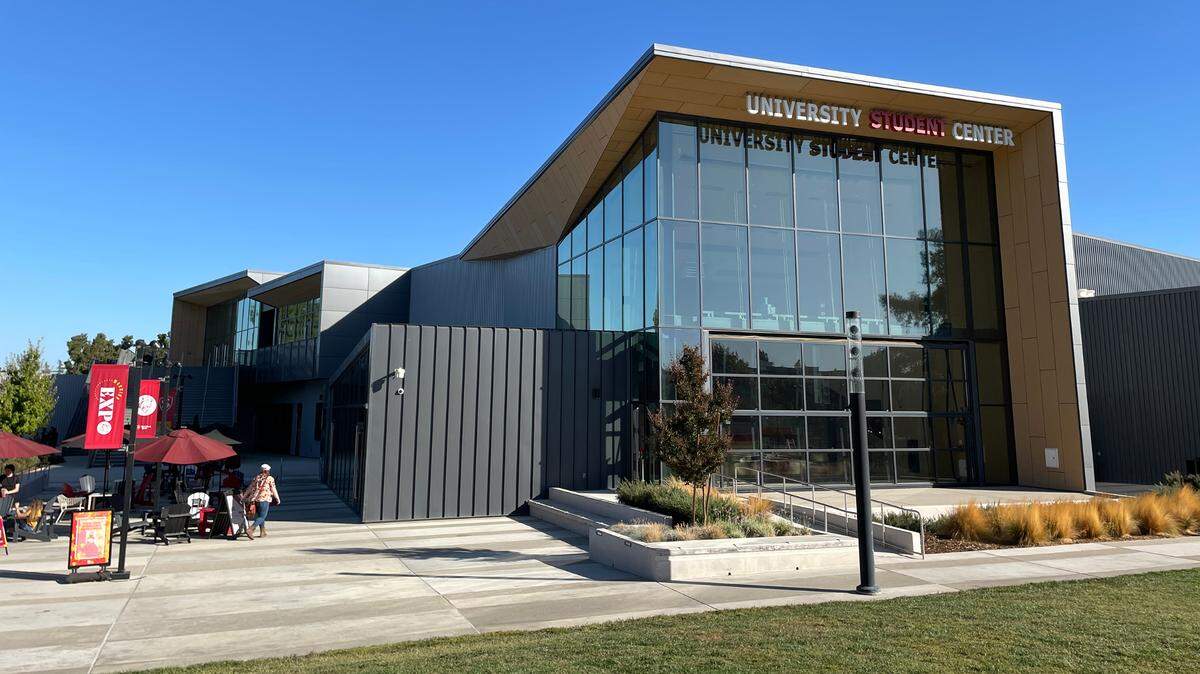
Last week, California State University, Stanislaus, notified faculty of possible layoffs.
The university, citing a budget shortfall, already has laid off 18 staff members and reassigned 11 others — actions that faculty members say were unnecessary and avoidable.
Steven Filling, a faculty member in the accounting and finance department, said the administration’s approach has left faculty in the dark. The layoff notice issued to the California Faculty Association did not specify how many positions would be cut or which departments would be affected, stating only that the university was engaged in the process of determining layoffs.
“’Transparency’ isn’t a word I’d use,” Filling said, adding that faculty members often learn about major decisions from news releases rather than direct communication from the administration.
Filling, who has been at Stanislaus State for 31 years, said he doesn’t believe the university has done enough to explore alternative solutions before considering layoffs. He noted that the CSU system’s audit report for 2023-24 reveals more than $8 billion in cash and investments.
The administration maintains that budget constraints leave it with no choice. In a press release, the university stated that it has taken significant steps to cut costs, including eliminating 50 permanent positions through a voluntary separation program, reducing nine management positions, implementing a minimum 5% reduction to each division’s operating budget and enacting a hiring freeze.
“While we are having to make difficult decisions, please know we strive to make them transparently and compassionately with our student welfare and success at the forefront of what the Stan State community means to the Central Valley’s overall prosperity,” the university’s statement reads.
The administration stated that despite these efforts, it still anticipates a $6.2 million shortfall for the 2025-26 fiscal year.
To address the deficit long-term, the administration outlined strategies including collaborating with other CSU campuses on shared services, leasing space at the Stockton campus to a charter school and increasing revenue through parking management.
Despite these measures, faculty members argue that the university has not done enough to explore alternatives to layoffs.
Nic Webber, campus president of the California State University Employees Union, said that in the past decade, the number of managers at Stanislaus State has grown by 61.33%. Their salaries have also ballooned, with some receiving raises of 5% to 40% just in the last calendar year.
“Meanwhile, front-line workers — those who most directly support students — are being laid off,” Webber said in a statement.
Webber said the CSUEU had no prior knowledge of these layoffs and no role in determining which staff were reassigned. “If we had been consulted, we would have proposed reducing redundant executive positions before targeting essential staff,” he said.
He urged Stanislaus State leadership to provide a concrete plan for increasing enrollment and to reinstate the impacted staff, while also honoring its contractual and legal obligation to negotiate with the CSUEU.
“These layoffs should not have proceeded before the state budget was finalized or systemwide reserves were addressed. Stanislaus State must advocate for more state funding and engage with the Legislature to protect public higher education,” Webber said.
Ann Strahm, chair of the sociology department and vice president of the Stanislaus Chapter of the CFA, said that while the administration believes it has explored alternative solutions, those efforts have not been successful in protecting the university’s ability to fulfill its mission. She pointed out that the institution has the capacity to push for more funding from the chancellor but has not done so.
She also criticized the administration for disproportionate cuts to management positions, emphasizing that these cuts haven’t been in line with the growth in those roles over the past few years.
Impact of layoffs on students is a top concern
One of the biggest concerns among faculty is the impact on students. Over half of the university’s faculty are on term contracts, meaning many won’t receive formal layoff notices — they simply won’t be given a new contract, Filling said.
With class schedules for the fall semester still in flux, the exact number of faculty who will lose their positions remains unclear.
In the College of Business Administration, where Filling teaches, layoffs will lead to a reduction in administrative support. The college will now be down to just one administrative staff member to support three departments.
“We’re not going to get everything done. We don’t have the skills those people have. We don’t have the spare time,” Filling said.
Larger class sizes are another growing concern. Filling, who teaches a writing-intensive course with 25 students, worries about what will happen if more students are added to his class. More students mean more essays to grade, less time for office hours and fewer opportunities for personalized support.
“The biggest impact is probably on students in terms of workload, because they’re the ones that aren’t getting the services that we like to brag about providing,” Filling said.
Strahm added that the university should not expect them to take on duties beyond their role.
CSU cuts mean ‘overall reduction in the economic health of this state’
Beyond the direct impact on students and faculty workload, the potential layoffs also are affecting morale.
Strahm said faculty members are losing confidence that CSU Stanislaus administrative leadership shares their passion for the university’s mission of changing students’ lives.
Strahm said the CFA will fight to ensure that the governor and state Legislature understand just how important the CSU system is to the economic vitality and well-being of the state and beyond.
“The reduction in the educational capacity of the CSU ultimately means a reduction in tax revenue receipts, a reduction in consumer purchasing power, and thus an overall reduction in the economic health of this state,” Strahm said. “You can’t have a robust circulation of money if you don’t have people with robust incomes purchasing commodities and services. The opportunities for earning a robust income decline with declining educational attainment.”
Filling said CFA members visit Sacramento weekly to meet with legislators and engage with elected officials in their districts to highlight the value of the CSU system and advocate for sufficient funding to sustain it.
He said they are also encouraging the administration to engage with faculty and staff to address challenges and find solutions.
Strahm said if layoff notices are issued, the CFA will ensure the university complies with the bargaining contract and support those affected, offering resources on how to file for unemployment and other assistance. She said they will also make sure that remaining faculty members are not coerced into taking on unpaid work or performing tasks assigned to laid-off employees from other bargaining units.
“Anybody who works for a wage knows exactly what it is like to see their colleagues, who do really important work, be let go and then the boss turn right around, look us squarely in the face and say, ‘You will pick up this work and you will take on those tasks,’” Strahm said. “CFA will make sure that nonsense doesn’t happen to our colleagues.”