Eager to return to classrooms, Stanislaus teachers share priorities for coming school year
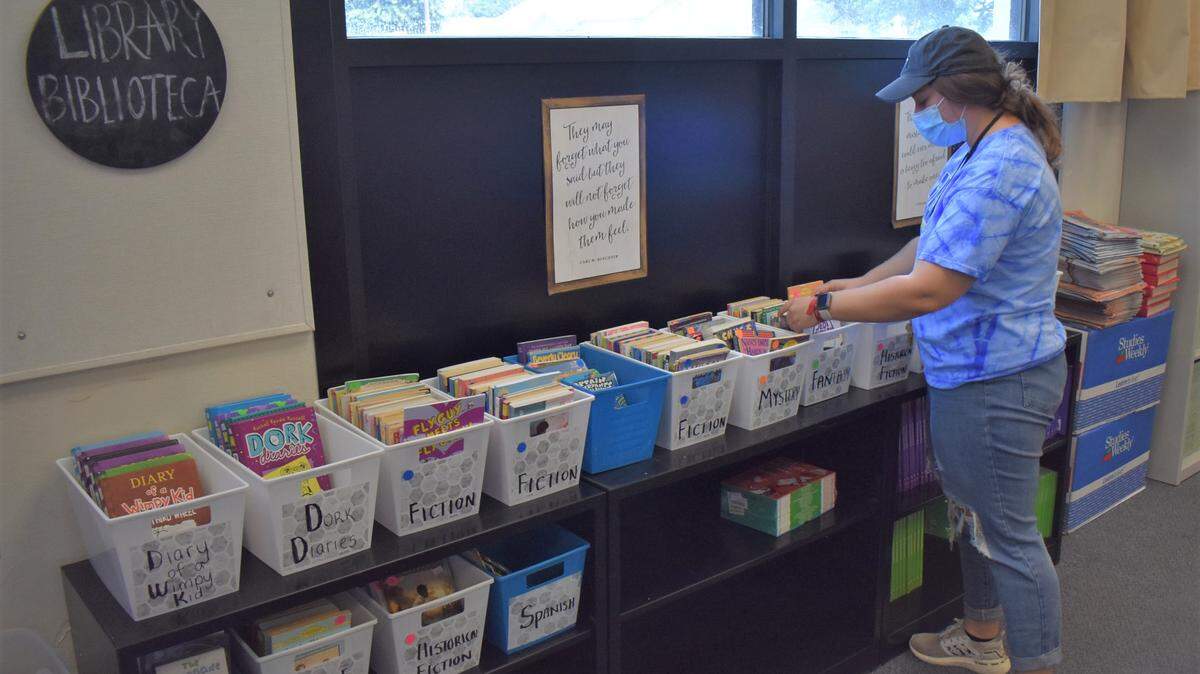
Patterson High School teacher Julianne Dittman is looking forward to teaching all of her students in one classroom, not split between desks and a screen.
When she taught math during the pandemic, she largely was talking to blank squares on a computer screen because nearly all of her students didn’t turn on their cameras. She couldn’t read body language or facial expressions to determine when concepts were registering and when she needed to change her delivery.
“My teacher superpower is reading the kids,” Dittman said. “Last year, I was without my superpower.”
Dittman and other Stanislaus County teachers shared with The Modesto Bee their excitement to begin a school year not yet completely “normal” but more traditional than the previous year and a half.
As they think about guiding students through the transition from social isolation to full-time campus learning, teachers outlined how they plan to support student well-being, fill in learning gaps and establish COVID-19 safety rules including wearing masks.
“Last year, I just missed the kids,” Dittman said.
Connecting with students
Teachers said they’ll spend more time getting to know their students this year and will put extra effort into creating a positive campus atmosphere.
Districts including Ceres Unified and Turlock Unified required employees to go through training on teaching students who have experienced trauma.
“A lot of it really boils down to intentionally building relationships with students,” said Amy Peterman, deputy superintendent of educational services in Ceres Unified.
Research shows deep student-teacher relationships improve student engagement and academic achievement.
During the pandemic, teachers weren’t able to establish a comfort level with their students that’s necessary to building strong connections, said Ceres’ Central Valley High School teacher Tiffany Pimentel.
She plans to spend a few more days at the beginning of the school year getting to know her ninth-grade English students’ personalities and learning styles. She wants them to know she’s there for them as they adjust to a different schedule on a new campus.
“We’re trying really hard to be super positive,” she said.
In the spring, some students returned to campuses in small cohorts on alternating days, then in combined cohorts in March. Still, many students continued with distance learning through the entire 2020-21 school year.
Shackelford Elementary School teacher Taylor Maddox said it was hard to talk individually with students about their interests outside of school when they were all sharing the same Microsoft Teams meeting. A teacher couldn’t wander over to a student’s desk for a couple minutes to chat.
“There’s several students I don’t really feel like I even knew last year,” Maddox said.
Filling in academic gaps
In addition to supporting student well-being, school officials are incorporating a variety of strategies to catch up students on learning they may have missed online.
National data found that students’ gains in math and reading were lower than a prepandemic school year, with larger declines in math. Black, Latino and low-income students were hit hardest, particularly in elementary grades.
Rather than framing this as “learning loss,” Modesto City Schools Superintendent Sara Noguchi said she encourages employees to build from students’ strengths. Noguchi instructed teachers to make students feel comfortable in the classroom to empower their learning. School officials will teach key standards students need to learn to be successful as they move through their education.
“There’s no quick fix,” Noguchi said. “We’re not going to remediate our way out of this.”
Teachers across the county said they’ll take advantage of digital tools they learned to use during remote learning, such as Google Forms, to frequently check for understanding.
At Ceres High School, freshman English teacher Cameron Moscozo said he will assume students are behind. He’ll slow down and hone in on key concepts in an effort to not overwhelm them. That might mean spending a few days on one reading rather than cramming in multiple for the sake of moving through content.
Moscozo said he never has been a big homework-giver, but this year he doesn’t plan to assign any. He hopes this will give students time for fun after-school activities, while also giving them space to deal with personal effects of the pandemic.
“Once they’re done, they’re done,” Moscozo said. “They get to go home and rest and relax and do all those things that they’re responsible for doing.”
Keeping students safe
Teachers said they expect in-person learning to be a more effective and positive experience, even as students and adults must wear masks inside.
“I’m happy to do it for the safety of my students and other staff members,” said Leslie Littlefield, a resource specialist in Turlock.
All school districts must require masks per rules from the California Department of Public Health. Trustees for the Modesto City and Turlock school districts have asked California public health officials for local control over masking, but the mandate stands.
Littlefield said she’ll incorporate mask rules into the first couple weeks of school, when she sets procedural expectations for her class. How teachers present masking is key, she said.
Krystal Booth-Gill, a sixth-grade science and math teacher at Savage Middle School, said she will teach a lesson on COVID-19 that explains the scientific facts behind masking.
Booth-Gill said she is fully vaccinated but contracted COVID-19 in the weeks before the start of school. She expects to be out of quarantine by students’ first day.
She plans to share her experience with her students so they recognize why they still need to wear their mask properly, use hand sanitizer and practice social distancing as much as possible.
Booth-Gill said she doesn’t want them to assume a false sense of security.
“We’re still not safe,” she said.
This story was originally published August 8, 2021 at 5:00 AM.