State says schools can offer small learning pods. What Stanislaus districts are doing
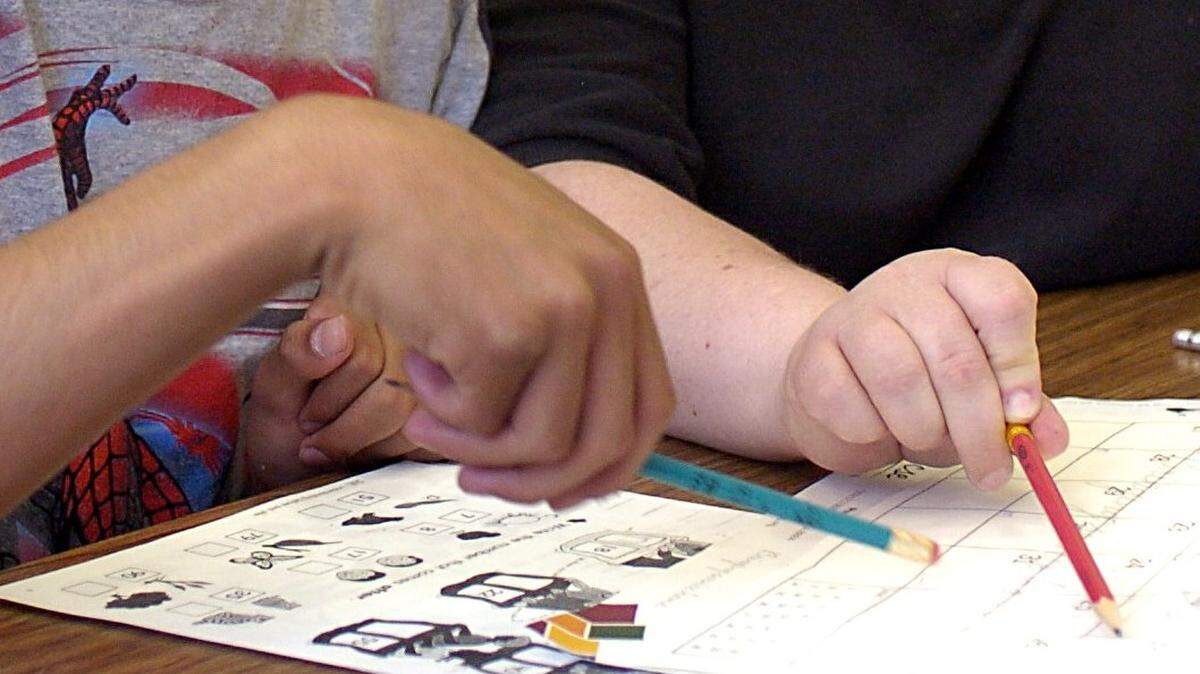
Under guidance from the California Department of Public Health issued this week, school districts in Stanislaus County are working toward providing in-person instruction and other services to small groups of children including at-risk students, those with disabilities and other special needs, and English language learners.
Schools may work with cohorts, or pods, of no more than 14 children and no more than two supervising adults in a supervised environment in which all stay together for all activities including meals and breaks and avoid contact with people outside of their group, the state says.
Modesto City Schools Superintendent Sara Noguchi said districts knew the guidance was coming, so her cabinet has been talking since at least the start of the school year about what services can be offered and how.
She said the district has identified a variety of at-risk students, “those kids that really, no matter what supports we provide them — internet, computer, what have you — they’re just really struggling” with the distance learning that has been necessary since schools closed because of the novel coronavirus pandemic. Among those students are, for example, homeless and foster children.
School principals are identifying students who potentially could benefit from a learning pod situation, said Mark Herbst, associate superintendent overseeing student support services. The district’s Special Education Office also is identifying students with disabilities who have been unable to access distance learning, Herbst said, and working “to begin targeting those individuals potentially for an opportunity to attend a learning center at one of our school sites.”
Most local school districts, as well as Stanislaus County Office of Education programs, already have been bringing in select students for one-on-one assessments of needs, SCOE spokeswoman Judy Boring said. Noguchi confirmed that individual assessments of English language learners is happening at MCS “on a pretty large scale” because thousands of students need to be tested.
Staffing requirement not a one-size-fits-all solution
The requirements of the state guidance will not work for a number of student situations, Boring cautioned. Citing students on the autism spectrum as an example, she said in an email, “some programs require a cohort/team of staff to implement direct instruction/programming. In our classrooms for Emotionally Disturbed, the IEP (individualized education program) requires counseling services and behavior services. In our Deaf and Hard of Hearing program, students require interpreters and other support staff per IEP, in addition to the teacher and para educators.”
In this time of distance learning, students are accessing all services and providers daily, Boring said, but it would be “nearly impossible” for the great majority of SCOE programs to operate with only two adults per classroom.
Herbst agreed that the staffing ratio laid out by the state is an obstacle to serving children with moderate to severe disabilities. Special education classes typically have more than one paraprofessional, and in programs for the deaf and hard of hearing, there may be “a handful” of interpreters needed in a classroom, he said.
The richer staffing ratios in some programs might prevent the district from bringing them back in the current pandemic situation, in which Stanislaus County remains on the state’s COVID-19 watch list, “or we will need to think of other creative ways to do it,” Herbst said.
The guidance does work well for English learners, who make up 36 percent of MCS’s population, said Lauren Odell, associate superintendent overseeing curriculum/instruction and professional development. Typically, a paraprofessional helping a student speaks English and the child’s native tongue.
Mandatory assessment testing began recently, she said, and is adhering to all state and county health and safety requirements. Students come in by appointment, and both they and the assessors wear personal protective equipment. “They have plexiglass kind of cubicles, and after each student leaves, they are disinfected for the next one.”
Before a child may come in for assessment, the family is asked standard health questions including whether members have traveled outside the country or been exposed to anyone known to be infected. That’s kept a few children from coming in, Odell said.
If schools were open, those kids would be in classrooms, she noted, adding, “We’re doing a really good job of ensuring the safety and the health of both the adults doing the assessing and the students coming in.”
Where cohorts may meet
As schools identify students who could benefit from pods, and where they reside, that will determine the number and location of learning centers, Herbst said. The district also must ensure all health and safety protocols are in place and that staff members are trained.
It’s possible if unlikely that a cohort meets at each MCS elementary campus, “maybe even more than one depending on space availability,” he said. “But we also would maintain flexibility. Let’s say, for example, we didn’t need a learning pod at Franklin, for whatever reason. We could take Franklin kids and offer it at, say, James Marshall.”
As for transporting children, Herbst said there is no concrete plan yet, but health and safety will be paramount.
Noguchi emphasized that the opening of cohorts will be “small scale” for those students most in need. It’s not a way of circumventing the restrictions on opening schools, she said.
The district knows there are hundreds if not thousands of families whose children are struggling with distance learning, the superintendent said. But the cohorts must be reserved for those in “extreme” cases, she said, such as, say, a third-grader who is alone at home daily and can’t even get on the internet, or children whose families live in vehicles or motel rooms.
Teachers know who those students are, she said, but families who believe they have somehow been overlooked should contact its school principal.
The district will have its plans much more “solidified” in time for a presentation to its board of education on Sept. 8, Noguchi said.
Efforts being made in other districts
Turlock Unified spokeswoman Marie Russell said in an email to The Bee that her district is reviewing the new state guidance on cohorts as it simultaneously works on completing a waiver application for elementary schools to reopen.
“Many of the required components of the waiver overlap with this new guidance,” she said. “We do not have a set date for returning students and staff to schools at this time, but it does remain a priority in TUSD.”
Prior to receiving the state guidelines, this week, said Riverbank Unified School District Superintendent Christine Facella, she and her staff already “were brainstorming in collaboration with (county) public health on ways to assist our seniors at Riverbank and Adelante high schools who had yet to engage in distance learning.”
She continued, in her email to The Bee, “We are not okay with any students not graduating and wanted to find a way to support them. Our intention is to bring those most at-risk seniors in very small groups to support their engagement and participation in their courses online. As for other possible groupings, we are still discussing how we might do that and what it would look like.”
And Oakdale Joint Unified School District Superintendent Marc Malone said his district “will assess our student needs and create site schedules to address those needs as we continue with our distance learning platform.”
This story was originally published August 27, 2020 at 12:02 PM.