Man shot by ICE in Stanislaus moved at least five times in four days
Carlos Mendoza Hernandez, the man shot by Immigration and Customs Enforcement in Patterson, was moved at least five times and hundreds of miles in the days following his April 13 arrest by the FBI.
Mendoza Hernandez’s current location finally was revealed Monday in federal court during his defense’s failed attempt to have him set free on bail. As of Tuesday, he’s being detained in California City. Mendoza Hernandez was rejected from several federal facilities due to his medical condition, according to his public defender and lead attorney David Harshaw.
Where has Mendoza Hernandez been?
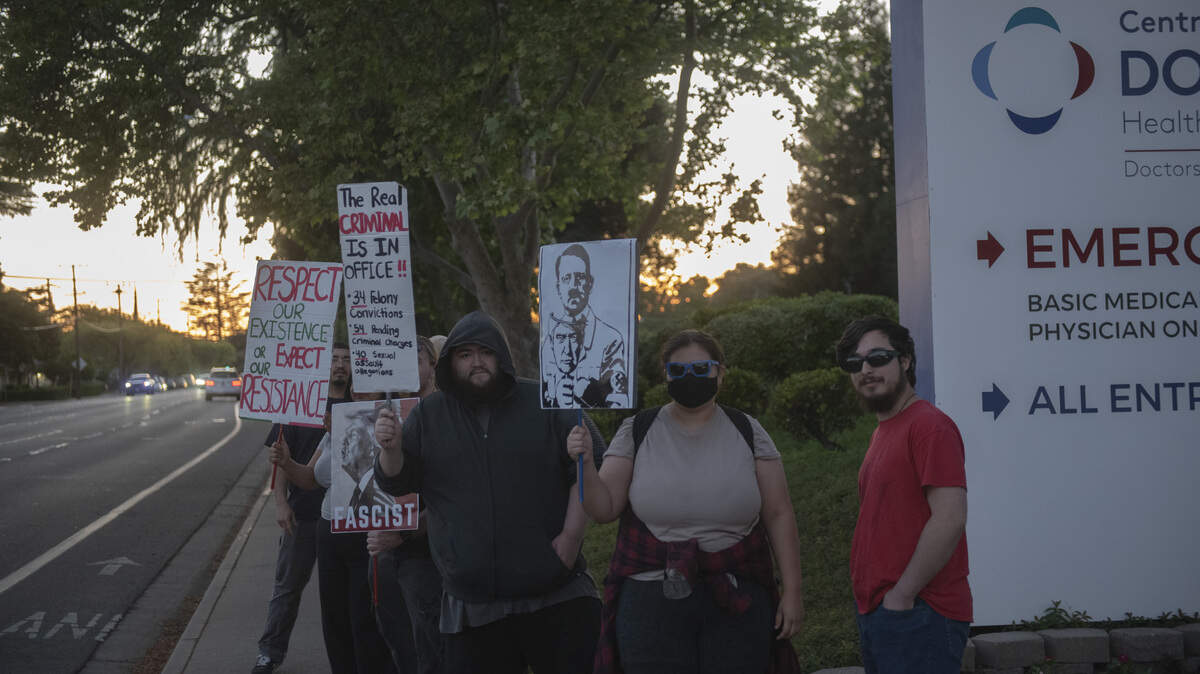
Last week, while in the middle of fielding questions from news media, Mendoza Hernandez’s other attorney, Patrick Kolasinski, announced that his client was being discharged from Doctors Medical Center in Modesto. Mendoza Hernandez was taken there to be treated for gunshot wounds to the face, arm and body sustained while ICE was detaining him.
Kolasinski asked local reporters to meet him at the hospital, but by the time they arrived, Mendoza Hernandez was gone. FBI agents, who’d just arrested him, took him to the Sacramento County jail first, but the Sheriff’s Department refused to facilitate him. The department has yet to explain why.
Mendoza Hernandez was then taken back to Stanislaus County and placed in its Public Safety Center overnight. The Stanislaus County Sheriff’s Office stated this was a “courtesy hold.” After his hearing in Sacramento the next morning, Mendoza Hernandez was taken to Yuba County Jail in Marysville, where he spent the night. It’s unclear when, but after that, he was transported 321 miles south to the Taft Community Correctional Facility in Kern County.
On Friday, he was again transported to the California City Detention Facility operated by ICE. However, Mendoza Hernandez is in the U.S. Marshals Service custody, not ICE’s, as he awaits trial.
Since his arrest, community leaders, advocates, family members and attorneys have expressed concern and outrage for what they feel has been opaque messaging from federal authorities. At many times, no one seemed to know exactly where he was.
Conflicting narratives coming from multiple parties, including those defending Mendoza Hernandez, added to the confusion.
Contradictions
On April 16, Kolasinksi spoke with reporters and local advocates after he’d learned Mendoza Hernandez was being moved from Yuba County to Taft. Like many of the press conferences he’d held after his client’s transfers, he demanded more transparency from federal authorities, but called this move in particular “outrageous,” “unfair” and “not a normal thing at all that’s happening.”
He said Mendoza Hernandez was “being tortured” and “tossed around like a sack of potatoes,” and Kolasinski charged news media and community organizations with trying to learn where he was. In response, the Central Valley-based immigrant advocacy group Faith in the Valley released a statement criticizing his treatment while in federal custody, saying Mendoza Hernandez was “forced to appear in court visibly incapacitated and confined to a wheelchair.”
But two days later, Heather Williams, head of the Eastern District’s Federal Public Defenders office, showed no surprise or concern about Mendoza Hernandez’s numerous transfers. “I’m stunned by that, given the ball of yarn ICE is trying to spin,” she said sarcastically.
Williams said Mendoza Hernandez’s case had gained a lot of notoriety. Given this, she said, her office trusted the Marshals Service’s tactics and that it was taking his safety and medical condition into consideration.
By Monday, though, Harshaw complained in court that he, like Kolasinski, was having difficulty reaching his client because he was being moved around so much. He also criticized his treatment while in custody. Harshaw asked U.S. District Judge Dale Drozd to order federal agents guarding Mendoza Hernandez to grant him a half-hour meeting with his lawyer before moving him again.
Harshaw’s attempts to sustain an order by a previous judge to release Mendoza Hernandez on bail were unsuccessful. New evidence submitted by the FBI argued Mendoza Hernandez was a flight risk because he moved his car before ICE officers shot him, which contradicts a witness statement. Details of the shooting are still being litigated.
Other new evidence alleges a contradiction in statements made by Mendoza Hernandez’s defense. A photo of a tattoo on Mendoza Hernandez’s chest resembles a symbol for the 18th Street Gang. ICE alleges it was detaining Mendoza Hernandez because he was a part of that gang and wanted for questioning back in El Salvador.
Shortly after the shooting, Kolasinksi said his client was “absolutely not a gang member.” There is no evidence made public, as of Tuesday, that proves Mendoza Hernandez has any current gang ties.
In his April 16 press conference, Kolasinski questioned why his client, who never committed a crime, was being treated worse than other inmates. “If he were just your ordinary criminal, a drug dealer, a cartel member, a pedophile, he’d be treated better than a man who’s never committed a crime in the United States, never committed a crime in El Salvador,” the attorney said.
The FBI alleged on Monday that it has documents from the Salvadoran government that show Mendoza Hernandez held status in the 18th Street Gang and was convicted of aggravated extortion in 2010. Mendoza Hernandez was 20 years old at the time. The FBI says he served five years in prison.
On Monday, Drozd overturned a previous judge’s ruling that Mendoza Hernandez could be set free on bail as he awaits trial. The defendant will remain in federal custody until that happens.
His next court appearance is scheduled for May 5.
Additional reporting for this story was done by The Sacramento Bee’s Sharon Bernstein
This story was originally published April 21, 2026 at 4:00 PM.