Riverbank explosion leads to investigation, arrest by environmental task force
Investigators arrested an executive Wednesday as part of a lengthy probe into a chemical explosion at a waste facility in Riverbank that injured a sanitation worker.
Phillip Whitmore, manager of Advanced Material Manufacturing Technology LLC, was arrested on suspicion of the illegal storage, transportation and disposal of several barrels containing highly flammable powdered aluminum and magnesium.
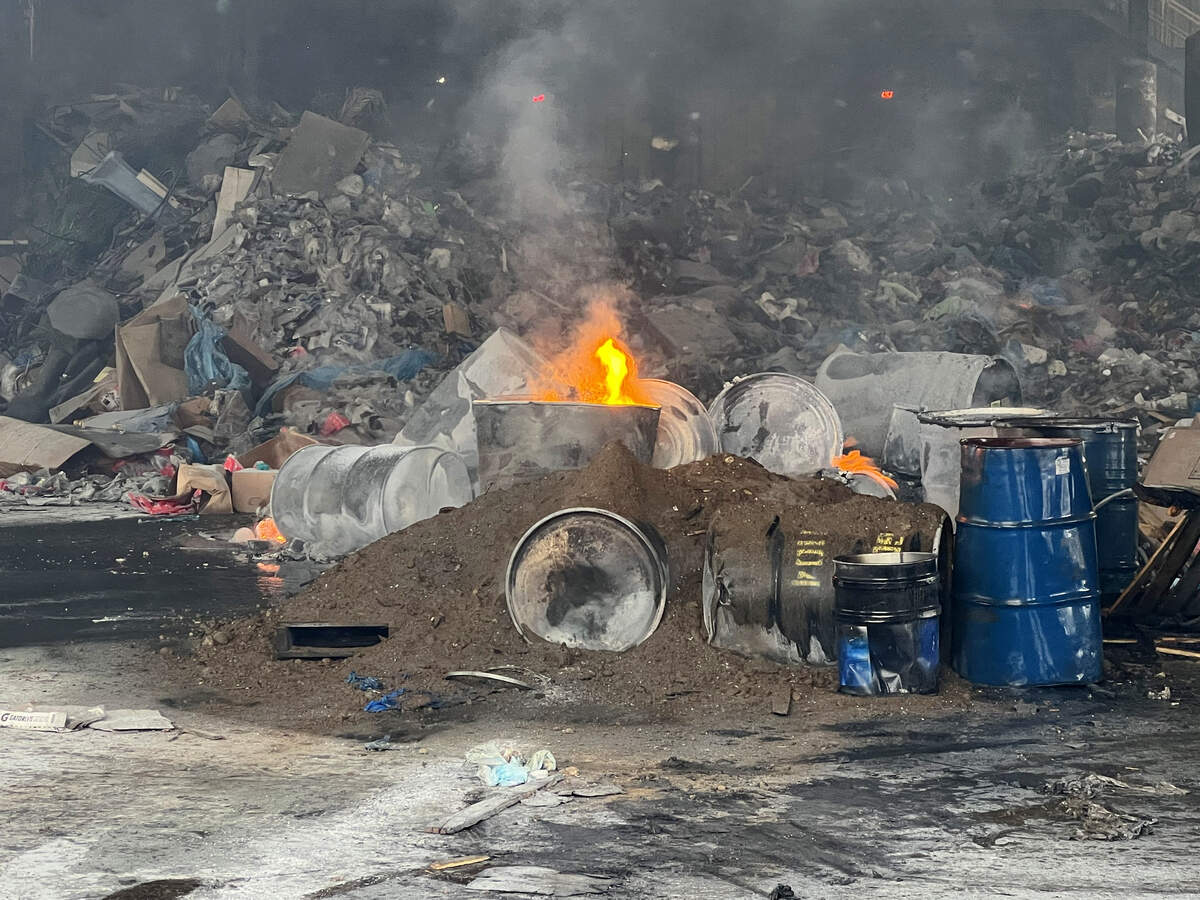
Allegedly, the 55-gallon barrels holding the material were put in a normal garbage bin, then picked up and taken to a waste facility by Gilton Solid Waste Management. The barrels ignited at the facility on March 27, 2025.
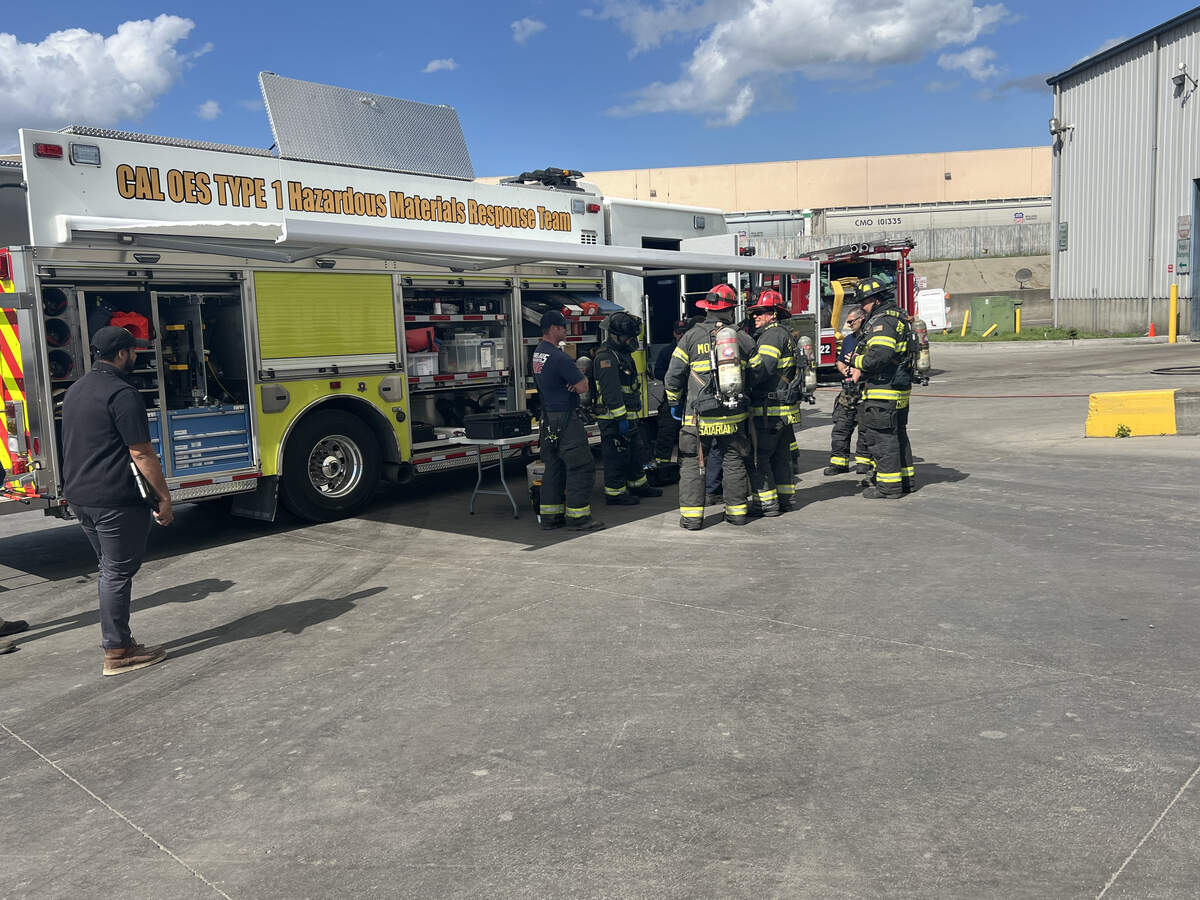
Not knowing what type of fire it was, responding firefighters doused it with water — creating flammable hydrogen gas. The reaction fueled the flames and caused a secondary explosion, according to the Stanislaus County District Attorney’s Office.
After dirt was used to extinguish the flames, a hazmat team called to the scene alerted the District Attorney’s Office, which had its newly formed Environmental Crimes Task Force investigate.
“The District Attorney’s Office is committed to investigating and prosecuting environmental crimes,” District Attorney Jeff Laugero said in a statement. “These violators endanger public health and threaten community safety. We will pursue every appropriate legal action to ensure that those who put the public in danger are held accountable.”
Terry Seese, chief of the DA’s Bureau of Investigation, said Whitmore confessed in a statement to investigators after he was read his legal rights. Seese also said AMMT’S executive director, Henry Meeks III, has a warrant out for his arrest but has not yet been taken into custody.
The investigation
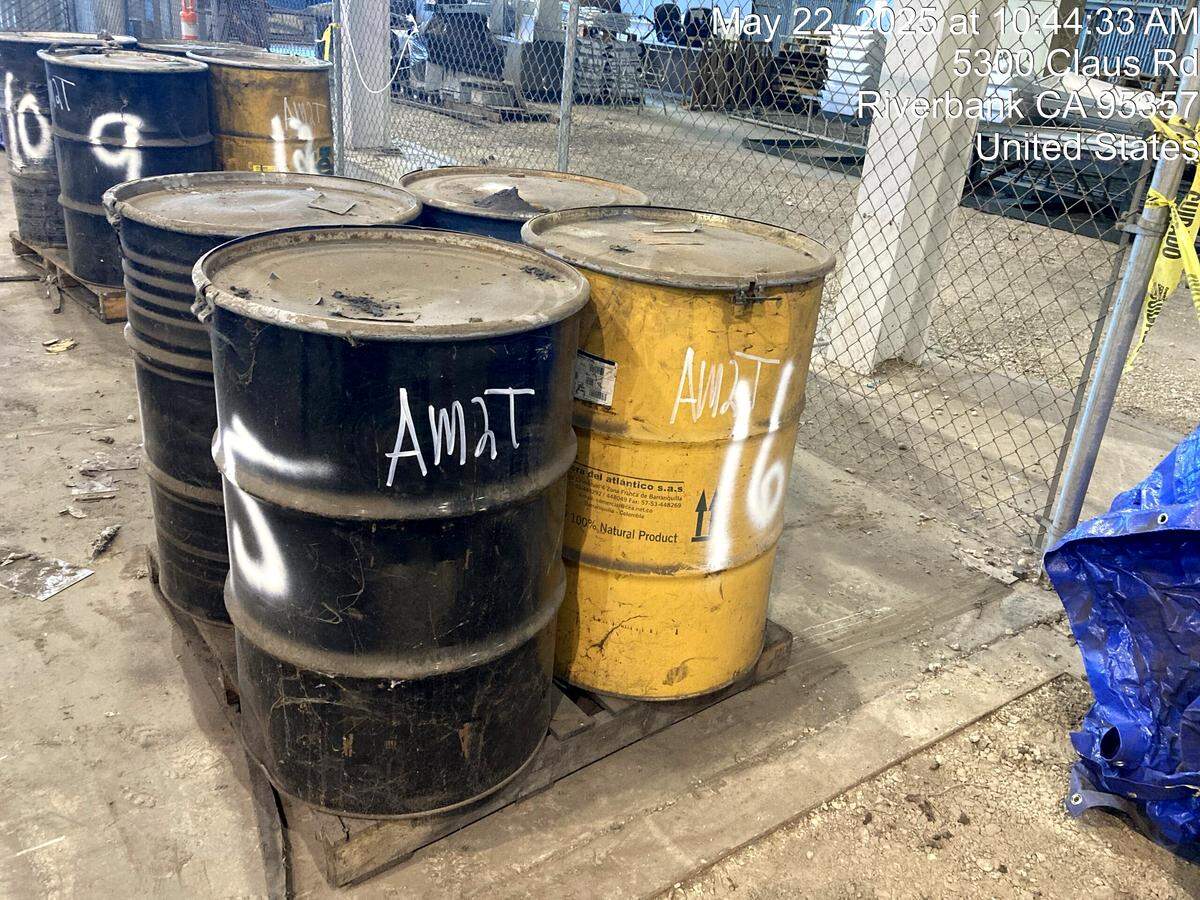
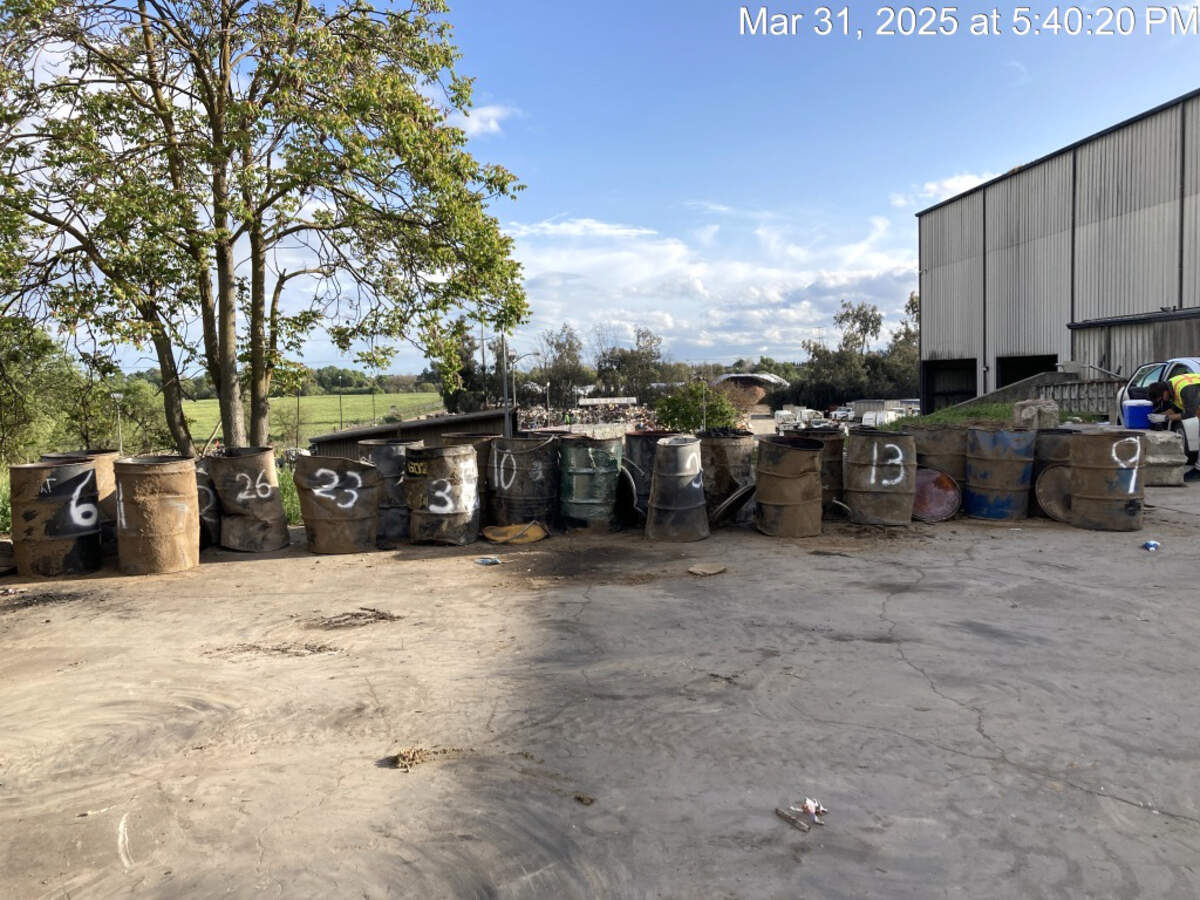
When DA investigators showed up to the Gilton facility, it wasn’t difficult to determine where the barrels originated. Each was spray-painted with “AM2T,” the company’s acronym.
A driver for Gilton told investigators where the barrels were picked up and said the company previously had tried to dispose of them in the same way but was rejected by sanitation workers, according to Seese.
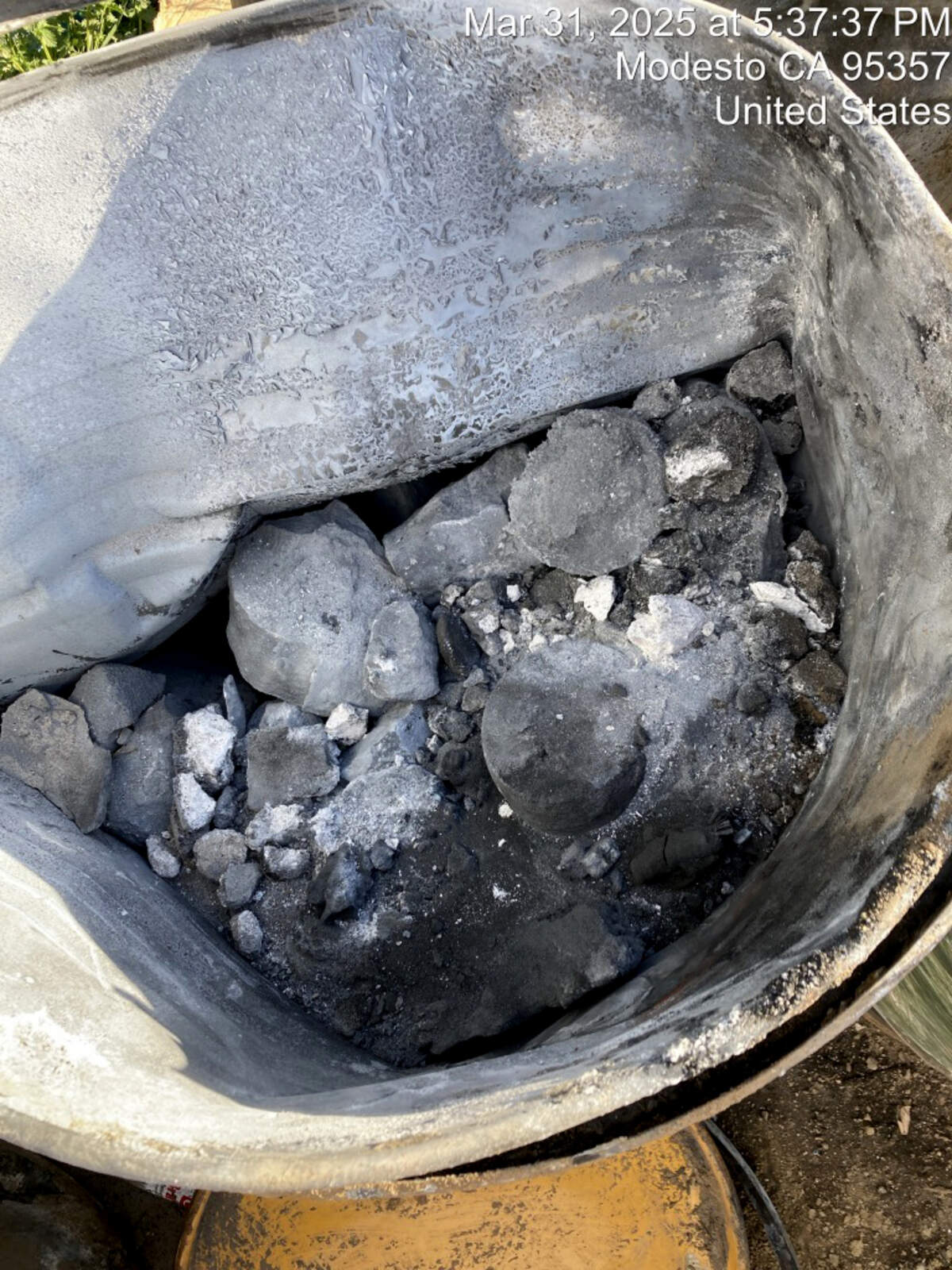
Investigators then went to 5200 Claus Road — a facility at the former Riverbank Army Ammo Plant, now known as the Riverbank Industrial Complex. There, prosecutors say they found 20 more barrels containing a powdered aluminum and magnesium mix, sometimes referred to as magnalium.
DA’s Office investigators then set out to find out more about AMMT, which they said left barrels of the material at its site after the business shut down. After realizing Whitmore was local, an arrest warrant was prepared. Meeks, however, could not be contacted after multiple attempts.
A Nevada resident, Meeks will have to be arrested by a local agency and extradited to Stanislaus County. Seese said Meeks was sent a letter to surrender but the DA’s Office doesn’t know if he will.
“We’ll try anyway, see what he does,” Seese said.
A mysterious company
Seese told The Bee he isn’t sure what type of business AMMT did but that magnalium has several different uses, including pyrotechnics, 3D-printing and explosives.
Magnalium has some military applications, such as small-caliber ammunition, tracer rounds and “other specialty applications,” according to Reade Advanced Materials, a company that supplies aerospace and defense industries.
AAMT does share a name with the Advanced Materials and Manufacturing Technologies Office, a suboffice of the U.S. Department of Energy’s Office of Energy Efficiency and Renewable Energy.
It’s also the same name of a program through the Department of Energy’s Office of Nuclear Energy. A press release on the program’s website shows it’s researching 3D-printed materials for use in nuclear reactors.
The Department of Energy could not be reached for comment for this story.
Whitmore is in custody at the Stanislaus County Public Safety Center and is being held in lieu of $120,000 bail. He was arrested on suspicion of four charges related to illegal dumping of hazardous material.
The charges are “wobbler offenses,” which can either be felonies or misdemeanors, depending on decisions made during court proceedings.
This story was originally published March 5, 2026 at 3:20 PM.